If you drive or are shopping for an electric vehicle, you’ve probably heard that the battery is the most expensive part of the car. What fewer people talk about is the EV cooling system that keeps that battery, motor, and electronics healthy. Understanding how EV cooling works, and what can go wrong, can help you protect your range today and your resale value tomorrow.
Quick definition
What Is an EV Cooling System?
Every electric vehicle has a thermal sweet spot, typically around 68–86°F (20–30°C), where the battery, motor, and electronics are happiest. An EV cooling system constantly moves heat in or out of the vehicle’s components so they stay near that sweet zone whether you’re fast-charging in Phoenix or commuting on a freezing January morning.
How it differs from a gas car
In a gasoline car, the engine makes lots of waste heat, and the cooling system’s main job is to get rid of it so the engine doesn’t overheat. Cabin heat is basically free, you’re just borrowing waste heat from the engine.
In an EV, there’s no hot engine by default. The car has to carefully manage limited heat, deciding when to move it away from the battery and when to reuse it for the cabin or to precondition the pack before fast charging.
The big thermal “customers”
- High-voltage battery pack – needs a narrow temperature window for longevity and safety.
- Drive motor(s) – generate heat under high load.
- Inverters and onboard chargers – power electronics that don’t like overheating.
- Cabin HVAC – especially demanding in very hot or cold weather.
Why EV Cooling Systems Matter So Much
EV Cooling System Impact at a Glance
Thermal management is one of the quiet heroes of EV design. Good cooling doesn’t just keep you from seeing a warning light; it directly affects range, fast-charging speed, battery degradation, and winter drivability. It’s also a major input into the battery warranties that make EV ownership predictable for a decade or more.
Used EV shoppers, pay attention
Core Components of an EV Cooling System
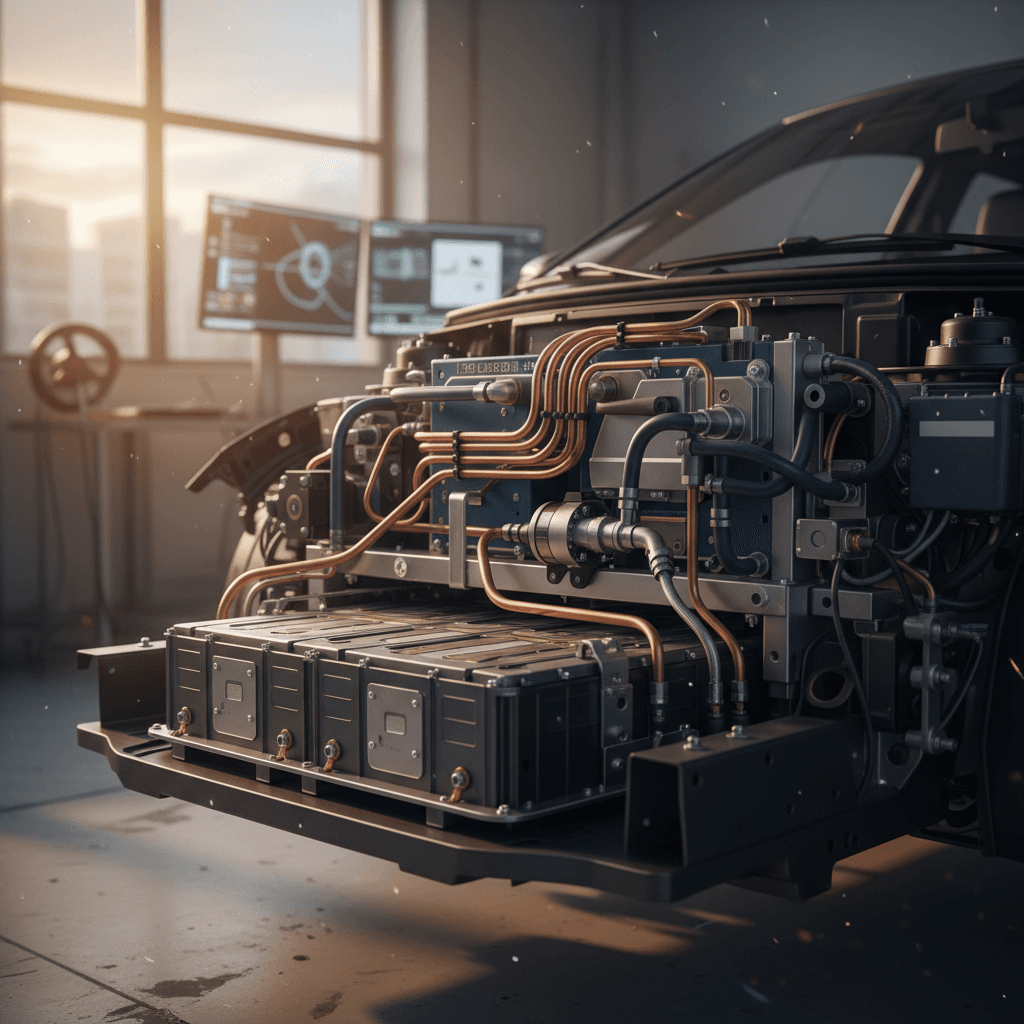
Most modern EVs use a mix of liquid coolant and refrigerant, orchestrated by software. The plumbing diagrams look complex, but you can break an EV cooling system into a few main building blocks.
Main Pieces of an EV Cooling System
Different brands lay them out differently, but the jobs are similar.
Coolant loops
Closed circuits of water–glycol coolant move heat between the battery, motor, inverter, and a front radiator. Some EVs have separate loops; newer designs increasingly share a common loop with smart valves.
Electric pumps & valves
Variable-speed pumps push coolant where it’s needed. Multi-port valves (think Tesla’s Octovalve-style hardware) route flow between battery, powertrain, and the cabin heat exchanger.
Radiators & fans
Like a gas car, EVs use radiators at the front to dump excess heat to outside air, with fans kicking on when airflow isn’t enough, such as during fast charging while parked.
A/C and chiller
The same refrigerant loop that cools the cabin can be tied into a chiller that pulls heat out of the battery coolant, crucial for repeated fast charging or hot climates.
Battery cooling plates or channels
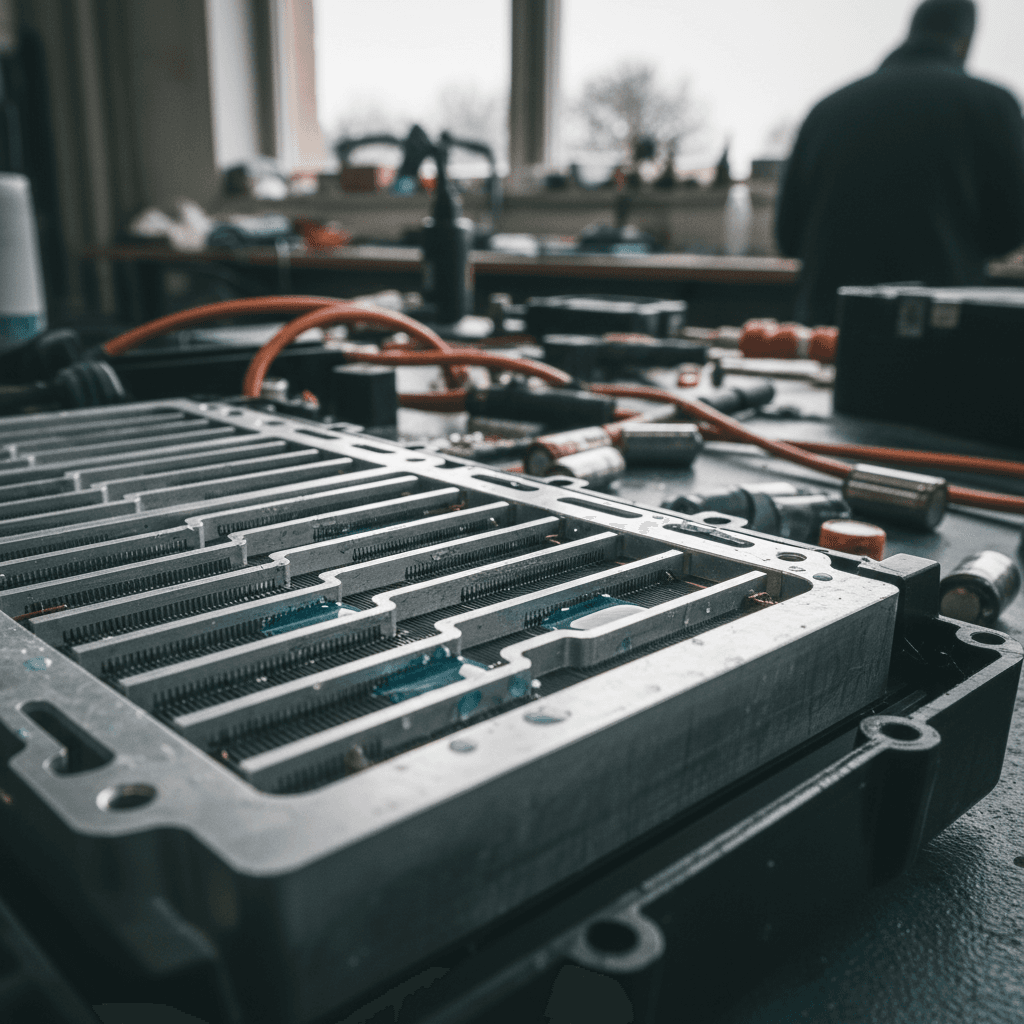
Within the pack, thin aluminum plates or microchannel tubes sit under or between cells. Coolant flowing through them keeps cell temperature even, which is critical for long-term health.
Thermal control software
A dedicated controller watches temperatures and decides when to preheat the battery, spin up pumps, open valves, or limit power to keep everything in safe bounds.
Battery Thermal Management: Liquid vs Air Cooling
Batteries are where EV cooling gets serious. A large pack can generate several kilowatts of heat under hard acceleration or rapid charging. If that heat isn’t carried away evenly, cells age faster, lose capacity, and in worst cases can enter runaway failure. That’s why nearly all new battery-electric vehicles have moved to active liquid battery cooling.
Liquid vs Air-Cooled EV Battery Systems
How the main battery cooling approaches compare in real-world use.
| Feature | Liquid-Cooled Battery | Air-Cooled Battery |
|---|---|---|
| Typical use today | Most new BEVs and performance PHEVs | Older or low-cost models, some PHEVs |
| Cooling method | Coolant plates or tubes pull heat from cells | Fans push air through or around pack |
| Fast charging | Supports repeated DC fast charging better | Often slows or overheats in long DC sessions |
| Temperature uniformity | Very good across the pack | Can have hot spots and wider gradients |
| Complexity & cost | Higher (pumps, valves, plates) | Lower, fewer parts |
| Battery longevity | Generally better in hot climates & high use | More sensitive to heat stress over time |
Most modern EVs that support fast charging or towing use liquid cooling for the main traction battery.
Don’t ignore hot-battery warnings
Beyond classic liquid vs air, researchers and some high-end designs are experimenting with immersion cooling (cells bathed in dielectric fluid) and hybrid systems using phase change materials alongside coolant. For most drivers, though, the key takeaway is simple: a well-designed liquid cooling system is one of the best predictors of a long-lived EV battery.
Heat Pumps and Whole-Car Thermal Management
The latest EV platforms treat thermal management as one big puzzle instead of separate systems. Rather than having one loop for the cabin A/C and another for the battery, many newer vehicles use integrated heat pump systems that shuffle heat between components wherever it’s most useful.
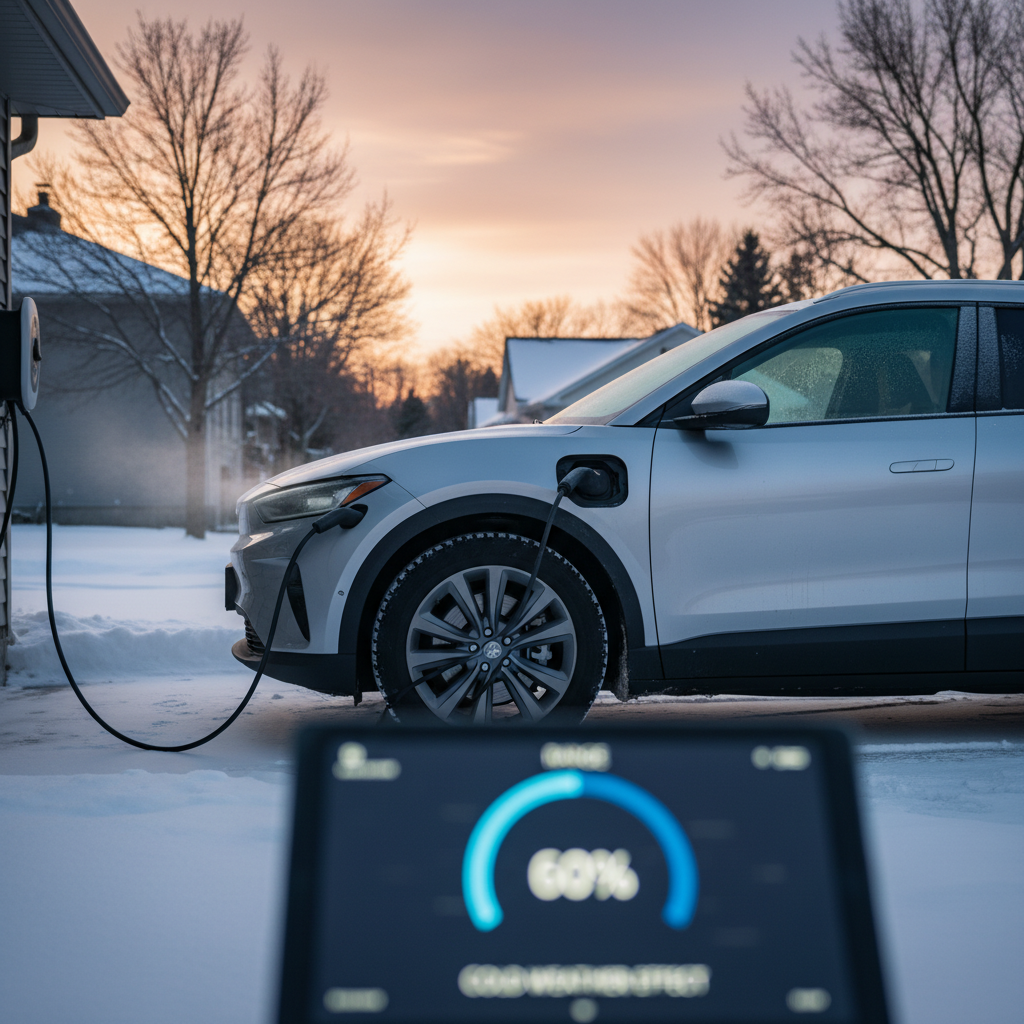
- Heat pumps work like a reversible air conditioner, moving heat rather than creating it outright. In EVs, that means they can warm the cabin or battery with far less energy than traditional resistance heaters, especially around freezing temperatures.
- Many EVs from Tesla, Hyundai, Kia, BMW, Audi, Volkswagen, Nissan and others now pair a heat pump with a smart coolant network, pulling waste heat from the motor or power electronics instead of throwing it away.
- Independent testing has shown that heat-pump-equipped EVs can retain significantly more winter range compared with similar models using only resistive heat, especially around 32°F (0°C).
Winter driving tip
Common EV Cooling System Issues and Warning Signs
EV cooling systems are generally robust, but they’re not maintenance-free. As EVs rack up more high-mileage years, shops are starting to see familiar patterns, most of them relatively simple if you catch them early.
Typical EV Cooling System Problems
What goes wrong and what you might notice.
Low coolant level or leaks
Symptoms: Warning messages, reduced fast-charging speed, or the cooling fan running often. You may see dried coolant residue near hoses or under the car.
Why it matters: Air pockets and low fluid can create hot spots in the pack or inverter.
Weak pump or stuck valve
Symptoms: Cooling-related error codes, the car limiting power on hills, or a sudden drop in DC fast-charging speed.
Why it matters: If coolant isn’t moving where it should, critical components can get stressed quickly.
Clogged radiators or filters
Symptoms: Fans roaring to life often, especially at lower speeds or when fast charging, plus higher-than-normal component temps.
Why it matters: Reduced airflow means the system can’t dump heat effectively.
Software or sensor faults
Symptoms: Inconsistent temperature readings, random cooling alerts, or the car refusing to fast-charge even in mild weather.
Why it matters: The thermal controller may go into safe mode, limiting performance until the fault is addressed.
Safety first
Simple EV Cooling System Maintenance Tips
You don’t need to be an engineer to keep an EV cooling system happy. A handful of basic habits will go a long way toward protecting your battery and drive components.
Owner-Friendly Cooling System Checklist
1. Watch for alerts and derating
Don’t ignore repeated messages about reduced power, reduced charging speed, or battery temperature. If these pop up often, especially in moderate weather, schedule a diagnostic.
2. Check coolant level at service intervals
Most EVs have a translucent coolant reservoir under the hood. During routine service, confirm it’s at the proper mark and that the coolant looks clean and free of oil or debris.
3. Keep the front end clear
Leaves, plastic bags, and road grime can clog radiators and condensers. Periodically inspect the grill area and gently clear debris so air can flow freely.
4. Respect DC fast charging in heat
Occasional fast charging is fine, but repeatedly fast charging a hot battery after long high-speed drives can stress the system. When possible, let the car cool or use DC fast chargers more strategically.
5. Use preconditioning features
If your EV offers battery preconditioning, use it before fast charging or in very cold weather. The cooling system will warm or cool the battery to its ideal temperature automatically.
6. Follow coolant change recommendations
Some manufacturers specify coolant replacement intervals. Stick to those guidelines and always use the correct fluid; mixing the wrong types can damage seals and components.
What to Check on a Used EV’s Cooling System
If you’re shopping used, especially for a vehicle that’s seen frequent fast charging, towing, or hot climates, the state of its EV cooling system is almost as important as the odometer reading. This is where buying from an EV-focused retailer like Recharged can give you real peace of mind.
Questions to ask or check
- Any history of cooling-related error codes, pump replacements, or battery temperature faults?
- Has the coolant ever been changed, and if so, was the correct specification used?
- Has the car been used heavily for fast charging, rideshare work, or frequent towing?
- Are there visible leaks, stains, or corrosion around coolant hoses, the reservoir, or the front radiator area?
How Recharged approaches it
Every EV sold through Recharged includes a Recharged Score Report that goes far beyond a quick visual check. Our EV specialists:
- Perform battery health diagnostics informed by how the pack has been thermally managed over its life.
- Check for active or stored cooling-system trouble codes and verify proper operation of pumps and valves.
- Factor thermal history into fair market pricing, so you’re not overpaying for a tired pack.
You can complete the entire purchase online, or visit our Richmond, VA Experience Center if you prefer to see and feel the vehicle in person.
EV Cooling System FAQ
Frequently Asked Questions About EV Cooling Systems
Bottom Line: Cooling Is Battery Insurance
Under the floor of every EV is a battery pack that represents much of the car’s value, and standing guard over it is the EV cooling system. When that system is well-designed and properly maintained, you get the upside of electric ownership: stable range, strong fast-charging, and a battery that ages gracefully. When it’s neglected or compromised, problems often show up first as annoying warnings and slow charging, then eventually as accelerated degradation.
Whether you already own an EV or you’re in the market for a used one, it pays to understand how thermal management works and what the warning signs look like. If you’d rather not decode coolant loops yourself, buying through a specialist like Recharged, where every vehicle comes with a Recharged Score battery health report, transparent pricing, and EV-focused support, can take the guesswork out of the process and help ensure the cooling system that protects your investment is doing its job.