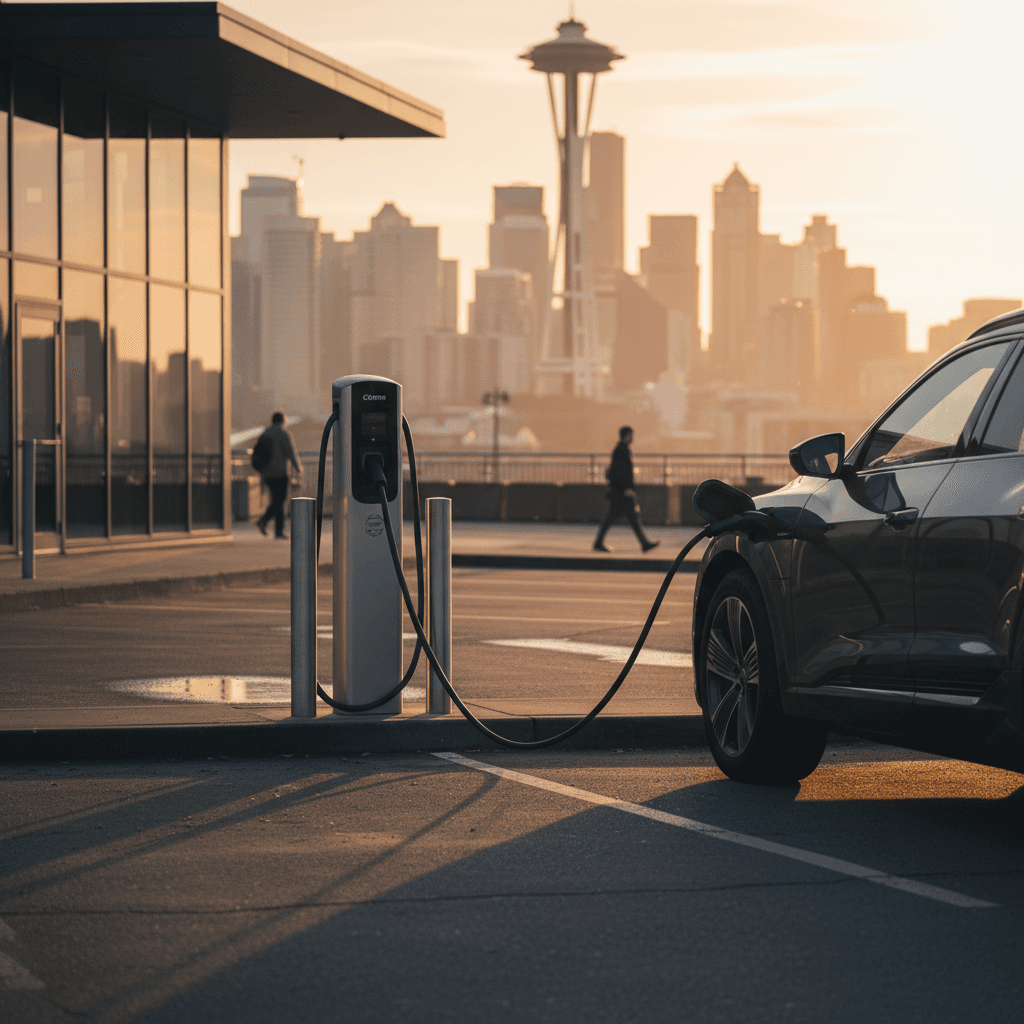
If you drive, or are thinking about buying, an electric vehicle in the Puget Sound region, you’ll spend a lot of time using **EV charging stations in Seattle, WA**. The good news is that Seattle is one of the stronger EV markets in the country, with growing public options from Seattle City Light, private fast-charging networks, and even free Level 2 charging at Sea-Tac Airport. The key is knowing what’s available, what it costs, and which options make sense for your daily life.
Seattle’s EV charging at a glance
Why Seattle is a strong EV city
Seattle & Washington EV and charging snapshot
Strong state incentives, utility investment, and a climate-conscious culture mean you’ll see EVs everywhere from Ballard to Bellevue. That doesn’t mean every charger is perfect, reliability, vandalism, and congestion can still be issues, but if you understand the local landscape you can make day-to-day driving and longer trips straightforward.
Types of EV charging stations in Seattle
Know your Seattle charging options
Match charging type to how you actually use your car
Level 2 (240V) public chargers
Most common in neighborhoods and parking garages.
- Often 6–10 kW (20–35 miles of range per hour)
- Great if you’ll park for a few hours
- Used by Seattle City Light’s curbside network and many workplaces
DC fast chargers
High-power stations along highways and major corridors.
- Commonly 50–350 kW
- Good for road trips or quick top-ups
- Run by networks like EVgo, Electrify America, and some utilities
Home and workplace charging
Not public, but crucial to your strategy.
- Overnight Level 2 at home is the gold standard
- Workplace Level 2 can replace public stops
- Without either, you’ll lean much harder on public stations
Think in miles per hour, not just kW
Seattle City Light public charging network
Seattle City Light operates a growing network of **public Level 2 curbside chargers** and **DC fast chargers** across the city. Under its curbside pilot, the utility has installed dozens of Level 2 ports at on-street locations in residential neighborhoods. These are particularly valuable if you live in an apartment or older home without off-street parking.
Seattle City Light charger basics
Key details for Seattle City Light public chargers (typical values as of 2025–2026).
| Charger type | Typical power | Use case | Approx. speed | Access & payment |
|---|---|---|---|---|
| Level 2 curbside | Up to ~9.6 kW | Overnight or multi‑hour neighborhood parking | ~25–30 miles of range per hour | Public, first‑come; pay per kWh via ChargePoint or network app |
| DC fast chargers | Commonly 50 kW+ | Quick top‑ups, highway access points | 60+ miles in 20–30 minutes (vehicle-dependent) | Public, first‑come; pay per kWh via network app or card |
| Utility-hosted workplace/lot | Level 2 or DC fast | Employees, fleets, or mixed-use sites | Varies by site | Often app- or RFID-based; may have access limits |
Exact locations and pricing can change, so always confirm details in your charging app before you plug in.
How to find City Light chargers
Pricing on City Light chargers is **per kWh**, with different rates for Level 2 and DC fast and time-of-day variations. For example, Level 2 might be roughly similar day and night, while DC fast can be more expensive during daytime hours and cheaper overnight. That structure rewards drivers who plan around off-peak times when possible.
Private fast-charging networks around Seattle
Where you’ll find them
Private networks provide much of the **DC fast charging** in and around Seattle. You’ll see clusters of stations:
- Along I‑5, I‑405, and SR‑167 corridors
- Near big-box retail (Costco, Walmart, Fred Meyer)
- At shopping centers like Northgate, Westfield Southcenter, and outlet malls
- In urban garages in downtown Seattle and Bellevue
Major networks to know
- EVgo – Dense presence in the Seattle metro, including some locations near Sea‑Tac and downtown.
- Electrify America – High‑power sites at key retail and highway stops, often 150–350 kW.
- ChargePoint – Mix of Level 2 and DC fast, many owned by businesses and property managers.
- Tesla Supercharger (with Magic Dock or NACS) – Increasingly usable by non‑Tesla EVs with the right adapter or built‑in access, especially at newer V4 sites.
Watch for reliability and vandalism hot spots
Because private sites can vary widely in price, uptime, and lighting, it’s worth building a short list of “trusted” stations you like to use repeatedly, especially for regular trips between Seattle, Tacoma, and Everett.
EV charging at Sea-Tac Airport
If you fly often, **Seattle-Tacoma International Airport (SEA)** is one of the more EV-friendly airports in North America. The Port of Seattle has steadily expanded charging over the past decade, and recent projects have nearly doubled the number of public plugs in the main parking garage.
EV charging options at SEA Airport
Public-facing EV charging for travelers at Sea-Tac as of 2025–2026.
| Location | Charger type | Approx. number of stalls | Cost to charge | Ideal for |
|---|---|---|---|---|
| Main parking garage | Level 2 (240V) | About 90+ stalls across multiple floors | Charging is typically free; you still pay regular parking rates | Trips where your car is parked for a day or more |
| Cell phone lot | DC fast chargers | Small number of fast-charging stalls | Per kWh pricing via network (often EVgo) | Quick top-up while waiting to pick someone up |
| TNC/Taxi lots & fleet areas | Mix of Level 2 & DC fast | Growing number dedicated for commercial/fleet | Pricing/terms vary by operator | Rideshare and taxi operators |
Exact stall counts and locations can shift during construction, so always reference the airport’s parking map or signs on arrival.
Finding airport chargers quickly
Best apps and maps for finding Seattle EV charging
Must-have apps for Seattle-area EV drivers
Use more than one app so you’re not stranded when a single network hiccups.
PlugShare
Why it matters: Community-driven map that aggregates almost every network.
- Shows City Light, EVgo, Electrify America, ChargePoint, Tesla (where applicable), and more
- User check-ins highlight broken or vandalized stations
- Great for trip planning beyond the city
Network-specific apps
Install the apps for the networks you use most:
- EVgo – Frequently used fast chargers in Seattle metro
- Electrify America – High-power highway and retail locations
- ChargePoint – Huge number of Level 2 workplace and curbside stations
- Many utility- or city-owned chargers rely on these apps for billing
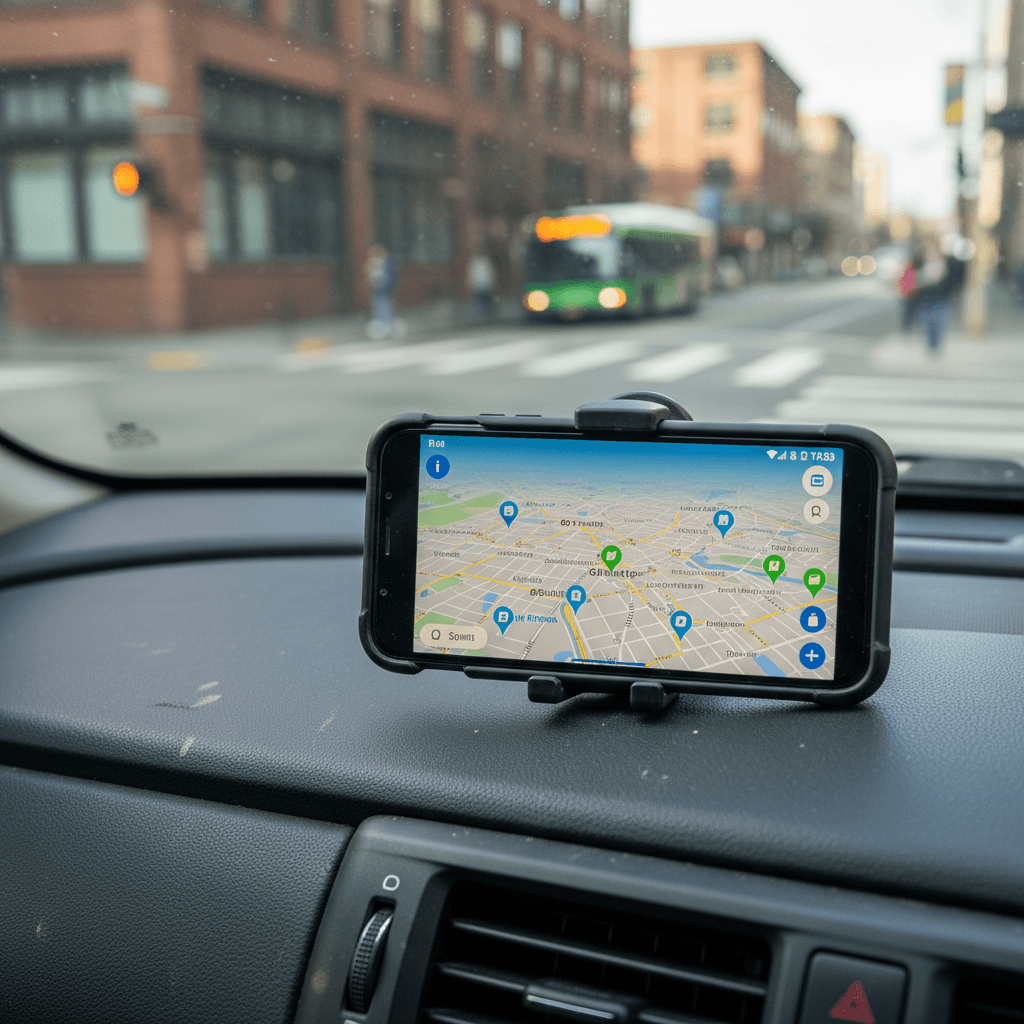
Navigation & route planners
A Better Routeplanner (ABRP) and many built-in car nav systems can:
- Plan I‑5 and I‑90 trips with automatic charging stops
- Account for your EV’s real-world efficiency and weather
- Reduce “range anxiety” on longer drives
- Keep your **RFID cards** or key fobs for networks like ChargePoint and EVgo in the car so a dead phone doesn’t strand you.
- Add the **U.S. DOE Alternative Fuels Data Center** map as a backup reference for major corridors.
- If you drive a Tesla, keep the **Tesla app** handy even if you’re using a non-Tesla car in the family, Supercharger access for non-Tesla EVs is expanding.
What it costs to charge in Seattle
Charging costs in Seattle depend on **charger type**, **time of day**, and **who owns the station**. City Light-owned chargers typically use straightforward per‑kWh pricing with modest time-of-day differences, while private networks may layer on idle fees and higher peak rates. Sea-Tac’s main garage, by contrast, often provides the electricity itself for free while you pay standard parking rates.
Typical public charging price ranges in Seattle
Approximate public-charging costs you’re likely to see around Seattle. Always check the app or screen at each station for exact, current pricing.
| Charging setup | Typical pricing structure | Ballpark cost | Best use case |
|---|---|---|---|
| Seattle City Light Level 2 curbside | Per kWh flat rate (day & night similar) | Moderate – often cheaper than private Level 2 | Regular neighborhood charging if you lack a driveway |
| Seattle City Light DC fast | Per kWh with off‑peak discounts | Moderate to higher during daytime; cheaper overnight | Quick top‑ups when you’re short on time |
| Private DC fast (EVgo, EA, etc.) | Per kWh or per minute; may include idle fees | Higher than home or most Level 2 | Road trips or emergency charging when speed matters |
| Sea-Tac airport Level 2 | Electricity often free; pay for parking | Charging is “free,” but airport parking adds up | Multi‑day trips where you’d pay to park anyway |
| Home Level 2 | Per kWh on residential electric rate | Usually lowest cost per mile | Daily charging for most owners |
Home charging from a Seattle City Light residential account is usually cheaper per kWh than public charging, particularly compared to DC fast.
How to keep your charging bill in check
Practical local tips and safety considerations
Seattle-specific EV charging tips
1. Plan around hills and weather
Seattle’s hills and cool, wet climate affect range. Build in a buffer on steeper routes like West Seattle or Queen Anne, and expect somewhat shorter range in winter.
2. Favor well-lit, busy locations at night
If you’re charging late, choose stations at grocery stores, shopping centers, or staffed garages rather than isolated corners of parking lots.
3. Check recent check-ins for vandalism
Seattle has experienced periodic cable theft and vandalism at some chargers. A quick look at PlugShare reviews can save you a wasted trip.
4. Watch maximum parking time limits
Curbside and City Light chargers often have posted time limits, especially in busy neighborhoods. Don’t risk a ticket or tow by overstaying while plugged in.
5. Keep a backup Level 2 strategy
If your usual DC fast station is down, knowing a nearby Level 2 you can use while you shop or grab a meal can prevent real headaches.
6. Carry your own mobile connector
If you park at friends’ houses or stay in older rentals, a portable Level 1/Level 2 EVSE and the right adapters can turn a simple outlet into overnight charging.
Safety first at charging sites
Planning a Seattle-area EV road trip
Seattle’s position on I‑5, plus solid coverage on I‑90 and secondary highways, makes regional EV road trips more than workable. Whether you’re heading to Portland, Vancouver, the Olympic Peninsula, or the Cascades, your biggest tasks are choosing the right charging stops and allowing for some flexibility.
Sample charging strategies from Seattle
Seattle ⇄ Portland (I‑5 corridor)
Use DC fast chargers roughly every 100–130 miles, depending on your EV’s real-world range.
Mix Tesla Superchargers (if your car can use them) with networks like Electrify America and EVgo at highway-adjacent retail.
Plan a food stop at a site with multiple chargers to kill two birds with one stone.
In winter or heavy rain, add an extra 10–20% range buffer.
Seattle ⇄ Vancouver, BC
Check charging options on both sides of the border and make sure your apps and accounts work in Canada.
Use corridor fast chargers near Bellingham or outlet malls to combine shopping and charging.
Confirm that your roaming or payment methods work across networks before you go.
Bring your passport or enhanced driver’s license, you don’t want documentation issues to overshadow charging logistics.
Seattle ⇄ Mountain & coastal destinations
Look for DC fast chargers in gateway towns (e.g., North Bend, Tacoma, Olympia) before you head deeper into rural areas.
Use Level 2 destination chargers at hotels and lodges; call ahead to confirm availability.
Expect sparser coverage in remote coastal or mountain areas, plan conservatively, especially in winter weather.
If you own a plug‑in hybrid, use the gas engine as a backup for the last leg where charging is limited.
Don’t underestimate weather and elevation
How charging access should shape which EV you buy
The way **you personally will use EV charging stations in Seattle, WA** should influence which EV you choose, especially if you’re shopping the used market. Range, charging speed, and connector type matter more here than in many other cities because of the mixed public infrastructure and the region’s hilly terrain.
If you have reliable home or workplace charging
- You can prioritize **value and practicality** over maximum range.
- A used EV with ~200 miles of EPA range may be plenty for urban and suburban driving.
- Fast-charging speed is still nice for trips, but you’ll lean on it less day-to-day.
In this scenario, pick the car you like and think of public chargers as a safety net rather than your lifeline.
If you depend on public charging
- Consider an EV with **faster DC charging capability** (100+ kW if your budget allows).
- Look for strong **efficiency** so each kWh you buy goes further.
- Pay attention to **connector support** (CCS, NACS access, and future-proofing).
A bit more range and quicker DC charging can make public‑charging life in Seattle much smoother.
Where Recharged fits in
Because Recharged is a digital-first retailer with nationwide delivery and trade‑in options, you can shop for a used EV that fits your Seattle driving habits without bouncing between multiple dealers. Our EV specialists can walk you through how a specific model will fare on your commute, on I‑5 road trips, or when relying on public chargers instead of home power.
FAQ: EV charging stations in Seattle, WA
Frequently asked questions about Seattle EV charging
Bottom line: getting the most from Seattle EV charging
Seattle is ahead of many U.S. cities when it comes to EV adoption and public charging, but you still need a strategy. Combine **home or workplace charging** when possible with a short list of trusted public Level 2 and fast‑charging locations, backed up by apps like PlugShare, EVgo, Electrify America, and ChargePoint. Use City Light’s curbside chargers and Sea-Tac’s Level 2 stalls to your advantage, and save DC fast charging for when your time is most valuable.
If you’re considering a used EV for life in Seattle, choosing the right car, and understanding how it will interact with the local charging network, can make the difference between effortless ownership and constant frustration. Recharged’s battery-health reports, fair pricing, and EV‑savvy support team are designed to help you make that decision with confidence and enjoy everything Seattle’s EV infrastructure has to offer.