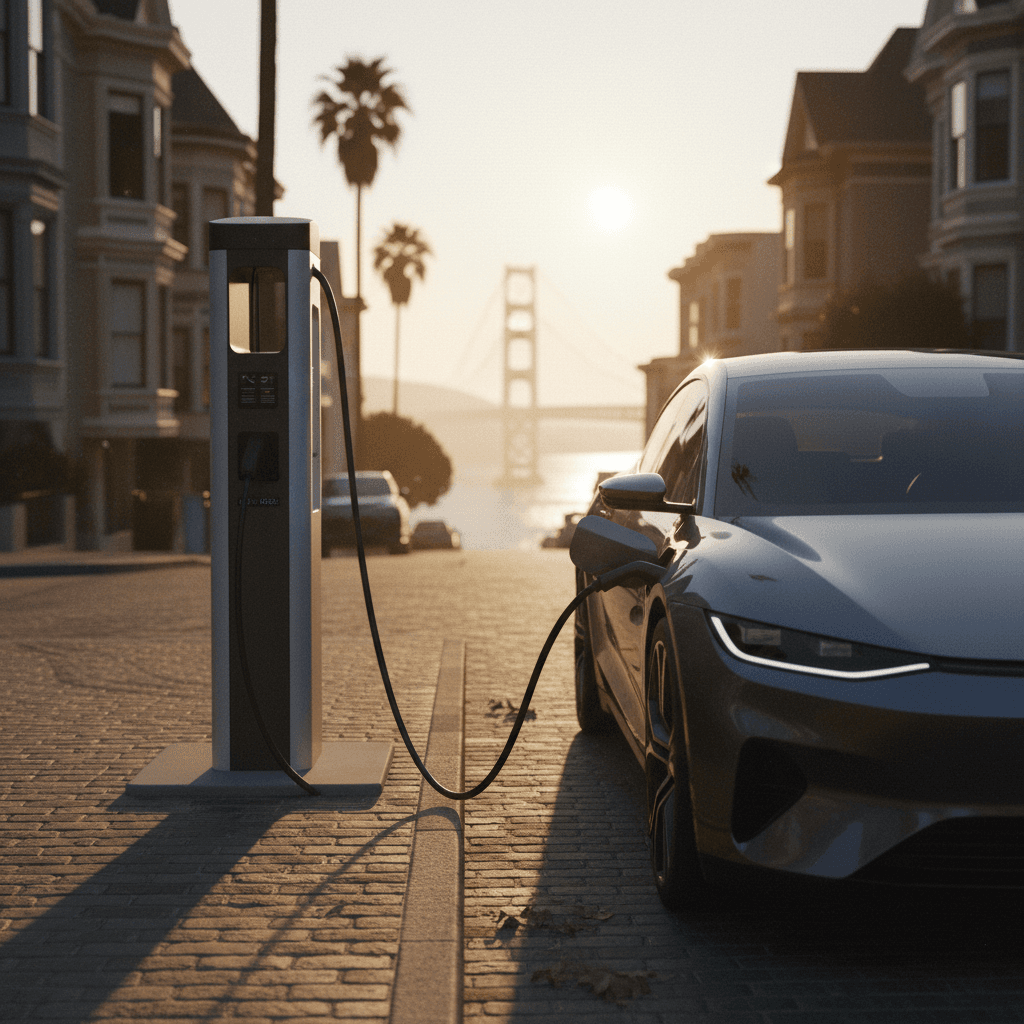
Driving an EV in San Francisco can feel like a magic trick: you’re surrounded by chargers and yet somehow still worried about where you’ll plug in next. The good news is that **EV charging stations in San Francisco, CA** have grown fast over the last couple of years, and if you know which networks to use, which neighborhoods are best, and how pricing works, owning an EV in the city gets a lot less stressful.
San Francisco is ahead of the curve
Why EV charging in San Francisco feels different
San Francisco packs dense housing, steep hills, crowded curb space, and some of the highest EV adoption in the U.S. into just 49 square miles. That creates real tension: **lots of EVs, not a lot of private parking**. If you live in an apartment in SoMa, the Richmond, or the Tenderloin, you may depend almost entirely on public or workplace charging instead of a home Level 2 charger in a garage.
The challenges
- Many homes lack off‑street parking, so drivers rely on public chargers.
- Parking rules and time limits can make slow charging impractical in some spots.
- Tech‑heavy downtown traffic means chargers see heavy use at peak hours.
The opportunities
- High concentration of Level 2 and DC fast chargers per square mile.
- Growing mix of networks, ChargePoint, EVgo, Electrify America, Tesla, and more.
- New curbside and garage projects specifically targeting underserved neighborhoods.
Think like a local, not a visitor
How many EV charging stations are in San Francisco?
San Francisco EV charging by the numbers (early 2026)
Those numbers only tell part of the story. San Francisco is also adding chargers through city programs and federal grants that expand **garage, lot, and curbside** charging, often aimed at residents who can’t charge at home. So if you looked for chargers here a couple of years ago and came away unimpressed, it’s worth taking a fresh look.
Port counts vs. station counts
Major EV charging networks in San Francisco
Who actually runs the chargers you’ll use?
Get familiar with the big players before you’re down to 5% on Twin Peaks.
ChargePoint
ChargePoint supplies the bulk of Level 2 chargers in San Francisco, especially in office garages, retail lots, hospitals, and campuses.
- Great for topping up while you work or shop.
- Pricing is set by the site owner, so rates vary a lot.
- Most stations require the ChargePoint app or RFID card.
EVgo & other DC fast networks
EVgo, Electrify America, and a handful of smaller networks operate many of the **CCS and NACS DC fast chargers** around the city.
- Good for 20–40 minute fast sessions.
- Often located at grocery stores and big retail centers.
- Apps and memberships can cut per‑kWh or per‑minute costs.
Tesla Supercharger & Destination
Tesla has Supercharger sites along highways and in the city, plus slower Destination chargers at hotels and garages.
- More sites now support non‑Tesla EVs via the NACS standard.
- Destination chargers are perfect for overnight or all‑day parking.
- Access and pricing are shown in the Tesla app.
On paper, app logos all look the same. In real life, they behave differently. ChargePoint dominates slower Level 2 charging in San Francisco. For road trips or quick turnarounds, you’ll lean more on **EVgo, Electrify America, and Tesla Superchargers**, or on newer NACS‑compatible hubs as your next EV arrives with Tesla’s plug from the factory.
Download the core apps before you need them
Where to find EV chargers by neighborhood
The density of **EV charging stations in San Francisco, CA** isn’t uniform. Some pockets are wonderfully covered; others lag behind. Thinking in “charging neighborhoods” will help you plan smarter routes and decide whether a public‑charging lifestyle works with your commute.
Neighborhood‑by‑neighborhood EV charging snapshot
These are patterns, not an exhaustive map, always confirm in your charging app before you go.
| Area | Charging strengths | Common networks | Best use case |
|---|---|---|---|
| Downtown / FiDi / South Beach | High density of garage and lot chargers; many are paid parking but great while you work or dine. | ChargePoint, Tesla Destination, EVgo | Workday charging, dinner + movie top‑ups. |
| SoMa & Mission Bay | Mix of DC fast hubs and Level 2 in mixed‑use garages; popular with rideshare drivers. | EVgo, Electrify America, ChargePoint | Fast charging between gigs; quick top‑ups near ballpark and arenas. |
| Inner Richmond / Inner Sunset | More Level 2 in public lots and grocery stores; a few fast chargers on major corridors. | ChargePoint, some EVgo | Overnight and evening charging for apartment dwellers. |
| Marina / North Beach | Limited but growing; a few key garages with Level 2 and some Destination chargers. | ChargePoint, Tesla Destination | Combine with weekend outings and waterfront visits. |
| Twin Peaks / West Portal / Outer neighborhoods | Fewer chargers overall; you’ll rely on select hubs and retail lots. | ChargePoint, mixed networks | Plan your stops carefully, don’t arrive home at 5% hoping for magic. |
| Freeways & bridges (US‑101, I‑80, Bay Bridge approaches) | Higher‑power DC fast sites geared to through‑traffic and road trips. | Tesla Supercharger, Electrify America, EVgo | Quick highway stops on longer drives. |
Use this table as a starting point, then star your favorite stations in each area.
Apps are better than static lists
Types of EV chargers you’ll see in San Francisco
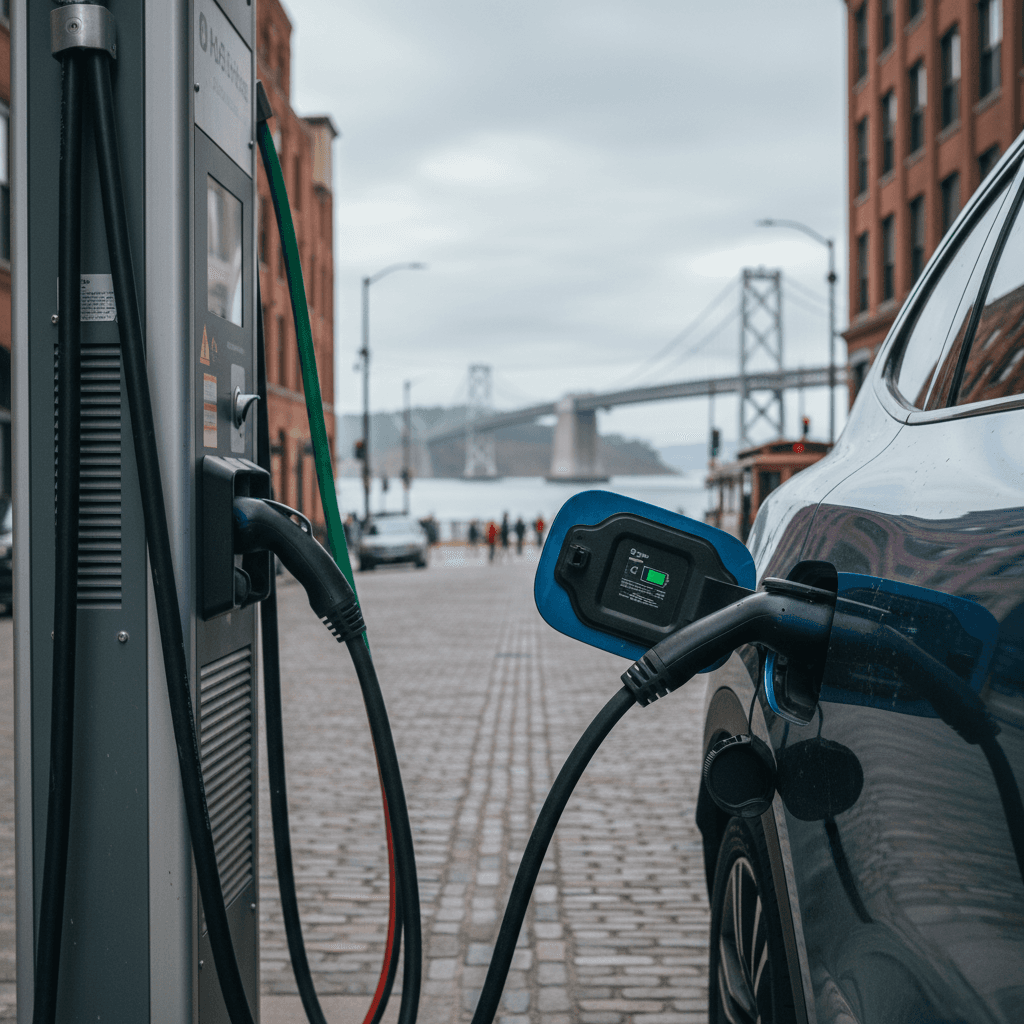
Not every plug is built for every situation. San Francisco has plenty of slow, cheap Level 2 chargers and a growing number of DC fast chargers aimed at rideshare drivers and road‑trippers. Knowing which is which helps you grab the right station for your schedule.
- Level 1 (120V) – Standard household outlets. In SF, these matter mostly if you have a dedicated spot with access to an outlet. Great for overnight if you park in the same place every night, but too slow for public use.
- Level 2 (208–240V) – The bread‑and‑butter of public charging in San Francisco. Think 6–11 kW, or roughly 20–40 miles of range per hour for most modern EVs. Ideal for multi‑hour parking: workdays, classes, dinners, and overnight in a garage.
- DC fast charging (50–350 kW) – High‑power stations that can add 150+ miles of range in 20–45 minutes, depending on your car. Located along highways, near big retail centers, and in some dense urban hubs. These are your **“I’ve got to go now”** chargers.
Watch your connector
Pricing at EV charging stations, and how to avoid surprises
If there’s one thing guaranteed to annoy new EV owners in San Francisco, it’s the first time they realize parking and charging are priced separately, or that their “cheap” Level 2 session actually cost more than their neighbor’s home electricity rate. Public charging isn’t free, but you can keep it predictable.
How public charging is usually priced in SF
Know which meter you’re watching: time, energy, or parking.
Per minute
Common at some DC fast sites and a few Level 2 locations.
- Good for fast‑charging cars that can take high power.
- Less ideal for older EVs that charge slowly.
- Watch idle fees if you stay plugged in after you’re full.
Per kWh
Increasingly popular and the fairest for most drivers.
- You pay for the energy you actually receive.
- Pricing often ranges from roughly the cost of home power up to several times that, depending on location.
- Great for comparing networks apples‑to‑apples.
Parking + energy
Typical in garages and lots downtown.
- Think “hourly parking” plus a charging fee.
- Useful if you planned to park there anyway.
- Always read the signs: some garages charge idle fees after 4–6 hours.
Three simple ways to save on charging
Curbside and garage EV charging in San Francisco
San Francisco knows that a huge share of its residents street‑park their cars. In response, the city has been piloting and expanding **curbside EV charging** and putting more Level 2 and DC fast chargers into city‑owned garages and lots. These projects target areas where private off‑street parking is rare and where communities have traditionally had less access to clean transportation investment.
How to make the most of SF’s curbside and garage chargers
Look for pilot curbside sites in dense neighborhoods
Neighborhoods like Duboce Triangle and other pilot areas now have **on‑street Level 2 chargers** tucked into residential blocks. They’re ideal if you don’t have a driveway but can leave the car for a few hours.
Use city and garage apps
Municipal garages and some private garages list EV spots separately and may show real‑time availability. Bookmark your closest garage with a decent cluster of chargers, it can become your “virtual home charger.”
Respect time limits and signage
Curbside chargers often have posted charging‑only hours or caps like 4 hours. Overstaying can mean a ticket or an idle‑fee surprise on your next bill.
Plan overnight charging in secure garages
If you can afford it occasionally, doing a full overnight charge in a **downtown or neighborhood garage** can cover a full week of city driving.
Don’t count on that single on‑street plug
Planning a low‑stress charging routine in SF
Once the novelty wears off, what you want from **EV charging stations in San Francisco, CA** is boring reliability. The trick is to blend home, workplace, and public options into a routine that fits your life, whether you drive 10 miles a day or 150.
Charging playbooks for common San Francisco EV drivers
Apartment dweller without home charging
Find 2–3 reliable Level 2 chargers near home (public lot, curbside pilot, or grocery store) and star them in your apps.
Aim for one deeper charge (60–90 minutes) every 2–3 days instead of constant small top‑ups.
Keep at least one **DC fast hub** in your favorites for late‑night or rainy‑day emergencies.
If your workplace has chargers, treat those as your primary “home” and public chargers as your backup.
Suburban commuter who parks in the city
Install a Level 2 charger at home if you can; let that cover most of your miles.
Use city chargers mainly when you know you’ll be parked for hours, concerts, ballgames, or longer meetings.
Choose garages that combine **secure parking + Level 2** so you’re not circling for both a space and a plug.
On truly heavy driving days, stop once at a highway DC fast charger on your way home.
Rideshare or delivery driver
Map out 3–4 fast‑charging hubs near your common pickup zones and along freeway corridors.
Use early‑morning or late‑night windows to grab cheaper, less crowded fast‑charging sessions.
Consider a membership with your most‑used network if it offers lower per‑kWh rates or idle‑fee forgiveness.
Keep an eye on station reviews in your apps, reliability matters more when your income depends on staying online.
Weekend road‑tripper
Before leaving the city, top up to at least 80% at a fast charger near home or your route out of town.
Use the in‑car nav or apps to plan stops where you can grab food or a walk while you charge.
Check connector types on your planned route, especially if you drive a CCS‑only EV and expect to use NACS‑heavy corridors.
When you return, don’t park at home with 5% and good intentions; stop at a DC fast site on the way back into SF.
Routine beats range anxiety
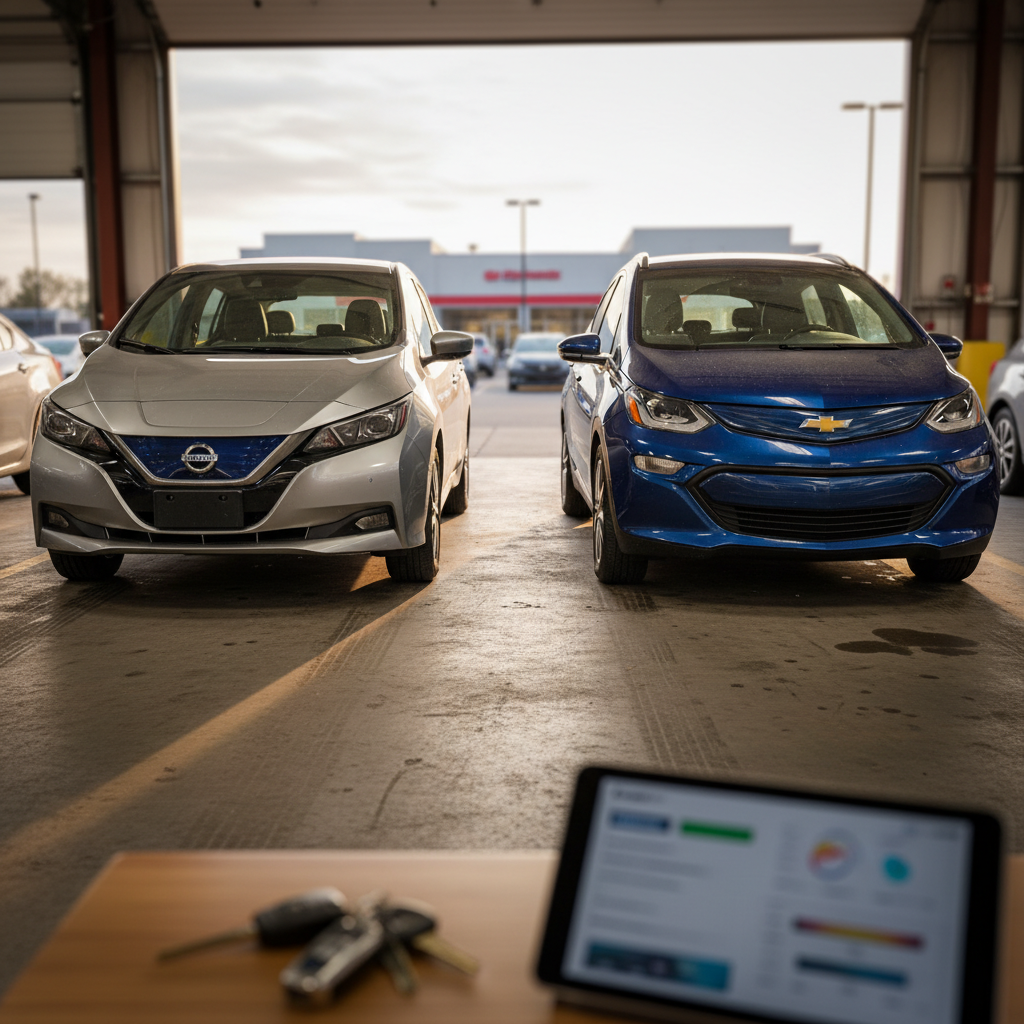
EV charging and buying a used EV in San Francisco
Public charging is only half the story. If you’re shopping the Bay Area’s booming used‑EV market, how your next car interacts with **San Francisco charging stations** is just as important as its paint color or infotainment system. Battery health, charging speed, and connector type will determine whether those 600‑plus local stations feel abundant, or barely adequate.
Used‑EV checklist: charging questions to answer before you buy
1. What’s the real battery health?
Two cars with the same odometer reading can have very different usable range. A **battery health report**, like the Recharged Score you get on every vehicle from Recharged, helps you understand how much capacity is left and how often you’ll need to plug in around the city.
2. How fast can it charge on DC fast?
Some older EVs peak at 40–50 kW; newer ones can handle 150 kW or more. In a city with busy stations, higher peak speeds mean you spend less time hogging a stall, and more time on the road.
3. Does it use CCS, NACS, or both?
Connector type determines which **EV charging stations in San Francisco, CA** you can use natively. Many 2025+ models ship with NACS (Tesla‑style plug), while earlier ones use CCS and may need an adapter to use some newer sites.
4. Is there a convenient “home base” charger for this car?
Before you buy, open your charging apps and filter for your connector type. Make sure there are multiple reliable Level 2 and at least one solid DC fast option near your home and usual routes.
5. Are you financing or trading in?
If you’re moving from gas to a used EV, factor in **lower fuel and maintenance costs** but potentially higher public‑charging rates. Recharged can help you **trade in** your old car, finance a used EV, and understand total cost of ownership with Bay Area charging in mind.
How Recharged fits into your SF EV story
FAQ: EV charging stations in San Francisco, CA
Frequently asked questions about EV charging in San Francisco
The bottom line on EV charging in San Francisco
EV charging in San Francisco is no longer an experiment, it’s infrastructure. There are **hundreds of EV charging stations in San Francisco, CA**, from slow but steady curbside Level 2 plugs to high‑power DC fast hubs built for rideshare drivers and road‑trippers. The difference between a frustrating experience and a smooth one comes down to knowing your networks, mapping a few trusted stations, and choosing an EV whose connector and charging speeds fit the way you live.
Whether you’re upgrading from gas or trading into a newer EV, pairing a well‑chosen car with a smart local charging strategy turns San Francisco into one of the easiest places in the country to drive electric. And if you’re exploring used EV options, Recharged can help you understand battery health, charging performance, and total ownership costs, so those dots on the city’s charging map line up perfectly with the car in your driveway.