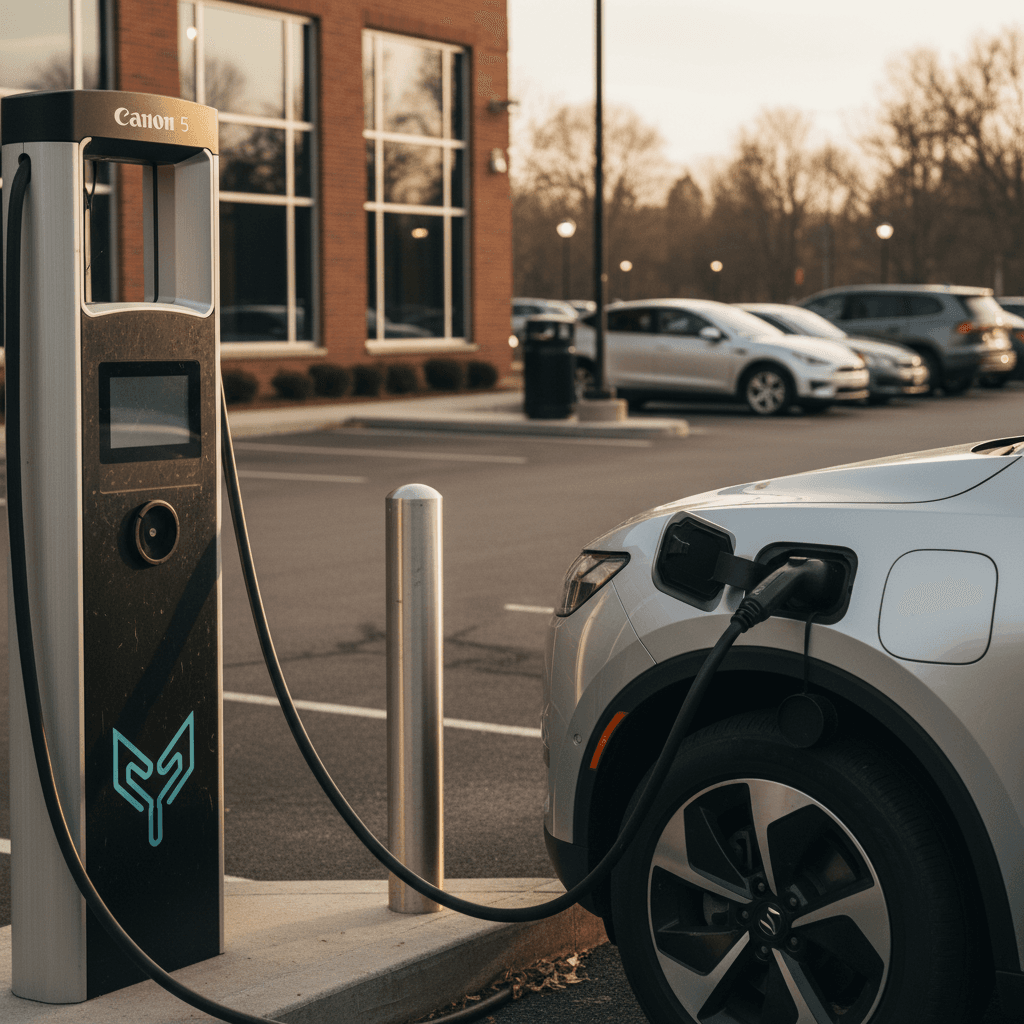
If you drive an electric car in Northern Virginia, you live in one of the country’s most EV‑dense suburbs, and Fairfax is quickly filling in the charging map. But “EV charging stations Fairfax” can mean anything from slow overnight plugs in a condo garage to 350 kW highway fast chargers. Knowing what’s where, and what actually fits your life, is the difference between easy electric miles and white‑knuckle range anxiety on I‑66.
Fairfax is quietly turning electric
Why EV charging in Fairfax matters now
Fairfax is built around commuters: I‑66, Route 50, the Fairfax County Parkway, Metro park‑and‑rides, and endless office parks. That’s ideal EV territory, as long as you can reliably plug in. The county is adding chargers at libraries, community centers, and garages, while Dominion Energy and local programs are dangling incentives for home and shared parking installations. In other words, the infrastructure is finally catching up to the hype.
EV momentum in Fairfax County
Think like a commuter, not a road‑tripper
Types of EV charging stations you’ll find in Fairfax
Before you start hunting for plugs, you need to know what you’re looking at on the map. In Fairfax you’ll see all three basic types of EV charging, but they’re not interchangeable, and choosing the wrong one can turn a quick top‑off into a three‑hour coffee break.
Charging levels you’ll see around Fairfax
How Level 1, Level 2, and DC fast charging compare for typical Fairfax drivers.
| Type | Typical Location in Fairfax | Power & Speed* | Best For | Notes |
|---|---|---|---|---|
| Level 1 (120V) | Older garages, single‑family homes using a normal outlet | ~2–5 miles of range per hour | Overnight charging for light drivers | Slow but simple. Fine if you drive 20–30 miles a day and can plug in every night. |
| Level 2 (240V) | County garages, workplaces, apartments, retail centers, most home wall units | ~10–30 miles of range per hour | Daily commuting and “park it for a while” stops | Sweet spot for Fairfax: fast enough to refill a commute while you work, shop, or sleep. |
| DC Fast Charging (50–350 kW) | Corridors like I‑66, Route 50, near Fairfax Circle and along I‑495 | ~150–300+ miles per hour (model‑dependent) | Road trips, emergency top‑ups | Treat like a gas station: short, purposeful stops. Not for everyday charging, higher prices and more battery wear. |
Level 2 is the workhorse for daily driving in Fairfax; DC fast charging is your emergency parachute.
Speed claims are marketing, not guarantees
Where to find EV charging stations in Fairfax
The charging landscape in Fairfax is a patchwork: county‑owned stations, private networks like ChargePoint and Electrify America, Tesla Superchargers increasingly open to non‑Tesla EVs, and chargers installed by property owners under incentive programs. The trick is knowing the patterns.
Typical EV charging hotspots around Fairfax
You’ll find more plugs where cars naturally sit for hours.
County facilities & garages
Fairfax County has installed Level 2 ports at multiple government sites, including:
- Community and recreation centers
- Libraries and government office buildings
- Public parking garages near transit
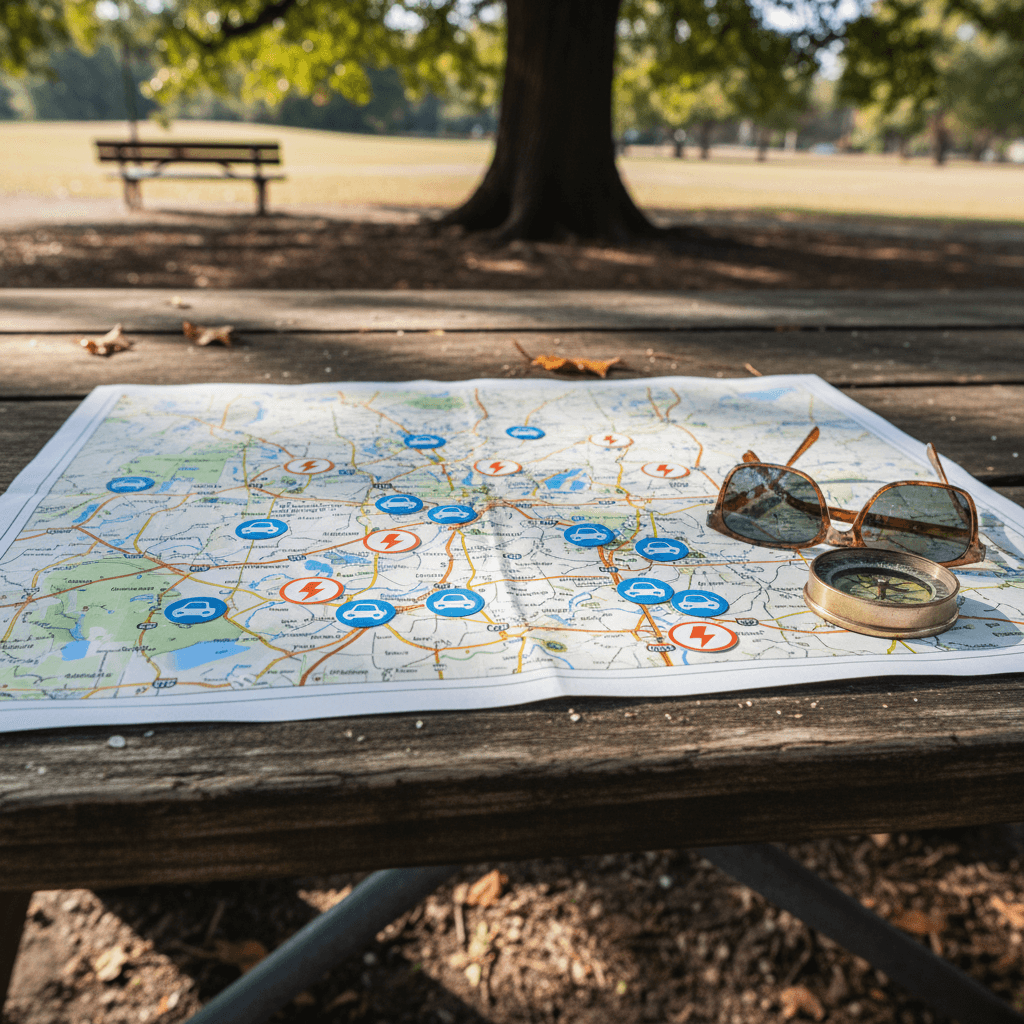
Many of these are visible in the county’s Climate Action Viewer and in public charging apps.
Retail, gyms & dining
Commercial landlords are adding chargers to keep high‑income EV drivers lingering:
- Shopping centers along Route 50 & Lee Highway
- Big‑box and grocery stores
- Fitness centers and cinemas
Think of these as “top‑off while you’re already here” locations.
Highway & corridor sites
Longer‑distance drivers lean on DC fast along:
- I‑66 interchanges
- Fairfax County Parkway and I‑495 access points
- Major east‑west arteries into Arlington and Tysons
These locations are ideal for those “I forgot to charge last night” moments.
County tools worth bookmarking
Best apps and tools to locate Fairfax EV chargers
You don’t have to memorize where every charger is in Fairfax. You just need a couple of solid apps and a habit: check before you roll. Different apps shine at different things, coverage, reliability reviews, or tight integration with a specific charging network.
Apps locals actually use to find Fairfax EV charging
Carry at least two so you’re never flying blind.
PlugShare
Why Fairfax drivers like it:
- Crowdsourced check‑ins and photos for most public stations
- User comments flag broken equipment or blocked spots
- Filters by plug type, speed, and network
Best for: truth‑telling about what’s actually working right now.
Network apps
Must‑haves:
- ChargePoint
- Electrify America
- EVgo
- Shell Recharge & others along I‑66
Best for: starting and stopping sessions, tracking pricing, and getting support if something goes sideways.
Government & utility tools
Good backstops:
- DOE Alternative Fueling Station Locator
- Fairfax County Climate Action Viewer
- Dominion Energy EV tools for home & multifamily charging
Best for: planning, not last‑second emergencies.
Two‑app rule of thumb
Cost: how much it really costs to charge in Fairfax
Charging prices in Fairfax are all over the map: some county Level 2 stations are priced to simply recover electricity and admin costs, while many private DC fast chargers are unapologetically premium. The basic pattern is simple, though, home is cheapest per mile, DC fast is most expensive, and Level 2 public falls somewhere in the middle.
Home charging with Dominion
- Standard residential rates in Northern Virginia typically make home charging the lowest cost per mile.
- Dominion’s Residential Charger Program lets you spread the cost of an installed Level 2 charger over about five years as a fixed charge on your bill.
- The EV Charger Rewards program offers up‑front rebates on qualified smart chargers and annual bill credits if you let Dominion slightly shift your charging during peak demand.
If you can install Level 2 at home, your EV “fuel” bill often undercuts gas by a wide margin.
Public Level 2 & DC fast
- Public Level 2 in Fairfax is often billed per kWh or per hour, with effective energy rates typically higher than what you pay at home, but still reasonable for topping up while you do something else.
- DC fast chargers along I‑66 and major corridors charge a hefty premium for speed, closer to highway gas prices per mile.
- Some garages charge parking fees on top of charging, so always check signage before you plug in.
Treat public charging as convenience; reserve regular, cheap fueling for your driveway or assigned spot if at all possible.
Watch for idle and dwell fees
Home EV charging in Fairfax: Dominion programs and permits
For most Fairfax drivers, the gold standard is simple: Level 2 at home plus a public network as backup. Dominion Energy and Fairfax County both lean into that model, with financing, rebates, and guidance to make it less painful to get a 240‑volt circuit into your garage or driveway.
Setting up home charging in Fairfax: step‑by‑step
1. Decide if Level 1 is enough
If you drive 20–30 miles a day and can reliably plug into a standard outlet every night, you may not need anything more. But most Fairfax commuters quickly outgrow Level 1 once winter hits and errands pile up.
2. Check your panel capacity
Have a licensed electrician confirm you have enough spare capacity for a 240‑volt circuit. Dominion’s Residential Charger Program requires your panel to support the needed upgrades and the charger location to be within about 30 feet of the main panel.
3. Compare Dominion programs
Look at Dominion’s <strong>Residential Charger Program</strong> if you’d rather roll charger + installation into a predictable monthly fee, and <strong>EV Charger Rewards</strong> if you’re buying your own smart charger and can shift charging to off‑peak hours in exchange for rebates and bill credits.
4. Pull the right permits
Fairfax County’s Land Development Services may require an electrical permit for new 240‑volt circuits or outdoor installations. Your electrician should pull these, but it’s your job to make sure they did.
5. Think about future vehicles
If there’s any chance your household will end up with two EVs, ask about running conduit and sizing the panel work to support a second charger or a 50‑amp circuit that can be shared.
Don’t DIY the heavy stuff
Charging for condos, HOAs and nonprofits: Charge Up Fairfax
Fairfax’s big challenge isn’t single‑family homes; it’s the maze of townhome clusters, condos, and garden apartments wrapped around every main road. That’s where the county’s Charge Up Fairfax program comes in, aimed squarely at common‑interest communities and other organizations that want to offer shared EV charging but dread the logistics and cost.
What Charge Up Fairfax means for your community
Less theory, more actual plugs in shared parking lots.
Who can apply
- Homeowner and condo associations
- Places of worship and nonprofits
- Other eligible organizations within Fairfax County
Applications are now accepted on a rolling basis, making it easier to jump in when your board is ready.
What support looks like
- Technical assistance to evaluate sites and electrical capacity
- Reimbursement grants for part of the EVSE installation cost
- Higher grant amounts for communities with higher vulnerability scores
Grant tiers currently range into the low five figures depending on vulnerability status and program track.
Stacking with Dominion incentives
Planning a route through Fairfax with an EV
Driving an EV around Fairfax isn’t like threading a desert in a prototype. The risk isn’t truly running out of juice; it’s burning an evening juggling kids, groceries, and a blinking low‑battery light. A little planning turns that chaos into background noise.
Charging strategies for common Fairfax driving patterns
Daily commuter to DC, Tysons, or Arlington
Install (or lobby for) Level 2 at home or in your building, this is your main fuel source.
Save your favorite county or workplace chargers in PlugShare as back‑ups for bad‑weather days or forgotten plugs.
Use DC fast only when you’re truly behind the curve: late‑night returns, emergency detours, or back‑to‑back long days.
Work‑from‑home, heavy errands
Level 2 at home turns every afternoon into a top‑off opportunity.
Favor shopping centers and gyms with reliable Level 2, you’re there anyway.
Don’t obsess over 100% state of charge; aim for the middle of the pack where batteries are happiest.
Rideshare & delivery drivers
Map out DC fast hubs along I‑66 and major corridors and learn which stalls are usually reliable.
Consider a plan with cheaper off‑peak home charging if you can plug in overnight.
Build 20–30 minutes of fast charging into your meal break instead of treating it as lost time.
Occasional visitor or college family
Book hotels with on‑site Level 2 charging; it’s the easiest way to arrive full and leave full.
Use the DOE station locator or PlugShare to confirm a couple of reliable DC fast sites near where you’re staying.
If you’re borrowing or renting an EV, test your charging apps before you leave home. Don’t troubleshoot sign‑ups at the charger.
Common pitfalls at EV charging stations in Fairfax
Most charging sessions in Fairfax are unremarkable, park, plug, walk away. The horror stories usually come from three things: hardware that’s down, drivers treating chargers like reserved parking, or people misunderstanding how their car and the charger talk to each other.
- Arriving at a fast charger with 3% battery and no back‑up site in mind.
- Assuming a charger in a private garage is public, many office and residential chargers are off‑limits.
- Parking a plug‑in hybrid at the only DC fast stall “because it’s closer to the door.”
- Leaving the car plugged in for hours after it’s full, racking up idle fees and dirty looks.
- Using a third‑party adapter at high‑power sites without reading the manufacturer’s limits.
Respect the plug hierarchy
How Recharged helps Fairfax shoppers choose the right EV
The best way to “fix” EV charging is to start with the right car, and a clear plan for where it will live and plug in. That’s where buying used through Recharged can tilt the game in your favor if you’re in or near Fairfax.
Why Fairfax EV buyers look at Recharged for used EVs
Charging isn’t just hardware; it’s how the car, battery, and your life fit together.
Battery health, not hand‑waving
Every EV on Recharged comes with a Recharged Score Report that includes verified battery health. For Fairfax drivers relying on Level 2 and occasional fast charging, knowing how much usable range you actually have matters more than window‑sticker fantasy numbers.
Model‑specific charging insight
Our EV specialists talk through how each model fast‑charges, what adapters you’ll need on local networks, and whether a given car works with your plan to install home or shared Level 2 in Fairfax.
Digital buying, local reality
Recharged offers financing, trade‑in options, and nationwide delivery, plus an Experience Center in Richmond, VA. You can handle everything online, then plug into Fairfax’s growing charging network with a car that actually matches your lifestyle.
Ready to find your next EV?
Browse VehiclesEV charging stations Fairfax: FAQ
Frequently asked questions about EV charging in Fairfax, VA
Bottom line: EV charging in Fairfax
Fairfax isn’t California, but it doesn’t need to be. With a growing web of county Level 2 ports, a thickening layer of private chargers at every strip mall worth its parking lot, Dominion Energy incentives for home hardware, and county grants for shared stations, the region has quietly crossed into everyday‑usable EV territory.
If you can line up reliable Level 2 where your car sleeps or regularly parks, public EV charging stations around Fairfax become a convenience, not a lifeline. Pair that with an EV whose charging behavior and battery health match your routine, something Recharged was built to help you untangle, and you discover the real upside of electric life in Northern Virginia: most of your “fueling” disappears into the background of your day.