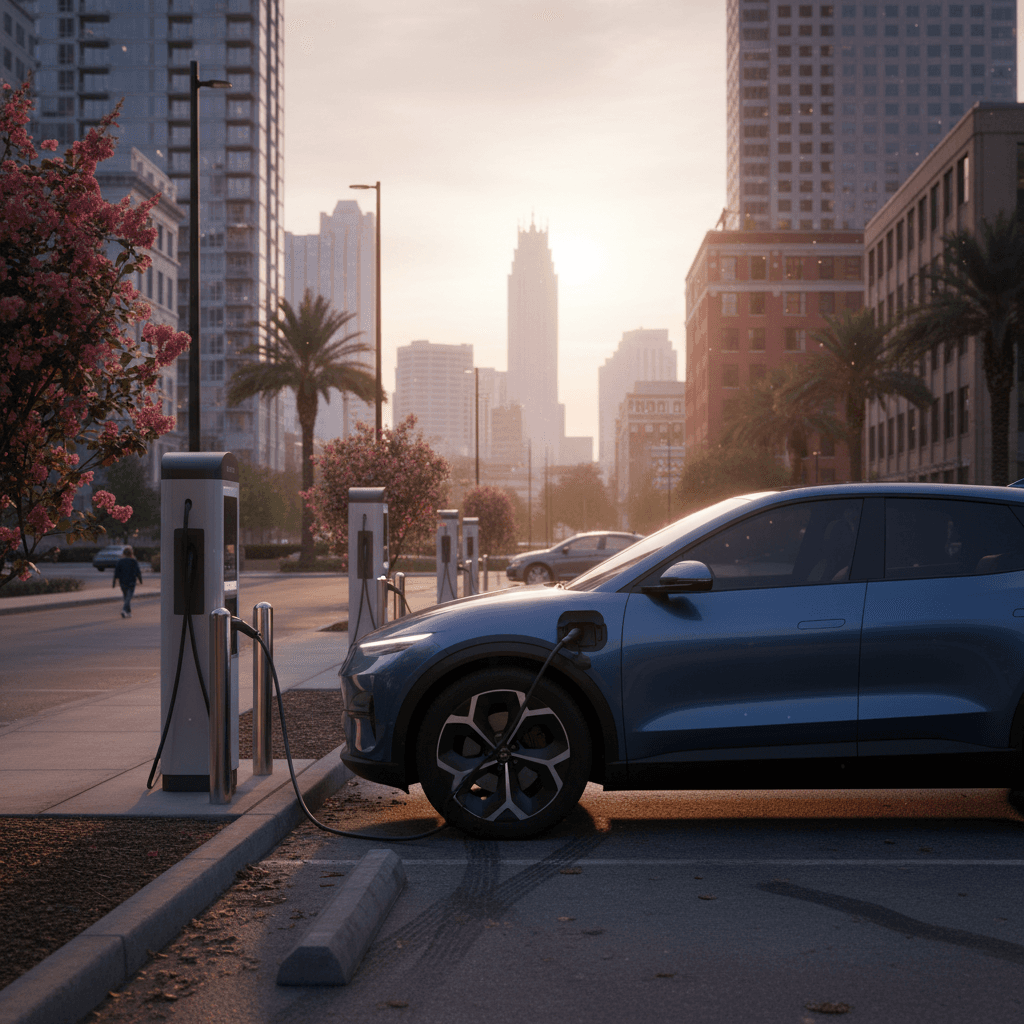
If you drive an electric car in Charlotte, you already know the feeling: gliding past gas stations on Wilkinson or Independence, then anxiously checking your apps to see which EV charging stations in Charlotte, NC are open, working, and actually near where you need to be. The good news is that Charlotte has gone from “early adopter scavenger hunt” to a genuinely usable charging ecosystem, if you understand how it’s stitched together.
The short version
Why EV charging in Charlotte feels different
Charlotte is a textbook Sun Belt boomtown: fast growth, lots of new apartments, sprawling suburbs, and a car culture built around interstates. That mix shapes how and where EV charging has rolled out. High-income corridors like SouthPark and Ballantyne were early to get workplace and retail chargers. Neighborhoods along Beatties Ford Road and in East Charlotte have been catching up more recently as public and nonprofit money flows into equitable charging projects.
Statewide, North Carolina now has well over a thousand public charging locations, with Charlotte ranking among the heaviest concentrations of plugs thanks to I‑77, I‑85, and a strong Duke Energy presence. That means if your commute runs through Uptown or the ring of shopping districts around it, you can almost always layer public charging into your weekly routine.
Charlotte EV charging at a glance (2025–2026)
Charlotte EV charging at a glance
- Dense cluster of public chargers in Uptown, South End, SouthPark, University City, and near CLT airport.
- Growing DC fast options along I‑77, I‑85, and US‑74 for regional trips.
- Level 2 chargers popping up at apartment communities, workplaces, hospitals, and parking decks.
- Equity-focused stations arriving in the Historic West End, East Charlotte, and affordable housing communities.
- Plenty of home-charging potential in single-family neighborhoods from Steele Creek to Mint Hill.
Think in layers, not single stations
Types of EV charging stations in Charlotte, NC
Level 1: 120V outlets
Every EV sold in the U.S. can plug into a standard household outlet. In Charlotte, that’s fine if you:
- Drive less than ~30 miles per day
- Have secure overnight parking with an outlet
- Are willing to gain ~3–5 miles of range per hour
For apartment dwellers without parking control, Level 1 is often more fantasy than plan.
Level 2: 240V, home and public
This is the workhorse of EV charging in Charlotte. Level 2 stations add ~20–40 miles of range per hour and live in:
- Home garages and driveways
- Public parking decks and curbside spots
- Workplaces, parks, and shopping centers
If you can install a Level 2 at home, your life gets dramatically easier.
DC fast charging (DCFC)
DC fast chargers skip the car’s onboard AC charger and feed high-voltage DC directly into the battery. In Charlotte, you’ll find them mostly:
- Near I‑77, I‑85, and US‑74
- At big-box retailers and travel centers
- In new dedicated fast‑charging plazas
They can add 60–200+ miles in 20–40 minutes, depending on station power and your car.
Tesla Superchargers and NACS
For years, Tesla Superchargers were a private club. Now that most automakers are adopting the NACS connector, and some Superchargers are opening to non‑Teslas, Charlotte drivers will see more cross‑compatible sites. If you’re shopping for a used EV, ask whether it has a NACS port, a CCS port, or both, and whether an adapter is included.
Watch your peak charge speeds
Where to find EV charging stations in Charlotte
Charlotte’s common charging hotspots
You’ll start to see patterns once you know where to look
Uptown & South End
Parking decks, office towers, and mixed-use developments tuck Level 2 chargers into garages and curbside spots. DC fast often sits just off the interstates or near large retailers.
Great for commuters and anyone catching a show or game.
Retail corridors
SouthPark, Northlake, Arboretum, and Rivergate all mix shopping with charging. You’ll see Level 2 at grocery stores, gyms, and malls, plus DC fast at big-box stores and travel plazas.
Perfect for a 45–90 minute top‑up while you run errands.
Neighborhood & community sites
Library branches, parks, recreation centers, and affordable housing complexes are adding Level 2 infrastructure, especially in the Historic West End and East Charlotte.
Slower, but key for residents without home charging.
Across metro Charlotte you’ll see a patchwork of logos, Duke‑funded Level 2 stations at workplaces and public sites, third‑party networks at grocery stores and hospitals, and city or nonprofit-led chargers at community anchors. The pattern is simple: anywhere land is expensive and time is money, DC fast shows up first; where people linger, parks, campuses, apartments, Level 2 dominates.
Recharged tip for local shoppers
Ready to find your next EV?
Browse Vehicles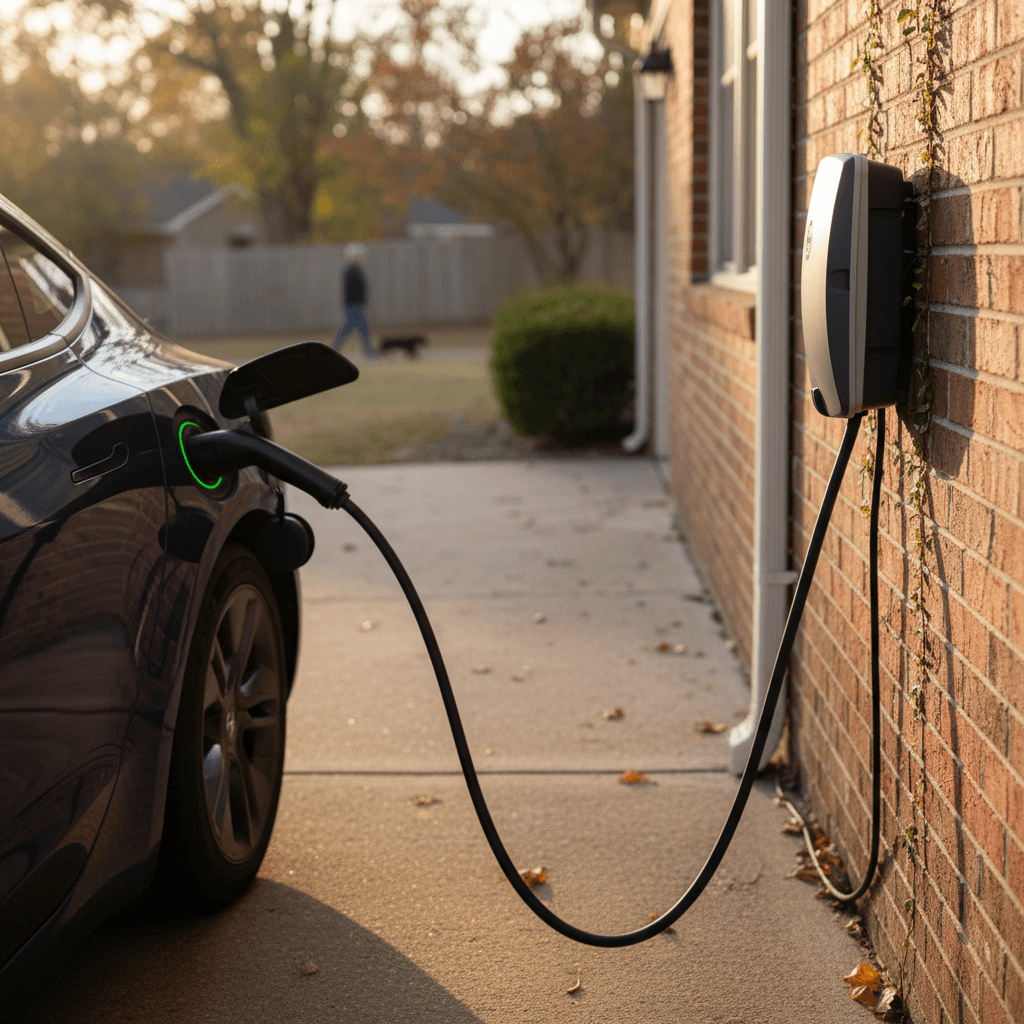
What it costs to charge an EV in Charlotte
How much you pay to use EV charging stations in Charlotte, NC depends on three variables: where you plug in (home vs public), how fast the station is (Level 2 vs DC fast), and what kind of pricing model the network uses (flat session fee, per‑kWh, or per‑minute).
Typical EV charging costs in Charlotte (2026)
Rough, real‑world numbers for a 250–300 mile EV. Your exact costs will vary by network, plan, and driving efficiency.
| Location / Type | How you pay | Approx. cost per kWh | Cost for ~250 miles |
|---|---|---|---|
| Home Level 2 (Duke Energy) | Residential rate, monthly bill | $0.11–$0.15 | $8–$13 |
| Workplace / free public Level 2 | Often free or subsidized | $0 | $0 (time is your only cost) |
| Paid public Level 2 | Per hour or per kWh | Equivalent of ~$0.20–$0.30 | $15–$25 |
| DC fast (off‑peak) | Per kWh or per minute | Equivalent of ~$0.30–$0.45 | $22–$35 |
| DC fast (peak urban sites) | Per kWh or per minute | Equivalent of ~$0.40–$0.60+ | $30–$45+ |
DC fast is convenient insurance; home Level 2 is your budget play.
Beware idle fees
Best apps and tools for finding chargers in Charlotte
Must‑have tools for Charlotte EV drivers
Use at least two apps so you’re never flying blind
PlugShare
Crowd‑sourced map of nearly every public charger in Charlotte. Filter by plug type, network, and power level, and read recent check‑ins to see which stations are working or blocked.
Network apps
Apps from major networks (Electrify America, ChargePoint, EVgo, and others) let you start sessions, track prices, and sometimes reserve a plug. Keep your favorite two loaded with payment info.
Navigation & planning
Google Maps, Apple Maps, and most in‑car nav systems now surface EV chargers directly in search results. For road trips, use a planner like A Better Routeplanner to preview charging stops.
When you arrive at a new station in Charlotte, say, a fast charger off Tyvola, you’ll quickly learn that app reviews are worth their weight in electrons. Before you trust a station for a critical charge, scan recent check‑ins for comments about broken hardware, blocked spaces, or surprise pricing changes.
Make the apps work for you
Turning your Charlotte home into your main charging station
If you have a driveway or garage anywhere from Dilworth to Huntersville, the smartest move is to make home your primary station and use public charging as a backup. A 240V Level 2 charger turns your house into a personal “gas station” that refills while you sleep.
Home charging setup checklist for Charlotte drivers
1. Confirm your parking situation
You need either a private driveway, a garage, or a deeded parking spot where you’re allowed to install equipment. Renters should talk with landlords or HOAs early about adding shared chargers.
2. Check your electrical panel
Look for available capacity and open breaker slots. Many Charlotte homes built in the last 20–30 years can support a 40‑ or 50‑amp circuit, but older houses might need a panel upgrade.
3. Decide on outlet vs. hard‑wired
A NEMA 14‑50 outlet with a plug‑in Level 2 charger offers flexibility. A hard‑wired unit can be cleaner and may support higher continuous current. Either way, use a licensed electrician.
4. Use Duke Energy programs where possible
Duke’s charger prep credits and EV‑complete style programs can offset part of the cost of wiring and infrastructure. If you know you’ll buy an EV soon, time the work to stack incentives.
5. Match charger speed to your EV
If your car tops out at 32–40 amps on AC, a monster 80‑amp unit is overkill. Choose a reliable charger that fits your car’s max AC rate and your panel capacity.
6. Enable smart scheduling
Once everything’s installed, set your car or charger to **charge overnight** when rates are typically lower and the grid is less stressed.
Safety first with 240V
Charging equity: Urban core, suburbs, and under-served neighborhoods
Like a lot of fast‑growing cities, Charlotte’s earliest EV chargers landed where the money was: corporate campuses, luxury apartments, and shopping districts. Over the last couple of years, the map has started to fill in places that had been overlooked, think the Historic West End, East Charlotte, and affordable housing communities where residents are more likely to rely on curbside parking.
Nonprofits and community groups have partnered with charging providers to drop Level 2 stations at rec centers, libraries, and small business corridors. They’re not glamorous, no 350 kW bragging rights, but for a resident who can’t install a home charger, that 6–7 kW plug two blocks away is the difference between “EVs are for other people” and “maybe this could work for me.”
Community carshare is changing the picture
Planning Charlotte-based road trips in an EV
From Charlotte, the classic EV question is: can I get to the beach, the mountains, or Grandma’s house in one shot? For many modern EVs, the answer is yes, with a margin. For smaller‑battery or older used EVs, you’ll often make one fast‑charge stop each way.
Common Charlotte EV routes
- West: Asheville, Boone, and the Blue Ridge Parkway via I‑85 / I‑40 / US‑321
- East: Wilmington and the coast via US‑74 and I‑140
- North: Winston‑Salem, Greensboro, and Virginia via I‑77 / I‑85
- South: Columbia, Charleston, and beyond via I‑77 / I‑26
Each corridor now has at least a skeleton of DC fast chargers, you just need to know which ones suit your car.
Smart planning habits
- Start trips at 90–100% after an overnight home charge.
- Target chargers near food, restrooms, and shade.
- Aim to arrive with 10–20% and leave around 60–80% for best charging speeds.
- Have a backup stop in case your first choice is down or crowded.
For older used EVs with smaller packs, think in 70–120 mile hops between fast chargers.
Use Charlotte as your “hub”
Local incentives that make charging cheaper
Charging in Charlotte is already cheaper than buying gas mile for mile, but layering incentives on top is how you really win. Between federal credits, state programs, and Duke Energy initiatives, you can often shave hundreds of dollars off panel upgrades and home charger installs.
- Federal tax credits for home EV charging equipment and certain electrical upgrades, currently scheduled to run through the mid‑2020s.
- Utility programs from Duke Energy that offer **charger prep credits** or rebates for upgrading home wiring to support Level 2 charging.
- Occasional city or state grants that help fund public and workplace chargers, especially in under‑served neighborhoods.
- Low‑ or no‑cost charging at workplaces, city facilities, and some multi‑family communities.
Stack incentives with your purchase
FAQ: EV charging stations in Charlotte, NC
Frequently asked questions
Charlotte is no longer a risky science experiment for EV owners. It’s a city where, if you pick the right car and understand the charging landscape, electric driving just works. Build home Level 2 charging into your plan if you can. Learn the rhythm of public Level 2 and DC fast stations where you already shop and work. And if you’re choosing your first or next EV, let Recharged help you find a used electric car whose range, charging speeds, and battery health fit the way you, and this fast‑growing city, actually move.