If you’re shopping for an electric vehicle in the Lowcountry, it’s natural to wonder whether there are enough EV charging stations in Charleston, SC to make daily life, and the occasional road trip, stress‑free. The short answer: yes, as long as you understand where chargers are today, how fast they are, and how to work them into your routine.
Charleston’s EV moment
Why EV charging in Charleston, SC deserves its own guide
Charleston isn’t a dense, transit‑only city, and it isn’t a Sunbelt suburb with three garages per cul‑de‑sac either. It’s a mash‑up of historic downtown streets, flood‑prone neighborhoods, beach traffic, and fast‑growing suburbs like Mount Pleasant and North Charleston. That mix creates some unique charging challenges, and advantages, for EV drivers.
- You may park in a downtown garage at night but live in a historic home with no driveway.
- You might commute between Summerville, North Charleston, and downtown with heavy I‑26 traffic.
- Weekend life often means beach runs to Folly, Sullivan’s, or Isle of Palms, plus seasonal tourist crowds.
- Hurricanes and king tides mean you have to think about where chargers sit in relation to flood‑prone areas.
How to read this guide
Overview: Where can you charge an EV in Charleston today?
Charleston EV charging at a glance
The City of Charleston currently maintains eight public EV charging stations in city‑owned parking garages, where the electricity is free but you still pay to park. Around the wider Charleston area, third‑party sites like Way.com and PlugShare list roughly 50–60 total charging locations when you include hotels, workplaces, and private businesses that offer charging to customers.
Coverage is uneven
Types of EV chargers you’ll see around Charleston
Level 1: Standard wall outlet (120V)
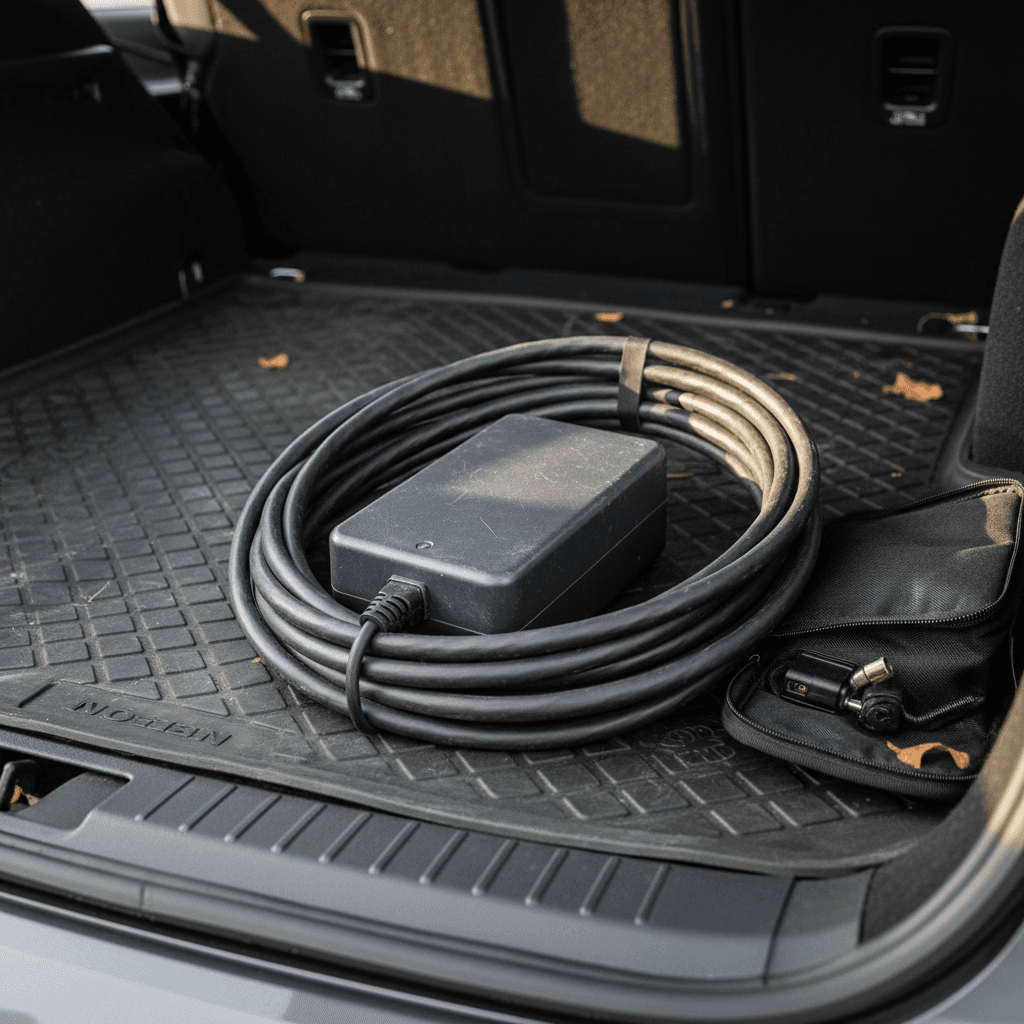
Every EV can plug into a normal household outlet with the portable cord that comes with the car. Around Charleston, Level 1 is usually something you use at home, not in public.
- Adds roughly 3–5 miles of range per hour.
- Good for very short commutes or overnight top‑ups.
- In older homes, have an electrician confirm the circuit is safe.
Level 2: 240V public and home charging
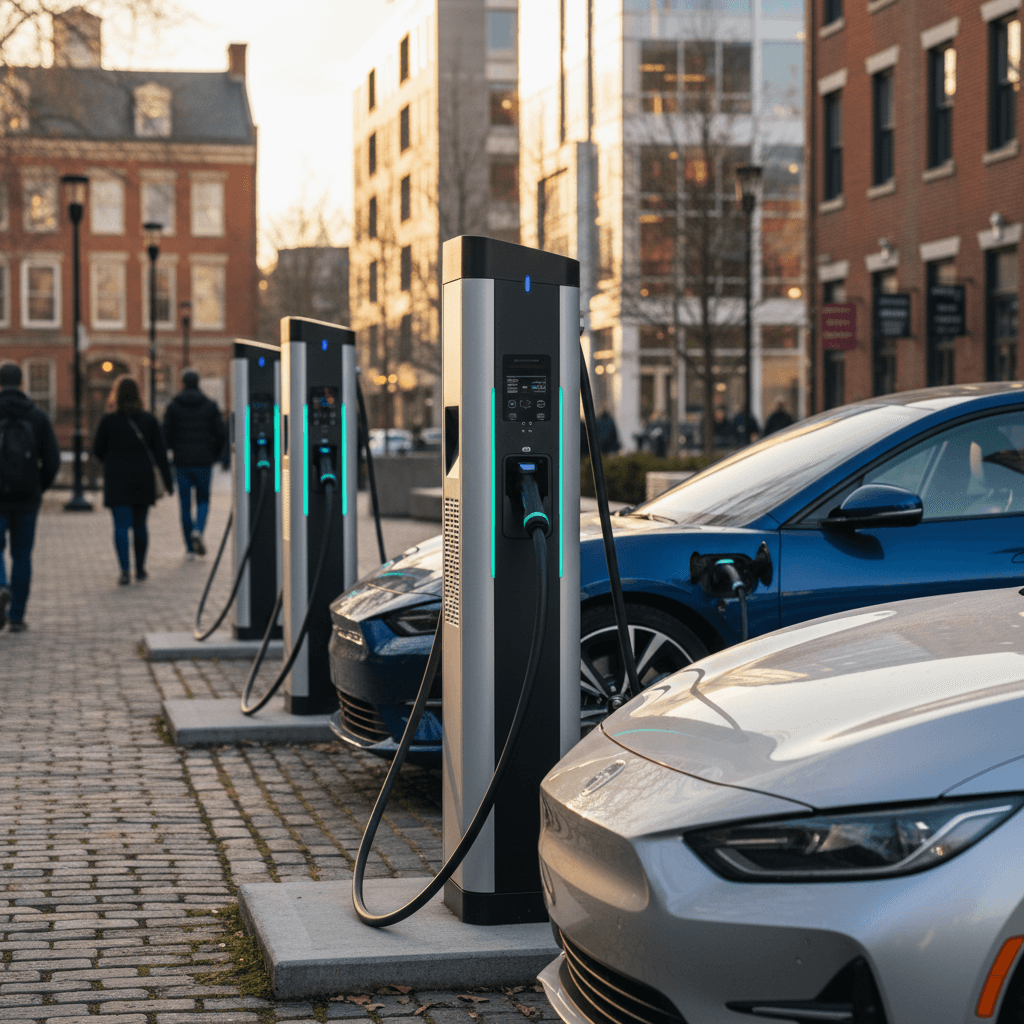
Most public EV charging stations in Charleston, SC are Level 2 units with the J1772 connector for non‑Tesla EVs and destination chargers for Teslas.
- Adds about 15–35 miles of range per hour, depending on your EV.
- Common in city garages, hotel lots, and newer mixed‑use developments.
- Perfect for workday or overnight charging.
DC Fast Charging (DCFC)
DC fast chargers are your road‑trip and emergency backups. In the Charleston region you’ll typically see:
- CCS and sometimes CHAdeMO plugs at non‑Tesla networks.
- Tesla Superchargers, increasingly usable by other brands as NACS access rolls out.
- Power ratings from roughly 50 kW up to 350 kW, although your EV has its own max.
Where DC fast lives near Charleston
Most true DC fast sites are clustered along major travel corridors and commercial areas, think I‑26, US‑17, and the North Charleston retail spine, rather than on narrow historic streets downtown.
For a used‑EV buyer, that’s fine: you’ll usually fast‑charge on road trips, not every day.
South Carolina’s signage push
How to find EV charging stations in Charleston (apps & maps)
Best ways to locate chargers around Charleston
Use a mix of apps for the most accurate, real‑time picture.
PlugShare
PlugShare is the go‑to community map for EV charging stations in Charleston, SC and beyond.
- Shows stations from multiple networks plus user‑added sites.
- Filters by plug type, power, price, and access hours.
- Driver check‑ins and photos help you avoid broken or blocked chargers.
Network apps (ChargePoint, EVgo, etc.)
Most big networks have their own apps, useful when you’re loyal to a specific brand or membership.
- Check real‑time availability and start a session from your phone.
- View pricing and any idle fees.
- Store payment methods for faster sessions.
Local & city resources
The City of Charleston maintains an online map of city‑owned EV chargers, mainly in downtown garages, and third‑party tools like Way.com aggregate many commercial locations.
Always cross‑check with PlugShare or a network app before you drive out of your way, listings can lag reality by a few weeks.
Set up your charging toolbox once
Downtown Charleston: Garages, destinations, and overnight charging
If you live, work, or stay on the peninsula, your public charging backbone will be city parking garages with Level 2 stations plus a scattering of hotel and workplace chargers. The City currently offers free charging at eight stations in garages such as the Gaillard Center, the Visitor Center, and selected downtown decks, though availability can ebb and flow as equipment is upgraded.
Typical downtown charging scenarios
How Charleston’s downtown garages and businesses fit into an EV routine.
| Scenario | Best Charger Type | What It’s Good For | Watch Out For |
|---|---|---|---|
| Overnight hotel stay | Hotel Level 2 or Tesla destination | Wake up full without moving the car. | Some hotel chargers are for guests only; confirm when booking. |
| Dinner plus a show | City garage Level 2 | Add 40–80 miles during a night out. | Normal parking fees still apply; garages can fill on big event nights. |
| Downtown office worker | Garage or workplace Level 2 | Top up once or twice a week instead of every night at home. | Don’t camp on the charger all day if you’re already full, rotate spots. |
| Tourist day trip | Garage Level 2 near visitor center | Cover your day of walking tours and carriage rides. | Weekend congestion; be ready with a Plan B garage. |
Exact locations and counts change as the city upgrades equipment, always confirm in your app before you go.
Mind the flood maps
North Charleston, Mount Pleasant, and the beaches
Head north or across the Cooper River and you’ll see a different pattern. Newer suburbs and commercial corridors are adding chargers in front of big‑box stores, office parks, and parks. Mount Pleasant in particular is a regional EV hot spot, with growing charging access in popular park-and-play destinations.
How charging looks outside downtown
Think in zones: commute, errands, and weekend fun.
North Charleston & I‑26 corridor
Here you’ll find many of the region’s higher‑power DC fast chargers at highway‑adjacent plazas and big retail hubs.
Great for: road trips toward Columbia or inland, quick top‑ups on the way home from work.
Mount Pleasant & US‑17
Mount Pleasant leads Charleston County in EV registrations, and charging is following: new stations at parks, libraries, and shopping centers make it easier to top up while you live your life.
Great for: combining grocery runs, kids’ sports, and a 1–2 hour Level 2 session.
Folly, Sullivan’s, IOP
Beach towns are catching up more slowly. You’ll see a handful of public or hotel‑only chargers, but capacity is limited and summer demand is high.
Plan to arrive with plenty of charge or top up inland before you hit the sand.
Good news for future coverage
Cost: How much does it cost to charge in Charleston?
Costs vary by network, location, and whether you’re using AC Level 2 or DC fast charging, but you can think in terms of a few simple buckets when you plan your budget around EV charging stations in Charleston, SC.
Typical Charleston‑area charging cost scenarios
1. City garage Level 2
The electricity is currently free in city‑operated chargers, but you’ll pay standard parking rates, often comparable to what you’d pay with a gas car visiting downtown for the same period.
2. Workplace or hotel chargers
Some are free for employees or guests, others charge a per‑kWh or per‑hour fee. Always check signage or ask the front desk so you’re not surprised at checkout.
3. Retail Level 2 stations
Grocery stores, big‑box retailers, and shopping centers may offer free or low‑cost Level 2 charging to attract customers. Think of it as discounted fuel in exchange for shopping time.
4. DC fast charging on road trips
Expect to pay more per kWh than you would at home, often in gas‑equivalent territory or a bit below, but you’re paying for speed. Membership plans with networks like Electrify America or EVgo can shave a few cents per kWh if you fast‑charge regularly.
5. Home charging on a residential rate
If you can charge at home overnight on a typical South Carolina residential rate, your cost per mile will be significantly lower than gas, especially if you schedule charging for off‑peak hours where your utility offers time‑of‑use discounts.
Watch for idle fees at fast chargers
Planning daily driving vs. road trips from Charleston
Daily life around the Lowcountry
Most Charleston‑area commutes fall comfortably within the range of modern EVs, especially used models with 200+ miles of EPA range when new. Your routine might look like:
- Plug in at home a few nights a week, or
- Top up at a workplace or city garage once or twice during the workweek.
If you can treat public chargers like a bonus rather than a lifeline, you’ll worry less about competition for plugs downtown or at the beach.
Road trips on I‑26, I‑95, and beyond
Charleston sits within striking distance of Columbia, Savannah, Myrtle Beach, and the I‑95 corridor. For longer drives, plan your fast‑charging stops along major highways instead of trying to rely on in‑town chargers meant for locals.
- Use PlugShare or your car’s built‑in nav to map DC fast sites.
- Favor higher‑power sites (150 kW+) with multiple stalls.
- In summer tourist season, assume you might need a backup stop.
Pre‑trip dry run
Home charging in Charleston: houses, condos, and apartments
Your experience with EVs in Charleston will depend heavily on whether you can plug in where you sleep. The city has been working on ordinances to encourage or require EV‑ready wiring in new construction, but many historic homes and smaller multifamily buildings still lag behind.
Common home‑charging setups in the Charleston area
What’s realistic in different types of homes.
Single‑family home or townhome
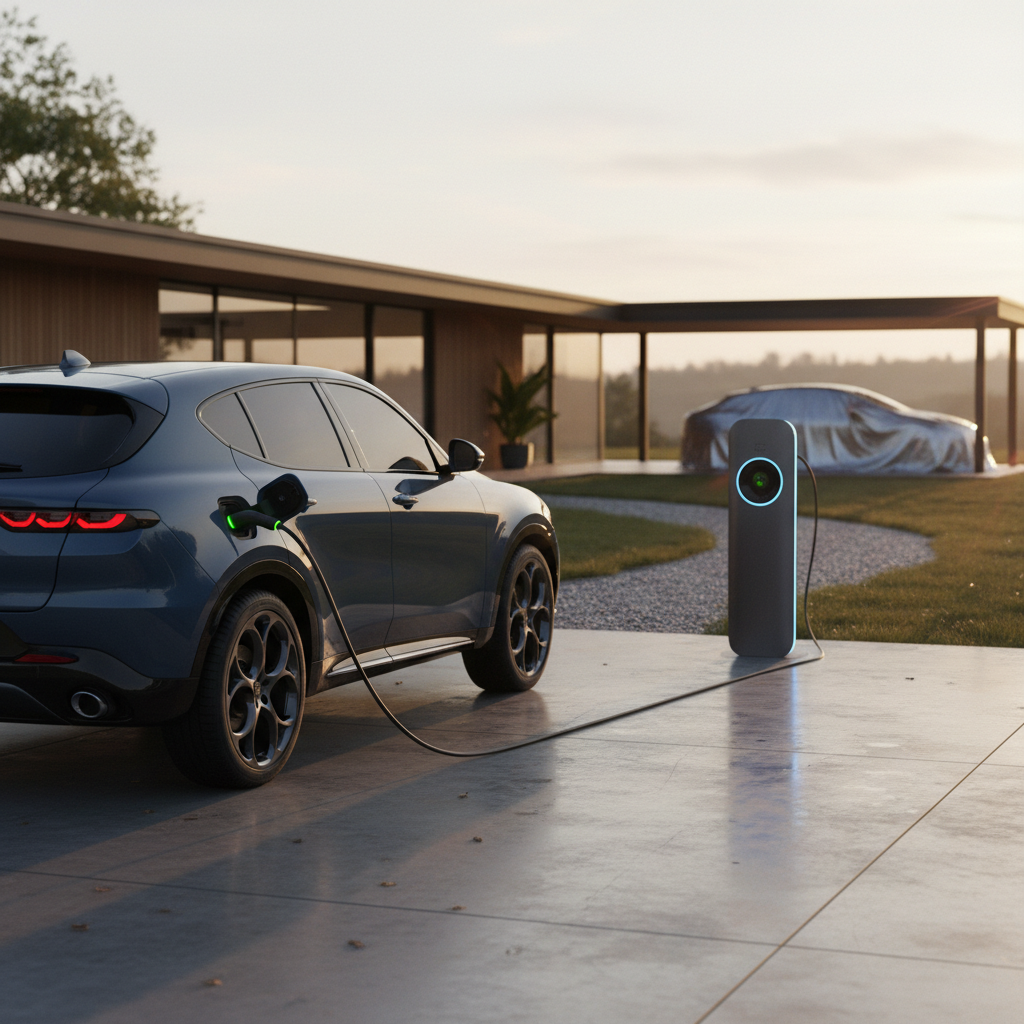
If you have off‑street parking, the gold standard is a 240V Level 2 charger or at least a 240V outlet in your garage or driveway.
Have a licensed electrician inspect older wiring, humidity, age, and DIY projects can all be enemies of safe EV charging.
Condo with assigned parking
Here, the challenge is less technical and more political. You’ll need HOA approval and sometimes dedicated metering or cost‑sharing agreements. South Carolina’s statewide EV stakeholder initiatives are pushing for friendlier policies, but it can still take time.
Apartment or street parking only
If you can’t plug in at home, look closely at public EV charging stations in Charleston, SC within a short walk of home or work. You may be able to live off a mix of workplace, garage, and retail charging, but it requires more planning and flexibility.
Don’t DIY a 240V solution
Buying a used EV for Charleston? Charging checklist
If you’re browsing used EVs, you’re already doing the smart, budget‑conscious thing. The next step is to pick a car whose charging profile fits Charleston’s mix of home and public infrastructure. This is exactly where a service like Recharged shines, every vehicle comes with a Recharged Score battery‑health report and expert guidance that takes your local charging reality into account.
Charleston‑specific charging questions to ask before you buy
1. Where will I charge 80% of the time?
Be brutally honest. If your answer is “I don’t know” or “probably downtown garages,” pause and map out what that looks like on a busy workday or rainy Saturday.
2. How much real‑world range do I need?
Factor in summer A/C, winter cold snaps, bridge traffic, and beach detours. A used EV that offers 200+ miles of healthy real‑world range will feel much more relaxed than one that can only manage 120.
3. What’s the battery’s health today?
Two identical cars on paper can have very different usable range after a few Charleston summers. A <strong>Recharged Score</strong> battery‑health report helps you see past the spec sheet so you know what range you’re actually buying.
4. Does it support DC fast charging I’ll actually use?
If you plan frequent runs up I‑26 or I‑95, make sure the car supports CCS or NACS fast charging at speeds that make sense, 50 kW is fine in a pinch, but 100 kW+ makes road trips far more pleasant.
5. Is my home ready, or what will it take?
Before you sign, get a rough quote from an electrician or landlord on adding a 240V outlet or charger. Sometimes a simple panel upgrade is all you need; other times, the cost or HOA politics suggest choosing a different building, or a different car.
6. Who’s in my corner after I buy?
EV ownership is simpler when you have specialists to lean on. Recharged pairs you with EV‑savvy support from browsing through delivery, including help understanding charging, battery reports, and local infrastructure.
FAQ: EV charging stations in Charleston, SC
Frequently asked questions about Charleston EV charging
Bottom line: EV life in the Lowcountry
Charleston is no longer an early‑adopter experiment for EVs. With dozens of public EV charging stations in Charleston, SC, free city‑garage chargers, and a growing web of DC fast sites on nearby highways, the pieces are in place for EV ownership to work smoothly, as long as you choose the right car and charging plan for your lifestyle.
If you can plug in at home or at work and treat public chargers as backups and bonuses, you’ll find that the Lowcountry’s stop‑and‑go traffic and short‑hop errands are made for electric torque. And if you’re shopping used, Recharged can help you pair a verified‑battery EV with Charleston’s unique mix of historic streets, coastal weather, and modern infrastructure, so your first years of EV ownership feel like an upgrade, not an experiment.