Atlanta has quietly become one of the strongest EV markets in the Southeast. In 2026 you’ll find thousands of public EV charging stations across Georgia, with the densest cluster in and around metro Atlanta. If you’re searching for EV charging stations in Atlanta, GA, whether you commute from Decatur, live in Midtown, or road‑trip through Hartsfield‑Jackson, this guide will help you charge confidently and avoid the most common headaches.
Why Atlanta is a good place to own an EV
Atlanta EV charging at a glance
EV charging in Georgia and metro Atlanta (2024–2026 snapshot)
Those numbers translate to practical reality: if you stay within the Atlanta region and charge at home or work, you’ll rarely need to think about public charging. But if you live in an apartment, have a long commute, or road‑trip frequently, you’ll want to understand the different charger types, networks, and pricing before you plug in.
Types of EV charging stations in Atlanta, GA
Level 1 & Level 2 (AC) charging
Level 1 uses a standard 120‑volt household outlet. It adds roughly 3–5 miles of range per hour, fine for occasional top‑ups but too slow for most Atlanta commuters.
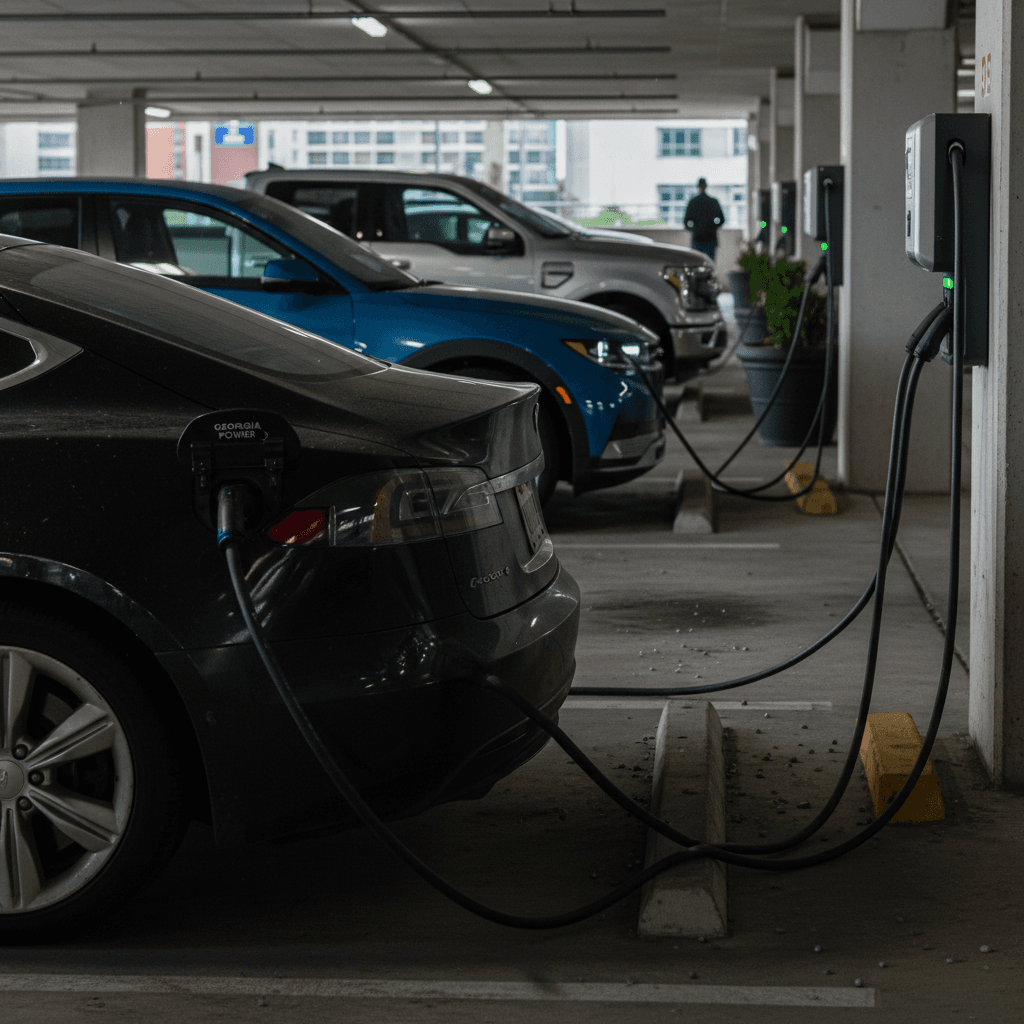
Level 2 chargers run on 240 volts, similar to an electric dryer circuit. Typical public stations in Atlanta deliver 6–19 kW, adding about 20–35 miles of range per hour for many EVs. You’ll find Level 2:
- In parking decks Downtown, Midtown, and Buckhead
- At retail centers in Cobb, Gwinnett, and DeKalb
- At some workplaces and multifamily properties
Level 2 is the workhorse: ideal for “park for a few hours while you do something else.”
DC fast charging (DCFC)
DC fast charging bypasses the vehicle’s onboard charger and feeds DC power directly to the battery. Common power levels you’ll see in metro Atlanta:
- 50–75 kW older stations
- 150 kW newer installs
- Up to 350 kW at some highway sites
On a typical modern EV, a 150 kW charger can take you from about 10% to 80% in 25–40 minutes, depending on battery size and temperature. These stations are essential for:
- Road trips on I‑75, I‑85, I‑20, and I‑285
- Rideshare drivers who need quick turnarounds
- Apartment dwellers without consistent home charging
Know your connector
Where to find EV charging stations around Atlanta
Best tools for finding EV charging stations in Atlanta, GA
Use more than one app for the most accurate picture of availability and pricing.
PlugShare & similar community apps
PlugShare, ChargeHub, and similar apps crowd‑source station information. Drivers report broken chargers, blocked spots, and real‑world charging speeds.
- Filter by network, power level, price, and access hours
- Check recent check‑ins before you drive to a site
- See photos so you know exactly where in the garage or lot the stations are
Network‑specific apps
Most major networks around Atlanta have their own apps, including:
- ChargePoint – widespread in office parks, retail, and parking decks
- EVgo – strong fast‑charging presence across the metro area
- Electrify America – high‑power sites along interstates and at big retail
- Tesla – Superchargers increasingly support non‑Tesla EVs via adapters or Magic Dock at select sites
In‑car navigation and Google Maps
Your car’s built‑in navigation and apps like Google Maps and Apple Maps now include real‑time charger availability on many networks.
- Search “EV charging” plus your destination
- Filter by plug type where available
- Use route planning to add charging stops automatically
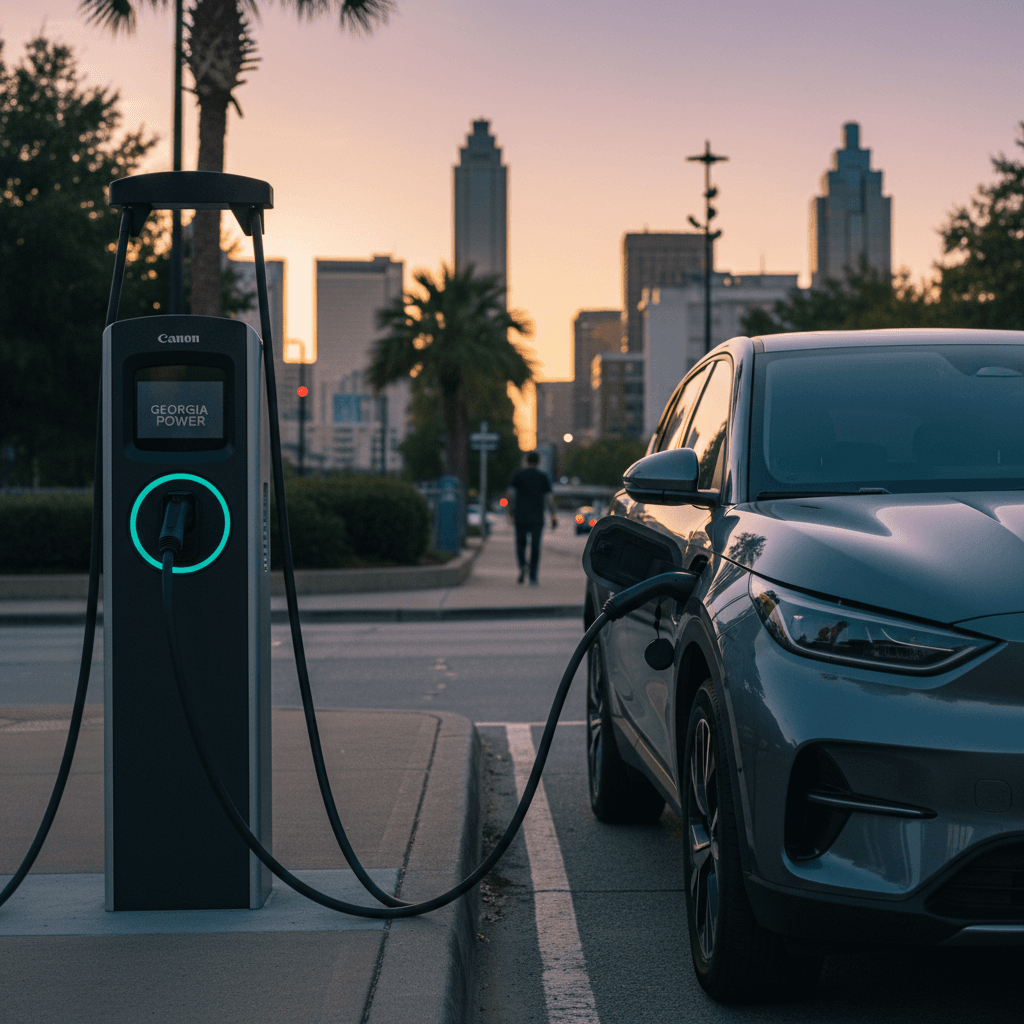
Within Atlanta city limits, you’ll see clusters of chargers in the core business districts, near major attractions (like Mercedes‑Benz Stadium and State Farm Arena), and along key commercial corridors. Suburban hubs, Alpharetta, Sandy Springs, Duluth, and the airport area, also have growing fast‑charging coverage supported by private networks and Georgia Power’s community charging efforts.
Find the “easy” chargers first
How much does EV charging cost in Atlanta?
Your total cost of charging in Atlanta depends on three main variables: where you charge, how fast the station is, and your utility rate plan. Unlike gasoline, where prices are posted on a big sign at the street, EV charging prices can vary widely by network and location.
Typical EV charging costs in Atlanta, GA (2026)
Real‑world ranges based on common 2024–2026 pricing in Georgia. Always check your app for exact rates before plugging in.
| Charging location | Typical pricing model | Approx. cost per kWh* | Good use case |
|---|---|---|---|
| Home (Georgia Power) | Residential kWh rate, often cheaper at night | $0.12–$0.18 | Daily charging for most drivers |
| Workplace / multifamily Level 2 | Often free, flat session fee, or kWh‑based | Free–$0.25 | Parked for several hours on weekdays |
| Public Level 2 (garage / retail) | Hourly or kWh‑based, plus parking in some decks | $0.20–$0.35 (effective) | Shopping, dining, events downtown |
| DC fast charging – metro area | per‑kWh or per‑minute, idle fees common | $0.32–$0.55 | Quick top‑ups when you’re short on time |
| DC fast charging – highway | Similar to metro, can be slightly higher | $0.35–$0.60 | Road trips on I‑75, I‑85, I‑20, I‑285 |
Level 2 is usually cheapest per kWh, while DC fast charging trades higher cost for speed.
Many Atlanta‑area drivers still do 80–90% of their charging at home, where cost per mile is typically far below gasoline, especially if you can shift most charging to off‑peak hours. Georgia Power’s time‑of‑use and EV‑specific rate options can make a noticeable difference on your bill if you’re willing to schedule charging overnight.
Georgia Power EV charger rebates
Home, workplace, and apartment charging in Atlanta
If you own a detached home in Atlanta or the surrounding suburbs, a Level 2 home charger will almost always be your cheapest and most convenient option. For apartment and condo residents, the picture is more complicated, but it’s improving quickly as more properties add EV‑ready parking.
Choosing the right primary charging option in Atlanta
1. Install a Level 2 charger at home (if you can)
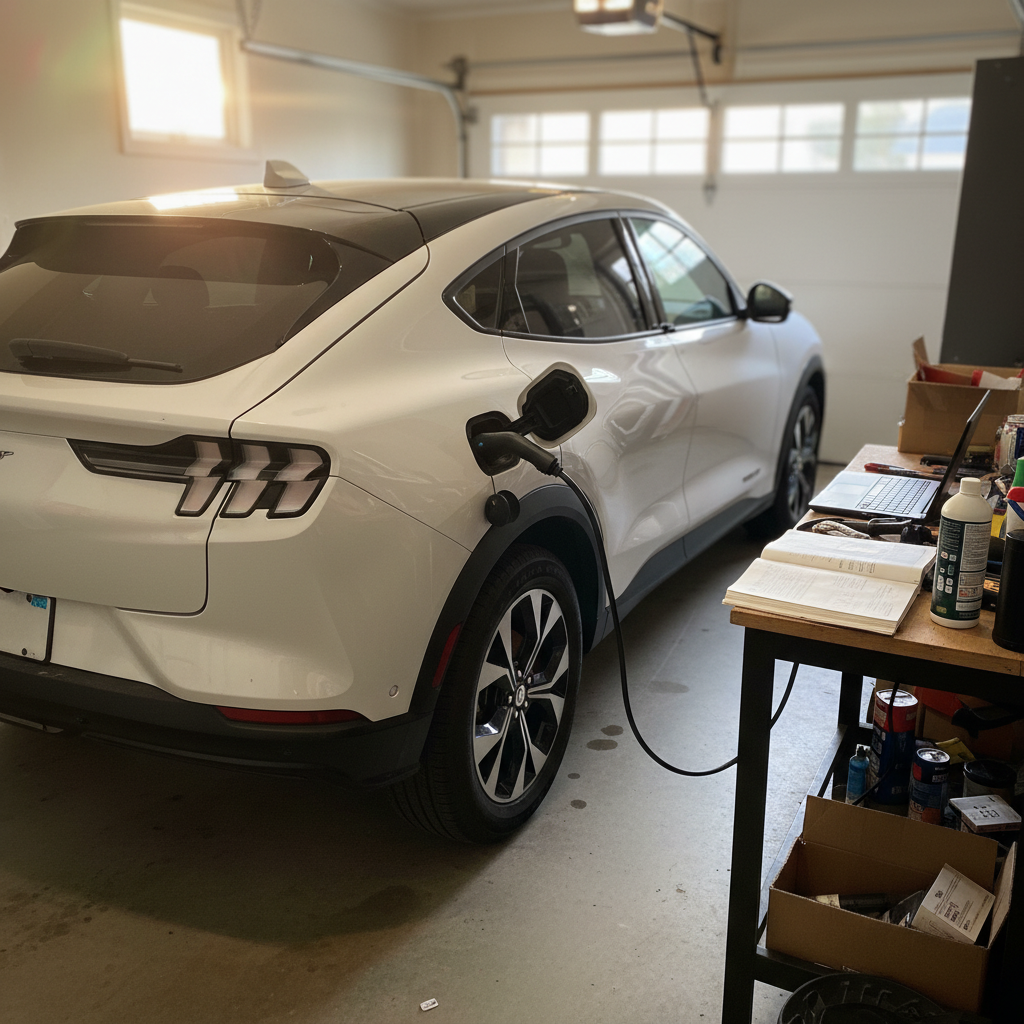
For most single‑family homeowners, a 240‑volt Level 2 charger in the garage or driveway is the sweet spot. It can add 25–35 miles of range per hour and pairs well with Georgia Power’s EV rates and rebates. A licensed electrician can assess panel capacity, run a new circuit, and handle permits.
2. Ask your landlord or HOA about EV‑ready parking
Atlanta and several inner‑ring suburbs are encouraging or requiring EV‑ready spaces in new multifamily development. If your building doesn’t have chargers yet, ask whether they’ve looked at Georgia Power’s make‑ready programs or business rebates, they can significantly reduce upgrade costs.
3. Use workplace charging to cover your commute
Many large employers in Downtown, Midtown, and Perimeter Center now offer Level 2 charging, often at a lower cost than public stations. If you can plug in 2–3 days a week at work, you may only need public fast charging for road trips or occasional weekends away from home.
4. Build a routine with nearby public Level 2
Apartment dwellers without home or workplace charging often rely on a nearby Level 2 station, at a grocery store, library, or parking deck, and treat it like a once‑or‑twice‑a‑week errand. The key is consistency: pick stations you trust and fold them into your normal schedule.
Don’t live on DC fast charging
Planning EV road trips from Atlanta
Atlanta sits at the crossroads of the Southeast, which makes it an ideal home base for EV road trips to the coast, the mountains, or neighboring states. The good news is that by 2026 I‑75, I‑85, and I‑20 corridors have far better DC fast‑charging coverage than just a few years ago. The challenge is choosing the right stops and avoiding the occasional unreliable site.
Common EV road‑trip routes from Atlanta
How to think about charging when you head out of town.
I‑75 south to Macon, Valdosta, Florida
Fast chargers are spaced along I‑75 at major exits, with higher density near Macon and further south. Plan on one stop for Macon‑area trips, two or more for Florida depending on your battery size.
Tip: Favor larger, multi‑stall sites at travel centers over single‑charger locations in small towns.
I‑75/I‑575 north to the mountains
For trips to Blue Ridge, Ellijay, or Chattanooga, you’ll find a mix of DC fast and Level 2 in suburban Atlanta, Cartersville, Dalton, and Chattanooga.
Tip: Cold weather and elevation changes cut range; give yourself a buffer and expect slower charging at very low temps.
I‑85 to Greenville, Charlotte, or Raleigh
I‑85 has a growing number of high‑power DCFC sites in Georgia and the Carolinas. Atlanta–Greenville is an easy one‑stop run for most modern EVs; Charlotte may take two stops if you start below full.
Tip: Keep an eye on both CCS and Tesla options if your vehicle supports NACS, it opens up more choices.
EV road‑trip checklist for Atlanta drivers
Confirm fast‑charging options on your route
Use PlugShare plus your car’s native route planner (or apps like A Better Routeplanner) to verify at least two viable fast‑charging options near each intended stop.
Check recent station check‑ins
Look for recent successful charging reports in the last few days. If a site has multiple reports of broken units or blocked access, pick an alternative.
Arrive with 10–20% state of charge (SoC)
Batteries charge fastest from low to mid‑range. Don’t push it to 1–2% in rural areas, but arriving around 10–20% usually balances safety and speed.
Watch idle fees and session limits
Many networks in Georgia now charge idle fees once your car is full or a time limit is reached. Set a phone reminder or use your car’s app so you can move promptly.
Reliability, etiquette, and best practices
Public charging in the U.S. improved meaningfully in 2025, but Atlanta drivers still encounter the occasional broken connector, ICEd spot (a gas car parked in an EV space), or jammed card reader. A little preparation, and good etiquette, goes a long way.
- Have a backup plan. Before you navigate to a fast charger, note a second station within 10–15 miles in case the first is down or crowded.
- Don’t treat charging spaces as VIP parking. Only park in EV spaces while you’re actually charging. Once your session is done, move your car so others can use the stall.
- Share when you can. If there are more cars than working plugs, consider charging just enough to reach your next good stop rather than all the way to 100%.
- Label your adapters. If you use a CCS–NACS or J1772 adapter, put your name and phone number on it. If you forget it, there’s a better chance you’ll get it back.
- Report issues. Use the station’s app or PlugShare to note broken connectors or payment problems so other Atlanta drivers don’t waste a trip.
Good news on reliability
When better charging means it’s time for a used EV
Sometimes the missing piece isn’t the charging network, it’s the car. Older EVs with short range and slow fast‑charging speeds can make Atlanta‑to‑anywhere road trips feel like a chore, even with today’s improved infrastructure. If you’re constantly planning around limited range or 50 kW maximum charge rates, it might be time to upgrade without jumping into new‑car pricing.
Why a newer used EV can transform charging
- More real‑world range: Stepping up from ~120 miles to 220–280 miles opens up longer stretches between stops on I‑75 and I‑85.
- Faster DC charging: Many 2021+ EVs can sustain 100–150 kW or more, turning a 60–90 minute stop into a 25–35 minute one.
- Better thermal management: Newer batteries handle Georgia summers and repeated fast‑charge sessions more gracefully.
How Recharged helps Atlanta buyers
When you shop for a used EV through Recharged, every vehicle comes with a Recharged Score battery health report, so you know how the pack has aged before you buy. That’s crucial if you’re counting on public fast charging for road trips or daily rideshare work.
Recharged also offers financing, trade‑in options, and nationwide delivery, including to the Atlanta area, plus EV‑specialist support to help you choose the right mix of range, charging speed, and price for your driving pattern.
EV charging stations Atlanta, GA: FAQ
Frequently asked questions about EV charging in Atlanta, GA
Atlanta’s EV charging landscape has come a long way in just a few years. With thousands of public charging ports, expanding DC fast‑charging along every major interstate, and meaningful utility support from Georgia Power, it’s now practical for many Atlantans to run an EV as their primary vehicle. If you match the right charging strategy to the right used EV, owning an electric car here can be cheaper, quieter, and more convenient than a gas vehicle, especially once you’ve built a routine around the city’s growing web of EV charging stations.