If you’re eyeing a 2023 Ford Mustang Mach-E, you’ve probably seen mixed headlines about recall campaigns, software gremlins, and eye‑popping high‑mileage success stories. So where does the 2023 Ford Mustang Mach-E reliability rating really land, and what does it mean if you’re considering one used today?
Quick take
2023 Mustang Mach-E reliability rating at a glance
2023 Mustang Mach-E reliability snapshot
Put simply, the 2023 Mach-E isn’t a trouble‑free appliance like an old Camry, but it’s not an unreliable experiment either. Think of it as a quick, tech‑heavy EV that’s maturing fast: early build years took the arrows in 2021–2022; by 2023, most of the big mechanical demons were tamed, leaving mainly software and trim‑quality annoyances to watch for.
How major sources rate 2023 Mustang Mach-E reliability
When you’re judging the 2023 Ford Mustang Mach-E reliability rating, it helps to separate three voices: data‑driven reliability indexes, owner reviews, and long‑term durability stories. They don’t always agree, but together they paint a useful picture.
Where the 2023 Mach-E stands on reliability
Different lenses on the same EV
Independent reliability index
Sites that aggregate warranty data and owner complaints generally put the 2023 Mach-E in the "good" tier, with a reliability score around the mid‑60s out of 100. That places it ahead of some early EVs but behind the most bulletproof hybrids and compact crossovers.
Owner satisfaction scores
Consumer and owner‑review platforms show high satisfaction, often above 4.3–4.5 out of 5 stars. Many owners praise the smooth powertrain, quiet ride and low running costs, while calling out small software bugs and fit‑and‑finish issues more than serious mechanical failures.
High‑mileage durability stories
A handful of Mach-E owners have now logged well over 250,000–300,000 miles with only modest battery degradation (roughly 8% capacity loss reported) and routine maintenance. Those are extreme use cases, but they suggest the core battery and drive unit are fundamentally robust.
How to read these ratings
Common 2023 Mach-E issues owners report
Scroll through owner forums and review sites and you’ll see a familiar handful of complaints for the 2023 Mustang Mach-E. Most are irritating rather than catastrophic, but you don’t want them to be surprises after you’ve signed the paperwork.
- Software gremlins and warning lights: Random alerts for driver‑assist systems, temporary loss of BlueCruise hands‑free, or phantom fault messages that clear after a restart or over‑the‑air update.
- Infotainment and screen quirks: The big center screen is the brain of the car. Owners sometimes report freezes, slow boot‑ups, or Bluetooth/CarPlay/Android Auto hiccups that require a reboot or software update.
- Minor trim and build‑quality issues: Creaks from the hatch, misaligned interior panels, wind noise from glass roof seals, and squeaks from the dash over rough pavement.
- 12‑volt battery problems: Like many EVs, the Mach-E still uses a conventional 12‑volt battery to power accessories and control systems. A weak 12‑volt can leave the car unwilling to "wake up," even if the main high‑voltage pack is healthy.
- Charging‑port or cable latch glitches: A small number of owners mention charge ports that won’t lock/unlock cleanly or public DC fast chargers that drop the session unexpectedly. Often this is network‑related, but occasionally the car’s charge‑port hardware is at fault.
Rare but serious complaints
Recalls affecting the 2023 Ford Mustang Mach-E
No reliability conversation is complete without a look at the recall sheet. The Mach-E is a thoroughly modern car, which means Ford can fix many issues with free over‑the‑air (OTA) software updates instead of wrenching in a service bay, but you still need to make sure those fixes have actually been applied.
Major recall themes for 2023 Mustang Mach-E
Exact campaigns vary by build date and configuration; always run the VIN through NHTSA before you buy.
| Issue | Model years affected | What can happen | Typical fix |
|---|---|---|---|
| Rearview camera image may freeze or delay | 2021–2023 Mach-E among other Ford models | Backup camera image can cut out, increasing low‑speed crash risk when reversing. | Software update for the image‑processing module, delivered OTA or at a dealer. |
| Electronic rear door latches may not unlock | 2021–2025 Mach-E | In some cases, rear doors may stay locked after front occupants exit, potentially trapping rear passengers who can’t reach interior handles. | Body‑control software update that changes how the latches wake and release. |
| High‑voltage battery system/12‑volt interface | 2021–2025 Mach-E (varies by campaign) | Certain control strategies can trigger shut‑down or prevent the car from starting, despite a healthy main battery. | Reprogramming the powertrain control modules and, if needed, replacing specific components under warranty. |
| Roll‑away risk on some EV and hybrid models | Later Mach-E years (2024+ primarily) | Under specific conditions, the vehicle may not hold in Park as expected. | Software update to the powertrain or brake‑control system (most 2023s are unaffected, but verify by VIN). |
Most 2023 Mach-E recalls are software‑driven and repairable via OTA updates or brief dealer visits.
How to check your VIN
Battery life and long‑term durability
For any EV, reliability lives or dies with the traction battery. On the 2023 Mach-E, the news so far is encouraging. Between real‑world high‑mileage cars and early fleet data, the pack is aging more gracefully than many shoppers expect.
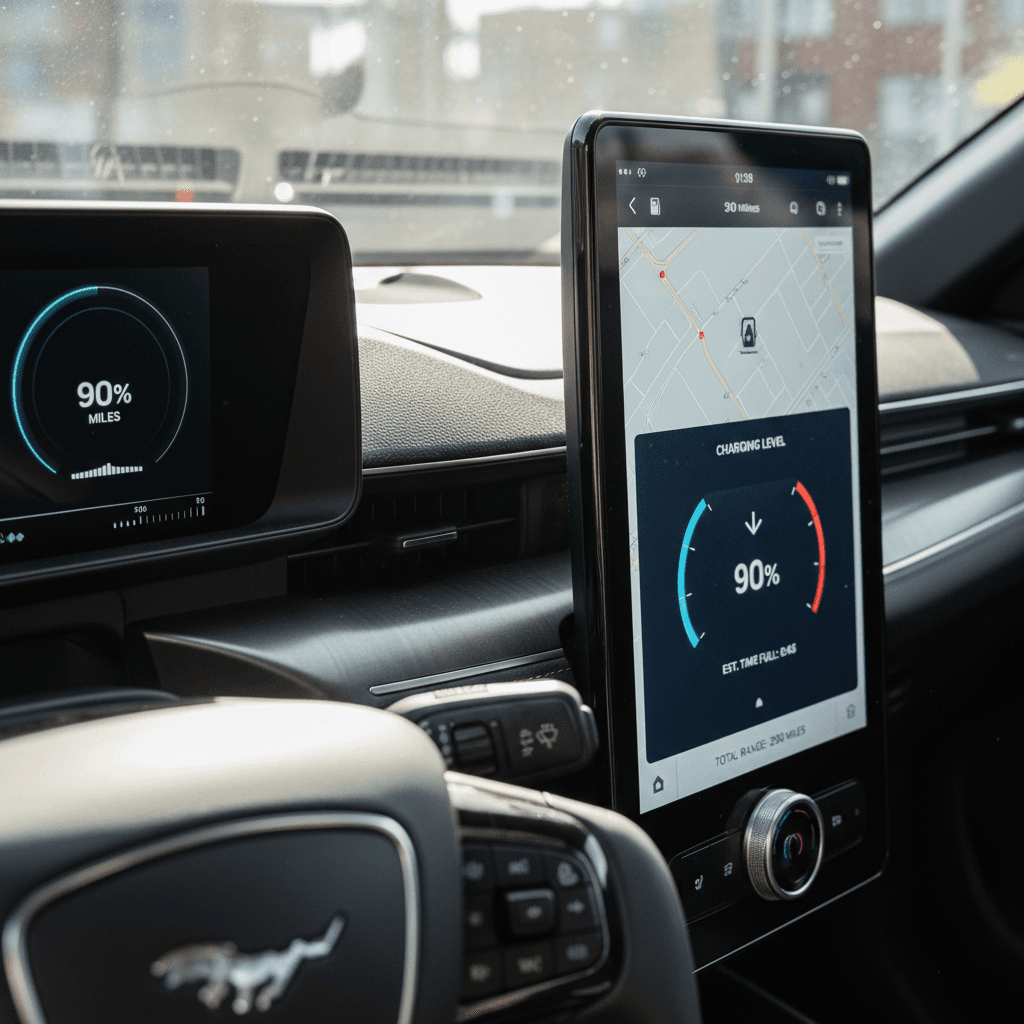
- High‑mileage examples look strong: Several Mach-E owners and fleets have documented 250,000–300,000+ miles with only about 8% battery‑capacity loss and no major pack failures, thanks in part to Ford’s conservative usable‑capacity window.
- Typical degradation so far: For daily‑driven Mach-Es under 100,000 miles, owner tools and testing usually show single‑digit capacity loss. Abuse the car with constant DC fast charging or high‑heat storage, and that number will climb, but there’s no sign of systemic pack weakness in the 2023s.
- No pattern of pack replacements: Unlike some first‑generation EVs, there isn’t a swarm of 2023 Mach-Es needing full battery replacements under warranty. Pack replacements do happen, but mostly as one‑off cases tied to manufacturing defects or external damage, not a design flaw.
- Thermal management helps: The Mach-E’s liquid‑cooled pack and conservative charge buffers are doing their job. If you keep it within Ford’s recommended charging habits, regular Level 2 at home, DC fast charging when needed, and avoiding weeks parked at 100%, the battery is on track for a long life.
Battery‑care habits that pay off
Ownership experience: charging, tech, and software
You can’t separate reliability from day‑to‑day livability. A car that starts every morning but constantly drops your phone connection or crashes its navigation doesn’t feel reliable, even if nothing mechanical ever breaks. The Mach-E lives in that software‑heavy gray zone.
Where the Mach-E shines
- Effortless powertrain: Instant torque, smooth acceleration, and no gear hunting, it just goes.
- Low running costs: Brake pads last ages thanks to regen, and there’s no oil to change.
- BlueCruise (if equipped): Many owners love the hands‑free highway capability when it’s working properly.
- Quiet, composed ride: Especially on Premium and California Route 1 trims, road‑trip comfort is a strong point.
Where "soft" reliability annoys
- Center screen as single point of failure: Climate, drive modes and many settings live in software menus. A frozen screen can make the whole car feel broken.
- Inconsistent OTA cadence: Some owners get updates quickly; others wait months for bug fixes, depending on build and region.
- App/connectivity hiccups: Key‑phone access, remote preconditioning and charge‑scheduling sometimes misbehave until the next update.
- Dealer learning curve: Not every Ford dealer is equally fluent in EV diagnostics yet, which can stretch resolution time for oddball issues.
Test the tech before you buy
Is a used 2023 Mustang Mach-E a good buy?
If you like how the Mach-E drives, and many people love it, the 2023 model year can be a smart sweet spot. It benefits from lessons learned on the earliest builds, but it’s still new enough that warranty coverage and battery life are on your side.
Who the 2023 Mach-E fits best (from a reliability lens)
Match the car to your expectations
Great fit if…
- You want a quick, stylish EV crossover for daily commuting and weekend trips.
- You’re comfortable with occasional software quirks in exchange for strong performance.
- You have (or plan to install) reliable Level 2 home charging.
- You appreciate that most fixes arrive as free OTA updates.
Borderline fit if…
- You’re extremely sensitive to dashboard lights, even if they clear on their own.
- Your local Ford dealer has limited EV experience and long service backlogs.
- You expect luxury‑car levels of interior quiet and materials.
Probably not your car if…
- You want a "set it and forget it" appliance with almost no tech learning curve.
- Your driving patterns require constant DC fast charging with no home option.
- You can’t live with the idea of recalls or OTA updates, even if the repairs are free.
On balance, a well‑vetted 2023 Mach-E with completed recalls, a clean diagnostic scan, and healthy battery readings can be an excellent used‑EV buy, especially as prices soften and more come off lease.
How Recharged evaluates Mach-E reliability and battery health
Because Recharged specializes in used EVs, we look past simple star ratings and dive into what actually fails, how often, and what it takes to fix. Every Mustang Mach-E that comes through our marketplace gets a Recharged Score Report that covers both battery health and known trouble spots for that model year.
What’s in a Recharged Score Report for a 2023 Mach-E
VIN‑level recall and campaign check
We run the VIN through manufacturer and federal databases to confirm which 2023 Mach-E campaigns apply, and verify whether each one has been completed or still needs attention.
Deep‑dive battery health diagnostics
Using our own Recharged Score process, we look at pack capacity, balance between modules, and how the car has been charged and driven. You see an objective snapshot of how much battery life is realistically left.
Charging‑system and DC fast‑charge test
We confirm the car can AC charge at full expected power and, when possible, simulate or test DC fast charging to spot potential contactor or thermal‑management issues early.
Full‑system scan for stored faults
Our technicians scan for current and historical trouble codes in powertrain, safety and driver‑assist modules, even if no warning lights are illuminated during a short test drive.
Road‑test for real‑world quirks
We listen for suspension and body noises, evaluate regen blending and braking feel, and look out for intermittent issues that only show up in real traffic, not just on a lift.
Transparent pricing vs. market
Because reliability and battery health directly affect value, our pricing engine bakes your Mach-E’s condition into fair‑market pricing, not just mileage and trim level.
Why this matters for the Mach-E
Ready to find your next EV?
Browse VehiclesChecklist: shopping for a used 2023 Mustang Mach-E
Whether you’re shopping locally or browsing nationwide listings, use this checklist to translate the 2023 Mach-E’s reliability story into concrete steps before you commit.
Pre‑purchase reliability checklist for a 2023 Mach-E
1. Confirm build date and trim
Look at the driver‑door jamb sticker to verify the build month/year and match it to the trim (Select, Premium, GT, etc.). Some recalls and software campaigns are tied to specific production windows.
2. Run a full recall and campaign search
Use the car’s VIN to pull open recalls and service campaigns. Ask the seller for service records or invoices showing completed fixes, especially for camera, latch, battery‑system and driver‑assist updates.
3. Ask for battery health documentation
Request printouts or screenshots from a reputable battery‑health scan. If you’re buying through Recharged, review the battery section of the Recharged Score Report for capacity and degradation insights.
4. Test both AC and DC charging
Plug into Level 2 during your inspection, and, if possible, do a short DC fast‑charge session. Watch for error messages, sudden session drops, or abnormal noises from the battery or cooling system.
5. Work every door, latch and window
Cycle each door from inside and out, paying special attention to rear doors and electronic latches. Confirm child locks function correctly and that no doors stick, bounce back open, or stay locked unexpectedly.
6. Stress‑test the infotainment and driver‑assist
Run navigation, stream music, pair your phone, and enable whatever driver‑assist features the car has. Make sure nothing freezes, reboots, or shows warning chimes that the seller can’t explain.
7. Consider warranty and service access
Check how much factory powertrain and battery warranty remains, and research which Ford dealers near you are EV‑certified. A solid local service option makes any future issues far less painful.
FAQ: 2023 Ford Mustang Mach-E reliability
Common questions about 2023 Mach-E reliability
Bottom line: who the 2023 Mach-E suits best
From a reliability standpoint, the 2023 Ford Mustang Mach-E is a maturing EV, not an experiment. The big pieces, battery pack, motor, and core driveline, are proving durable, and the car’s main black marks come from software‑tunable issues and a string of recalls that are inconvenient more than catastrophic.
If you’re willing to live with the occasional update, dealer visit, or infotainment quirk, a well‑vetted 2023 Mach-E can be a terrific everyday EV with strong long‑term prospects. The key is choosing the right individual car: one with clean diagnostics, documented recall completion, and verified battery health. That’s exactly what Recharged is built for, surfacing the real story behind each used EV so your next electric Mustang feels like a confident leap, not a blind jump.