The phrase “EV charging service” gets thrown around a lot, usually by people who assume you have free weekends to decode kilowatts, subscriptions, and roaming apps. You don’t. You just want to know: who’s actually selling the electricity, how much you’ll pay, and which charging setup will make living with an electric car feel…normal.
Good news for 2025
What is an EV charging service, really?
At its core, an EV charging service is everything wrapped around the simple act of sending electrons into your car: the hardware (chargers), the software (apps and payment systems), the business model (how you’re billed), and the reliability (whether it actually works when you pull up). It’s the EV version of a gas station brand plus your utility company plus a loyalty card, all layered together.
On the front end: what you see
- Charging locations – home charger, workplace, public stations on highways and in cities.
- Access tools – apps from networks like Electrify America, EVgo, ChargePoint, or roaming tools such as PlugShare.
- Pricing info – kWh rates, per‑minute fees, idle fees, and membership discounts.
On the back end: what you don’t see
- Networking and authentication – how the charger identifies your car or account.
- Billing and settlements – how payments flow between site hosts, networks, and utilities.
- Load management – software that limits power to keep the grid and hardware happy.
Think in terms of “who owns the experience”
The three main types of EV charging services
Three flavors of EV charging service
Most drivers end up using a blend of all three.
1. Home charging service
A Level 1 or Level 2 charger tied to your electric meter. Your utility sets the rates; a hardware brand or installer provides support.
Think: predictable, cheap, overnight refueling.
2. Workplace & destination
Chargers at offices, apartments, hotels, shopping centers, and parking garages. Often run by ChargePoint, Shell Recharge, or local operators.
Think: top‑ups while you’re already parked.
3. Public fast charging
DC fast chargers along highways and in cities, Tesla Supercharger, Electrify America, EVgo, Ionna, and others.
Think: road‑trip refueling and emergency energy.
EV charging service by the numbers (North America & beyond)
Coverage is better, but still uneven
Public EV charging service: networks, apps, and speeds
Public EV charging services are where things get interesting, and occasionally infuriating. You’ve got legacy networks like Electrify America and EVgo, tens of thousands of Level 2 stations operated via ChargePoint and others, Tesla opening parts of its Supercharger network, and new joint ventures like Ionna aiming for lounge‑style “rechargeries.” Underneath the branding, what matters to you are speed, reliability, and how hard it is to pay.
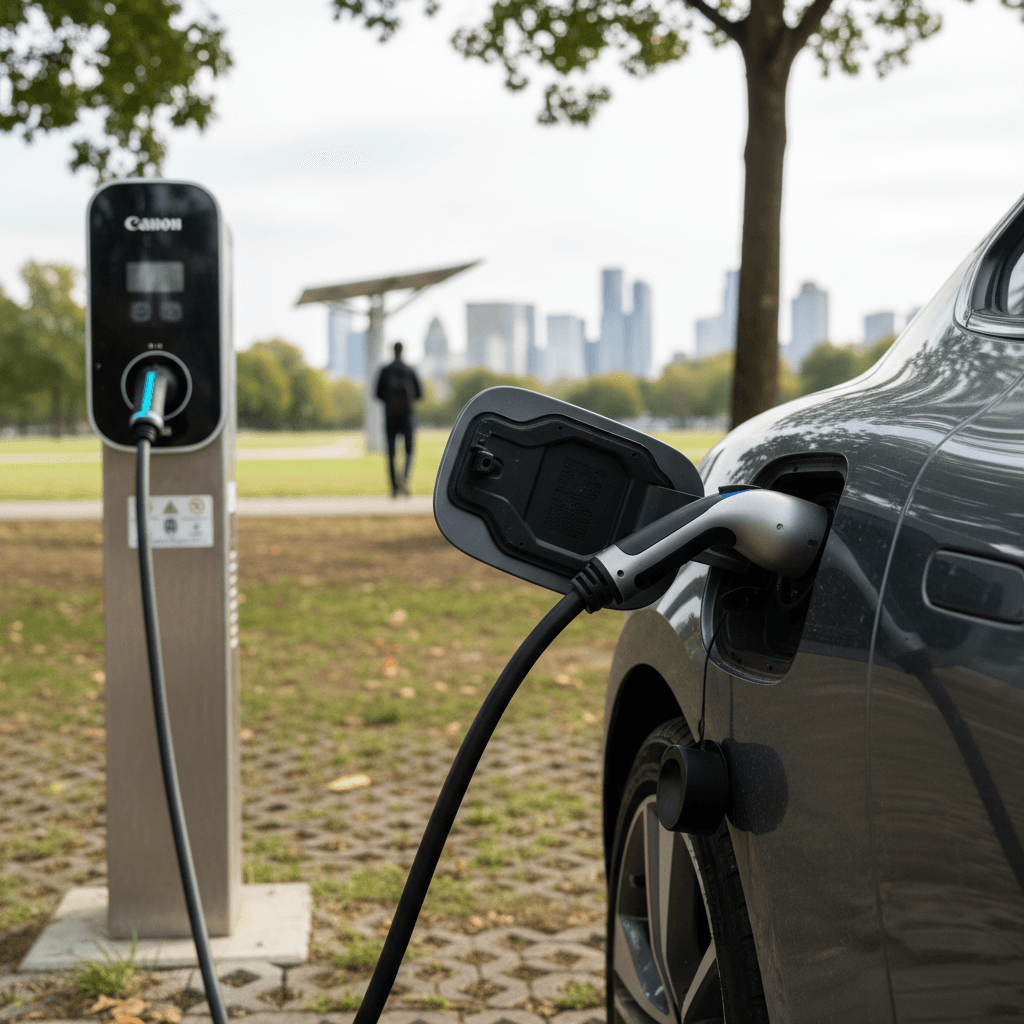
Major public EV charging services in the U.S.
How the main players differ on speed, access, and typical use cases.
| Network / Service | Typical DC Speed | Access & Payment | Best For |
|---|---|---|---|
| Tesla Supercharger | Up to 250 kW (V3/V4) | Tesla app; many sites now support non‑Tesla EVs with NACS or built‑in adapters | Reliable road‑trip fast charging |
| Electrify America | Up to 350 kW | App, credit card tap, Plug & Charge on supported cars | Highway corridors, cross‑country trips |
| EVgo | Up to 350 kW | App, RFID, credit card, PlugShare payment at some sites | Urban fast charging, grocery/retail hubs |
| ChargePoint (public) | Level 2 + some DC | App, RFID, some tap‑to‑pay; pricing set by site host | Workplaces, parking garages, destination charging |
| Ionna (new JV) | Targeting up to 400 kW | Brand‑specific app, card payments; early sites in 2024–25 | Future‑focused “rechargery” hubs with amenities |
Details vary by site; always check the app for real‑time info before you drive to a charger.
Use PlugShare as the universal translator
How EV charging services are priced
This is where EV charging service stops being abstract and starts hitting your bank account. Pricing can be by the kilowatt‑hour, by the minute, per session, or bundled into subscriptions. A few networks let site hosts set their own rates, which is why that charger behind a hotel sometimes costs more than one at a highway plaza.
Common EV charging service pricing models
Same electrons, very different math.
Energy‑based pricing (per kWh)
You pay for the energy your car takes on, like paying per gallon of gas.
- Pros: Fair and intuitive; slow‑charging cars aren’t penalized.
- Cons: Available only where regulations allow, rules vary by state.
Time‑based pricing (per minute)
You pay for how long you’re plugged in, regardless of actual charging rate.
- Pros: Encourages drivers to move when charging slows or finishes.
- Cons: Can punish cars that charge slower by design or in cold weather.
Session fees & idle fees
Flat connection fees plus penalties if you leave the car plugged in after charging.
Idle fees are the industry’s way of prying people off chargers that other drivers need.
Memberships & subscriptions
Networks offer discounted rates or monthly plans for frequent users.
Read the fine print: unless you road‑trip constantly, pay‑as‑you‑go is often cheaper.
Watch for “slow but expensive” traps
Home EV charging service: installation, upgrades, and reliability
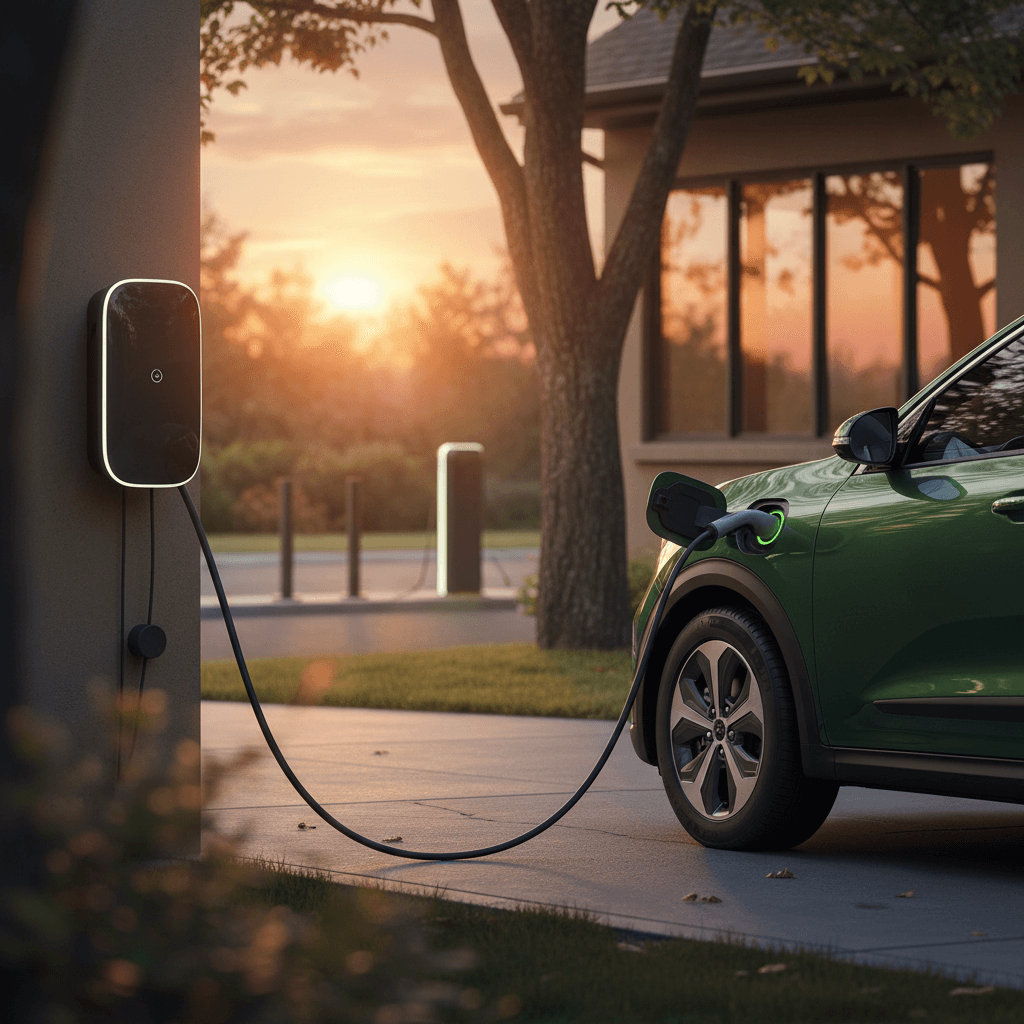
For most drivers, the most important EV charging service isn’t public at all, it’s the outlet in your garage or the shared chargers in your building. Home charging turns your house into a personal filling station, with your utility as the silent partner.
- Level 1 service: A standard 120‑volt outlet and the portable cord that ships with many EVs. Think 3–5 miles of range per hour, fine for very short commutes.
- Level 2 service: A 240‑volt circuit (like an electric dryer) feeding a wall‑mounted or portable charger. Typically 20–40 miles of range per hour, enough to refill most batteries overnight.
- Managed charging: Many utilities now offer off‑peak EV rates or "smart" programs that throttle charging to cheaper hours automatically.
- Service upgrades: Older homes may need panel upgrades or new circuits; condos and apartments may need building‑wide planning and load management.
Ask your utility about EV rates
Key questions for your home EV charging service
1. How many miles do you actually drive daily?
If you average under 30 miles per day and can plug in every night, even a modest Level 2 charger, or in some cases Level 1, may cover you just fine.
2. What’s your electrical panel capacity?
A licensed electrician can tell you if you can add a 40‑ or 50‑amp circuit easily or if you’re staring down a full panel upgrade.
3. Do you want smart features?
Wi‑Fi, usage tracking, and utility integrations can be helpful, but they also add complexity. Decide whether you want a simple “plug and charge” box or an app‑heavy ecosystem.
4. Own, rent, or share parking?
Single‑family homeowners have the most control. Renters and condo owners should ask about building EV policies, shared charger service, and cost allocation.
Don’t DIY 240‑volt work
How to choose the right mix of charging services
Every EV driver builds a personal charging portfolio, whether they realize it or not. Maybe you charge at home 90% of the time and lean on fast‑charging services for road trips. Maybe you’re an apartment dweller treating public fast charging like a weekly grocery run. The trick is to be deliberate about which services you rely on so you’re not constantly improvising with 3% battery remaining.
Sample charging service strategies
Suburban commuter with home parking
Install a 32–40 A Level 2 charger at home; enroll in an off‑peak EV rate if available.
Use workplace or destination Level 2 charging opportunistically, not as a crutch.
Keep accounts active with at least two fast‑charging networks plus Tesla’s app if your car is NACS‑compatible.
Treat fast charging as backup and road‑trip fuel, not daily habit.
Apartment dweller without home charging
Map out reliable DC fast chargers within a comfortable radius of home and work; test them before you’re desperate.
Favor grocery stores, big‑box retail, and hubs with multiple stalls, more redundancy, better lighting.
Consider a modest subscription if you’re using the same network weekly and the math pencils out.
Negotiate with property management about future shared chargers; bring data, not demands.
Frequent highway road‑tripper
Prioritize cars with strong DC fast‑charging curves and good route‑planning software.
Stick to corridor‑style networks (Tesla, Electrify America, emerging Ionna hubs) with 150–350 kW service.
Avoid arriving below ~10% state of charge if you can; it leaves less room for broken hardware surprises.
Carry a backup plan: alternate sites, different networks, and a realistic buffer in your schedule.
Occasional driver / second car
Run the numbers: if you drive very little, a Level 1 charger plus occasional public top‑ups may be enough.
Skip monthly subscriptions; pay‑as‑you‑go is almost always cheaper at low annual miles.
Use your EV app’s scheduling to take advantage of the cheapest overnight hours if your utility offers them.
Check your battery state regularly, sitting at 0% or 100% for long periods is bad form.
When it’s set up right, charging disappears
EV charging service questions to ask when buying a used EV
A used EV isn’t just a car; it’s a relationship with charging services that somebody else already configured, well or badly. This is where Recharged’s focus on battery health and real‑world usability matters just as much as paint and options packages.
Six charging‑service questions to ask about any used EV
These determine how easy the car will be to live with on your routes, with your electrical panel, at your budget.
1. What’s the usable battery range now?
Forget the window‑sticker fantasy. Ask for current usable range at highway speeds and in cold weather. That range dictates how often you’ll lean on fast‑charging services.
2. What are the AC & DC limits?
Two identical cars can have very different charging personalities. Know the max AC rate (for home Level 2) and DC rate (for road trips).
3. Which plug standard does it use?
In North America, new models are marching toward NACS. Older ones may be CCS or CHAdeMO. Connector type changes which public services are convenient or even available.
4. How does it behave on real networks?
Some cars simply play nicer with certain fast‑charging services. Look for owner forums and real‑world logs, not just brochure promises.
5. Any history of charging issues?
Repeated DC fast‑charging errors, random charge stops, or flaky communication with networks are all red flags.
6. Does the seller provide a charging report?
With Recharged, every vehicle comes with a Recharged Score Report that includes verified battery health and charging performance, so you know how the car actually behaves at the plug.
How Recharged fits into your charging picture
Checklist: setting up your EV charging service
From driveway to highway: your EV charging service playbook
1. Map your daily driving reality
Track a normal week of driving. How many miles per day? Where does the car sleep? This determines how heavy a home charging service you really need.
2. Talk to your utility before you buy hardware
Ask about EV‑specific rates, rebates, and smart‑charging programs. Sometimes the “best” charger is the one that plays nicely with your utility’s incentives.
3. Get a proper home charging quote
Have a licensed electrician price out a Level 2 circuit and charger. If you’re buying a used EV from Recharged, factor this into your total ownership cost, not as an afterthought.
4. Build your public‑charging app stack
Install at least two major network apps plus a discovery tool like PlugShare. Set up payment ahead of your first road trip so you’re not creating accounts in a windy parking lot.
5. Do a shakedown run close to home
Before a big journey, test your local fast‑charging services on a lazy Saturday. Learn which stations are reliable, well‑lit, and reasonably priced.
6. Revisit your setup once or twice a year
Charging networks, prices, and even your utility plan will change. A quick annual review keeps your EV charging service cheap, reliable, and drama‑free.
EV charging service FAQ
Frequently asked questions about EV charging service
The bottom line on EV charging service in 2025
If early EV ownership was a science experiment, today’s EV charging service is closer to a utility: not glamorous, not always perfect, but increasingly dependable if you set it up right. Most of your energy should come quietly from home or work. Public fast‑charging services should feel like planned coffee breaks, not rescue missions.
Get your home situation sorted, learn which public networks actually work along your routes, and be realistic about range and charging speeds when you’re shopping for a new or used EV. Do that, and the car just fits your life. And if you’re browsing used EVs, Recharged is built to make this whole picture, battery health, charging behavior, and real‑world running costs, as transparent as the window sticker never was.