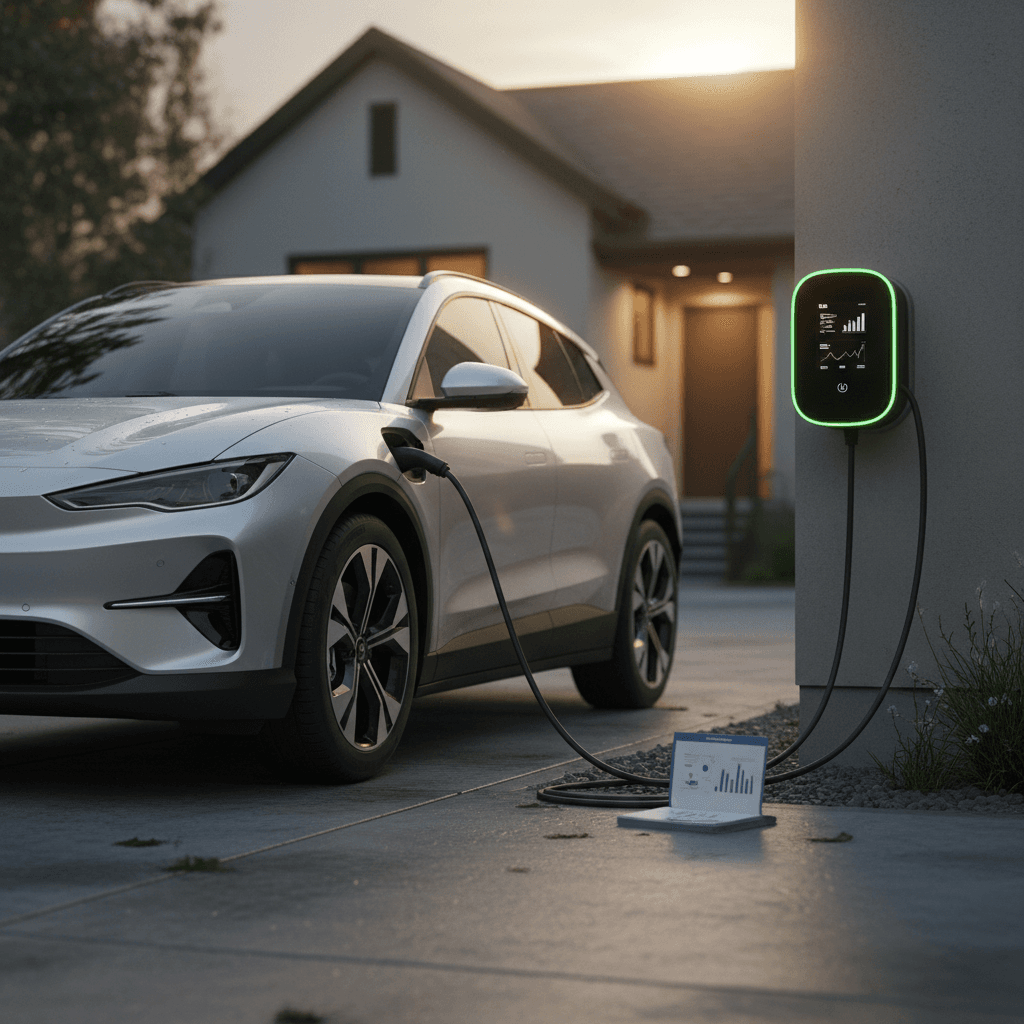
Owning an electric vehicle is the easy part. Charging it well, that’s where the real savings, convenience, and long-term battery health live. Follow the right EV charging best practices and your car will go farther, charge more predictably, and hold its value better when it’s time to sell or trade‑in.
Quick takeaway
Why EV charging best practices matter
Why your charging habits matter
Three big reasons to care about how you charge: 1. Battery longevity: Your traction battery is the most expensive component in the car. Treat it well and you’ll delay degradation and preserve range. 2. Cost: When and where you charge can swing your per‑mile cost from cheaper than gasoline to surprisingly pricey. 3. Convenience: Good habits mean you almost always leave home with plenty of range and avoid surprise “I need a charger now” moments.
Recharged bonus
Charging fundamentals you should know
Before we dive into EV charging best practices, it helps to understand a few basics: charging levels, speeds, and connectors. You don’t need to become an engineer, just a confident owner.
EV charging levels at a glance
Know what each option is really good for
Level 1 (120V)
Use when: You drive modest miles daily and have all night to charge.
- Standard household outlet
- Typically ~3–5 miles of range per hour
- Great for plug‑in hybrids or light commuters
Level 2 (240V)
Use when: You want true "fuel at home" convenience.
- Dedicated 240V circuit (like an electric dryer)
- Often 20–40+ miles of range per hour
- Best long‑term solution for most EV owners
DC fast charging
Use when: Road‑tripping or in a genuine time crunch.
- High‑power roadside stations
- Can add 150–200+ miles in 20–30 minutes (varies)
- Fantastic tool, but harder on your battery if overused
Connectors you’ll encounter
- J1772: Standard plug for most U.S. Level 1 and Level 2 chargers (non‑Tesla).
- CCS: Common DC fast‑charging connector on many non‑Tesla EVs.
- NACS/J3400: Tesla’s connector, now adopted by many other brands for future models.
Charging speed realities
- Your car has a max AC charging rate (kW). A more powerful home charger won’t exceed what the car can accept.
- On DC fast chargers, speed tapers as the battery fills, especially past 60–80%.
- Cold or very hot weather will slow charging and reduce range temporarily.
Good to know
Battery health best practices
Modern EV batteries are built with sophisticated thermal and charge management systems, but your habits still matter. These simple EV charging best practices can help your pack age gracefully.
- Aim to keep your state of charge between about 20% and 80% for everyday driving when it’s practical.
- Reserve 100% charges for days when you genuinely need the range, like a road trip or big detour.
- Avoid letting the car sit for days at very low (<10%) or very high (near 100%) charge.
- Whenever possible, charge slowly (Level 1 or Level 2) instead of relying on DC fast charging for daily use.
- In very hot or cold climates, park in a garage or shade when you can and allow the car’s thermal management to do its job.
Don’t obsess over every percent
Treat your EV battery like a long‑haul runner, not a drag‑strip queen. Moderate effort, consistently, beats extreme sprints every time.
Home EV charging best practices
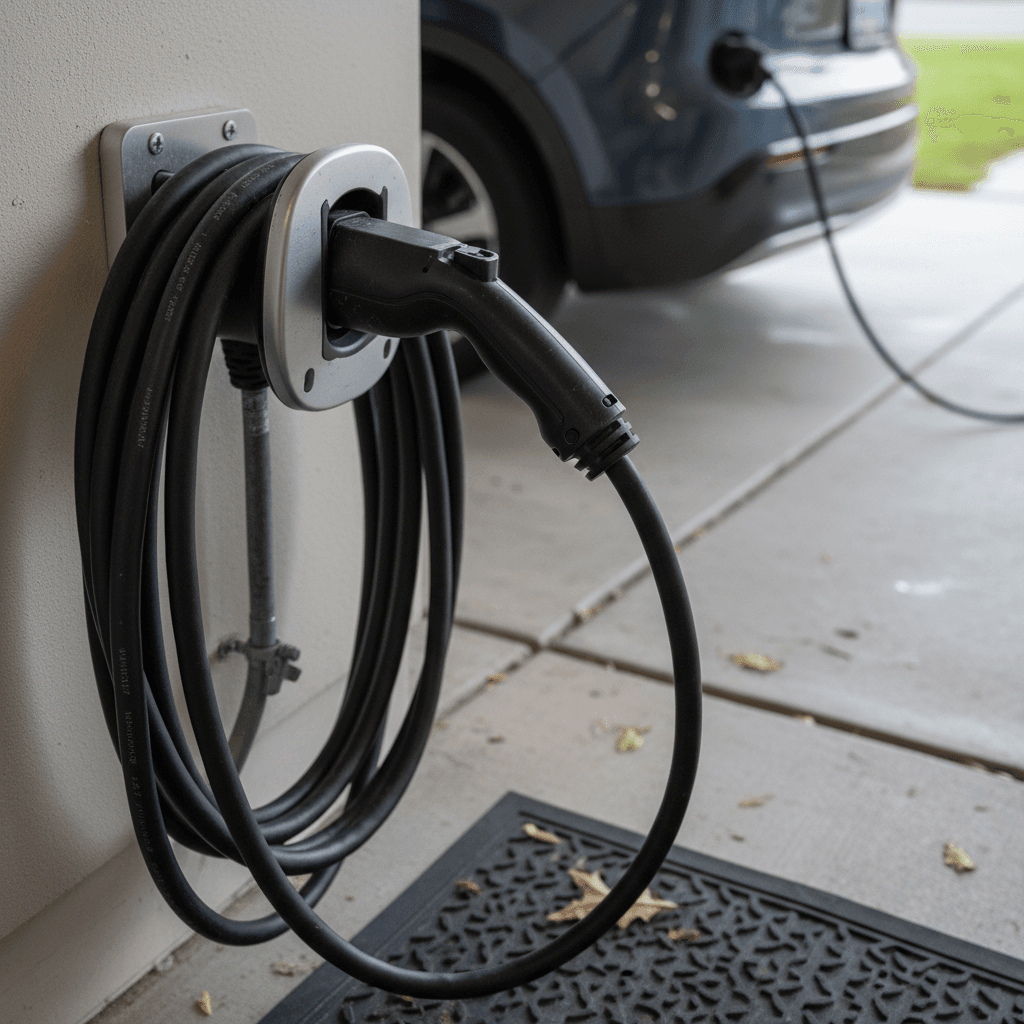
Home is the cheapest and most convenient place to charge if you have the option. A bit of planning up front will pay you back every time you plug in.
Set up home charging the right way
1. Use a dedicated circuit
Have a licensed electrician install a dedicated 240V circuit for a Level 2 charger. Sharing with dryers or ovens is a no‑go at EV charging currents.
2. Match charger to your panel and car
Bigger isn’t always better. If your car tops out at 32 amps for AC charging, a 48‑amp wall box won’t make it faster. Your electrician and owner’s manual are your best guides.
3. Skip extension cords for Level 2
Level 2 charging pulls serious power. Using household extension cords is unsafe and, in many cases, explicitly warned against by both automakers and charger makers.
4. Take advantage of off‑peak rates
Many U.S. utilities now offer time‑of‑use plans with steep discounts for charging overnight, sometimes off‑peak rates are a quarter or less of peak pricing. Program your car or charger to start after midnight when rates drop.
5. Keep the hardware dry and tidy
Mount the unit securely, use cable management hooks, and avoid low spots where water pools. Periodically inspect for damage or discoloration at the plug and breaker.
6. Let the car handle the smarts
Whenever reasonable, use your EV’s built‑in scheduling and battery‑care settings instead of constantly micro‑managing charge sessions via the wall box or app.
Extension cords: handle with extreme care
Why scheduling home charging matters
Examples of how much cheaper off‑peak charging can be on time‑of‑use plans.
| Utility example | Off‑peak window | Approx. off‑peak rate | Approx. peak rate | What it means for you |
|---|---|---|---|---|
| Urban Northeast utility | Midnight–8 a.m. | ≈$0.03–$0.05/kWh | ≈$0.13–$0.35+/kWh | Shifting to nights can cut charging cost by more than half. |
| California coastal utility | Midnight–6 a.m. | ≈$0.20–$0.31/kWh | ≈$0.35–$0.50+/kWh | Avoiding 4–9 p.m. can save serious money over a year. |
| Smaller public‑power utility | Overnight off‑peak | ≈$0.05–$0.10/kWh | ≈7–10x higher in peak | Great incentive to plug in late and let the car charge while you sleep. |
Actual windows and prices vary by utility, but the pattern is the same almost everywhere: nights are cheaper than evenings.
Tie it to your routine
Public and fast-charging best practices
Public charging is your safety net and your road‑trip enabler. It’s also where things get confusing and, sometimes, expensive. A few habits will keep you moving and help you avoid surprises.
Smart DC fast-charging habits
Use the power without punishing your battery or wallet
Charge for the middle, not the top
Fast charge from roughly 10–20% up to 60–80% when you can. That’s where you’ll see the quickest energy added per minute.
Above ~80%, most cars drastically slow the charge rate to protect the battery, which means you’re paying more minutes for fewer miles.
Be kind in extreme temperatures
If your car offers battery pre‑conditioning for fast charging, use it, especially in winter. A cold pack charges slowly and wastes time.
On brutal summer days, consider stopping a bit earlier on the state‑of‑charge curve instead of forcing that last 10% at high temps.
- Favor reputable networks and well‑lit locations, especially at night.
- Check station details in apps for kW rating, connector types, and pricing before you arrive.
- Avoid daisy‑chaining adapters or using any high‑power DC extension equipment the network doesn’t explicitly allow.
- If a station seems damaged, overheated, or throws repeated errors, move to another unit and report it through the app.
Mind the terms of use
Charging etiquette so you’re not “that” driver
Public chargers are shared infrastructure. A little courtesy goes a long way, and helps everyone get where they’re going with less drama.
Simple public charging etiquette
Move when you’re done
Don’t treat chargers like parking spaces. Once you’ve reached your target charge (or charging stops), unplug and move so the next driver can use the stall.
Don’t top off to 100% on DC fast
Unless you absolutely need it, avoid hanging around to go from 80% to 100% on a busy fast charger. It’s slow, expensive, and ties up shared hardware.
Park where your cable reaches
Position your car so you’re not stretching the cable across traffic lanes or blocking neighboring stalls. This is especially important at sites with short cables.
Avoid unplugging others
If someone is actively charging, don’t unplug their car unless there’s an emergency. If a station allows “stop” requests in the app, use those features instead of pulling the plug.
Share information, not lectures
If a newbie looks confused, offer a quick friendly tip, not a sermon on how they’re doing it wrong. We all started somewhere.
Leave the station tidy
Re‑hang cables properly, avoid driving over connectors, and pick up trash around the stall when you can. Small things add up.
Workplace EV charging best practices
If your employer offers chargers, that’s a huge perk, but it also means lots of drivers sharing a limited resource. Think of workplace charging as a supplement to good home habits, not a replacement.
Use work to top up, not fill up
- Arrive with 20–60% whenever you can, then top to the 60–80% range during the workday.
- Rotate: once you’ve got enough to get home with a comfortable buffer, move your car so coworkers can plug in.
- If chargers are free, it’s still smart to avoid unnecessary 100% charges, battery health doesn’t care who pays the bill.
Be a good workplace citizen
- Follow whatever signup, time‑limit, or badge system your employer posts.
- Communicate in workplace chat channels or posted boards if you’re moving your car or if a charger is down.
- Offer to help HR or facilities with real‑world feedback, they may be deciding whether to add more stations.
Help shape policy
Troubleshooting common charging issues
Even when you follow all the EV charging best practices in the book, things go sideways occasionally. Here’s how to work through the most common snags.
What to check when charging misbehaves
Quick diagnostics before you panic
Car won’t start charging
- Unplug, re‑seat the connector firmly, and try again.
- Check that the station isn’t in "paused" or "authorization" mode.
- Verify your RFID card or app payment method is current.
Unexpectedly slow charging
- On DC fast, make sure you’re actually on a high‑power unit and that your car’s battery isn’t already near 60–80%.
- In cold weather, allow the pack to warm up with a short drive or pre‑conditioning.
- On Level 2, check if your car’s onboard charger is limiting current in the settings.
Heat, smells, or visible damage
- If you smell burning, see melted plastic, or feel excessive heat at the plug, stop immediately and report the issue.
- Don’t try to force a damaged connector into your charge port.
- At home, call an electrician rather than resetting a tripping breaker repeatedly.
When in doubt, back out
FAQ: EV charging best practices
Frequently asked questions about EV charging best practices
Bringing it all together
Charging your EV well isn’t about memorizing a hundred rules, it’s about a few smart habits you repeat without thinking. Keep your battery in the comfortable middle most days, lean on home Level 2 charging and off‑peak rates whenever you can, treat DC fast charging as your road‑trip ace rather than your daily driver, and show a little courtesy at public stations.
Do those things and you’ll save money, cut hassle, and keep your battery, and your EV’s resale value, in a very good place. And if you’re looking for a used EV that already has its battery health documented, Recharged makes the process simple and transparent with Recharged Score reports, financing, trade‑in options, and nationwide delivery so you can start your EV journey with confidence, and all the right charging habits from day one.