If you own an electric vehicle, you probably think a lot about your battery and not much about your cabin air filter. But a smart EV cabin air filter replacement schedule has a big impact on how healthy, comfortable, and quiet your car feels, and it’s one of the simplest maintenance items to control, especially if you’re buying a used EV.
Quick answer
Why EV cabin air filters matter
In an EV, the cabin air filter does the same basic job it does in a gas car: it cleans the air coming through the HVAC system before it hits your lungs. A good filter traps dust, pollen, brake dust, soot, tire particles, and in some cases odors and gaseous pollutants. That’s especially important in cities and during wildfire, pollen, or smog seasons.
What a healthy cabin filter does for your EV
Small, inexpensive part; outsized effect on everyday comfort
Protects your health
Keeps airflow strong
Supports efficiency & comfort
EV-specific bonus
Typical EV cabin air filter replacement schedule
If you sort through owner’s manuals, service sites, and real-world experience, you’ll see a fairly tight range of recommendations for EV cabin filter intervals. Here’s the big picture you can use as a starting point:
Rule-of-thumb EV cabin air filter intervals
Always confirm the exact schedule in your owner’s manual, this table shows ballpark guidance for most EVs.
| Driving conditions | Recommended interval (time) | Recommended interval (miles) | Notes |
|---|---|---|---|
| Normal mix of city/highway, average climate | Every 12–24 months | 12,000–20,000 miles | Many EVs fall here; some default to every 2 years. |
| Hot, dusty, or high-pollen areas | Every 6–12 months | 6,000–12,000 miles | Shorter interval due to faster clogging. |
| Heavy urban pollution or wildfire smoke exposure | Every 6–12 months | 6,000–12,000 miles | Consider more frequent inspections and higher-grade filters. |
| Low mileage driver (<5,000 miles/year) | Every 24 months minimum | N/A | Organic material still breaks down over time even with low miles. |
Normal vs. severe driving conditions for EV cabin filters.
Don’t ignore the calendar
Model-specific intervals: examples from popular EVs
To make this more concrete, here’s how a few popular EVs handle cabin air filter service. These aren’t the only EVs on the road, but they do illustrate how different brands think about the schedule.
Sample EV cabin filter recommendations
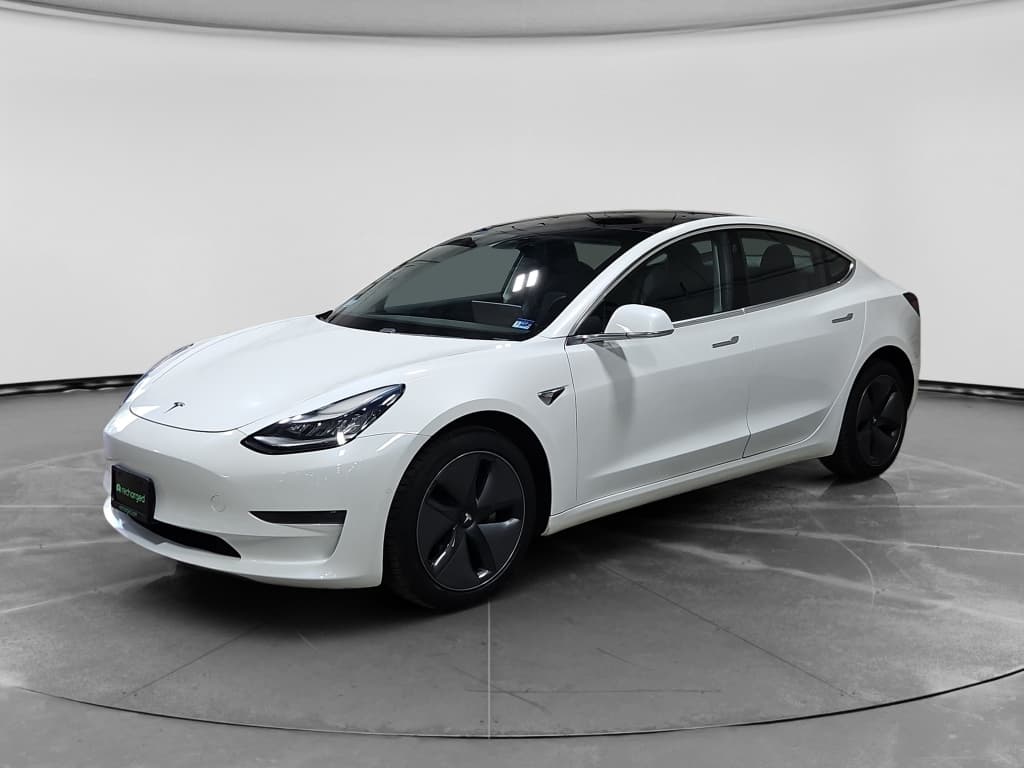
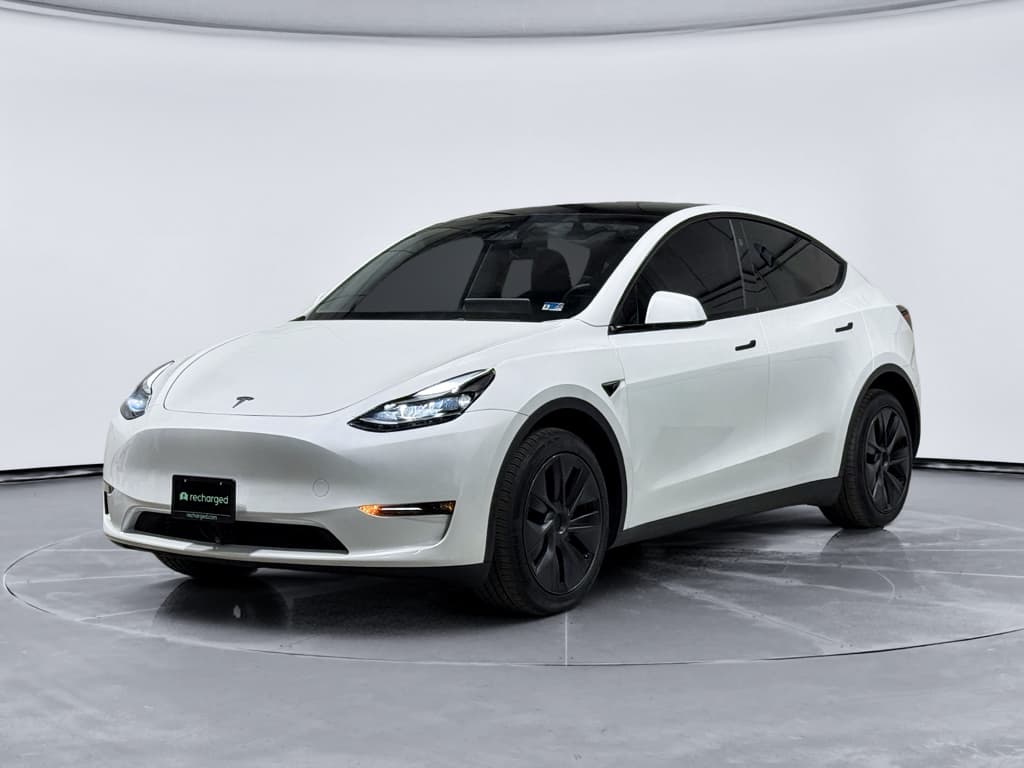
Tesla Model 3 / Model Y
Tesla has updated guidance over time, but recent owner’s manual language for some regions calls for cabin air filter replacement about every 12 months for HEPA-equipped and standard-filter cars. The Tesla online parts store has also referenced a roughly two‑year interval in the past, so the best practice is simple: follow the interval in the maintenance section of your in‑car manual, and err toward annual replacements if you live with heavy pollen, wildfire smoke, or urban pollution.
Because Teslas rely heavily on cabin overheat protection, dog mode, and preconditioning, features that run the HVAC system while parked, their filters can see more runtime than you might expect based only on mileage.
Hyundai Ioniq 5 and similar Hyundai/Kia EVs
Hyundai’s own service guidance notes that the climate control (cabin) air filter should typically be replaced about every 24 months under normal conditions, with inspection every 12 months or 7,500–8,000 miles and earlier replacement if needed. For U.S. models, Hyundai also promotes a 12,000‑mile recommendation on its service site as a conservative benchmark for cabin filters.
In practice, many Ioniq 5 owners find that checking the filter annually and replacing it every 12–24 months strikes a sensible balance, tightening the schedule in dusty or high‑pollen areas.
Other EVs, like the Chevrolet Bolt, Nissan LEAF, VW ID.4, Ford Mustang Mach‑E, and many luxury models, generally land in the same 1–2 year, 12,000–20,000‑mile window. Some offer optional HEPA or activated‑carbon filters for added protection, but the basic timing doesn’t change dramatically.
Always trust your owner’s manual first
Factors that change your EV’s cabin filter interval
Two EV drivers in the same model can need cabin filter service at very different times. Your driving environment, how you use the HVAC system, and even where you park all move the goalposts.
What can shorten (or extend) your cabin filter life?
If several of these apply to you, lean toward the shorter end of the interval range.
Urban traffic & smog
Pollen & vegetation
Heat & humidity
Dusty or unpaved roads
Where you park
Climate-control usage
Signs your EV cabin air filter needs replacement
You don’t have to guess. Even if you’ve lost track of mileage or calendar time, your EV will usually tell you it’s overdue, if you know what to look, smell, and listen for.
- Noticeably weaker airflow from the vents at the same fan setting.
- A musty, earthy, or damp smell when you first turn on A/C or heat.
- A whistling or hissing sound from the dash or cowl area at higher fan speeds.
- Foggy windows that clear slowly, especially on cool or wet days.
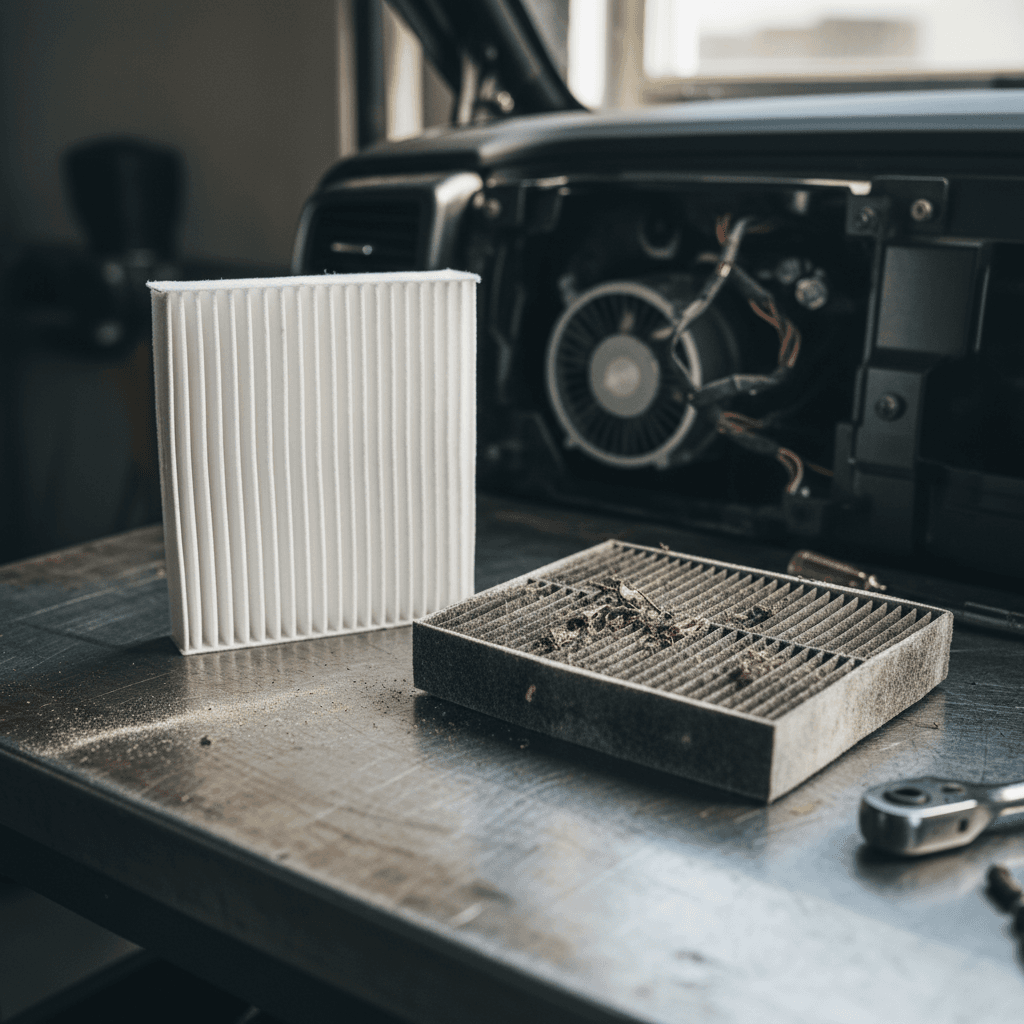
- Visible dirt, leaves, or discoloration on the filter when you inspect it.
- Allergy or asthma symptoms that spike when you’re in the car, then ease when you’re out.
Don’t ignore odors or fogging
Dealer vs. DIY cabin filter changes
If there’s one EV maintenance item that’s routinely overpriced at the dealership, it’s the cabin air filter. The part itself is usually inexpensive, and on many EVs the procedure is quick and tool‑light, often easier than replacing the wiper blades.
What dealers typically charge
At franchise dealerships, it’s common to see quotes of $80–$150 for a cabin filter replacement, sometimes more at luxury brands. That bill usually breaks down into:
- $20–$60 for the part, depending on brand and whether it’s a HEPA or carbon filter.
- $60–$100 in labor, even when the job takes 5–15 minutes.
There’s nothing wrong with having a pro do the work if you’re already in for service and value the convenience. But it’s worth knowing you have options.
DIY realities for most EVs
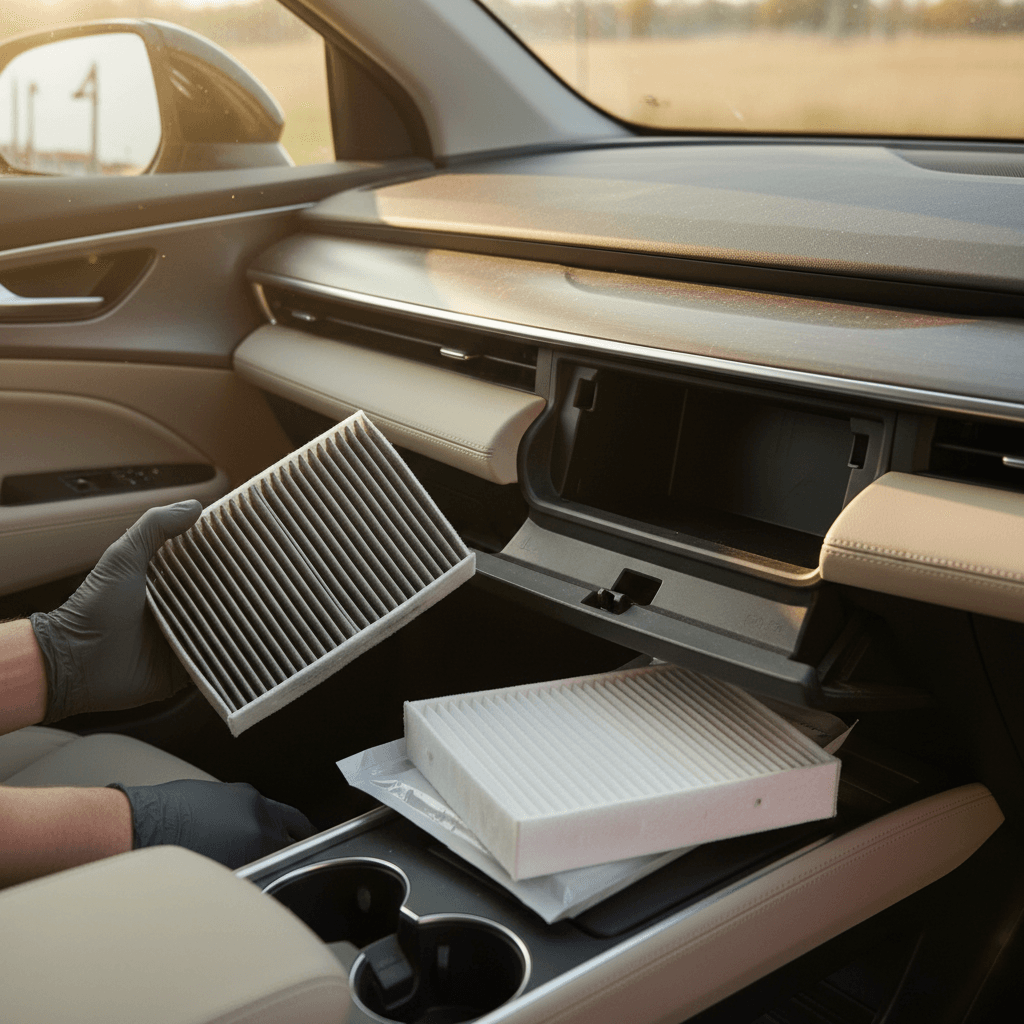
On many mainstream EVs, the cabin filter is behind the glovebox or under the cowl and can be accessed with basic hand skills. Typical DIY realities:
- Time: 5–20 minutes for most owners once you’ve watched a guide video.
- Parts cost: Often $10–$40 for a quality aftermarket or OEM‑spec filter.
- Tools: Sometimes none; at most a screwdriver or trim tool.
If you’re comfortable with simple home projects, cabin filters are an ideal entry point into EV maintenance you can handle yourself.
Where Recharged fits in
Ready to find your next EV?
Browse VehiclesStep-by-step EV cabin air filter checklist
Every EV is a little different, but the basic decision-making process is the same. Use this checklist as a quick annual ritual, set a reminder in your phone tied to allergy season or your registration renewal.
Your annual EV cabin filter check
1. Check your owner’s manual
Look up the official cabin or climate control filter interval and note whether your EV uses a standard, carbon, or HEPA-grade filter, and whether there are different schedules for “normal” and “severe” service.
2. Review your driving conditions
Be honest about where and how you drive. Lots of stop‑and‑go traffic, dirt roads, wildfire smoke, or tree‑lined parking? Plan for the shorter end of the interval range.
3. Inspect the filter visually
If access is reasonable, open the filter housing and slide the element out enough to inspect. Heavy discoloration, leaves, or strong odors are your cue to replace, even if you’re early on miles.
4. Decide on OEM vs. upgraded filters
Sticking with OEM is always safe. If odors are an issue, consider an <strong>activated‑carbon</strong> filter. If your EV supports it, an upgraded HEPA element can add protection against very fine particles.
5. Replace carefully, note the airflow direction
Filters are directional. Watch for arrows indicating airflow or “up.” Install the new filter in the same orientation to ensure proper sealing and performance.
6. Reset reminders and document the change
If your EV has a service reminder for the cabin filter, reset it. Jot down the mileage and date in a notes app or maintenance log so you can confidently follow your personal schedule.
How cabin filter maintenance differs for used EV buyers
When you’re shopping used, you don’t always know how closely the previous owner followed the maintenance schedule. The good news: cabin filters are cheap, fast insurance and a quick way to make a used EV feel, and smell, like new.
- If there’s any doubt about prior service, assume the cabin filter is overdue and replace it proactively.
- Use the first replacement to establish your own baseline, then follow the interval that matches your driving.
- Pay special attention to musty odors, noisy blowers, or weak defrost performance on a test drive, these can hint at a neglected HVAC system.
- On higher-mileage EVs, ask for service records or a digital report like the Recharged Score that shows what’s been checked recently.
Fast win after purchase
EV cabin air filter replacement FAQ
Frequently asked questions about EV cabin filters
Key takeaways and next steps
A cabin air filter isn’t as glamorous as a 300‑mile range or DC fast‑charge speeds, but it’s a big part of how your EV feels to live with every day. Treat it like the consumable it is: inspect at least once a year, replace on a 12–24‑month schedule that matches your reality, and don’t be shy about doing the work yourself if your model makes it easy.
If you’re shopping for a used EV, ask how recently the cabin filter was replaced and whether there’s documentation to back up the broader maintenance story. When you buy through Recharged, your EV comes with a Recharged Score battery health report and expert guidance on maintenance priorities, so you can set a smart schedule from day one, including that small but mighty cabin filter that keeps every drive literally easier to breathe.