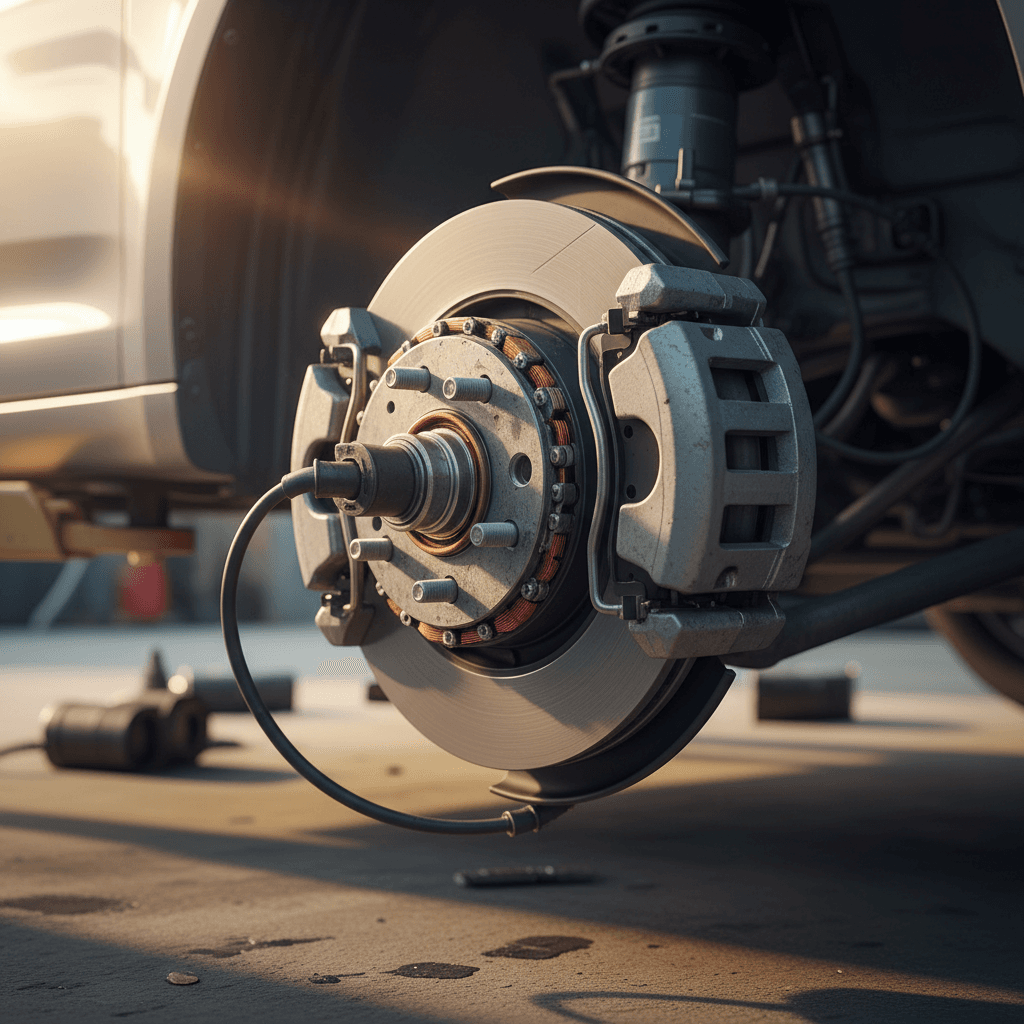
If you’ve heard that EV brake pad life is longer than on a gas car, you’ve heard right. For many drivers, brake pads on a modern electric vehicle can last well over 100,000 miles, sometimes the life of the car. But that doesn’t happen by magic, and it doesn’t happen for everyone.
Key takeaway
EV brake pads last longer: the short answer
On a typical gas car, you might replace brake pads every 30,000–60,000 miles, sometimes sooner if you drive hard or tow. In many EVs, especially those with strong one‑pedal driving, owners routinely see 80,000–150,000 miles on the original pads, and some never need a pad replacement at all.
- EVs slow down primarily with the electric motor, not the brake pads.
- Less heat and friction means pads and rotors wear much more slowly.
- Software lets you choose stronger or weaker regenerative braking levels.
- You still have conventional brakes for hard stops and emergencies.
To understand why EV brake pad life is longer, you need to look at what’s happening when you lift off the accelerator and when you press the brake pedal.
How regenerative braking actually reduces brake wear
In a gas car, letting off the throttle gives you some engine braking, but most slowing still happens when you press the brake pedal. Hydraulic pressure squeezes the pads against the rotors, turning your kinetic energy into heat, and wearing away brake material in the process.
What happens in a gas car
- Lift off the accelerator: the engine coasts, but does little braking.
- Press the brake pedal: pads clamp onto rotors, generating heat.
- All of the car’s kinetic energy is wasted as heat.
What happens in an EV
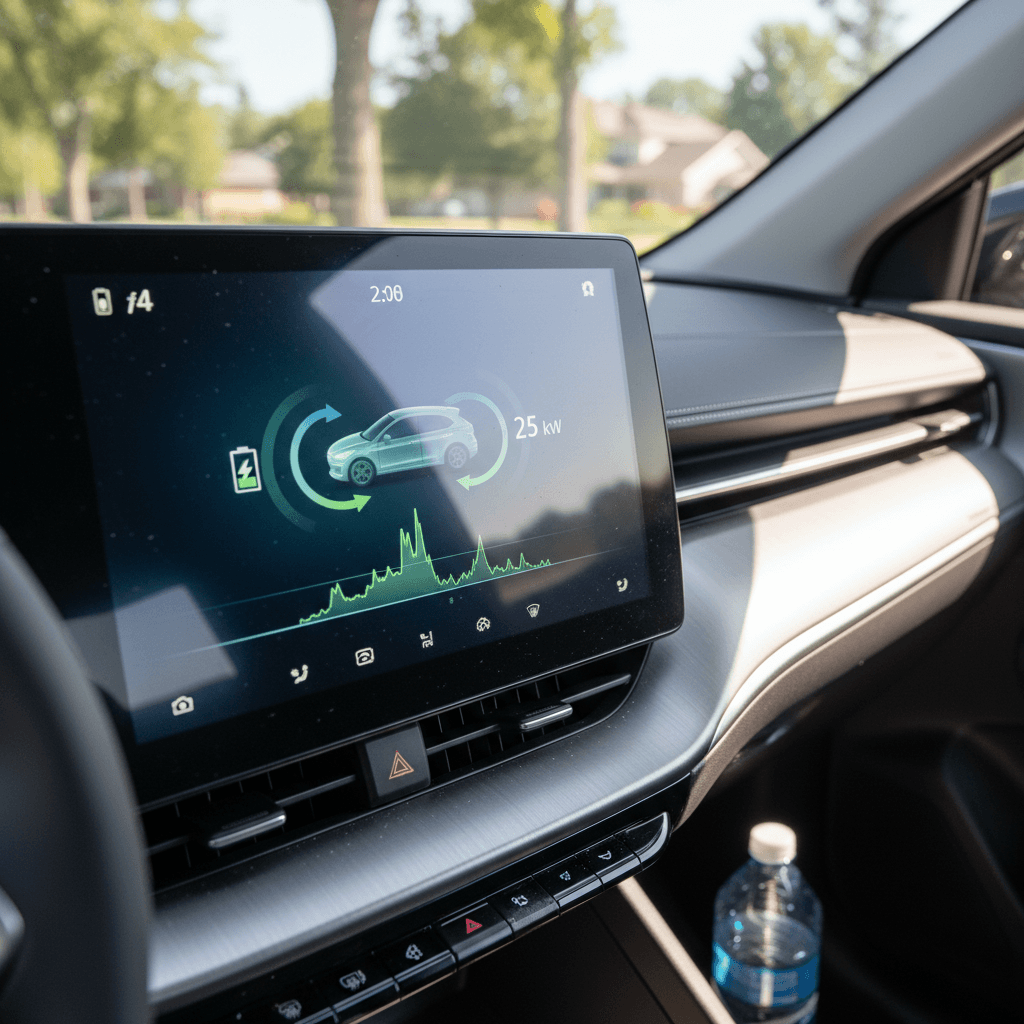
- Lift off the accelerator: the motor switches to generator mode.
- The car slows as the motor resists rotation and produces electricity.
- Energy is sent back into the battery instead of turning into heat.
That second scenario is regenerative braking. Because the motor is doing much of the work, the hydraulic brakes, pads, rotors, calipers, are used far less in everyday driving. They’re still there, and they still engage when you brake hard or when regen maxes out, but in normal commuting they may only do a fraction of what they would on a comparable gas car.
Use one-pedal mode
How much longer can EV brake pads last in the real world?
Typical brake pad life: EV vs. gas car
Those numbers aren’t promises, they’re patterns. Some taxi and ride‑share drivers rack up huge mileage and still report minimal brake wear because their cars spend all day in stop‑and‑go traffic where regen shines. On the other hand, an EV doing mostly high‑speed highway driving (where regen is naturally lower) or driven very aggressively can wear brakes closer to traditional intervals.
Good news for used EV buyers
Ready to find your next EV?
Browse VehiclesWhat still wears out EV brake pads (and rotors)
EVs don’t get a free pass on brake wear. The same physics still apply when you reach the limits of regeneration or need emergency stopping power. And there’s one EV‑specific issue many owners overlook: corrosion from lack of use.
The main brake wear culprits in EVs
Regen helps, but it can’t break the laws of physics
Hard, repeated stops
Towing & heavy loads
Rust & corrosion
Don’t ignore your brakes just because it’s an EV
City vs. highway driving and your style behind the wheel
Regenerative braking does its best work when you’re constantly speeding up and slowing down. That’s why urban commuters often see spectacular brake life in EVs, while drivers who spend all day cruising on the interstate may see less of a difference compared with a gas car.
City & suburban stop‑and‑go
- Frequent deceleration events give regen lots of chances to work.
- One‑pedal driving becomes second nature in traffic.
- Friction brakes might only chime in for the last few mph or sudden stops.
Result: Often the longest brake pad life you’ll ever see.
Highway‑heavy driving
- Once you’re at speed, you’re not slowing and accelerating as often.
- Regen is used less frequently, especially with adaptive cruise control that maintains speed.
- Long downhill grades at high speed can still overwhelm regen capacity.
Result: Longer pad life than a gas car in many cases, but not as dramatic.
Your personal style matters, too. Smooth drivers who look far ahead, lift off early, and let regen do the work will get more out of their pads than drivers who accelerate hard and brake late, EV or not.
Driving habits that extend EV brake life
Anticipate traffic and lift early
Look several cars ahead and ease off the accelerator sooner so your EV has time to slow using regen instead of a last‑second stomp on the pedal.
Use the highest regen setting you’re comfortable with
Experiment with your car’s regeneration or one‑pedal modes and choose the strongest level that still feels smooth. It might take a few days to adjust, but it pays off in pad life and efficiency.
Avoid riding the brake pedal
Resting your foot lightly on the brake can keep pads in light contact with rotors, generating heat and uneven wear. Let the pedal fully release unless you’re actively slowing.
Let the car handle downhill braking
On long descents, downshift‑style modes or “B” modes (if equipped) increase regen. Use them instead of manually feathering the brakes the whole way down.
Maintenance tips to maximize EV brake pad life
The beauty of EV brakes is that they can last a long time with relatively little fuss. But a few smart habits will help you get the full benefit of that extra longevity while avoiding unpleasant surprises.
- Schedule a brake inspection at least once a year, or per your owner’s manual.
- Ask your shop to check pad thickness, rotor condition, slide pins, and caliper operation.
- In wet or salty regions, have the brakes cleaned and lubricated periodically to prevent sticking.
- If your EV has a built‑in brake maintenance or “burnish” mode, follow the manufacturer’s guidance to exercise the brakes occasionally.
- Don’t ignore noises, pulsation, or warning lights, catching a small problem early is always cheaper.
Combine brake checks with tire rotations
Used EV shopping: what to check on the brakes
If you’re looking at a used electric vehicle, the brakes are both an opportunity and a risk. The opportunity: they may have lots of life left. The risk: if they’ve been neglected or corroded, you could be facing a brake job early in your ownership.
Brake questions to ask when buying a used EV
Whether you’re at a dealership, a private seller, or browsing online
1. When were the brakes last inspected?
2. Any signs of rust or vibration?
3. Is there a detailed condition report?
4. Has brake work already been done?
When you buy through Recharged, our EV‑specialist team inspects the vehicle and provides a transparent report that covers far more than brakes: battery health, charging performance, and fair‑market pricing, plus support with financing, trade‑ins, and nationwide delivery.
Cost savings: what longer brake life really means
Longer EV brake pad life is part of a bigger story: lower routine maintenance costs compared with a gasoline car. Fewer oil changes are the headliner, but brakes are a meaningful supporting act.
Example: brake costs over 150,000 miles
Illustrative comparison for a typical compact SUV, actual numbers will vary by model and driving style.
| Vehicle type | Typical pad/rotor replacements | Estimated total brake service cost | What’s driving the cost |
|---|---|---|---|
| Gas SUV | 2–3 full brake jobs | $800–$2,400 | More frequent pad and rotor wear from friction braking on every stop. |
| Electric SUV | 0–1 full brake jobs | $0–$900 | Regenerative braking takes the load off pads; you may need only inspection and occasional cleaning. |
EVs often need fewer major brake jobs over their lifetimes, especially in city use.
On top of that, every extra mile you get out of your pads and rotors means fewer trips to the shop and fewer chances for surprise repairs. If you’re comparing a used EV to a used gas vehicle with similar mileage, projected brake costs over the next several years should be part of your total cost picture.
Brakes + battery = the big picture
FAQ: EV brake pad life and regenerative braking
Common questions about EV brake pad life
Bottom line: EV brakes last longer, if you let them
Electric vehicles give you a built‑in advantage on brakes: regenerative braking turns what used to be wasted heat into usable energy, and that means far less work for your pads and rotors. For many owners, that translates into brake components lasting two to four times longer than in a comparable gas car, sometimes even the life of the vehicle.
To capture those benefits, you still need to do your part: use strong regen or one‑pedal modes when you can, drive smoothly, and keep up with simple inspections so corrosion or sticking parts don’t sneak up on you. And if you’re shopping used, treat brake condition as one important piece of the overall puzzle along with battery health, charging performance, and price.
When you shop with Recharged, every EV comes with a Recharged Score Report, EV‑savvy support, and options for financing, trade‑ins, and nationwide delivery. That way, you’re not just buying an electric car, you’re buying into a clear, data‑backed picture of its long‑term ownership costs, including how those longer‑lasting EV brakes work in your favor.