Buy an EV

  • EVs for sale
  • Learn about EVs
  • Articles
  • Charging

Sell or trade

  • How it works

Financing

  • Get pre-qualified
  • Credit application

Contact us

  • Book a consultation
  • Call us at (804) 390-5910
  • Email us at hello@recharged.com
  • Visit our Experience Centers
    • Richmond, VA
    • Fairfax, VA
    • Charlotte, NC

© 2025 Recharged. All Rights Reserved.

7-Day Return Policy·Privacy Policy·SMS Opt-In·Do Not Sell or Share My Information·
TikTokYouTubeInstagramLinkedInFacebook
    EV Battery Warranty Capacity Thresholds: What 70% Really Means
    Battery & Range·11 min read·By Recharged Editorial Team

    EV Battery Warranty Capacity Thresholds: What 70% Really Means

    ev-battery-warrantybattery-capacity-thresholdbattery-degradationused-ev-buyingtesla-batteryhyundai-kia-batterynissan-leaf-batteryrecharged-scoreev-battery-healthwarranty-claims

    Table of Contents

    • What is an EV battery warranty capacity threshold?
    • Common capacity thresholds by automaker
    • How capacity thresholds are measured in practice
    • Capacity thresholds vs. real‑world battery degradation
    • Why 70% became the industry benchmark
    • Fine print: Conditions that affect your coverage
    • Used EVs: how to evaluate battery warranty and health
    • EV battery warranty capacity threshold FAQ
    • Key takeaways for EV and used EV shoppers

    When you read the fine print on an electric vehicle warranty, you’ll usually see a phrase like “70% battery capacity retention.” That’s the EV battery warranty capacity threshold, the line where the automaker promises to step in if your pack degrades faster than expected. Understanding how that threshold works is critical if you already own an EV, and absolutely essential if you’re shopping for a used one.

    In one sentence

    An EV battery warranty capacity threshold is the minimum percentage of original battery capacity, typically around 70%, that the manufacturer guarantees your pack will maintain during the warranty period, or they’ll repair or replace it under specified conditions.

    What is an EV battery warranty capacity threshold?

    Every traction battery naturally loses capacity over time. To give buyers confidence, most automakers combine a time/mileage limit (for example, 8 years/100,000 miles) with a capacity threshold. If measured usable capacity falls below that threshold during the warranty, and you’ve followed the rules, you may qualify for repair or replacement.

    • Time/mileage coverage – how long the battery is covered (e.g., 8 years/100,000 miles, whichever comes first).
    • Capacity threshold – the minimum percentage of the battery’s original usable capacity (often 70%) that must be retained during that period.
    • Trigger – if capacity falls below that percentage while still within time and mileage limits, and no exclusions apply, the automaker is obligated to act.

    Think in range, not just percentage

    If your EV had an EPA‑rated 300‑mile range when new and the warranty threshold is 70%, the manufacturer is effectively saying: “As long as you have about 210 miles of usable range left by the end of the warranty and you’ve followed the rules, you’re still within spec.”

    Common capacity thresholds by automaker

    While the exact numbers and wording vary, most mainstream EV brands in 2026 converge around a similar pattern: roughly 8–10 years of coverage with a 70% capacity retention guarantee. Here’s how that looks in broad strokes for popular brands in the U.S. market.

    Typical EV battery warranty capacity thresholds (2026)

    Representative examples for mass‑market EVs sold in North America. Always confirm the exact language for your specific model year.

    Brand / Platform (example)Duration / Mileage (whichever comes first)Capacity thresholdNotes
    Tesla Model 3 / Y8 years / 100k–120k miles70%Applies to most current U.S. Model 3/Y variants.
    Tesla Model S / X8 years / 150k miles70%Higher mileage cap on larger packs.
    Hyundai Ioniq 5 / 610 years / 100k miles70%Longer time coverage than industry average.
    Kia EV610 years / 100k miles70%Similar structure to Hyundai’s warranty.
    VW ID.48 years / 100k miles70%Common structure for European‑designed EVs.
    GM Ultium (Lyriq, Blazer EV, etc.)8 years / 100k miles70%Module‑based pack design to simplify repairs.
    Nissan Leaf8 years / 100k miles~66% (8 bars)Capacity measured via 12‑bar gauge; warranty triggers at 8 bars or fewer.

    Most brands now promise at least 70% of original battery capacity through the warranty period.

    Model years matter

    Automakers tweak battery warranties over time. A 2018 model and a 2024 model from the same brand may have different mileage caps or exclusions. Always look up the actual warranty booklet for your VIN and model year rather than assuming the latest terms apply.

    How capacity thresholds are measured in practice

    Here’s where things get less intuitive. Your dashboard range estimate or percentage gauge is not the official yardstick for warranty claims. Automakers rely on internal diagnostics and specific procedures to decide whether your pack has fallen below the warranty capacity threshold.

    How manufacturers decide if your battery is below the threshold

    What they look at when you bring an EV in for a battery warranty check

    Factory diagnostics

    Service centers plug into proprietary diagnostic tools that read the pack’s state of health (SoH), temperature history, and charge/discharge data, metrics you can’t fully see from the driver’s display.

    Standardized test conditions

    Many brands require the pack to be balanced and at a specified state of charge before measuring capacity. That means the car might stay at the dealer for hours or overnight.

    Warranty criteria

    Automakers compare the measured SoH against the written warranty threshold (e.g., 70%) and check for exclusions like abuse, unauthorized modifications, or missing required service records.

    Nissan’s “bar” system is different

    On the Nissan Leaf, capacity warranty coverage is based on the 12‑segment battery gauge. Dropping to 8 bars or fewer within the 8‑year/100,000‑mile window generally indicates capacity around the mid‑60% range and can trigger warranty coverage, subject to conditions.

    Because automakers control both the measurement tools and the definitions, capacity‑related claims aren’t always straightforward for owners. Some brands specify that only their internal tests, not third‑party apps or home chargers, count toward warranty decisions. That’s one reason independent battery health diagnostics, like the Recharged Score used on every vehicle on Recharged, are becoming more important in the used market: they provide a transparent, third‑party view of capacity and pack condition before you buy.
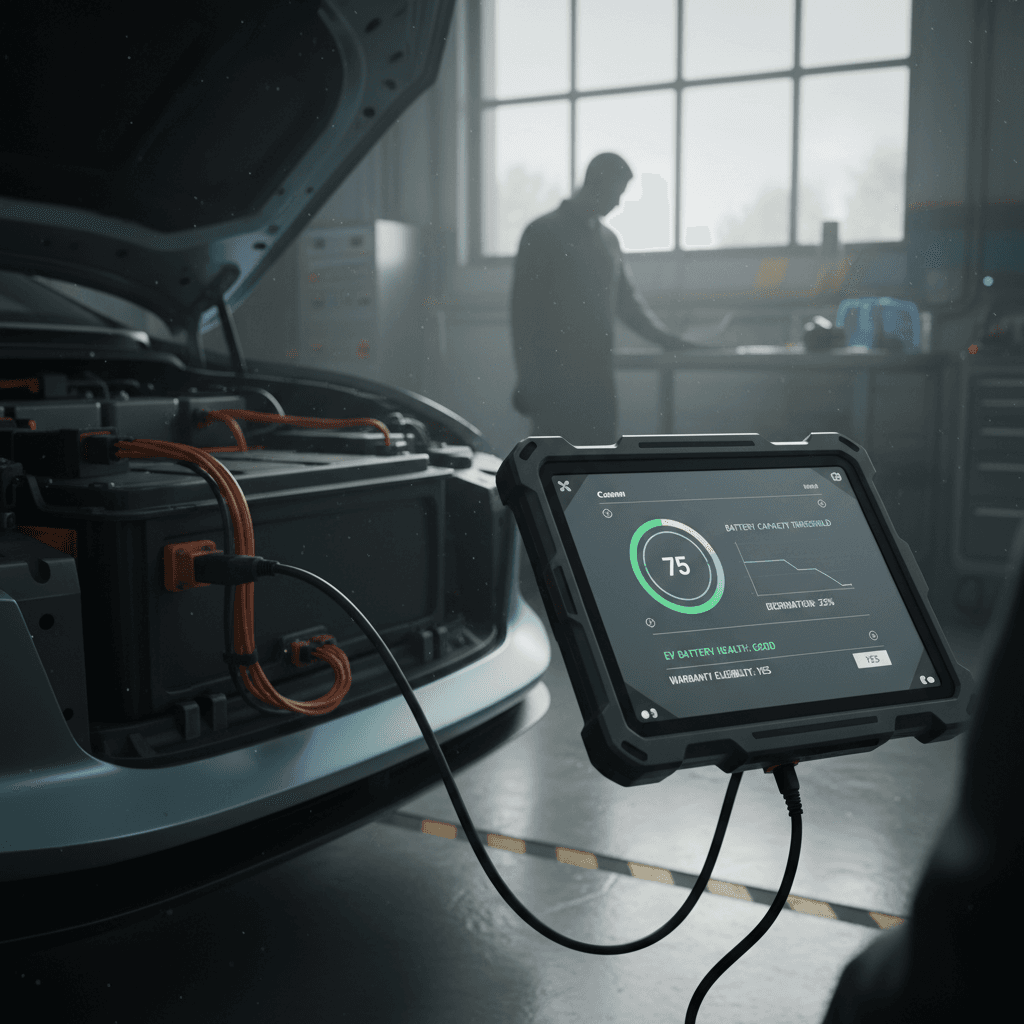
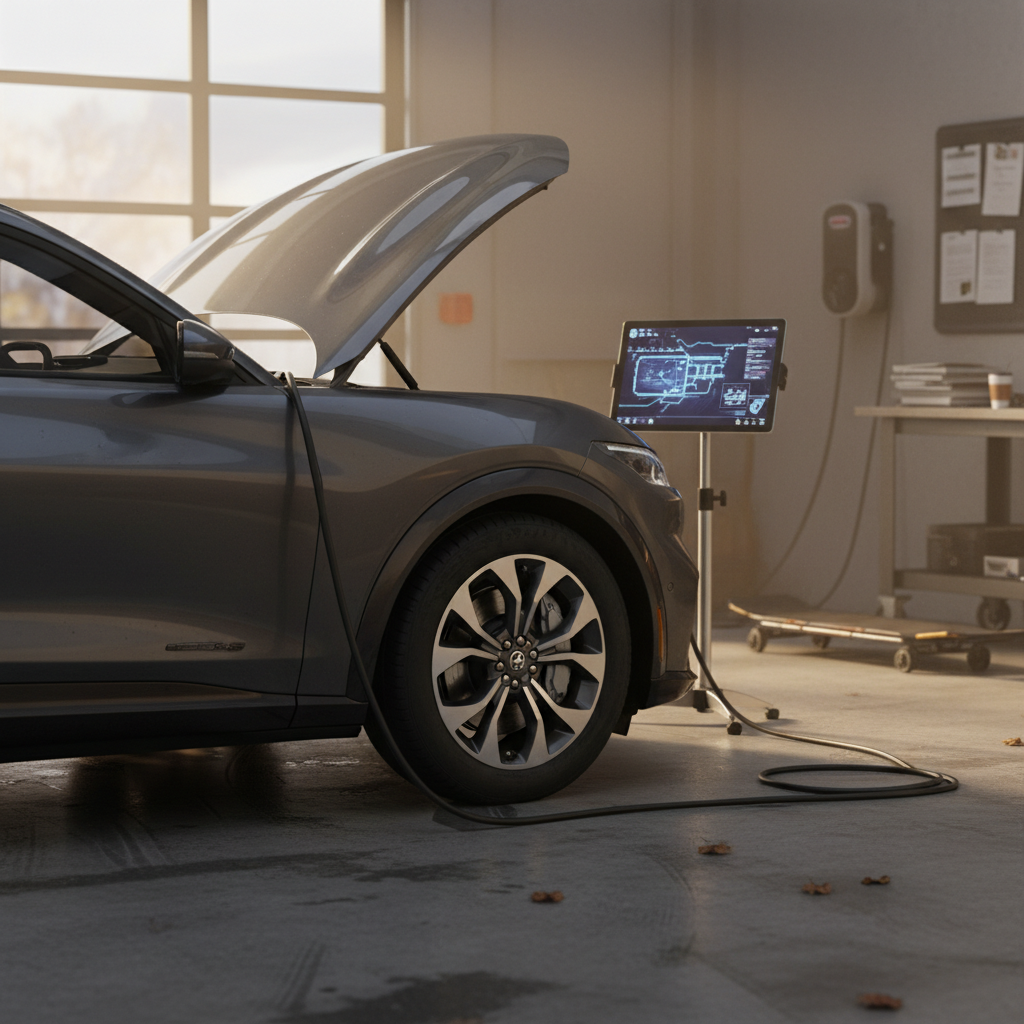
    Technician using a diagnostic tablet to assess EV battery health inside a service bay
    Automakers rely on proprietary diagnostic tools, not just the dashboard range readout, to decide if your battery has fallen below the warranty capacity threshold.

    Capacity thresholds vs. real‑world battery degradation

    Well‑designed EV packs are turning out to be more durable than many drivers expected. Real‑world data from taxis, ride‑hail fleets, and long‑term tests shows that most modern packs stay well above their warranty thresholds through 100,000 miles and beyond, especially when they use liquid cooling and modern chemistries.
    How real‑world battery wear compares to warranty limits

    70%
    Typical warranty floor
    Most automakers guarantee at least 70% of original capacity during the warranty period.
    90%+
    Actual capacity at ~100k mi
    Several long‑term tests and fleet datasets show many modern packs still above 90% capacity past 100,000 miles.
    8–12 yrs
    Warranty duration
    Most EV batteries are covered 8 years; some Hyundai and Kia models reach 10 years.
    <1–2%
    Claim rates
    Warranty claim rates for full pack replacement on late‑model liquid‑cooled EVs are typically low, based on fleet and insurer data. "}]},{

    EVs on Recharged

    See all →
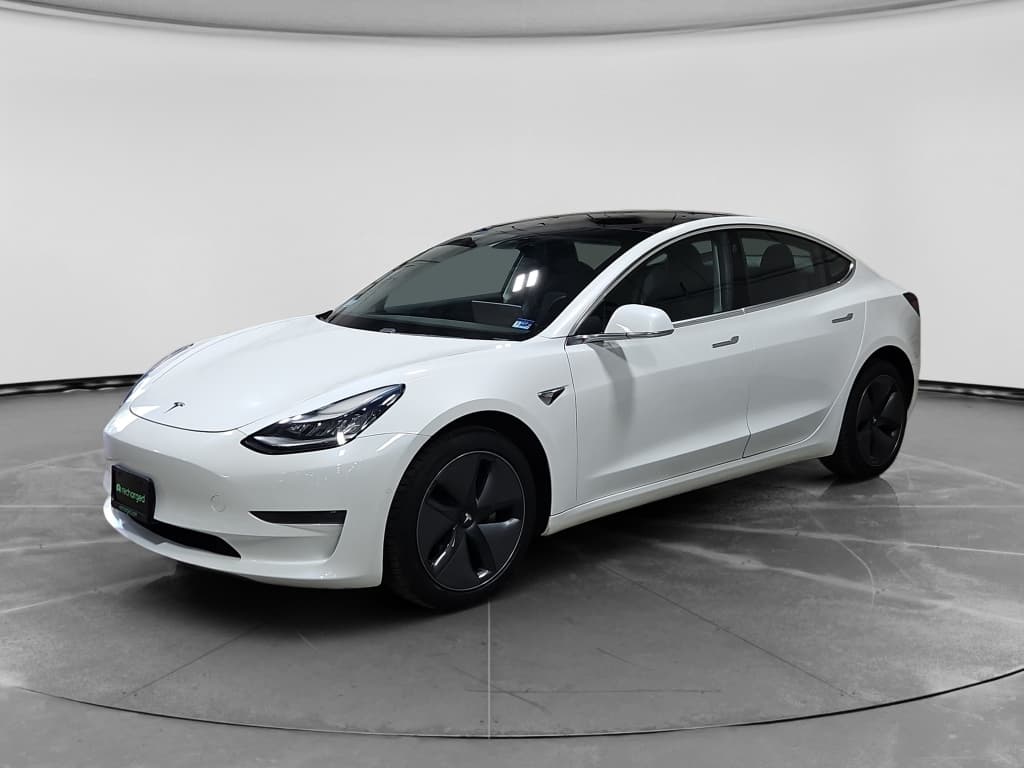
    2019 Tesla Model 3

    2019 Tesla Model 3

    Standard Range Plus•66K mi•210 mi range
    4.7/5Recharged Score
    $19,699
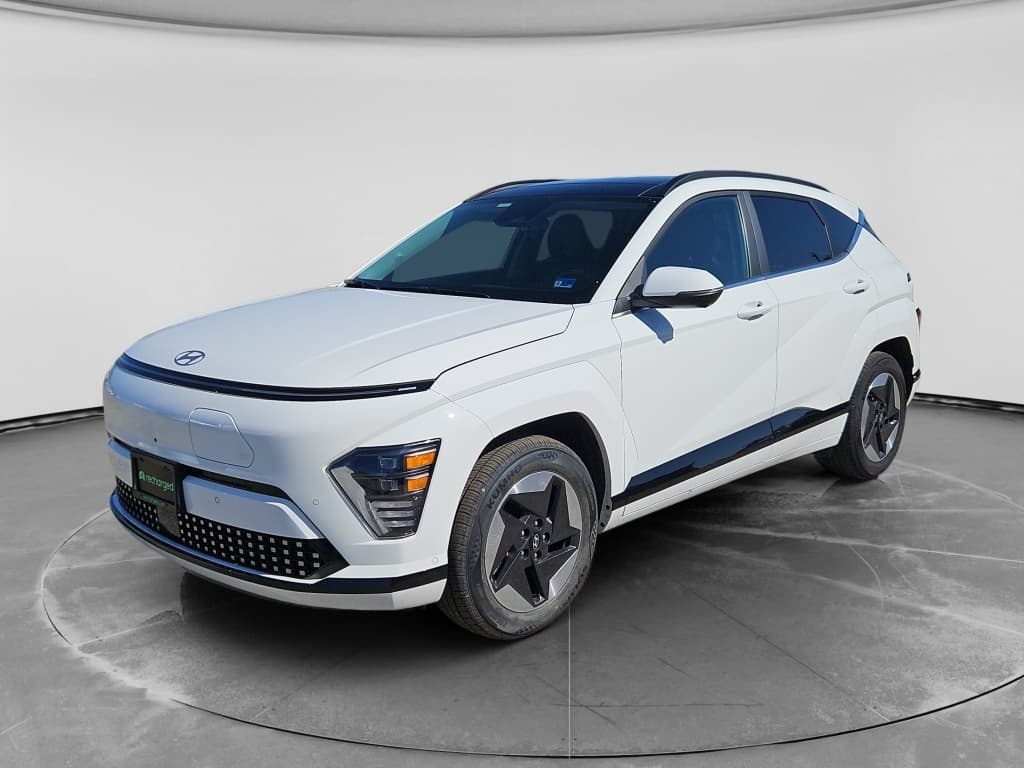
    2024 Hyundai Kona

    2024 Hyundai Kona

    Limited•31K mi•261 mi range
    4.9/5Recharged Score
    $25,597
    2024 Nissan LEAF

    2024 Nissan LEAF

    SV PLUS•39K mi•198 mi range
    4.8/5Recharged Score
    $17,997

    Related Articles

    Acura ZDX Common Problems and Fixes: What Owners Should Know
    Used EVs·11 min

    Acura ZDX Common Problems and Fixes: What Owners Should Know

    Learn the most common Acura ZDX problems, software, charging, brakes, and app issues, and how to fix or avoid them, especially when shopping used.

    acura-zdxused-ev-buyingev-reliability
    How to Sell Your Volvo EX40 (Formerly XC40 Recharge) for More
    Selling·9 min

    How to Sell Your Volvo EX40 (Formerly XC40 Recharge) for More

    Learn how to sell your Volvo EX40 (XC40 Recharge) for maximum value. Pricing tips, battery health, where to sell, and how Recharged can simplify the process.

    volvo-ex40volvo-xc40-rechargeselling-ev
    2024 Ford Mustang Mach-E Recalls List: What Owners Need to Know
    Problems & Recalls·9 min

    2024 Ford Mustang Mach-E Recalls List: What Owners Need to Know

    See every major 2024 Ford Mustang Mach-E recall in one place, what each fix involves, and how to check your VIN before buying a used Mach-E.

    ford-mustang-mach-e2024-model-yearev-recalls