If you’ve ever watched your range tumble on a cold morning or seen your DC fast charge slow to a crawl, you’ve already met the invisible star of EV ownership: the battery thermal management system. Get battery temperature wrong and your car feels tired, slow to charge, and short‑legged. Get it right and the same pack delivers more range, more performance, and a longer life.
In a sentence
Why battery temperature matters so much
Lithium‑ion cells are a bit like athletes: they have a narrow temperature band where they perform beautifully and a wide band where they complain, sulk, and eventually retire early. Too hot and chemical reactions inside the cell speed up, which feels great in the moment, big power, fast charging, but quietly accelerates capacity loss and internal damage. Too cold and the cell’s internal resistance spikes, your available power drops, and fast charging can cause lithium metal to plate onto the anode, a one‑way ticket to long‑term degradation.
What temperature does to an EV battery
Modern EVs know all of this, of course. That’s why you hear fans spin up after a fast charge or notice the car quietly heating the pack on the way to a DC charger. Underneath the floor, there is a surprisingly sophisticated thermal life‑support system working to keep every cell in the pack within a tight temperature window.
EV battery thermal management explained in plain English
“Battery thermal management” sounds like a whitepaper topic, but the idea is simple: the car constantly measures the battery’s temperature and uses cooling and heating hardware to nudge it toward ideal. Software then decides how much power you can use or how fast you can charge based on those readings.
- When the pack is too hot: the system pumps coolant, runs fans, and may slow charging or limit power to protect the cells.
- When the pack is too cold: heaters and sometimes a heat pump warm the battery so it can deliver power and accept charge safely.
- When the pack is just right: the car lets you access full performance and near‑peak fast‑charging speeds while keeping degradation in check.
Think of it as climate control for thousands of small batteries living under your feet. You rarely see it working, but when it’s missing or undersized, as in some early air‑cooled EVs, you feel it immediately in sluggish winter driving and overheated, throttled fast‑charging sessions in summer.
Key components of an EV battery thermal management system
What’s actually in there?
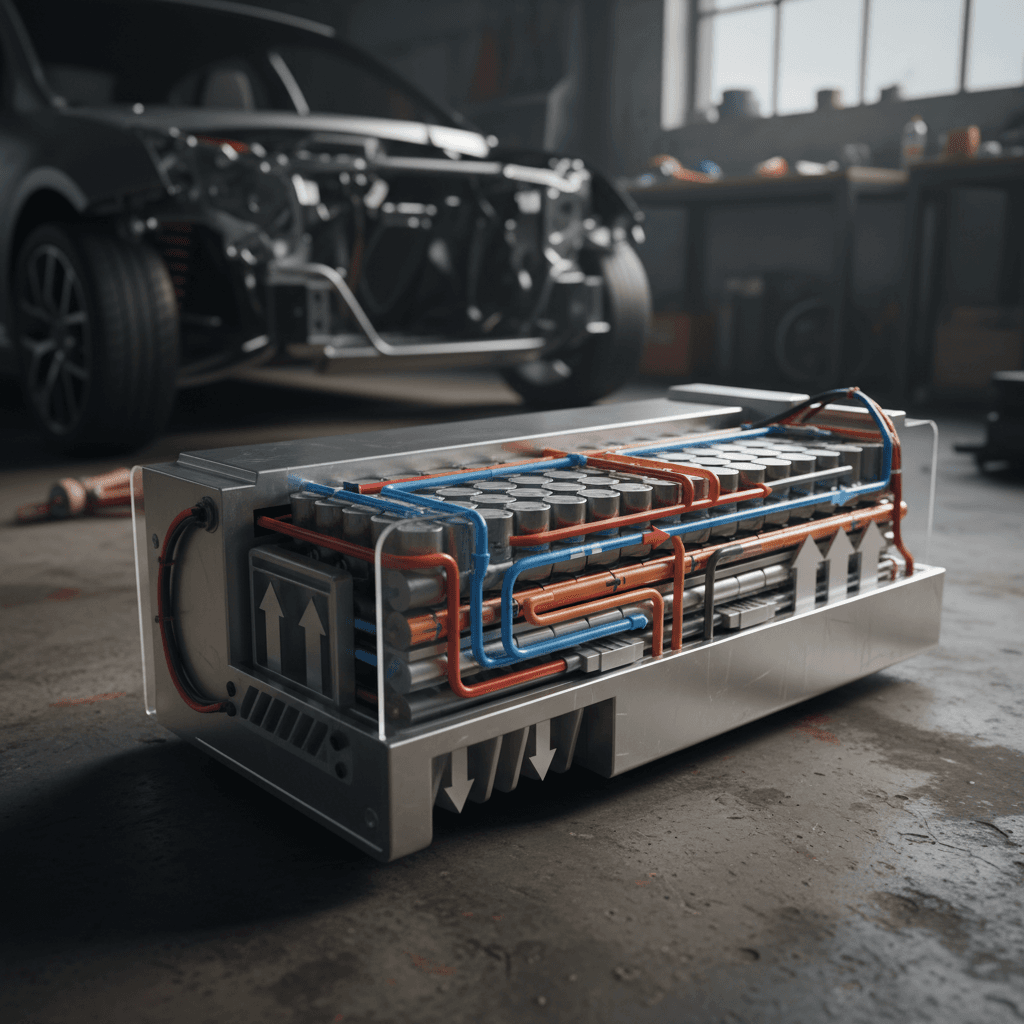
The main pieces almost every modern EV uses to manage battery temperature.
Battery pack & sensors
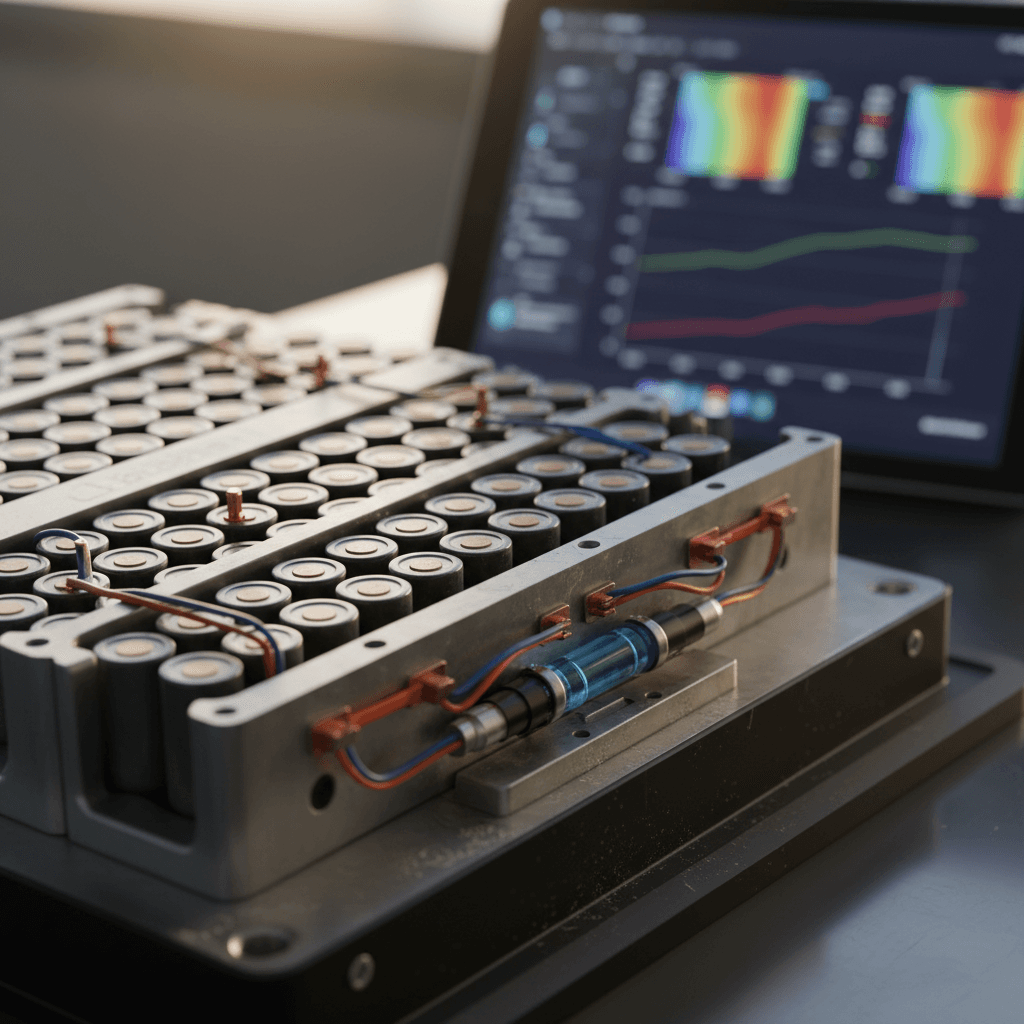
The pack itself is packed with temperature sensors, often multiple per module, feeding data to the battery management system (BMS). The BMS decides how hard the pack can be pushed and when to call in heating or cooling.
Coolant loop & plates
A water‑glycol coolant mixture circulates through aluminum cooling plates or channels integrated into the pack. Hot battery? The coolant carries that heat away to a radiator or chiller.
Radiator, chiller & fans
Up front, radiators and electric fans dump heat to outside air. In many EVs, a refrigerant chiller, shared with the A/C system, can pull battery temps down aggressively during fast charging or track use.
Heaters
Resistive heaters or PTC elements warm the pack in cold weather. Some cars also use the powertrain’s own waste heat, routed through valves and heat exchangers, to gently bring cells up to temperature.
Valves & manifolds
Electronically controlled valves decide who gets cooling or heating when: the battery, drive units, cabin, or all three. Newer EVs use integrated thermal modules that juggle these flows with surprising finesse.
Thermal control software
Software ties it all together, forecasting heat buildup from your route, driving style, and charging plan, then pre‑emptively heating or cooling the battery, often before you realize anything’s happening.
Why liquid cooling dominates new EVs
Cooling technologies: liquid, air and beyond
Not all thermal management systems are created equal. The hardware menu has evolved quickly as packs have grown larger and DC fast‑charging speeds have leapt from 50 kW to 150 kW and beyond.
Common EV battery cooling approaches
From early air‑cooled packs to sophisticated liquid and hybrid systems.
| Cooling type | How it works | Strengths | Weak spots | Typical use |
|---|---|---|---|---|
| Passive / minimal | Relies on natural airflow and conduction through the pack enclosure, sometimes with simple fans. | Cheaper, simpler, lighter. | Struggles with sustained fast charging and hot climates; more uneven cell temperatures. | Older EVs and low‑cost city cars. |
| Air‑cooled active | Blower fans push cabin or outside air through channels around the pack. | Better than passive, easier to engineer. | Limited heat‑moving capacity; noisy under heavy load; pack can still run hot on repeated fast charges. | First‑gen EVs, some plug‑in hybrids. |
| Liquid‑cooled (standard) | Coolant flows through plates or channels attached to modules; heat sent to radiator or chiller. | Strong heat removal, supports repeated fast charging and towing. | Slight weight and complexity penalty; must manage leaks and pump failures. | Most modern BEVs across price points. |
| Hybrid / advanced | Liquid cooling plus extras like phase‑change materials, micro‑channels or nanofluid coolants. | Very uniform cell temperatures, supports ultra‑fast charging and high‑power driving. | Cost and complexity; mostly in research or high‑end platforms today. | High‑performance EVs and next‑gen designs. |
If you’re shopping for a used EV, understanding how the pack is cooled is one of the best proxies for how it will age under real‑world heat and fast‑charging use.
Beware the hot‑climate mismatch
Heating, preconditioning and heat pumps
If cooling saves your battery from summer, heating saves it from winter. Below freezing, the chemistry inside each cell slows dramatically. Your car responds by restricting power, shrinking usable capacity, and, if you plug into a DC fast charger, slashing the charging rate to avoid damage.
Battery preconditioning: the secret sauce for fast charging
Battery preconditioning simply means warming (or occasionally cooling) the pack to the ideal temperature before you arrive at a fast charger. Many newer EVs will automatically do this if you set a DC fast charger as your destination in the built‑in navigation, quietly using 5–7 kW of energy to bring the pack into that Goldilocks zone.
- In cold weather, preconditioning can be the difference between a capped 50–70 kW charge and a near‑peak 200+ kW session on cars that support it.
- In hot weather, routing through the car’s nav can trigger extra cooling before you arrive so the pack doesn’t hit its temperature ceiling and throttle early.
- Preconditioning uses energy, but the time saved at the charger, and the reduced thermal stress on the pack, usually more than offset the cost.
Pro move on road trips
The rise of the heat pump
Many 2024–2026 EVs use a heat pump instead of (or alongside) resistive heaters. Think of it as an air‑conditioner run in reverse: it moves heat rather than creating it from scratch. The clever bit is that modern systems can shuffle heat among the cabin, battery, and powertrain:
- In winter, waste heat from the inverter and motors can be routed into the battery and cabin, cutting the range hit from cabin heating.
- In summer, the same circuit can aggressively pull heat out of the pack during high‑load driving or fast charging.
- Integrated thermal modules can prioritize where heat goes based on what you’re doing, towing, road‑tripping, or just commuting.
Why you want an EV with an efficient heater
How thermal management affects range and charging speed
Once you understand that your EV is constantly juggling temperature, range and charging behavior suddenly make more sense. The weird stuff, slow winter charging, summer power limits, fans roaring after a DC session, stops being mysterious and starts looking like self‑preservation.
Cold weather & range
In cold conditions, the battery’s internal resistance rises. The car spends more energy just heating itself and the cabin, while delivering less usable capacity. You see this as:
- Lower indicated range at a given state of charge.
- Sluggish acceleration and limited regen until the pack warms up.
- Very slow DC charging if the pack is near freezing and not preconditioned.
A strong thermal system narrows this winter penalty by preheating the pack and re‑using drivetrain waste heat.
Heat, fast charging & throttling
High‑power DC charging and hard driving both push a lot of current through the cells, generating heat. The thermal system works overtime to shed it. If it can’t keep up, you’ll see:
- Charging curves that taper early, dropping from a headline 200+ kW to much lower numbers.
- Temporary power limits after repeated high‑speed runs, especially in hot climates.
- Louder fans and extended cooling after you unplug from a fast charger.
Good cooling lets automakers safely advertise bigger numbers, faster 10–80% times, higher continuous power, without cooking the pack.
Everybody understands that a smartphone forced to charge in the sun will slow down or shut off. EVs are the same story, just at highway speeds and 400–800 volts.
What this all means when you buy a used EV
If you’re shopping the used market, battery thermal management isn’t just trivia, it’s one of the quiet dividing lines between EVs that age gracefully and EVs that feel tired before their time. Two cars with the same odometer reading can have very different packs, depending on how well they managed heat and cold.
Questions to ask about a used EV’s thermal system
You don’t have to be an engineer, just know what to listen for and what to read in the specs.
Is the pack liquid‑cooled?
In most cases you want an EV with a liquid‑cooled battery, especially if you live in a very hot or cold climate or rely on DC fast charging. It’s a strong sign the car was designed for real‑world abuse, not just city errands.
How does it behave at fast chargers?
Owners’ reports and road‑test data can reveal a lot. Does the car maintain decent charging speeds on back‑to‑back sessions, or does it crash to low power? Chronic throttling hints at marginal cooling.
How bad is its winter range hit?
Every EV loses range in the cold, but some handle it better. Look for models with battery preconditioning and a heat pump; they tend to keep more usable range and charge faster in winter.
Has the battery been health‑checked?
This is where a structured report matters. At Recharged, every vehicle gets a Recharged Score with verified battery health and fast‑charge performance, so you’re not guessing how the thermal system has treated the pack over the years.
How Recharged bakes thermal history into the story
Driver checklist: easy ways to help your battery
The good news is that you don’t need to baby an EV. But a few simple habits let the thermal system do its best work and keep your pack happier for longer, especially if you plan to own the car for years or care about resale value.
Simple thermal‑friendly habits
1. Use built‑in nav for DC fast charging
Let your car know you’re headed to a fast charger so it can precondition the pack. This can easily shave minutes off each stop and reduce thermal stress, particularly in extreme temperatures.
2. Avoid fast charging on a stone‑cold or blazing‑hot pack
If the car has been parked in freezing conditions or baking sun, give it a little time to warm or cool, or drive gently, before jumping on a high‑power DC charger.
3. Don’t chase 100% on fast chargers
Most manufacturers recommend aiming for about 80% on DC fast charging. The last 10–20% is slower, generates more heat, and isn’t great for long‑term health if you do it constantly.
4. Combine errands in extreme weather
In winter and high heat, a single longer trip is kinder to the battery than many short, cold‑soaked hops where the pack never settles into its comfort zone.
5. Park smart
In summer, shade or a garage means less work for the cooling system. In winter, plug in where you can so the car can pre‑heat the pack using shore power instead of draining the battery.
6. Pay attention to what the car is telling you
If you see repeated warnings about limited power, reduced charging speed or high battery temperature, that’s your cue to ease off and, if it persists, have the car checked.
What not to do
FAQ: Common questions about EV battery thermal management
EV battery thermal management explained – your questions answered
The bottom line on battery temperature
Underneath the software gloss and marketing numbers, an EV is still beholden to chemistry. The better a car manages that chemistry’s temperature, through smart cooling, efficient heating, and intelligent preconditioning, the more of the good stuff you get: range, rapid charging, repeatable performance and long‑term health.
As a driver, you don’t need to obsess over degrees and coolant circuits. Choose an EV with a competent thermal management system, give it half a chance in extreme weather, and it will quietly take care of itself for years. And if you’re shopping used, this is exactly the kind of invisible engineering that Recharged surfaces with our battery‑health‑driven Recharged Score, so you can buy the car you want, and the battery you need, with eyes wide open.