If you’ve spent any time in Tesla forums, you’ve seen the same debate on repeat: is Tesla PPF (paint protection film) really worth it, or is it just an expensive upsell detailers love? With 2026 pricing for quality film and labor often running north of $2,000 for a front end and up to $6,000–$7,000 for a full wrap, it’s a fair question, especially if you’re also thinking about long‑term resale value or planning to buy a used Tesla.
Quick answer
Why Tesla Owners Obsess Over PPF
Tesla paint has a reputation, fair or not, for being on the thin and chip‑prone side compared with many legacy automakers. Combine that with big, painted front bumpers, wide hoods, and fairly low ride heights (especially on Model 3 and Performance trims), and you have a recipe for rock chips, sandblasting, and road rash on the front of the car within the first 10,000–20,000 miles.
- Frequent highway driving or long‑distance commuting
- Living in states with winter road salt, sand, or gravel (upper Midwest, Northeast, mountain states)
- Owning a darker color (black, blue, deep red) that shows every chip and swirl
- Planning to keep the Tesla 5+ years or rack up high miles
- Caring a lot about resale value and cosmetic condition
The expensive reality of Tesla paint repair
What Paint Protection Film Actually Does for a Tesla
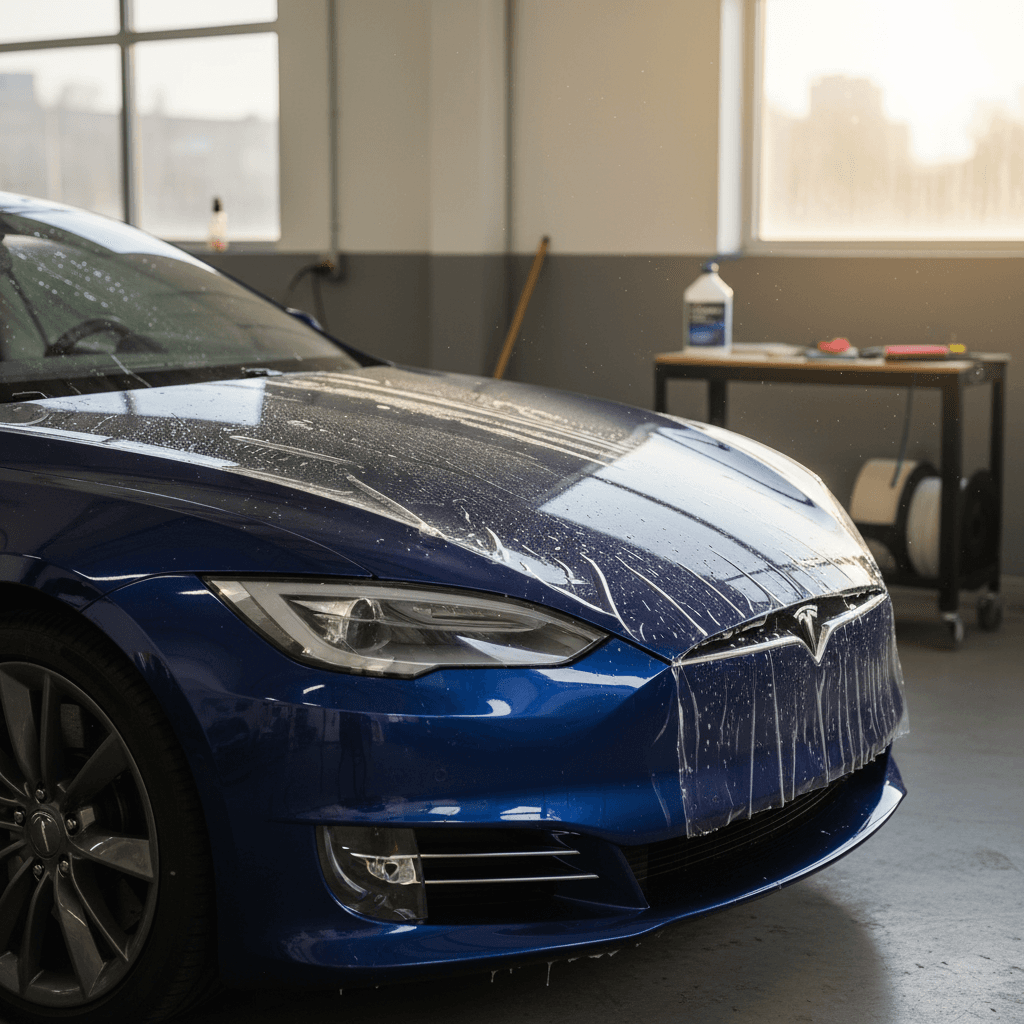
Paint protection film is a thick, optically clear urethane film that’s applied over painted panels. Modern films from brands like XPEL, SunTek, STEK, and others are designed to be virtually invisible when installed correctly and to last 8–10+ years with warranties to match.
Core benefits of PPF on a Tesla
What you’re actually buying when you pay for film, not the marketing language.
Impact protection
PPF absorbs rock chips, sand, and minor door dings that would otherwise chip or crack the paint. This is most obvious on the front bumper, hood edge, mirror caps, and rocker panels.
Self-healing surface
Most premium films have a self‑healing top coat: light scratches and swirls disappear with heat from the sun, warm water, or a heat gun.
Stain & UV resistance
PPF adds resistance to bug guts, bird droppings, tree sap, and UV that would etch or fade paint over time, especially on horizontal surfaces like the hood.
What PPF does NOT do
Real-World Tesla PPF Cost in 2026
In 2026, Tesla PPF pricing is surprisingly consistent across reputable installers in the U.S. for the mainstream models (Model 3, Y, S, X). You’re mostly paying for three things: coverage area, film brand/warranty, and installer skill.
Typical Tesla PPF price ranges in 2026 (USA)
Approximate 2026 Tesla PPF pricing by model & coverage
These are typical professional‑installer ranges using name‑brand self‑healing film in the U.S. Exact quotes vary by region and shop quality.
| Model | Partial Front | Full Front | Full Body |
|---|---|---|---|
| Model 3 | $700–$1,100 | $1,700–$2,500 | $4,500–$6,500 |
| Model Y | $900–$1,200 | $1,900–$2,700 | $5,000–$7,200 |
| Model S | $800–$1,300 | $2,200–$3,200 | $6,500–$8,000 |
| Model X | $900–$1,400 | $2,500–$3,500 | $7,000–$8,500 |
Use this as a sanity check against any quote you receive, very far above or below should trigger more questions.
What about Tesla’s own PPF option?
Tesla PPF vs Ceramic Coating: Which Protection Is “Worth It”?
People love to lump PPF and ceramic coating together, but they solve different problems. PPF is about physical impact protection. Ceramic coating is about appearance and easy cleaning. Many Tesla owners end up doing both on different budgets and timelines.
PPF (Paint Protection Film)
- What it does: Adds a thick, impact‑absorbing layer over paint.
- Best for: Rock chips, sandblasting, light scuffs, door edge damage.
- Look: Nearly invisible in gloss form; can also be satin ("stealth") to change the car’s appearance.
- Typical Tesla cost: $1,800–$2,800 for full front; $4,500–$7,000 for full car.
Ceramic coating
- What it does: Creates a thin, hydrophobic layer that makes washing easier and adds gloss.
- Best for: Deep gloss, water beading, UV and chemical resistance.
- Look: High‑gloss “wet” look; can be applied over paint or PPF.
- Typical Tesla cost: ~ $600–$1,800+ depending on term and paint correction level.
The smart combo
When PPF Is Worth It on a Tesla (And When It Isn’t)
Tesla owner profiles where PPF usually makes sense
If you recognize yourself in one of these, PPF is likely more than just vanity.
High‑mileage commuters
If you’re doing 15,000–25,000+ miles per year, especially with highway use, the front of your Tesla will see constant sandblasting. PPF often pays for itself in avoided repaints.
Harsh‑climate drivers
Owners in snow‑belt states or on gravel‑treated roads see accelerated paint wear on rocker panels and lower doors. Targeted PPF here is extremely high‑value.
Resale‑value maximizers
If you plan to sell the car in 3–6 years, having a chip‑free front end and clean rockers can make your Tesla stand out, and appraisers notice.
When PPF may not pencil out
How Much PPF Coverage Do You Really Need?
The most rational way to think about PPF is by coverage priority rather than "full car or nothing." Tesla owners often over‑buy coverage that doesn’t see much abuse while neglecting the cheap areas that quietly take the brunt of winter and highway debris.
Coverage tiers for a Tesla, from “must have” to “nice to have”
1. Rocker panels & lower doors
These are notorious problem areas on Model 3/Y in snow and gravel regions. They’re relatively cheap to protect and very expensive to respray cleanly. If you do lots of winter driving, this can be higher priority than even the hood.
2. Full front (bumper, hood, fenders, mirrors)
For most highway‑driven Teslas, this is the sweet spot. It protects the huge painted front bumper, the leading edge of the hood, and mirror caps that constantly catch debris.
3. A‑pillars, roof edge, trunk ledge, headlights
These smaller add‑ons don’t cost much but give good bang for the buck: A‑pillars and roof edges catch gravel; trunk ledges get beat up by luggage, strollers, and cargo.
4. Full body wrap
Best for owners who keep cars long‑term, hate touch‑ups, or want a full satin “stealth” look. From a strictly financial perspective, this is more about peace of mind and aesthetics than ROI.
New vs Used Tesla: Does PPF Still Make Sense?
PPF is easiest to justify psychologically on a new Tesla you’ve just taken delivery of. But it can still make sense on a used car, especially if you’ve bought one that’s clean today and you want to keep it that way.
If you’re buying new
- Installing PPF within the first few weeks prevents early chips that you’ll stare at for years.
- You can inspect the paint for defects, correct them, then lock in a clean baseline.
- Front‑end PPF and rocker coverage can be budgeted right alongside taxes and registration.
If you’re buying used
- PPF is most compelling if the car is already in above‑average cosmetic shape.
- If the front end is heavily chipped, consider whether a repaint + PPF makes sense versus buying a cleaner example.
- When you buy through a marketplace like Recharged, independent battery health and condition reports make it easier to decide if the car is worth protecting with film.
Where Recharged fits in
Ready to find your next EV?
Browse VehiclesDIY vs Professional PPF on a Tesla
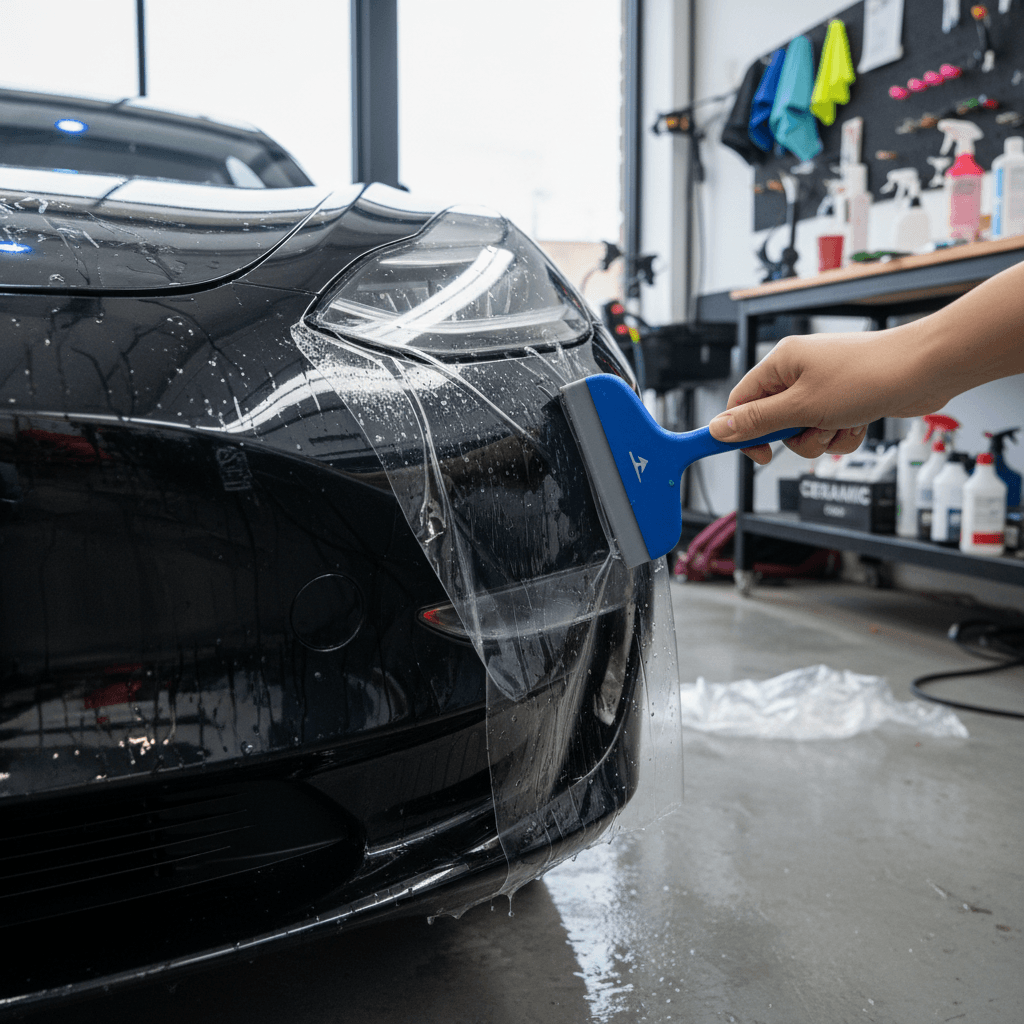
Search YouTube and you’ll find plenty of DIY Tesla PPF installs, often using pre‑cut kits. They can be tempting: kits for a Model 3 bumper and hood can cost a few hundred dollars instead of a couple thousand. But the trade‑offs are real.
DIY vs professional Tesla PPF: trade‑offs
Be honest about your tolerance for imperfections and your available time.
DIY kits
- Pros: Much cheaper in cash terms; you can do it on your schedule; good for learning.
- Cons: Steep learning curve, especially for complex bumpers; more visible seams; higher risk of trapped dust and stretch marks; no shop‑backed labor warranty.
- Best for: Small areas (trunk ledge, headlights, door cups) or owners who accept some cosmetic flaws in exchange for savings.
Professional install
- Pros: Far cleaner edges, fewer seams, better pattern fit, and a film + labor warranty.
- Cons: 3–10x the cost of DIY; you’re without the car for 1–5 days; quality varies heavily by shop.
- Best for: Full front or full‑body coverage, especially on newer cars where appearance and resale matter.
PPF install risk to be aware of
How PPF Affects Tesla Resale Value (Especially Used Sales)
PPF doesn’t show up as a separate line item on a book value the way mileage and options do, but it can absolutely move real‑world pricing and time‑to‑sell, especially in the used EV market, where buyers are comparing vehicles across multiple sites and photos are doing most of the selling.
Where PPF helps resale
- A clean, chip‑free front end photographs better and subconsciously signals a gently used car.
- Buyers shopping used Teslas worry about prior abuse; PPF with documentation is a strong signal that the owner cared.
- On higher‑value trims (Performance, Long Range with FSD), good cosmetics can easily swing a deal by hundreds of dollars.
Limitations of PPF’s value
- Don’t expect to recover the full install cost at resale, especially on a budget or older Tesla.
- If film is yellowed, lifting, or poorly installed, buyers may actually see it as a liability that needs to be removed.
- On marketplaces like Recharged, condition reports, photos, and service history matter at least as much as PPF in driving price.
Pro move when selling
Practical Checklist: Should You Buy PPF for Your Tesla?
Run through these questions before you sign a PPF invoice
1. How long will you keep this Tesla?
If you’re likely to sell or trade within 1–2 years, full‑body PPF almost never makes financial sense. A targeted front‑end or rocker package might; otherwise, focus on good wash habits.
2. How and where do you drive?
Highway commute through construction zones and winter salt? PPF has a lot more upside than for a low‑mileage city car that lives in a parking garage.
3. What’s your tolerance for cosmetic flaws?
Some owners truly don’t care about a few chips. Others notice every mark. Be honest with yourself, PPF is largely about how much those flaws will bother you over time.
4. What’s your budget today vs later?
If you can’t swing front‑end PPF immediately on a new car, it’s better to wait and do it right than to compromise with poor film or a questionable installer.
5. Are you buying new or used, and from where?
If you’re buying a clean used Tesla, especially from a curated marketplace like Recharged where battery health and condition are verified, PPF can be a smart way to preserve that condition for the next few years.
6. Have you compared at least three installers?
Ask for film brand, warranty term, specific coverage maps, and photos of previous Teslas. Big price gaps often hide big quality gaps.
Tesla PPF FAQ
Frequently asked questions about Tesla PPF
Bottom Line: Is Tesla PPF Worth It?
If you strip away the hype, PPF is neither a scam nor a must‑have religion. It’s a tool for buying down the risk and stress of paint damage on cars that are expensive to repaint and that tend to see a lot of real‑world abuse, descriptions that fit most Teslas surprisingly well.
For a typical U.S. Tesla owner who drives real miles, especially on highways or in winter states, a well‑done full‑front PPF package plus rocker coverage is usually worth it. It won’t make you money, but it can save you from watching an otherwise clean car slowly get peppered with chips and from paying for repeated paint work.
Full‑body PPF, on the other hand, is a quality‑of‑life and aesthetics purchase. If you’re the sort of person who keeps cars for 8–10 years, hates chips, and enjoys a satin "stealth" Tesla, you’ll probably love it, just don’t expect the used‑car market to reimburse you dollar for dollar.
If you’re still on the fence, start by getting a realistic picture of the car itself. Whether you’re buying new or shopping a used Tesla on Recharged, let the vehicle’s condition, your driving environment, and your tolerance for cosmetic wear, not internet arguments, decide whether paint protection film is worth it for you.