When people ask about EV battery price, they’re usually not curious about chemistry, they’re trying to answer two practical questions: “Will this battery fail on me?” and “If it does, will the bill wreck my budget?” The good news is that battery costs have dropped dramatically, failure rates are low, and a bit of homework goes a long way toward de‑risking your next EV, especially if you’re shopping used.
EV batteries are cheaper than you think
Why EV battery price matters more than you think
Battery price shows up in more places than just a scary worst‑case repair bill. It influences new EV sticker prices, used EV values, long‑term total cost of ownership, and even how confident you feel driving a high‑mileage car. Because the pack can represent 25–40% of a vehicle’s manufacturing cost, shifts in battery pricing ripple through the entire EV market.
- For new EVs, cheaper batteries push prices closer to comparable gas cars and make long‑range packs affordable.
- For used EVs, battery health determines whether a five‑year‑old car feels like a bargain or a liability.
- For automakers, battery price dictates which chemistries they use (like NMC vs. LFP) and how much range they can offer at a given price point.
- For you, understanding battery price helps you judge whether a replacement quote or used EV asking price is actually reasonable.
The trap to avoid
Current EV battery price per kWh in 2025
Battery price snapshot (light‑duty EVs)
At the pack level, mainstream estimates put 2023 EV battery costs around $139 per kWh for usable capacity in light‑duty vehicles, with 2024 global averages around $115 per kWh. That means a 75‑kWh pack that might have cost well over $20,000 in 2010 now pencils out closer to $8,500–$10,000 at the pack level before overhead, warranty, and margin.
Those are manufacturing‑side numbers, not what you’ll see on a repair invoice, but they explain why battery replacement quotes are gradually coming down and why you’re starting to see affordable long‑range EVs, from revamped compact cars like the Chevy Bolt to updated models such as the 2026 Nissan Leaf with 75‑kWh packs at mainstream price points.
What a full EV battery pack really costs
To make per‑kWh costs concrete, it helps to translate them into full pack prices. Using roughly $115–$150 per kWh as a 2024–2025 pack‑level yardstick, you get ballpark manufacturing costs like these (before markup and labor):
Illustrative pack‑level prices at recent $/kWh
Approximate pack manufacturing costs using 2024–2025 average pack prices. Real replacement quotes will be higher.
| Pack size | Approx. pack cost @ $115/kWh | Approx. pack cost @ $150/kWh | Example vehicle segment |
|---|---|---|---|
| 40 kWh | $4,600 | $6,000 | Early Leafs, entry‑level compact EVs |
| 60 kWh | $6,900 | $9,000 | Modern compact/mid‑size EVs |
| 75 kWh | $8,625 | $11,250 | Popular mid‑size sedans and crossovers |
| 100 kWh | $11,500 | $15,000 | Luxury and performance EVs |
| 130 kWh | $14,950 | $19,500 | Large trucks and SUVs |
These figures show why a replacement on a long‑range truck can cost several times more than on a compact city EV.
Why this doesn’t match your service quote
EV battery replacement cost by vehicle type
When drivers Google “EV battery price,” they’re usually looking for real‑world replacement bills. In 2025, complete pack replacement, including parts and labor, typically spans roughly $5,000 to $20,000+, depending on vehicle size, chemistry, and whether you use OEM or third‑party parts. Only a small minority of EVs ever need an out‑of‑warranty replacement, but it’s still worth understanding the ranges.
Typical 2025 replacement ranges by segment
These are broad ranges from recent real‑world quotes and industry reporting, not guarantees for any specific VIN.
Compact EVs
Typical pack size: 40–60 kWh
Typical replacement: about $5,000–$8,000 for OEM parts, sometimes less with refurbished packs.
Examples include older Nissan Leaf models and city‑focused hatchbacks. Early Leafs were notorious for degradation, but later packs are far more robust and replacement pricing has become more reasonable over time.
Mid‑size sedans & crossovers
Typical pack size: 60–80 kWh
Typical replacement: around $8,000–$15,000 including labor for mainstream models like Tesla Model 3/Y, Hyundai Ioniq 5, or Chevrolet Bolt.
Third‑party and refurbished options can shave thousands off that cost, often with shorter but still meaningful warranties.
Luxury EVs & trucks
Typical pack size: 90–130+ kWh
Typical replacement: frequently $12,000–$20,000+ for high‑end sedans, SUVs, and electric pickups such as Ford F‑150 Lightning or Rivian models.
Higher performance, larger packs, and premium brand parts all push prices up, but these vehicles also tend to carry longer or more generous warranties.
The under‑reported reality
Six factors that change what you’ll actually pay
Two owners with seemingly similar EVs can get wildly different battery quotes. That’s not random, it’s the result of a few key variables you can mostly anticipate.
Key drivers of EV battery price in the real world
1. Battery size and chemistry
A 130‑kWh truck pack simply uses far more material than a 50‑kWh commuter car. Chemistry matters too: LFP (lithium iron phosphate) tends to be cheaper per kWh than NMC but slightly heavier for the same range.
2. OEM vs. refurbished or third‑party
Dealer‑installed packs are typically the most expensive but come with strong warranties and software support. Independent shops and refurbishers can offer 30–50% savings with reconditioned packs, at the cost of shorter coverage or unknown history.
3. Labor rates and shop type
High‑cost metro areas and brand‑exclusive dealers tend to charge more per hour. Independent EV specialists can reduce labor cost, especially on older models where OEM warranty support has lapsed.
4. Warranty status and goodwill
If you’re still within the high‑voltage battery warranty, a failure often results in a heavily discounted or fully covered replacement. Some automakers also offer ‘goodwill’ assistance just outside warranty, especially for well‑documented failures.
5. Supply chain and timing
Battery modules and packs are big, heavy, and sometimes back‑ordered. Shipping, storage, and surcharges can noticeably inflate your quote, particularly for low‑volume models or early‑production vehicles.
6. Diagnostics and related repairs
A proper battery job can involve software updates, cooling system service, structural work, or high‑voltage components beyond the pack itself. Those extras can add thousands of dollars to the final invoice.
Practical move before you buy
Used EVs: battery price, health and resale value
For used EVs, battery price shows up less as a line item on a bill and more as silent depreciation. A car that’s lost 10% of its range after eight years feels very different from one that’s lost 30%, and the market is starting to price that in. Two identical cars on the lot can deserve very different prices if their batteries have aged differently.
How range loss affects value
Most modern EVs lose a few percent of usable capacity in the first couple of years, then settle into a slower decline. Light degradation, say, 8–15% after 7–10 years, barely changes the day‑to‑day experience for many drivers and shouldn’t radically affect resale value.
Heavy degradation, especially on smaller packs, can be a dealbreaker. A car that once went 150 miles on a charge but now struggles to do 90 fundamentally changes how you can use it. Used buyers and lenders are increasingly discounting those vehicles accordingly.
Why basic range tests aren’t enough
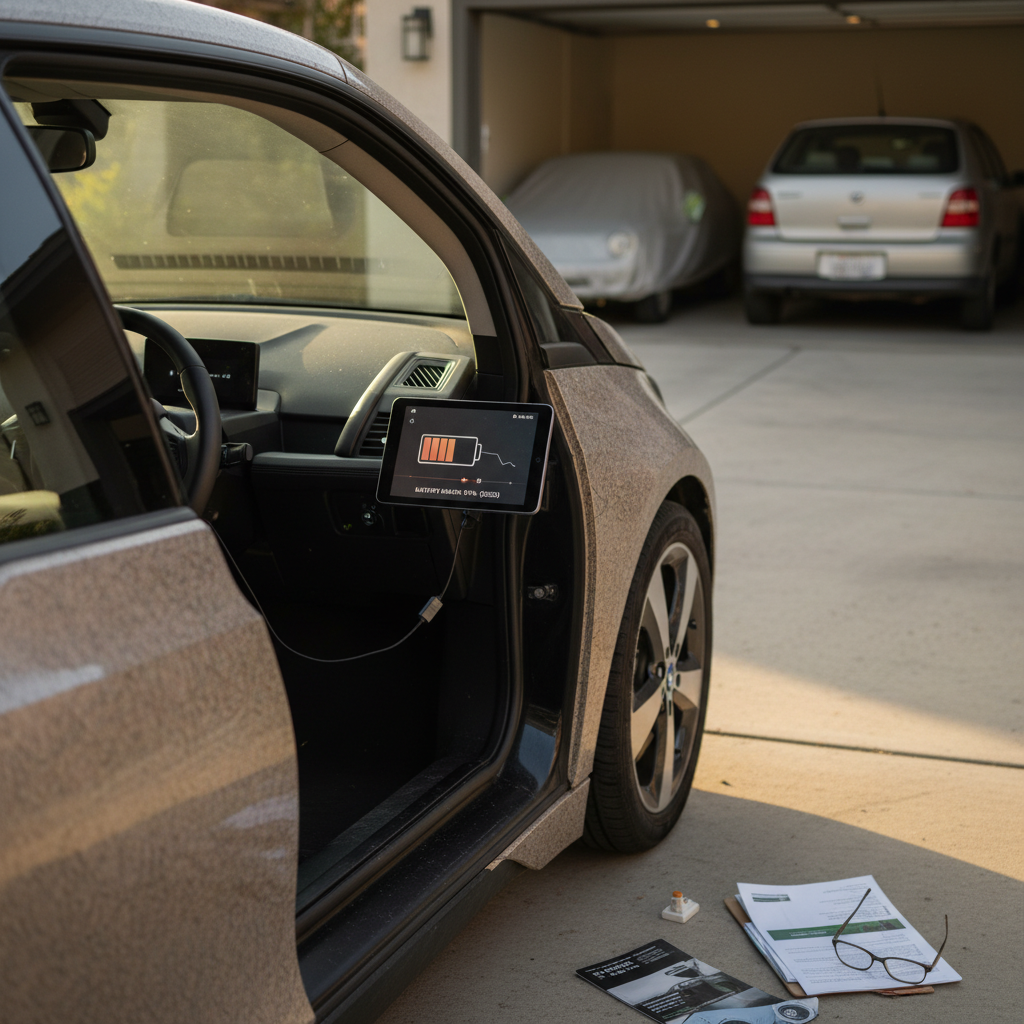
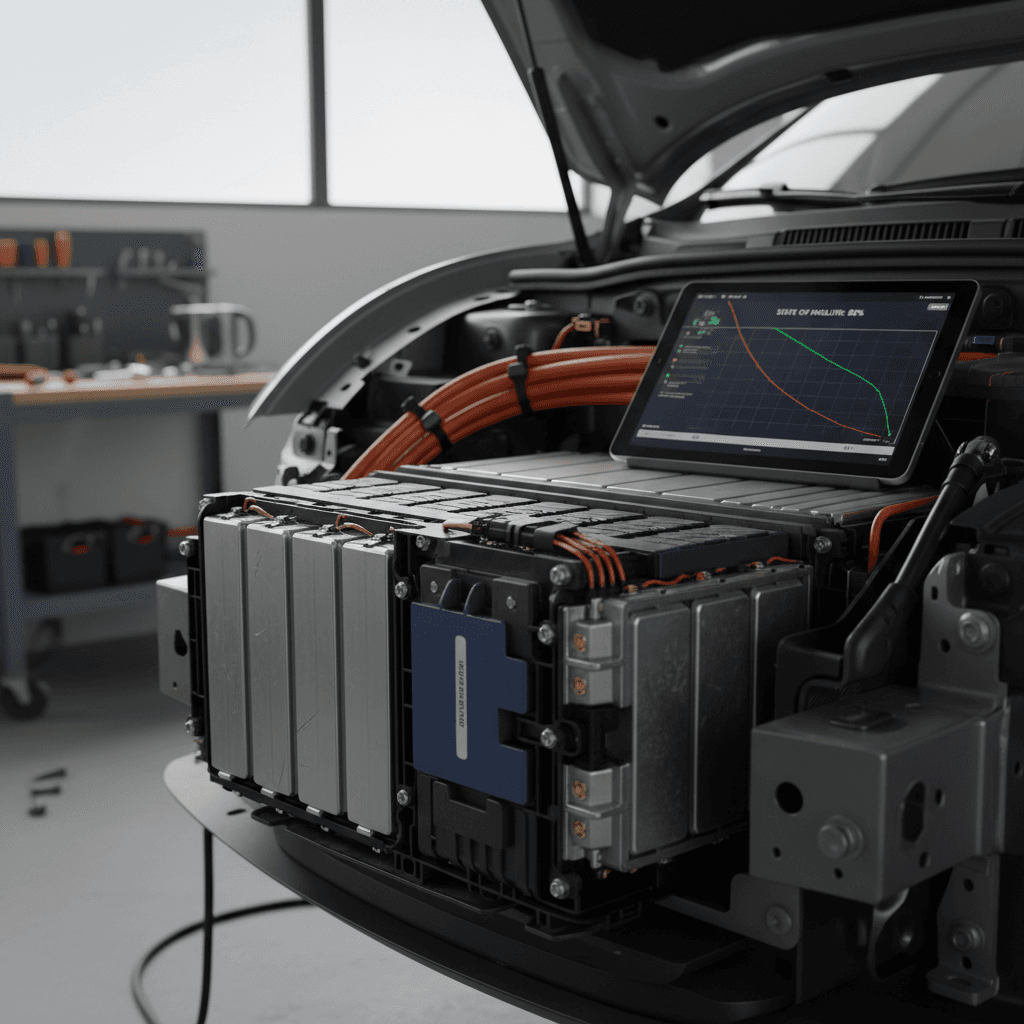
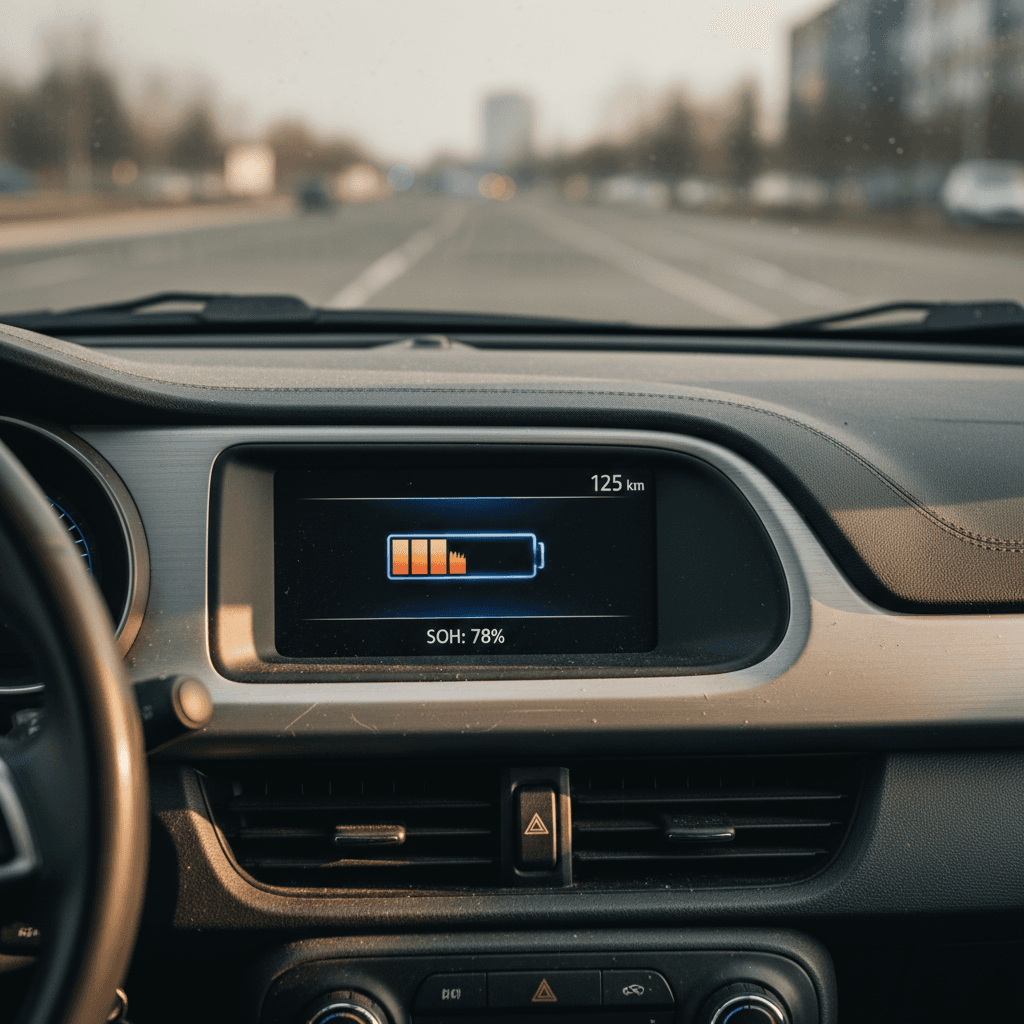
DIY tests like “how many miles does it go on a full charge” can be skewed by driving style, temperature, or software limits. What really matters is verified State of Health (SoH), an estimate of how much usable capacity is left relative to new.
That’s exactly why every vehicle on Recharged comes with a Recharged Score Report that includes independent battery diagnostics, not just a generic range estimate.
How Recharged uses battery price data
Where EV battery prices are heading by 2030
Battery pricing isn’t done falling. Analysts expect pack‑level costs to dip below $100 per kWh in the second half of this decade, with some forecasts pointing into the $80s by 2026–2027 if raw material markets remain relatively stable. Below roughly $80–$100 per kWh, it becomes much easier to build EVs that undercut comparable gasoline vehicles on upfront price, without relying on subsidies.
Forces pushing EV battery price down
Not all of these trends are visible to shoppers, but you’ll feel them in the showroom and on the used market.
Scale and manufacturing
Gigafactories keep getting bigger and more automated. As annual EV sales climb into the tens of millions, fixed factory costs are spread over far more packs, driving down per‑unit price.
Chemistry innovation
LFP chemistry has already slashed reliance on nickel and cobalt for many models. Next‑generation chemistries like lithium‑sulfur and sodium‑ion aim to cut material costs further for specific use cases.
Policy & local content
Policies like the U.S. Inflation Reduction Act are pushing more battery manufacturing onshore. In the near term that can be more expensive, but tax credits and vertical integration help offset costs and stabilize supply.
Why prices don’t fall in a straight line
How to protect yourself financially as a buyer
You can’t control global lithium prices, but you can absolutely control how exposed you are to an unexpected battery bill. Whether you’re buying new or used, a few habits dramatically improve your odds of never caring what a replacement pack costs.
Battery‑smart playbook for EV shoppers
1. Start with the warranty fine print
Look for at least 8 years or 100,000 miles of high‑voltage battery coverage, with a specified minimum capacity (often 70%). Some brands go longer. If the car is still well inside that window, your practical risk is low.
2. Get independent battery diagnostics on used EVs
Don’t rely on a generic ‘battery OK’ line in a service record. Use tools that read pack data directly, or buy from a platform like Recharged, where every car includes a detailed Recharged Score Report with verified State of Health.
3. Compare replacement cost to vehicle price
Before you commit, get a real quote for a replacement pack on that model. If the replacement would cost more than the car itself, you want to buy at a price that reflects that risk, or walk away.
4. Favor robust chemistries for heavy use
If you fast‑charge frequently or live in a very hot climate, consider EVs with proven thermal management and chemistries that tolerate high cycling well. It’s often worth paying a bit more upfront for long‑term durability.
5. Think in $/year, not just $/kWh
A $10,000 pack that reliably lasts 15 years and 200,000 miles is effectively costing you far less per year than a cheaper pack that needs replacement halfway through the car’s life. Total lifetime value matters more than headline price.
6. Let financing work for you, not against you
If you’re financing a used EV, avoid terms that substantially outlive the pack’s warranty. Platforms like Recharged offer financing that’s aligned with realistic battery life so you’re not still paying for a car whose pack is near end‑of‑life.
How Recharged reduces battery risk for buyers
Ready to find your next EV?
Browse VehiclesEV battery price FAQ
Frequently asked questions about EV battery prices
EV battery price used to be the single biggest reason to be skeptical of electric cars. In 2025, it’s increasingly a reason to be optimistic: costs have plunged, durability has improved, and the market now offers everything from budget‑friendly LFP commuter cars to long‑range trucks. If you pair that progress with verified battery health data and realistic expectations about warranties, an EV, new or used, can be one of the most financially predictable vehicles you’ll ever own. And if you’d rather not decode pack pricing on your own, Recharged exists to do that heavy lifting for you so you can simply pick the right car at the right price.