A long commute turns range from a specification into a daily requirement. The right EV should complete your normal route without forcing you to depend on a public charger, while leaving room for detours, weather, traffic, and battery aging. That makes a vehicle-specific battery test more useful than a factory range claim alone. Start with your actual route, then compare it with the car’s tested real-world range.
Start with your real range requirement
Your minimum range requirement is the complete round trip plus a practical reserve, not simply the distance from home to work. Include regular errands, school stops, and any miles needed to reach a charger if your usual setup is unavailable. If most of the trip is at sustained highway speed or you commute through cold winters, favor a larger cushion because real-world range can change with speed, temperature, climate control, terrain, and payload. Our cold-weather EV range guide explains why the displayed estimate should be treated as flexible rather than guaranteed.
Build your commute requirement
Map the complete round trip
Count every mile from departure until you return to your regular charger.
Add routine side trips
Include school, shopping, appointments, and other stops you make during a normal week.
Consider difficult conditions
Allow extra flexibility for cold weather, highway driving, elevation changes, and unexpected detours.
Identify backup charging
Know where you could charge near work or along the route if your primary setup is unavailable.
What Recharged’s battery and price data shows
Recharged data shows that used EVs can retain substantial battery capacity while delivering commute-friendly tested range. Across 2,242 Recharged Score inspections, median tested remaining capacity was 94.9% of original, while the average was 93.9%. Median tested real-world range was 268 miles, and the average was 266 miles.
Those fleet-wide results don’t replace an inspection of the particular car you’re considering. Range and battery condition vary across vehicles, so Recharged provides a Score Report with verified battery diagnostics rather than asking you to rely only on age or odometer mileage. The takeaway is simple: a used EV can be a strong long-commute choice, but you should confirm the individual battery’s tested capacity and range before buying.
The market also spans more than premium-priced long-range vehicles. Across 1,796 Recharged retail sales during the trailing 12 months, buyers paid a median of $27,297 and an average of $29,901. Those figures cover the broader EV fleet rather than one model or range class, but they show why it’s worth comparing battery condition and commute fit alongside price.
For a long commute, the battery report is part of the buying decision, not an afterthought. Two used EVs that look similar on paper can offer very different practical range for the same route.
Recharged data
Used EV battery health
94%
avg remaining capacity
From Recharged battery inspections, not manufacturer estimates.
- Lowest
- 63%
- Median
- 95%
- Highest
- 100%
- Est. range
- 266 mi avg
- Cell balance pass
- 100%
- Quick charges
- 18 avg
- Slow charges
- 65 avg
Average cell imbalance: 7.3 mV
Based on vehicles Recharged tested
Recharged data
Recent EV sold prices
$27,297
median sold price
What buyers actually paid through Recharged, not list price.
- Lowest
- $500
- Average
- $29,901
- Highest
- $129,998
Monthly median sold price
Based on Recharged sales in the last 12 months
Every EV is battery-tested with a Recharged Score. Nationwide delivery.
Which type of EV fits your commute?
The best vehicle profile depends on route length, charging reliability, passenger needs, and cargo, not on body style alone. An efficient car may maximize your range cushion, while a larger crossover can make more sense when weather, seating, or cargo flexibility takes priority. Use the table to narrow the field, then compare individual vehicles through a used-EV buying checklist.
Long-commute EV profiles
Choose the profile that matches your route and charging access before comparing individual vehicles.
| Vehicle profile | Best for | Charging fit | Watch closely |
|---|---|---|---|
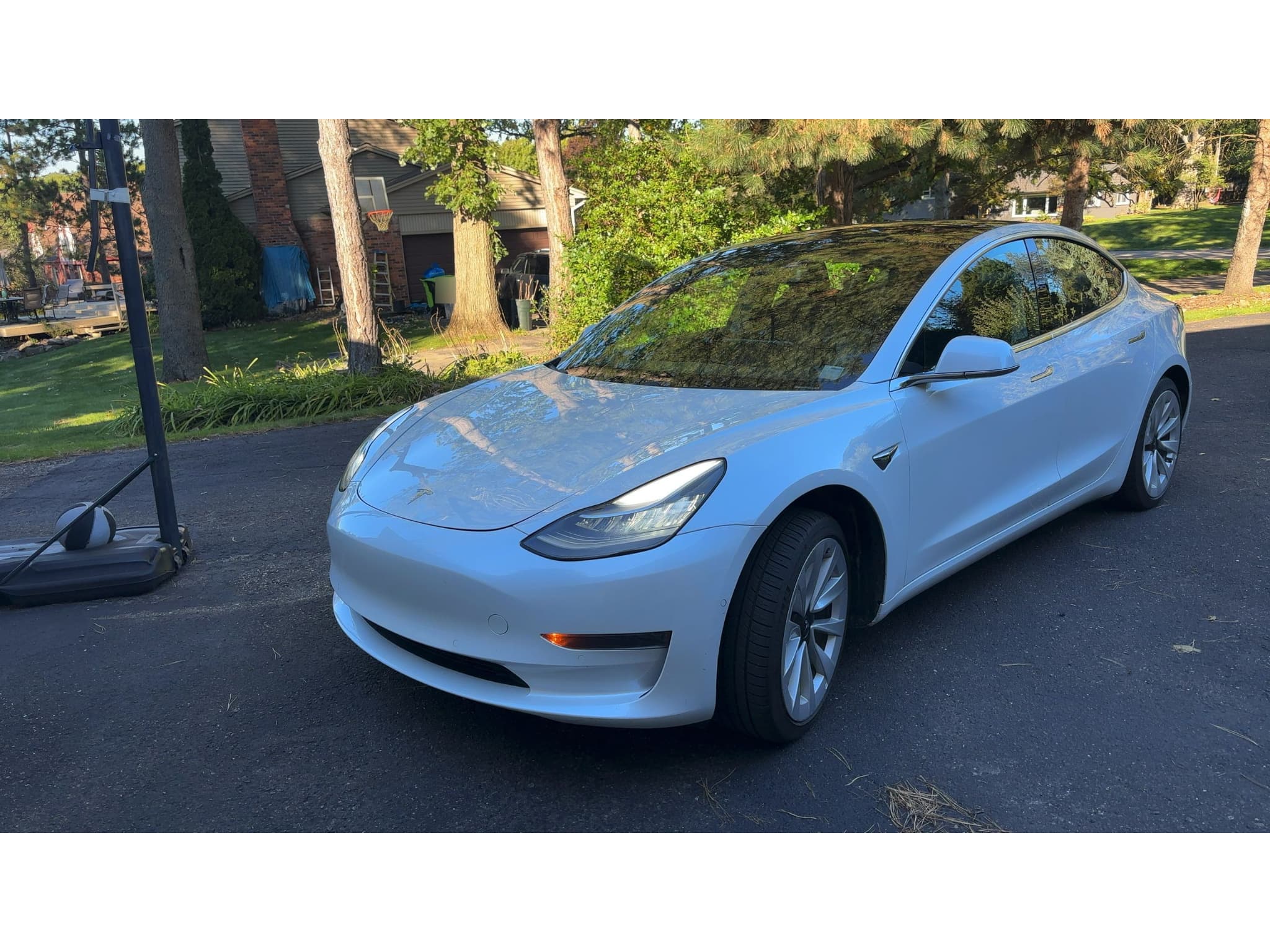
| Efficient long-range car | Longest highway routes | Reliable home charging | Cargo and ride needs |
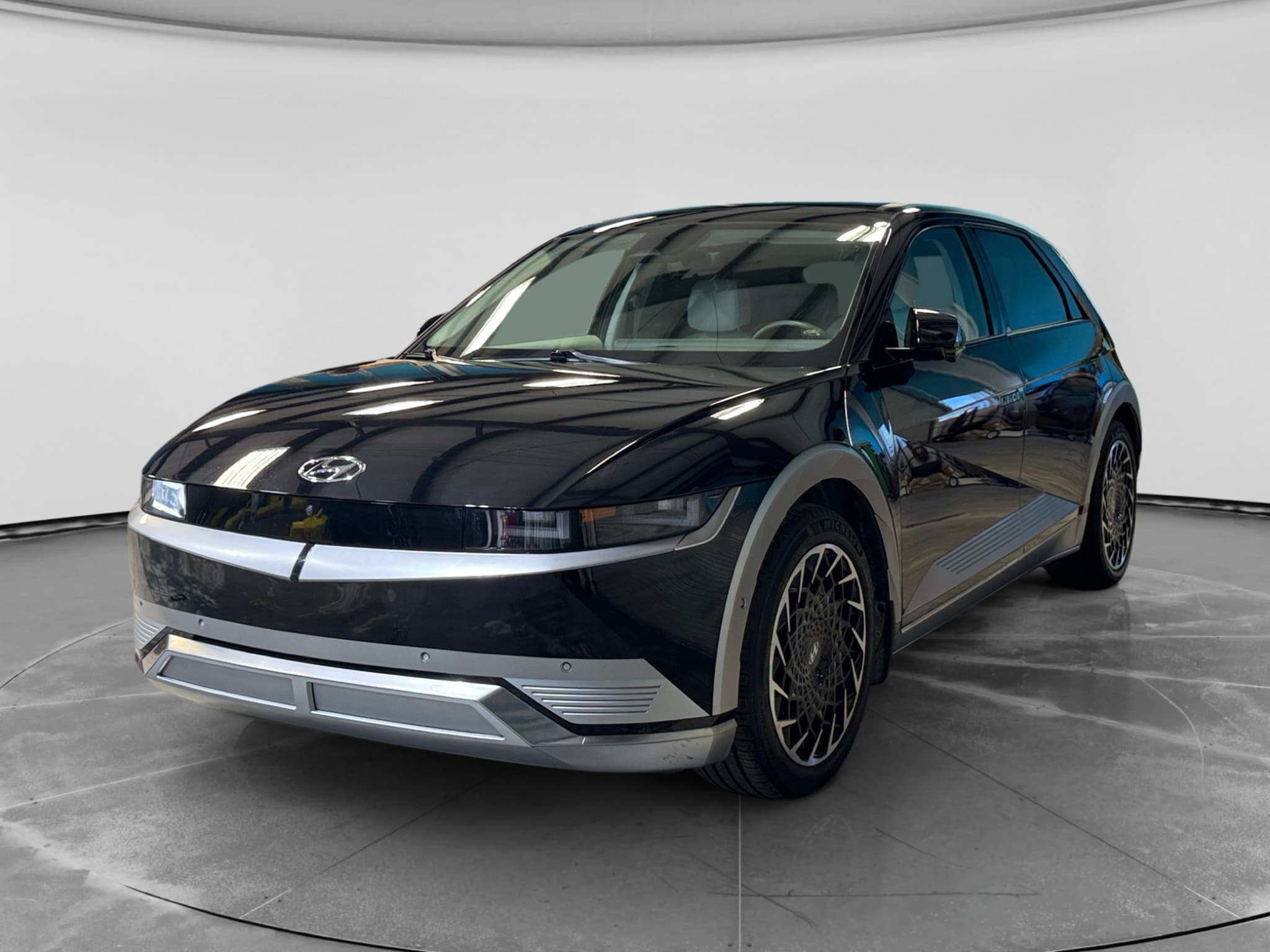
| Long-range crossover | Passengers and cargo | Home or workplace charging | Efficiency and tire costs |
| Mid-range hatchback | Moderate predictable routes | Dependable nightly charging | Seasonal range reserve |
| Older short-range EV | Charging at both ends | Frequent reliable access | Detours and charger outages |
Tested range and battery condition should decide whether a specific used EV fits.
Don’t shop by the EV label alone
Your charging plan matters as much as range
A dependable place to charge overnight is the simplest foundation for a long EV commute. Level 2 charging means dedicated, higher-power equipment that replenishes the battery more quickly than a standard household outlet. If you can plug in at home, you can start most mornings from a consistent charge level instead of building your routine around public stations. Review installation, parking, and equipment considerations in the home EV charging guide before choosing the car.
If home charging isn’t available, workplace charging can still make an EV practical, but reliability matters. Confirm that you’re allowed to use the equipment, that it’s usually accessible when you arrive, and that your shift gives the car enough time to charge. Public fast charging works best as a backup for an ordinary commute, because availability, location, and charging performance can vary. A car with more tested range gives you more flexibility when that backup plan doesn’t cooperate.
What should you inspect before buying?
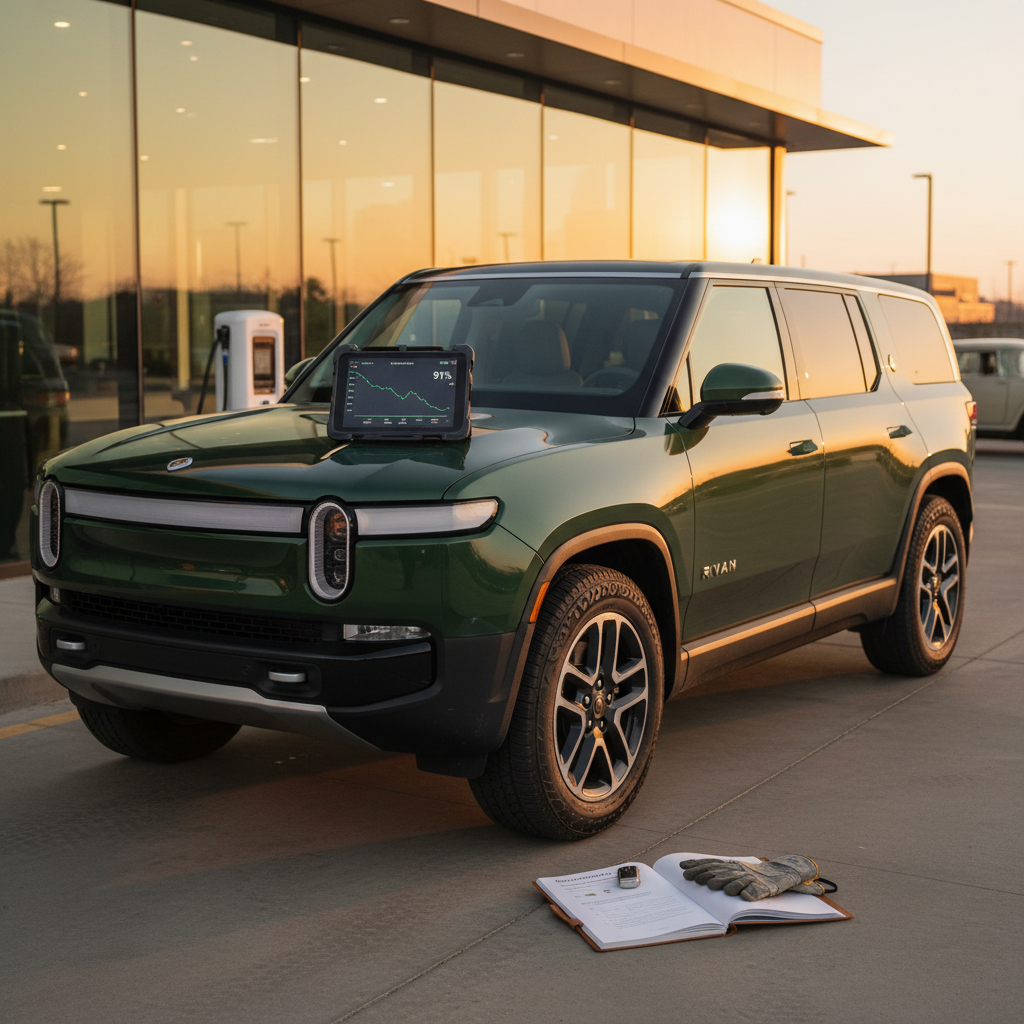
Verify the individual battery, charging equipment, tires, climate control, and route fit before buying a used commuter EV. Battery capacity is the tested percentage of the battery’s original energy storage that remains; it isn’t the same as the dashboard’s current state of charge. Ask for diagnostic evidence, compare tested range with your complete commute, and make sure the charging port and supplied equipment work with your plan. For a deeper explanation, see how to check used-EV battery health.
- Review the Recharged Score Report and tested remaining battery capacity.
- Compare tested real-world range with your complete round trip, including routine stops.
- Test the charging port and confirm which charging equipment comes with the car.
- Check tire condition, because long daily mileage makes replacement needs more consequential.
- Run the heat and air conditioning and confirm that the cabin reaches a comfortable temperature.
- Plan a backup charger before you need one, especially if you cannot charge at home.
A long-commute EV should feel uneventful in the best way. When the tested range comfortably covers the route and charging is predictable, you spend less time reorganizing your day around the car.
Instant offer, trade-in, or consignment. Pickup available.
Electric car long-commute FAQ
The best choice is the one with a buffer
The strongest electric car for a long commute is a specific vehicle with verified battery health, enough tested range for your whole day, and charging you can depend on. Start with the route rather than a favorite badge, then compare battery diagnostics, comfort, cargo needs, and price. Recharged’s Score Report gives you verified battery information so you can judge the actual used EV rather than guessing from its age or odometer. A comfortable range cushion and predictable charging are what turn an EV from a possible commuter into an easy one.