If you’re thinking about an electric vehicle, you’re really buying two big things: the car you can see and the EV battery pack hidden underneath it. That pack largely determines range, performance, resale value, and whether a used EV feels like a smart bet or a risky experiment.
Why battery packs matter
What Is an EV Battery Pack?
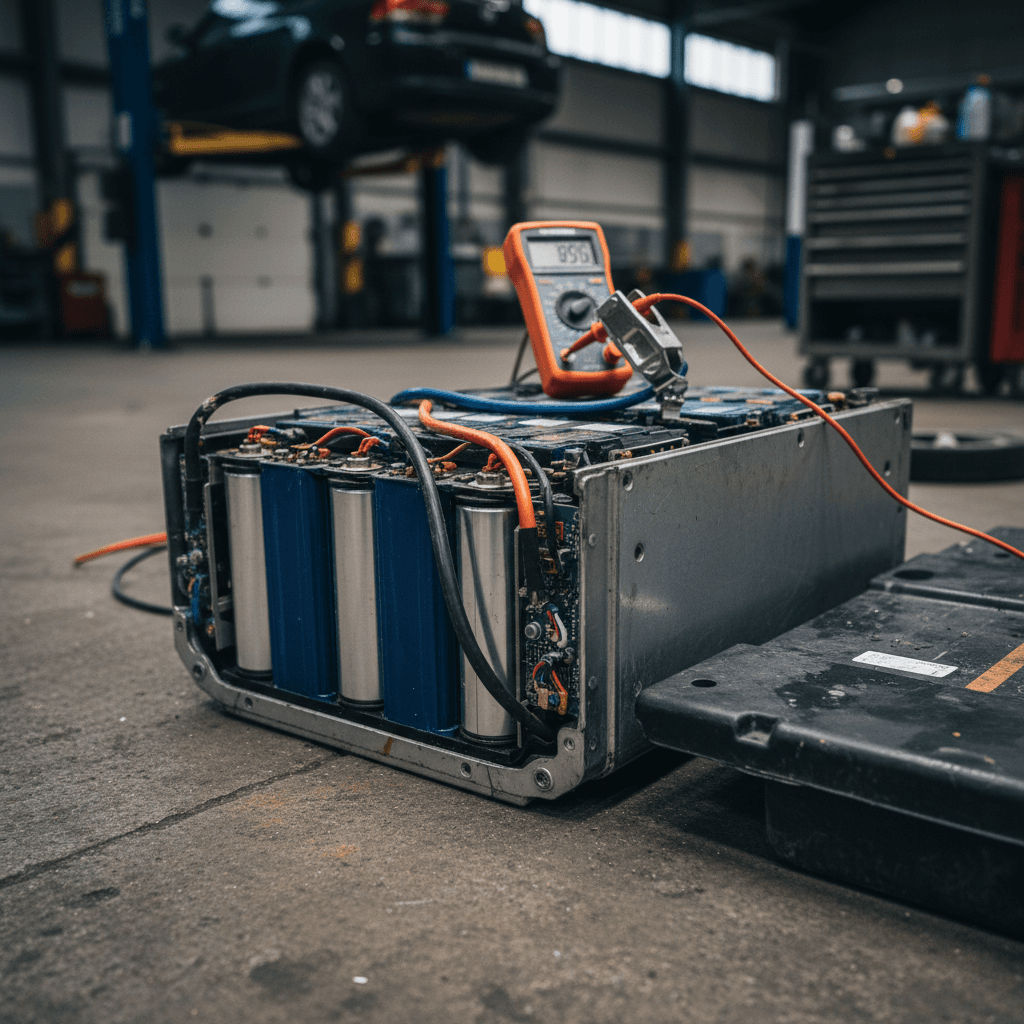
An EV battery pack is a large, high‑voltage assembly that stores the energy your electric car uses to drive. It typically sits under the floor, between the axles, and runs the length of the vehicle. Instead of one giant battery, it’s a tightly engineered box made up of hundreds or thousands of smaller lithium‑ion cells, plus electronics, cooling hardware, and a tough enclosure.
- Voltage: usually 300–800 volts, depending on the vehicle and platform.
- Capacity: often 50–100 kWh in modern EVs, which translates to roughly 180–350 miles of rated range depending on efficiency.
- Weight: several hundred kilograms, your battery pack is one of the heaviest parts of the car.
Think of it like a fuel tank plus engine
Inside an EV Battery Pack: Cells, Modules, and Management
1. Cells and modules
At the smallest level, you have individual cells – think oversized versions of the lithium‑ion cells in your phone or laptop. Automakers group dozens of cells together into modules, and then assemble multiple modules into the main battery pack.
- Cells → Modules → Pack: a building‑block approach that makes assembly and repairs more manageable.
- Some newer designs skip modules altogether using “cell‑to‑pack” or “blade” layouts to save space and cost.
2. Battery Management System (BMS)
The BMS is the pack’s brain. It constantly monitors voltage, temperature, and current across the pack and individual cell groups.
- Balances cells so none get over‑charged or over‑drained.
- Controls how quickly the pack can charge or discharge.
- Logs detailed data about usage and health, critical for assessing used EVs.
How EV Packs Protect Themselves
Thermal management is central to performance and safety
Cooling system
Liquid or air cooling keeps cells in a tight temperature window so they can deliver power safely without aging too quickly.
Heaters
In cold climates, pack heaters warm cells so they can charge and discharge without damage or severe range loss.
Crash protection
Aluminum housings, structural rails, and underbody shields protect the pack from road debris and collisions.
Battery Chemistries: LFP vs NMC and Why It Matters
Most EV battery packs on the road today use one of two lithium‑ion chemistries: LFP (lithium iron phosphate) or NMC (nickel manganese cobalt). You won’t see this on the window sticker at a typical dealership, but it directly affects range, cost, safety, and long‑term degradation.
LFP vs NMC EV Battery Packs (High-Level Overview)
How the two leading EV chemistries compare in real‑world use.
| Feature | LFP Pack | NMC Pack | What it means for you |
|---|---|---|---|
| Typical use | Standard‑range and value EVs, fleets | Long‑range and performance EVs | NMC often powers higher‑priced, longer‑range models. |
| Cost per kWh (2025 trend) | Lower | Higher | LFP packs help make entry‑level EVs more affordable. |
| Energy density | Lower (heavier for same range) | Higher | NMC packs can fit more miles into the same space. |
| Lifespan (cycles) | Longer | Shorter | LFP usually handles more charge cycles before noticeable loss. |
| Thermal safety | Very high | High with more engineering | LFP is more resistant to thermal runaway and fire. |
| Cold‑weather behavior | Weaker | Better | NMC tends to retain more performance and charging speed in deep cold. |
Exact numbers vary by manufacturer, but the trade‑offs are consistent across the industry.
Cold-climate shoppers
How Long Do EV Battery Packs Last?
The early fear was that an EV battery would fade like a smartphone and be toast in five years. Real‑world data tells a very different story. Large packs, sophisticated cooling, and conservative software make EV batteries far more durable than most shoppers expect.
What Recent Testing Shows About EV Battery Packs
Warranties back this up
- Degradation is usually gradual, not sudden. You’ll lose a bit of range over many years, not wake up to a dead pack one morning.
- Batteries tend to degrade faster in the first few years, then stabilize, similar to how your phone loses its “new” feel quickly and then slows down.
- Temperature, fast‑charging habits, and how close you live to the pack’s limits all impact the curve.
EV Battery Pack Replacement Costs and Realities
You’ll often hear horror stories about $20,000 battery replacements. They make for great headlines but don’t reflect typical outcomes. Replacement cost depends on pack size, chemistry, labor rates, and whether you’re buying new, remanufactured, or refurbished components.
What Drives EV Battery Pack Replacement Cost
It’s not one big scary number, several levers are at play
Vehicle & pack size
A compact EV with a 50 kWh pack costs far less to replace than a luxury SUV with 100 kWh+. More kWh = more cells = more money.
Parts sourcing
New OEM packs sit at the top of the price range. Remanufactured or module‑level repairs can trim thousands off the bill.
Labor & access
Some packs drop out with a few fasteners; others require more teardown. Shop expertise and local labor rates matter in the final quote.
Don’t assume you’ll ever replace the pack
Industry forecasts point to falling battery pack prices as manufacturing scales up and chemistries like LFP gain share. At the same time, more third‑party specialists are emerging who can repair or refurbish packs instead of swapping them wholesale. For a used‑EV shopper, that combination translates into less risk and more options over the life of the vehicle.
How to Take Care of Your EV Battery Pack
Good habits won’t turn a 200‑mile EV into a 400‑mile one, but they can help your EV battery pack age gracefully. The goal is to minimize stress, especially extreme heat, deep discharges, and long periods at 100% state of charge.
Practical Habits to Extend Battery Life
1. Treat 20–80% as your daily comfort zone
Use scheduled charging or charge limits so the car lives in the middle of its battery range most days. Save 100% charges for long trips.
2. Don’t fear fast charging, but don’t live on it
Occasional DC fast charging is fine. Relying on it several times a week, especially in extreme heat, can accelerate degradation.
3. Keep the pack cool when possible
On very hot days, park in shade or a garage. Climate‑control features that precondition the cabin often help keep the pack in its happy temperature range too.
4. Avoid sitting at 0% or 100% for long
Short visits to the extremes are normal. Problems arise when a car is parked for days or weeks at very low or very high state of charge.
5. Use the car’s built-in tools
Most EVs let you set charge targets, departure times, and cabin preconditioning. Those features exist partly to protect the battery, take advantage of them.
The upside of good habits
Used EV Buying: How to Evaluate Battery Health
When you shop for a used gas car, you might worry about sludge, misfires, or a worn‑out transmission. With a used EV, the focal point is the battery pack’s health. The good news: modern data and diagnostics make it easier than ever to see how a pack is doing, if you know what to ask for.
Essential Checks for a Used EV Battery Pack
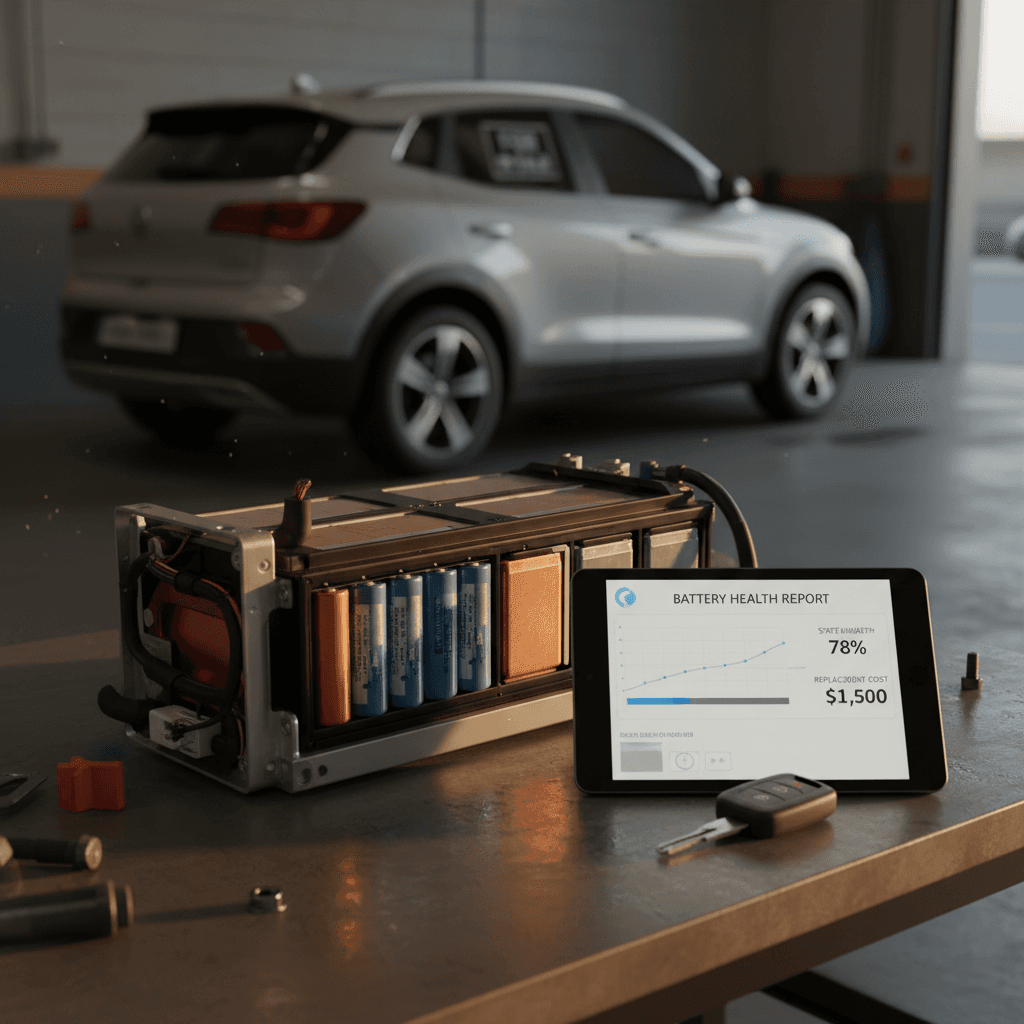
1. Ask for a battery health report
Look for a documented state of health (SoH) or similar metric that compares current capacity to when the car was new. Recharged includes a <strong>Recharged Score</strong> report with verified battery health on every vehicle.
2. Confirm remaining battery warranty
Ask for in‑service date and mileage, then compare it to the automaker’s battery warranty terms. A pack still under warranty offers extra peace of mind.
3. Review fast-charging history if available
Heavy DC fast‑charging use isn’t automatically a red flag, but it’s useful context. A balanced mix of home and public charging is ideal.
4. Test range in real conditions
On a test drive, reset the trip meter and compare energy use to rated range. You’re looking for consistency with the seller’s claims, not perfection.
5. Look underneath and in the service history
Have a technician check for signs of pack damage, prior collisions, or corrosion around high‑voltage components. An undamaged pack is more important than a perfectly clean bumper.
How Recharged helps
Traditional used-car lot
- Limited or no battery health data.
- Sales staff who may not understand EV chemistry or degradation.
- Range questions answered with guesses, not telemetry.
Buying through Recharged
- Verified battery diagnostics via the Recharged Score.
- Transparent pricing tied to real battery condition.
- Guidance from EV‑specialist advisors who speak the language of kilowatts and kWh.
EV Battery Pack FAQ
Frequently Asked Questions About EV Battery Packs
Key Takeaways on EV Battery Packs
The EV battery pack is the heart of an electric vehicle, and unlike early fears, it’s proving to be a durable, well‑understood piece of technology. Chemistries like LFP and NMC each bring strengths, while better cooling, software, and quality control are pushing real‑world lifespans comfortably past a decade for most drivers.
If you’re shopping used, the key is not to guess. Ask for hard data on battery health, understand how the prior owner used and charged the car, and compare any remaining warranty coverage. Platforms like Recharged exist to make that process transparent by pairing every vehicle with a Recharged Score Report, expert EV guidance, financing support, trade‑in options, and nationwide delivery. When you can see the true condition of the pack, an EV stops feeling like a science experiment and starts looking like one of the smartest purchases on the lot.