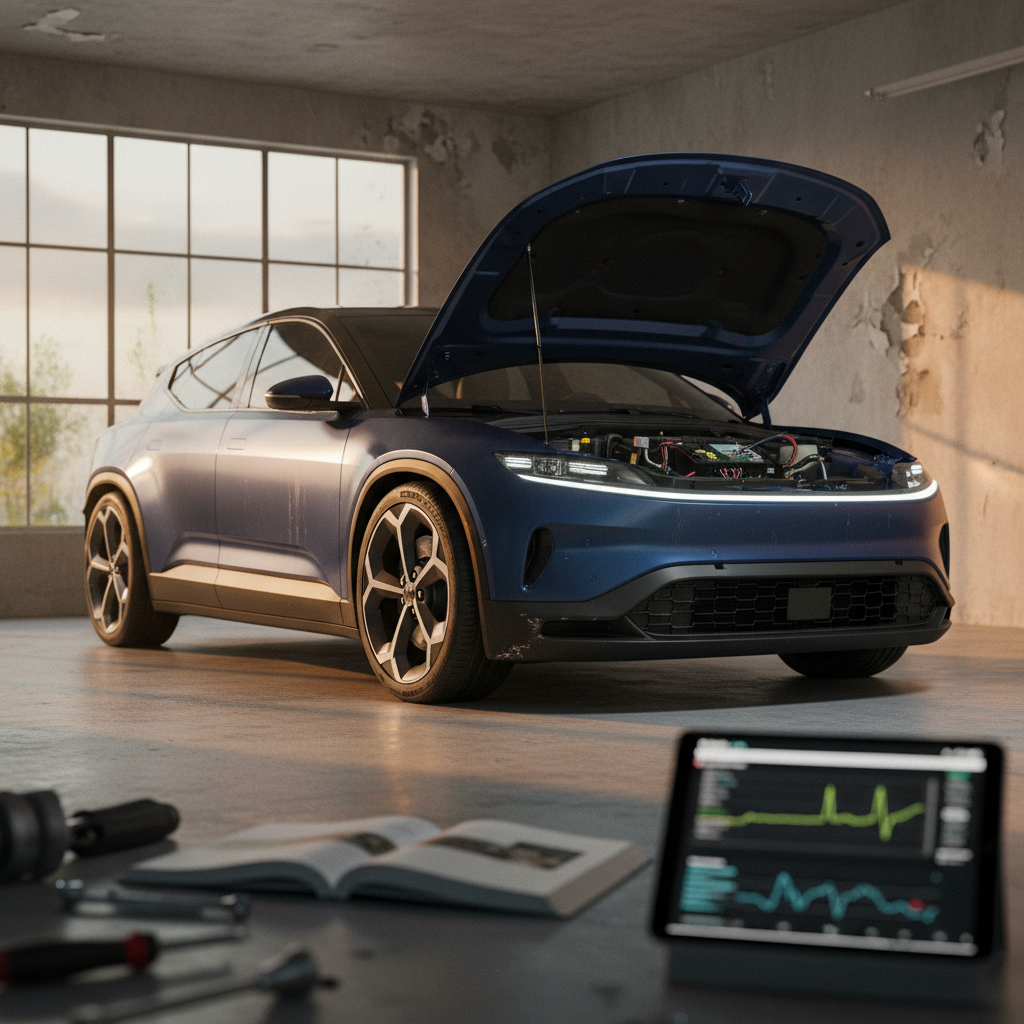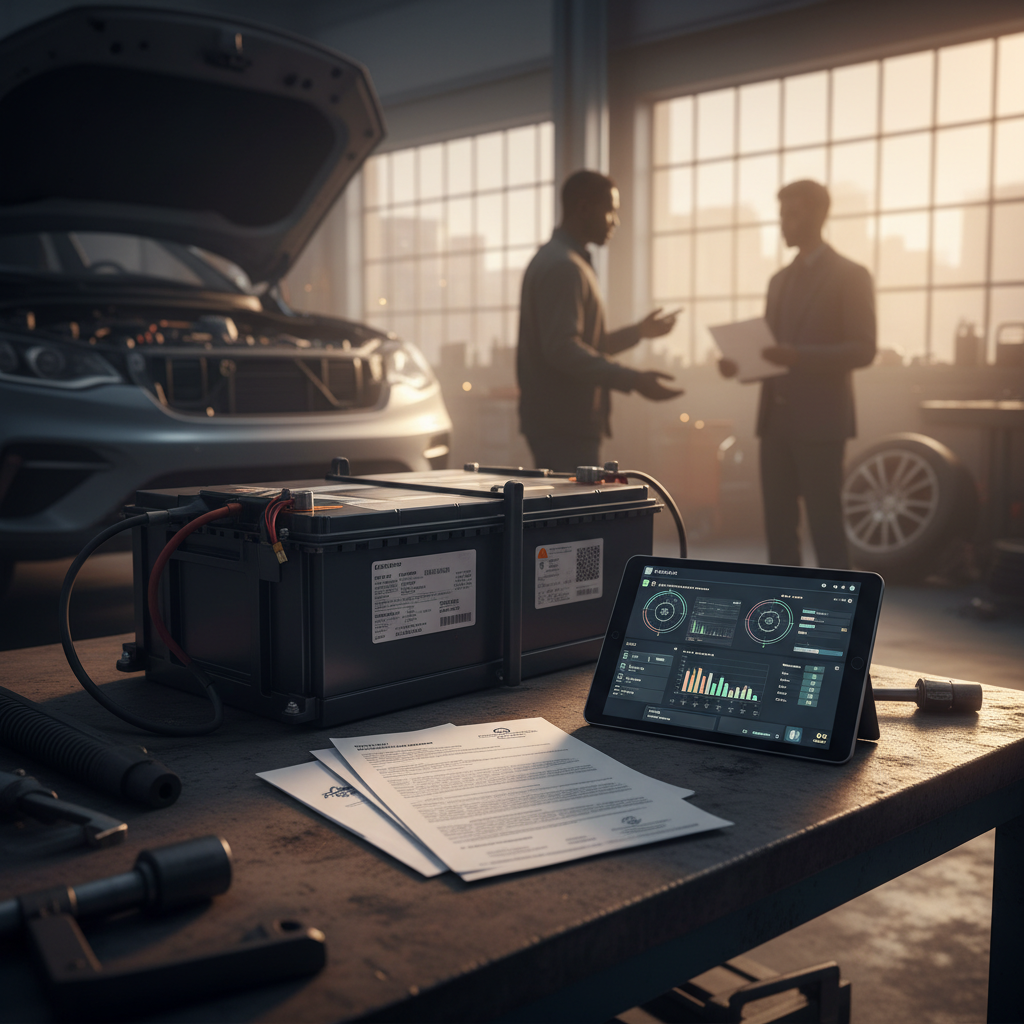
Pop the hood on an electric vehicle and you won’t see pistons, oil, or exhaust manifolds. Instead, the stars of the show are the EV battery pack and motor, a giant energy “tank” and a remarkably compact electric engine working together. Understand those two pieces, and you understand 80% of how an EV feels to drive, how far it goes, and how long it will last.
Big picture
EV battery pack and motor basics
Every modern EV is built around three core systems: the battery pack, the electric motor, and the power electronics that coordinate the two. The battery pack stores energy in hundreds or thousands of lithium‑ion cells. The motor turns that electrical energy into motion. Power electronics, mainly the inverter, sit in between, converting the battery’s DC power into AC power for the motor and managing how much power flows at any moment.
- Battery pack: determines how far you can drive (range) and how heavy the car is.
- Motor: determines how quickly the car accelerates and how efficiently it uses energy.
- Inverter and controls: decide how smoothly that power is delivered and how much energy you recover when you slow down.
Quick rule of thumb
Inside an EV battery pack
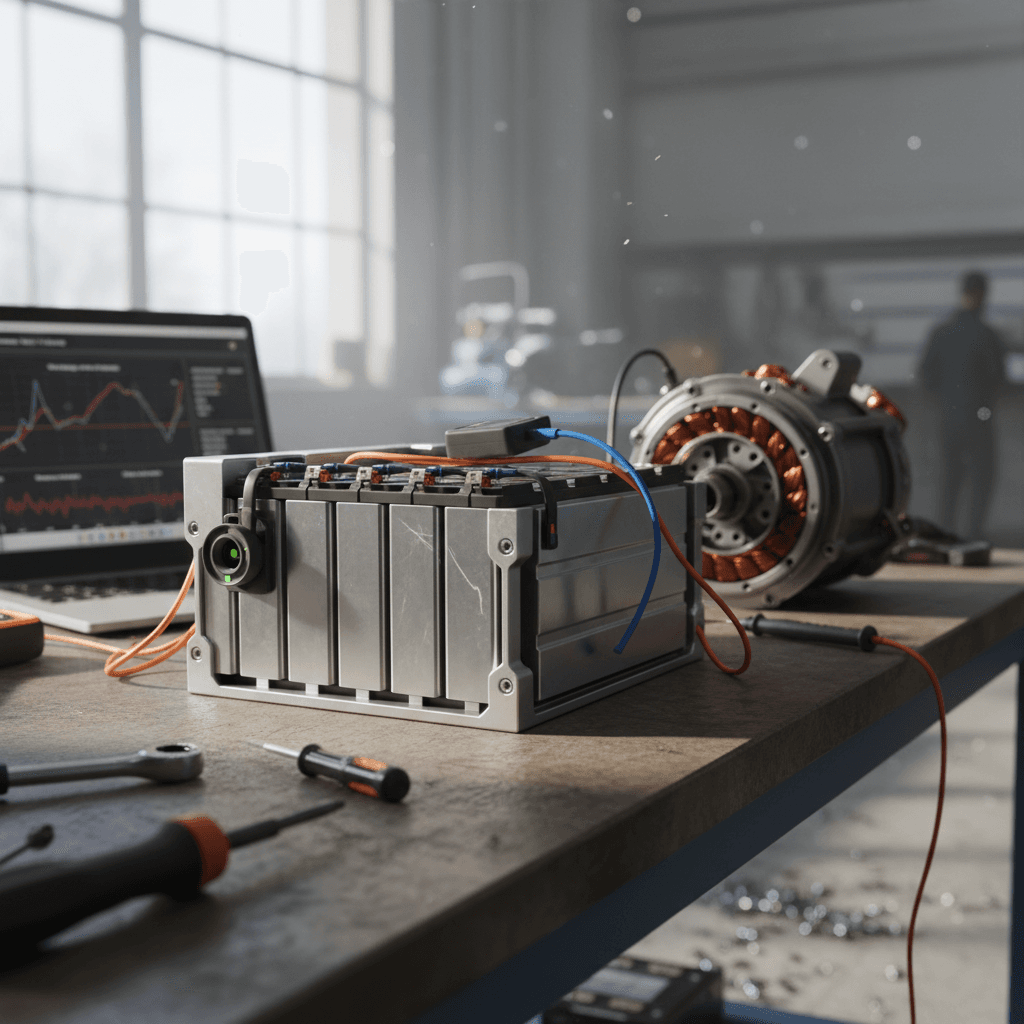
Under the floor of most EVs sits a flat, armored box: the battery pack. Open it up (carefully, in a lab, not your driveway) and you’ll find a highly engineered stack of parts designed to store a lot of energy safely and repeatably for years.
The main building blocks of an EV battery pack
From tiny cells to a structural pack under your feet
Cells
Modules
Pack housing & safety
Most EVs today use lithium‑ion chemistry in one of a few flavors, nickel‑rich for maximum range and performance, or LFP (lithium iron phosphate) for long cycle life and lower cost. Capacity is measured in kilowatt‑hours (kWh). A 60 kWh pack might give you around 220–260 miles of rated range depending on the car’s efficiency.
What EV battery pack numbers really mean
High‑voltage lives here
How EV motors work
If you grew up with engines that shook and shouted their way to redline, the silence of an EV takes a moment to trust. The electric motor is doing the same job, turning energy into motion, but it does it with a stator (fixed coils), a rotor (the spinning part), and a precise dance of magnetic fields instead of fuel and explosions.
Permanent magnet synchronous motors (PMSM)
These are the workhorses of modern EVs. The rotor carries powerful permanent magnets. The stator creates a rotating magnetic field, and the rotor follows in lockstep, hence “synchronous.”
- Pros: Excellent efficiency, compact size, and strong low‑speed torque. Great for range and punchy acceleration.
- Cons: Uses rare‑earth materials, which can be expensive and carry supply‑chain and sustainability concerns.
Induction and reluctance‑based motors
Induction motors use currents induced in the rotor (no permanent magnets) to create torque. Some automakers pair an induction motor with a PMSM for different driving conditions. Reluctance‑based motors, including switched‑reluctance designs, create torque by pulling the rotor toward the path of least magnetic resistance.
- Pros: Lower dependence on rare‑earth magnets, durable, can be very robust under heavy use.
- Cons: Often a bit less efficient or refined; control electronics are more complex and can generate more noise and vibration.
- Most EVs use a single‑speed reduction gear, not a multi‑gear transmission.
- Torque is essentially instant, from 0 rpm, so you feel strong pull leaving every stoplight.
- Many EVs place the motor between the wheels (front, rear, or both) to free up cabin and cargo space.
Why EV motors feel so good to drive
Battery pack vs motor: how they share the work
The EV battery pack and motor are constantly trading information. The pack reports how much energy is available and what temperatures look like. The motor and inverter decide how much power to request without overstressing the pack or overheating themselves. Software sits over all of this, adjusting behavior based on drive mode, traction, and battery health.
When you hit the accelerator
- The inverter pulls DC power from the pack and converts it to three‑phase AC power for the motor.
- The motor’s rotor chases the rotating magnetic field and turns the wheels through a reduction gear.
- More pedal = more current = more torque and faster acceleration, up to the limits set by the battery and thermal systems.
When you lift off or brake
- The motor becomes a generator in regenerative braking mode.
- Instead of wasting energy as heat in brake pads, the car pushes power back into the battery pack.
- Strong regen can return a meaningful chunk of city‑driving energy, especially in stop‑and‑go traffic.
One‑pedal driving
What really affects range and performance
On paper, range looks simple: bigger battery, more miles. In reality, the dance between pack size, motor efficiency, vehicle aerodynamics, and how you drive decides how far you actually get from a charge.
Four major levers on real‑world EV range
It’s more than just battery size
Vehicle & motor efficiency
Weather & temperature
Driving style & speed
Weight & cargo
Pack size vs charging time
Battery degradation and thermal management
Lithium‑ion batteries don’t last forever, but they’re aging far better in the real world than early skeptics predicted. Automakers design packs to lose capacity slowly over years of use, and smart thermal management is the quiet hero that makes that possible.
What wears a battery out?
- Time and cycles: Every full charge–discharge cycle nibbles away at capacity. Modern packs are commonly engineered for thousands of cycles.
- High and low state of charge: Living at 100% or near‑empty is harder on cells than hovering in the middle ranges.
- Fast charging heat: High‑power DC fast charging generates heat and chemical stress. Used occasionally, it’s fine; used constantly, it can speed up aging.
How cooling systems protect the pack
- Liquid cooling plates or channels move heat away from cells during hard driving and fast charging.
- Some designs tightly package cells and cooling channels (“cell‑to‑pack”) to keep temperatures even across the pack.
- Advanced systems combine active liquid cooling with clever hardware and software to keep each cell in its temperature “happy place.”
Why temperature matters
In practice, most owners see modest capacity loss in the first few years and then a slower decline. The pack’s battery management system (BMS) constantly monitors voltage, current, and temperature to keep things inside a safe, predictable envelope.
Evaluating battery health on a used EV
When you’re shopping used, the motor is almost the last thing you need to worry about, electric motors have very few wear items. The battery pack, on the other hand, is the most valuable component in the car, so understanding its health is crucial.
Checklist: How to judge a used EV’s battery and motor
1. Look for a real battery health report
Ask for a report that reads data directly from the car’s BMS, not just a guess based on mileage. At Recharged, every car comes with a <strong>Recharged Score</strong> that includes verified battery state of health, range estimates, and pricing aligned with that battery condition.
2. Compare displayed range to original specs
On a full charge, compare the car’s indicated range to its original EPA rating. Some drop is normal; a significant gap may signal higher‑than‑average degradation or different software settings.
3. Review charging history if available
Frequent DC fast charging and a life spent in very hot climates can age a pack faster. A car that mostly charged at home on Level 2 in moderate climates is usually a safer bet.
4. Test drive for power and smoothness
An EV with a healthy battery pack and motor should deliver consistent acceleration with no unexplained power cutbacks, grinding, or shuddering from the drivetrain.
5. Check for active warnings
Dashboard alerts about the high‑voltage system, reduced power mode, or charging faults are red flags that warrant a deeper diagnostic before you buy.
6. Understand warranty coverage
Many EVs carry separate battery warranties (often 8 years with a minimum capacity guarantee). Knowing what remains gives you a safety net for future degradation.
How Recharged helps here
Ready to find your next EV?
Browse VehiclesChoosing the right EV battery pack and motor for you
There’s no single “best” combination of EV battery pack and motor. The right setup depends on how and where you drive, where you’ll charge, and what you value most: range, performance, price, or long‑term durability.
Common EV battery & motor combinations
Match the powertrain to your life, not your neighbor’s
Urban commuter
High‑mileage highway driver
Family hauler or occasional towing
Leaning toward a new EV?
Shopping new lets you choose the exact pack size and motor configuration your lifestyle needs, plus the latest efficiency gains and charging speeds. If you regularly road‑trip, it can be worth stretching to the bigger pack and more efficient motor.
Considering a used EV?
A used EV with a healthy pack can deliver outstanding value. Prioritize vehicles with verified battery health data, transparent service history, and a remaining battery warranty, exactly the kind of details highlighted in a Recharged Score Report.
Don’t shop blind on the battery
FAQ: EV battery pack and motor
Frequently asked questions about EV battery packs and motors
Key takeaways for EV shoppers
- The EV battery pack is your energy tank and the most valuable component in the car; its size, chemistry, and health control range and long‑term value.
- The motor turns that stored energy into motion with instant torque and very few moving parts, so it tends to outlast the battery with minimal drama.
- Range isn’t just about kWh, motor efficiency, aerodynamics, temperature, and your right foot all play major roles.
- Smart thermal management and reasonable charging habits can keep a pack healthy for many years and thousands of cycles.
- When buying used, insist on verified battery health data, not guesses. That’s exactly what Recharged’s Score Report delivers, alongside fair pricing and EV‑savvy guidance.
If you remember nothing else, remember this: an EV is really a brilliant partnership between a big battery and a smart motor. Learn how that partnership works, choose the right combo for your life, and lean on trustworthy battery data when you shop, especially in the used market. Do that, and you’ll spend the next decade enjoying quiet, instant torque instead of worrying about what’s happening under the floor.