If you’ve just bought, or are thinking about buying, an electric car, you’ve probably heard a swirl of advice about EV battery charging best practices. Don’t fast charge too often. Don’t charge to 100%. Never let it sit at 0%. Some of that guidance is outdated, some is spot on, and some depends on your specific EV. This guide cuts through the noise so you can charge with confidence and protect your battery for the long haul.
The short version
Why EV battery charging habits matter
Your EV’s battery pack is the single most expensive component in the car. It’s also the part that quietly loses capability over time. All lithium‑ion batteries degrade; what you can control is how quickly. Real‑world data from tens of thousands of EVs shows that most packs lose only a small slice of range over the first 5–8 years when treated well, but heat, repeated deep discharges, and abusive fast charging can speed that up. Smart charging habits help you keep more of your original range and protect resale value.
What the data says about EV batteries
EV battery basics in plain English
How your EV battery works
Your EV uses a large pack of lithium‑ion cells, similar in principle to a laptop battery, just scaled up and wrapped in armor. When you drive, lithium ions move from one side of the cell (anode) to the other (cathode). When you charge, they move back. That back‑and‑forth is a charge cycle.
Every cycle causes a tiny bit of wear. High temperatures, very high or very low states of charge, and extremely fast charging all make that wear happen faster.
Why 0% and 100% aren’t what they seem
Your car’s software hides a buffer at the top and bottom of the pack so that what you see as 0–100% is usually a slightly narrower range in the real cells. That’s one reason modern EVs tolerate occasional 100% charges and deep discharges.
Still, spending lots of time at true extremes is harder on the chemistry. That’s why most best‑practice advice focuses on avoiding living at the top or bottom of your pack unless you need the range.
Know your chemistry
Daily driving: the 20–80% battery rule
You’ll hear a lot about keeping your EV between 20% and 80% state of charge for daily use. Think of this as a comfort zone for the chemistry, not a hard law. Staying away from the very top and bottom reduces stress on the electrodes and helps maintain capacity over many years.
How to use the 20–80% rule in real life
Three practical patterns that work for most drivers
Set a charge limit
Most EVs let you set a target SoC. For daily driving, set the limit around 70–80%. Bump it to 90–100% the night before a road trip when you actually need the range.
Top up regularly
Instead of running down to 5% and then charging all the way to 100%, try plugging in more often and adding smaller chunks of energy, say 40–60% up to 70–80%.
Don’t panic over exceptions
Life happens. If you occasionally arrive home at 3% or sit at 100% for a few hours, you haven’t ruined your battery. It’s the pattern over years that matters.
When you should charge to 100%
Best practices for home Level 2 charging
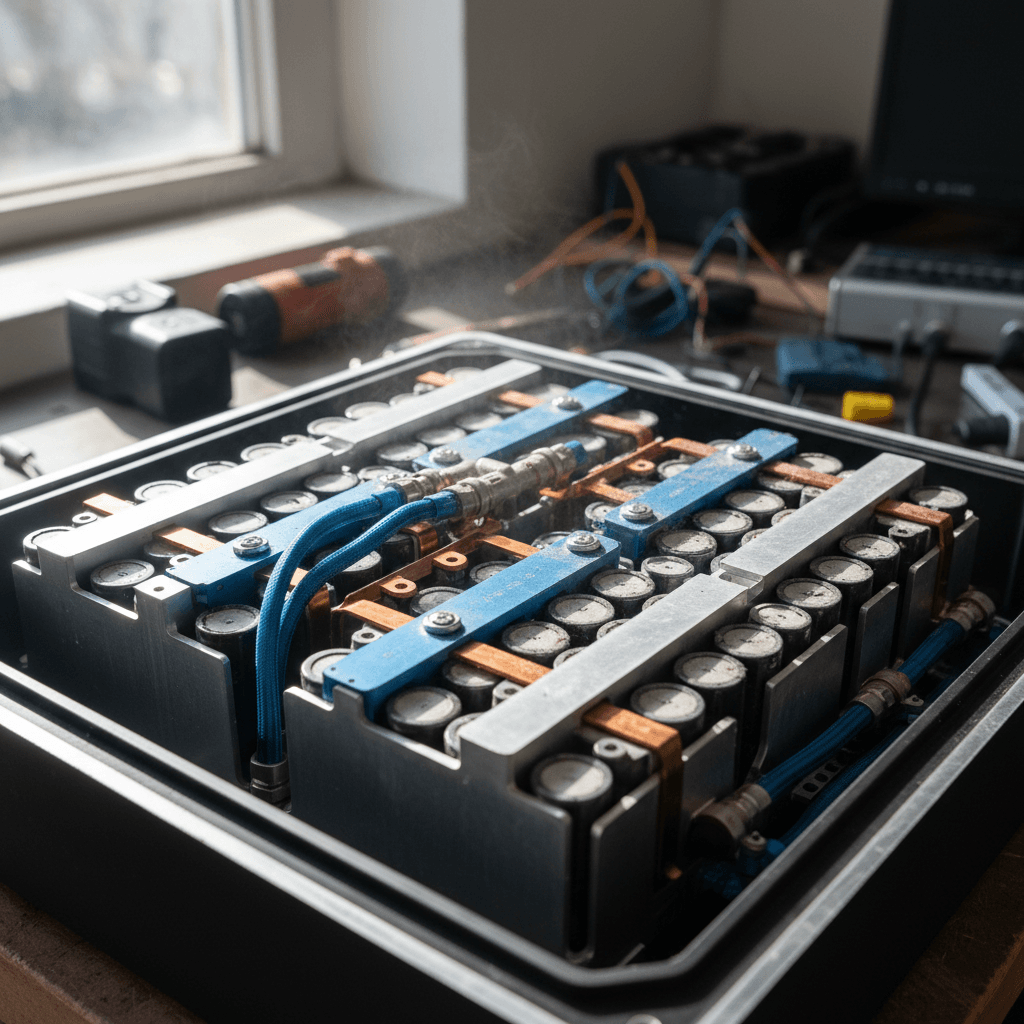
Home charging is where you have the most control, and where gentle habits are easiest. Level 2 charging (240V, usually 7–11 kW) is fast enough to refill a daily commute overnight but slow enough to be comfortable for the battery.
Set up your home charging for battery health
1. Right-size your charging speed
You don’t have to charge at the maximum possible rate. If your EV can take 48 amps but you only need to add 80 miles overnight, setting your charger to 24–32 amps reduces heat and stress without affecting your routine.
2. Use scheduled charging
Most EVs and smart chargers let you schedule sessions. Set charging to start late at night so the car finishes just before you leave. That way the pack doesn’t sit at a high state of charge for hours.
3. Take advantage of off-peak rates
Utility time-of-use plans often make power cheaper late at night. Aligning your charge schedule with off‑peak hours can save you hundreds of dollars per year while also reducing strain on the grid.
4. Keep the car shaded or indoors
If you have a garage, use it. Parking and charging in a cooler, stable environment eases the workload on your battery’s thermal management system and helps preserve long‑term capacity.
How Recharged helps here
Ready to find your next EV?
Browse VehiclesFast charging best practices
DC fast charging (sometimes called Level 3) is the superhero of road trips and busy days, but it’s also what makes many new EV drivers nervous. Early guidance said to avoid it whenever possible. Newer real‑world data is more encouraging: in many modern EVs, even frequent fast charging doesn’t drastically accelerate degradation. Still, there are smart ways to use it.
Fast charging: do’s and don’ts for battery health
Use the speed when you need it, skip the unnecessary stress
Do: Charge the middle, not the extremes
Fast chargers work best and most efficiently between roughly 10–15% and 70–80% SoC. Try to arrive with a low‑ish battery, then unplug once you have enough to reach the next stop, rather than waiting for 100%.
Don’t: Fast charge with a very hot or freezing battery
Extreme heat and cold are harder on cells under high power. Use your car’s battery preconditioning when available, and skip the fast charger if the pack is already very hot from hard driving on a hot day.
Do: Plan your stops
On a road trip, use the car’s built‑in planner or apps like A Better Routeplanner to arrive at chargers with 10–20% remaining. That keeps you in the sweet spot for quick, efficient fast charging.
Don’t: Make fast charging your only way to fuel
Fast charging red flags
Temperature and charging: how weather changes the rules
Battery chemistry is fussy about temperature. Charge when it’s too cold and ions move sluggishly; charge when it’s too hot and chemical reactions speed up in ways that shorten life. Your car’s thermal management and software do a lot behind the scenes, but your habits still help.
Cold weather
- Precondition before charging. Use your app or in‑car settings to warm the battery before you plug in, especially before DC fast charging.
- Expect slower speeds. In winter, fast chargers may deliver less power until the pack warms up. That’s the car protecting itself, not a broken station.
- Don’t store near empty. Leaving an EV at very low SoC in deep cold for days can trigger extra stress on the pack.
Hot weather
- Avoid long sits at 100% in the heat. If you need a full charge, time it so the car reaches 100% near departure.
- Prefer shaded or indoor chargers. Reducing cabin and pack temperature lowers the load on the cooling system.
- Ease off the throttle after a fast charge. Hard driving immediately after a hot fast‑charge session keeps the pack at high temperature longer.
Park smarter
Charging habits that quietly shorten battery life
Most EV batteries don’t fail dramatically, they just slowly lose range. Certain charging patterns can make that slope steeper than it needs to be. The good news: they’re easy to avoid once you know what to look for.
- Letting the car sit for weeks near 0% or 100% rather than somewhere in the middle of the pack.
- Using maximum‑power DC fast charging every single day when easier Level 2 options are available.
- Regularly fast charging from very low SoC (under ~5%) all the way to 100% in one shot, especially in high heat.
- Ignoring software updates that improve charging profiles and thermal management.
- Parking and charging in blazing direct sunlight day after day when a shaded alternative exists.
Don’t obsess over every percent
Smart charging for lower costs and a healthier grid
Best practices aren’t just about your battery, they’re also about your wallet and the power grid. As more EVs plug in, when you charge matters almost as much as how you charge.
Turn your charging habits into an advantage
Save money, support the grid, and keep your battery happy
Use off‑peak pricing
Many utilities offer time‑of‑use rates that make electricity much cheaper late at night. Aligning your home charging with those windows can significantly cut your fueling costs.
Let the car or charger manage it
Modern EVs and smart Level 2 chargers can automate charging to target certain SoC windows and time periods. Set it once and let the software handle the details.
Think about local grid stress
In areas with summer brownouts, avoiding evening peak charging when everyone’s A/C is on full blast helps reduce strain on neighborhood transformers, and may earn you bill credits in utility programs.
Charging best practices when you’re buying a used EV
If you’re shopping used, you inherit someone else’s charging decisions. You can’t go back in time and change their habits, but you can measure the impact and adjust your own habits going forward.
Used EV? Here’s how to evaluate and protect the battery
1. Get objective battery health data
Range guesses on the dash are only part of the story. Look for a third‑party battery health report or a platform like Recharged that provides a <strong>Recharged Score</strong> with verified state‑of‑health diagnostics.
2. Ask about charging history
If possible, find out where and how the car was charged. A vehicle that mostly lived on home Level 2 and saw occasional road‑trip fast charging is ideal, but even heavy fast‑charger usage can be fine if the SoH is strong.
3. Take a long test drive
Drive at highway speeds and watch how the state of charge falls. Does the indicated range feel consistent with what the battery report says? Sudden big drops can hint at cell imbalances.
4. Start good habits on day one
Once you own the car, set sane charge limits, schedule overnight charging, and follow the same best practices you would with a brand‑new EV. The battery doesn’t care how many owners it has had, only how it’s treated today.
Why this matters at Recharged
FAQ: EV battery charging best practices
Frequently asked questions about EV charging habits
Bringing it all together
You don’t need to be a battery scientist to follow EV battery charging best practices. If you keep your car mostly in the middle of its charge range for daily use, lean on Level 2 at home, treat fast charging as a powerful tool rather than a daily crutch, and respect what extreme heat and cold do to the pack, you’re already ahead of the curve. Your reward is more consistent range, lower total cost of ownership, and a healthier battery when it’s time to sell or trade in.
If you’re still in the shopping phase, especially for a used EV, pairing these habits with a transparent battery health report makes ownership far less mysterious. That’s why Recharged includes a Recharged Score Report with every car we list, plus EV‑savvy support to help you choose the right vehicle and understand how to charge it wisely. The result: you get all the benefits of electric driving, with far fewer unknowns.