If you live in a multi-car household, using an EV as your second car is often the lowest-risk, highest-reward way to go electric. You keep the flexibility of a gasoline vehicle for road trips and towing, while your EV quietly slashes fuel and maintenance costs on everyday driving.
A Quiet Revolution in Multi-Car Homes
Why an EV as a Second Car Makes So Much Sense
Think about how you actually use your two (or three) vehicles. One car usually handles long trips, kids’ sports, and big errands. The other tends to be the commuter, school-run, or grocery getter. That second role is where EVs shine: short, predictable, local driving that can be fueled at home for far less than gasoline.
Typical “Primary” Car
- Longest trips and vacations
- Highest passenger and cargo loads
- Towing or outdoor activities
- Used when you absolutely can’t be delayed
Typical “Second” Car
- Daily commute or school run
- Local errands and appointments
- Short daytime trips around town
- Often sits parked at home or work for hours
This second-car duty cycle aligns almost perfectly with an EV’s strengths: low running costs, silent operation, and easy overnight charging.
How Multi-Car Households Really Drive
Driving Patterns That Favor an Electric Second Car
The punchline: in a two-car garage, at least one car almost never needs to drive hundreds of miles in a day. That’s exactly why an EV fits so naturally as the second car. You use it for the bulk of your daily miles, and you keep a gas or hybrid vehicle around for edge cases.
Quick Self-Check
Key Benefits of an EV as Your Second Car
9 Practical Benefits of Making Your Second Car Electric
From your wallet to your driveway, the upsides stack up quickly.
1. Lower Fuel Costs
2. Less Maintenance
3. Home “Refueling” Convenience
4. Lower Emissions
5. Quieter, Cleaner Neighborhoods
6. Great for Stop-and-Go Traffic
7. Battery Degradation Matters Less
8. Hedge Against Gas Price Spikes
9. Low-Risk Way to Learn EVs
Costs: Running the Numbers on a Second EV
EVs do still tend to cost more up front than comparable gas cars, especially new ones. But the gap has been narrowing, particularly in the used market, and operating costs are often lower. For a second car that handles predictable daily miles, those economics can work strongly in your favor.
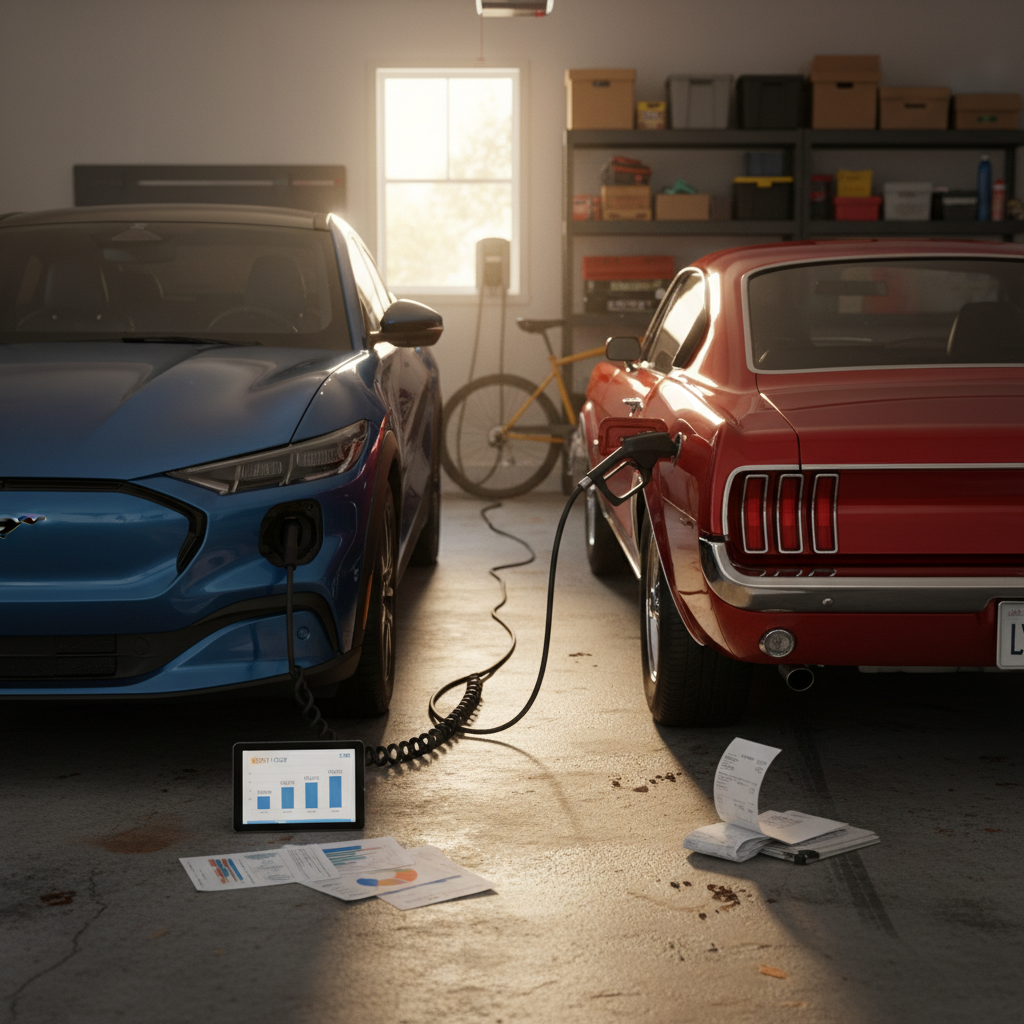
Typical 5-Year Cost Picture: Gas vs. Used EV as Second Car
Illustrative example assuming 8,000 miles per year on the second car in the U.S. Numbers are rounded and will vary by state, electricity rates, and specific models.
| Cost Category | Used Compact Gas Car | Used Compact EV |
|---|---|---|
| Purchase price | $16,000 | $20,000 |
| Fuel/energy (5 years) | ≈ $8,000 | ≈ $3,000 |
| Routine maintenance | ≈ $2,000 | ≈ $1,000 |
| Repairs outside warranty | ≈ $1,500 | ≈ $1,000 |
| Total 5-year cost (excl. insurance) | ≈ $27,500 | ≈ $25,000 |
These are directional comparisons, not quotes. Always run numbers for your exact vehicles.
Don’t Ignore Depreciation
Independent ownership-cost studies increasingly find that many EVs are cheaper to own over 5 years than similar gasoline models once you include energy and maintenance savings. For a second car driven moderate miles, those savings are meaningful, especially if you buy used at today’s softer EV prices.
Why Used EVs Are the Sweet Spot for a Second Car
If you’re putting an EV into the second-car slot, a used electric vehicle is often the smartest play. You avoid the steepest depreciation, you can still get plenty of range for daily needs, and you typically pay thousands less than new. Recent data shows that a majority of used EVs in the U.S. have been listing under $30,000, with a significant share under $25,000 as prices normalized after the first wave of demand cooled.
What Makes a Used EV Ideal as a Second Car?
Four reasons the math often works better used than new.
1. Depreciation Already Baked In
2. “Enough” Range for Daily Use
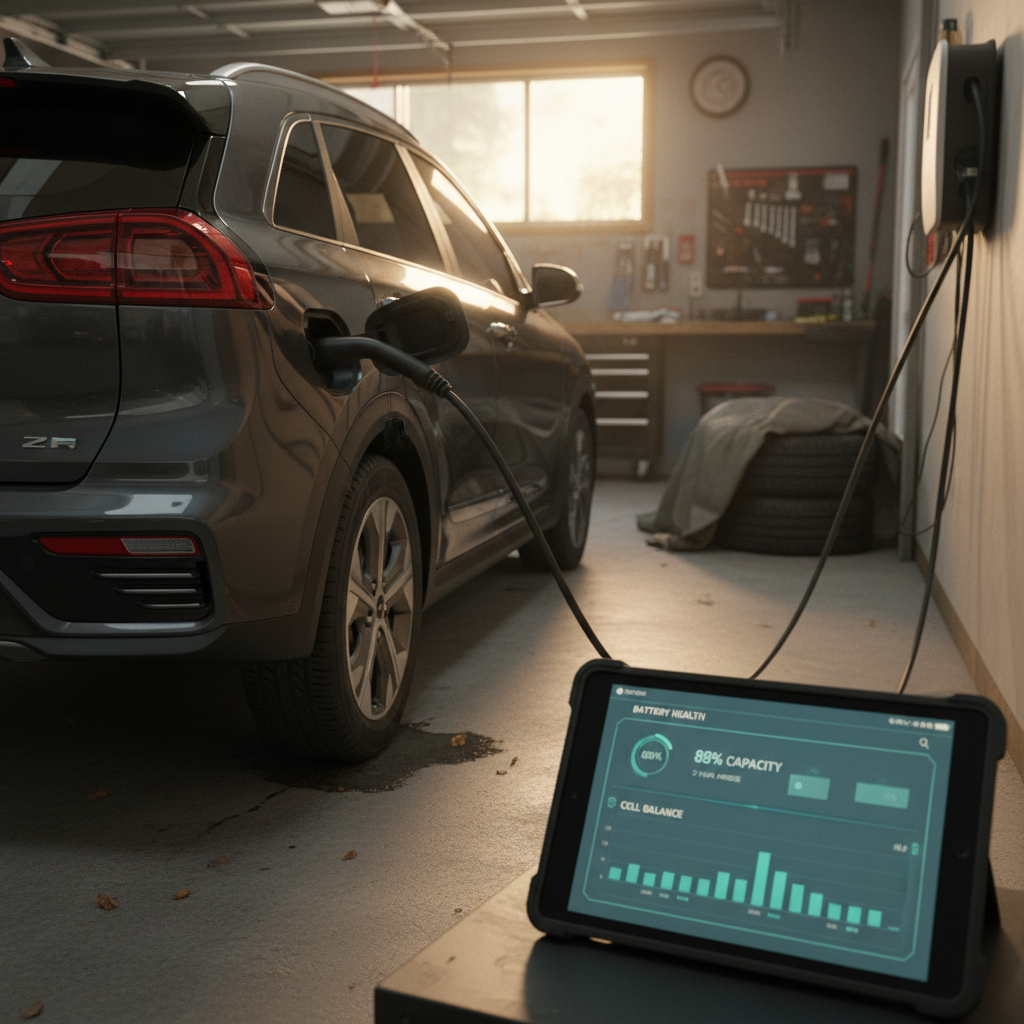
3. Transparent Battery Health
4. Inventory and Model Variety
How Recharged Helps With Used EVs
Charging: How Much Do You Really Need?
One of the biggest mental hurdles to buying an EV is charging. When it’s your second car, the bar is often much lower than you think. You don’t necessarily need a fancy wall box on day one; in many cases you can grow into your charging setup as you learn your real-world needs.
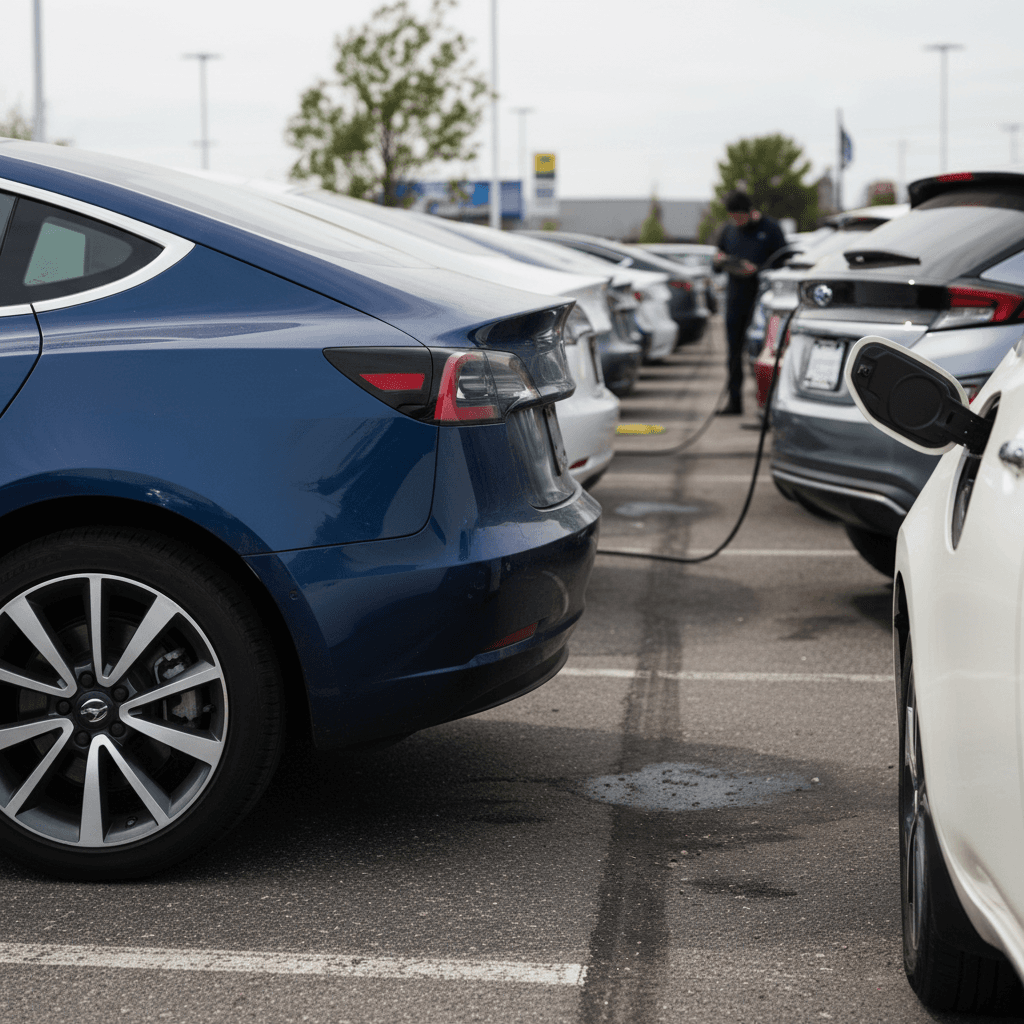
Right-Sizing Charging for a Second EV
1. Start With Level 1 if You Drive Very Little
If your second car does 20–30 miles a day or less and you have overnight parking near a 120V outlet, a standard household plug can add roughly 3–5 miles of range per hour, often enough to break even by morning.
2. Consider Level 2 for Heavier Daily Use
If you’re closer to 40–60 miles per day or want faster top-ups, a 240V Level 2 charger in the garage or driveway can add 20–40 miles of range per hour, depending on the vehicle and charger.
3. Use Public Charging as a Safety Valve
Even if home charging covers 95% of your needs, it’s smart to know where nearby Level 2 and DC fast chargers are located. Apps from major networks or automakers make this easy.
4. Check Your Electrical Panel Before Upgrading
Before installing a higher-amp Level 2 charger, have a qualified electrician confirm your panel has capacity and that permits and local codes are followed.
5. Leverage Workplace Charging If Available
If your employer offers charging, your second car might live there during the day, drastically cutting how much charging you need at home.
No-Guilt Experiment: Start Small
Range Anxiety Hits Different When It’s Your Second Car
Range anxiety, worrying you’ll run out of charge, is real, but it behaves very differently when the EV is not your only vehicle. You’re no longer betting the entire household on one battery; you’re assigning the right tool to the right job.
When EV Is Your Only Car
- Every unexpected long trip creates stress.
- Vacation planning revolves around charging maps.
- You might feel forced to overbuy range you rarely use.
When EV Is the Second Car
- Most days are short, local trips with huge range headroom.
- Surprise long trips can go to the gas or hybrid vehicle.
- You can choose a smaller-battery, lower-cost EV and still be fine.
What Range Is “Enough” for a Second Car?
When an EV as a Second Car Doesn’t Fit Well
EVs are not a magic answer for every household. There are real constraints that can make even a second-car EV challenging, especially around parking and charging access.
- You have no reliable off-street parking and limited public charging nearby, so plugging in regularly is hard.
- Your second car regularly handles unplanned 200+ mile trips where using the gas car instead isn’t practical.
- You live in an area with very high electricity prices and low gasoline prices, making per-mile savings smaller.
- Your budget is extremely tight, and even with today’s softer used EV prices, the up-front cost premium outweighs operating savings in your case.
- You frequently need to tow or carry unusually heavy loads with the second car, where many smaller EVs aren’t rated to help.
Red Flag: No Way to Charge at Home or Work
Step-by-Step Plan for Making Your Second Car Electric
Two Paths: Careful Planner vs. Quick Switcher
Deliberate Planner (3–12 Months)
Track your daily miles for a few weeks to confirm how much range you actually need.
Check home electrical capacity and parking to understand your realistic charging options.
Research used EV models that match your needs; focus on range, body style, and reliability history.
Get pre-qualified for financing so you know your budget and monthly payment range ahead of time.
Use a marketplace that provides battery health data, like Recharged with its Recharged Score, to shop vehicles confidently.
Install home charging (if needed), then switch the daily-commute or errand duty to your EV and monitor real-world costs.
Quick Switcher (0–3 Months)
Decide which existing car will stay as your long-trip or towing vehicle.
Set a clear budget for a used EV as your second car, including an allowance for a Level 2 charger if required.
Shortlist 3–5 specific models that fit your parking, family, and range needs.
Shop digital-first platforms such as Recharged where you can review battery health reports, arrange trade-in or consignment of your current car, and line up financing in one place.
Schedule test drives, either locally or via an Experience Center like Recharged’s Richmond, VA location, to confirm comfort and tech fit.
Complete the purchase online and set up home charging in parallel so the EV can immediately take over commuter and errand duty.
Pre-Purchase Checklist for a Second-Car EV
Clarify the Second Car’s Job Description
Is it mostly commuting, kid shuttling, errands, or a backup car? Being explicit about the role helps you pick the right size, range, and budget.
Verify Charging Access
Confirm whether you can park near an outlet or install a Level 2 charger. If you rent, check with your landlord or HOA before assuming it’s impossible.
Decide on Minimum Acceptable Range
Based on your logged daily miles, pick a realistic minimum range and don’t overpay for extra you’ll never use.
Evaluate Battery Health, Not Just Odometer
On a used EV, battery condition matters more than mileage. Use tools like the Recharged Score to see real battery health and expected range before you commit.
Run 5-Year Cost Scenarios
Use online total-cost-of-ownership calculators to compare a used EV against a similar gas car at your local fuel and electricity prices.
Plan for Resale or Replacement
Think about how long you expect to keep this second car. If you’re likely to upgrade again when next-generation EVs are cheaper, a lower-priced used EV may make the most sense.
EV as Second Car: FAQs
Frequently Asked Questions About Using an EV as a Second Car
The Bottom Line: Start Your EV Journey with the Second Car
Using an EV as your second car is one of the simplest, lowest-friction ways to go electric. You keep the security of a gas or hybrid vehicle for the rare edge cases while shifting most of your everyday miles to a quieter, cleaner, cheaper-to-run EV.
If you can plug in at home or work, drive modest miles on that second car, and buy intelligently, especially in today’s maturing used EV market, you can capture meaningful savings without reshaping your life around charging. That’s exactly what the data on multi-car households suggests is possible.
When you’re ready to explore options, marketplaces like Recharged are built for this use case: transparent battery health via the Recharged Score, fair pricing, expert EV guidance, financing and trade-in support, and even nationwide delivery or an in-person Experience Center in Richmond, VA. Taken together, those tools make turning your second car electric not just feasible, but genuinely attractive.