If you grew up with oil changes and emissions tests, an EV annual inspection can feel like a mystery. There’s no engine oil to change and no catalytic converter to fail, but you’re still piloting a 4,000–6,000 lb computer on wheels at highway speeds. This guide breaks down what’s actually needed in an annual EV inspection, what’s legally required, and what’s just smart insurance for your safety and your wallet.
Quick reality check
Why EV annual inspections matter (even if the law doesn’t)
A modern EV has far fewer moving parts than a gas car, which usually means fewer repairs. But it also concentrates a huge share of its value in a single component: the high-voltage battery. A hidden issue there, or in the charging system, can turn into a four‑ or five‑figure surprise. A structured annual inspection is how you catch problems while they’re still cheap and boring.
Three reasons not to skip an EV inspection
Especially important for used or higher‑mileage EVs
Safety at highway speed
Battery health & value
Predictable costs, fewer surprises
Legal inspections vs. smart annual EV checkups
In the U.S., what you *must* do each year depends on where you live. States set their own rules for safety and emissions inspections, and EVs occupy odd corners of those rules.
1. State-mandated inspections
Some states require an annual or biennial safety inspection for all vehicles, EVs included. Others require only emissions checks, from which purely electric vehicles are usually exempt. A few states have dropped most safety inspections for non‑commercial vehicles altogether.
What this means for you: check your state DMV or DOT site to see if your EV needs a state inspection sticker to renew registration. If so, that inspection may be fairly basic, often focused on lights, horn, wipers, tires, and sometimes brakes.
2. Recommended annual EV health check
Even where the law is silent, most experts recommend a yearly EV health inspection, especially once the car is out of its basic bumper‑to‑bumper warranty or if you bought it used. Think of it like an annual physical: you’re screening for early signs of trouble in the battery, charging hardware, and chassis.
This is where an EV‑savvy shop, or a platform like Recharged’s battery‑forward inspection process, matters more than the paper sticker on your windshield.
Don’t confuse emissions tests with EV health
EV annual inspection checklist: what’s needed
Whether you’re heading to a state inspection lane or a trusted EV specialist, a thorough annual EV inspection should cover four big buckets: battery and charging, chassis and wear items, software and safety systems, and basic body/roadworthiness.
High-level EV annual inspection checklist
Battery and charging health
State of health (SOH), range vs. spec, DC fast‑charge behavior, charging port and cables, and high‑voltage cooling or leak checks.
Brakes, tires, steering, and suspension
Pad and rotor thickness, brake fluid condition where applicable, tire wear pattern and remaining tread, alignment, shocks/struts, bushings, and steering play.
Software, diagnostics, and safety systems
Scan for fault codes, verify over‑the‑air (OTA) updates, and test ABS, stability control, airbags, lights, and driver‑assistance systems where equipped.
Body, underbody, and corrosion
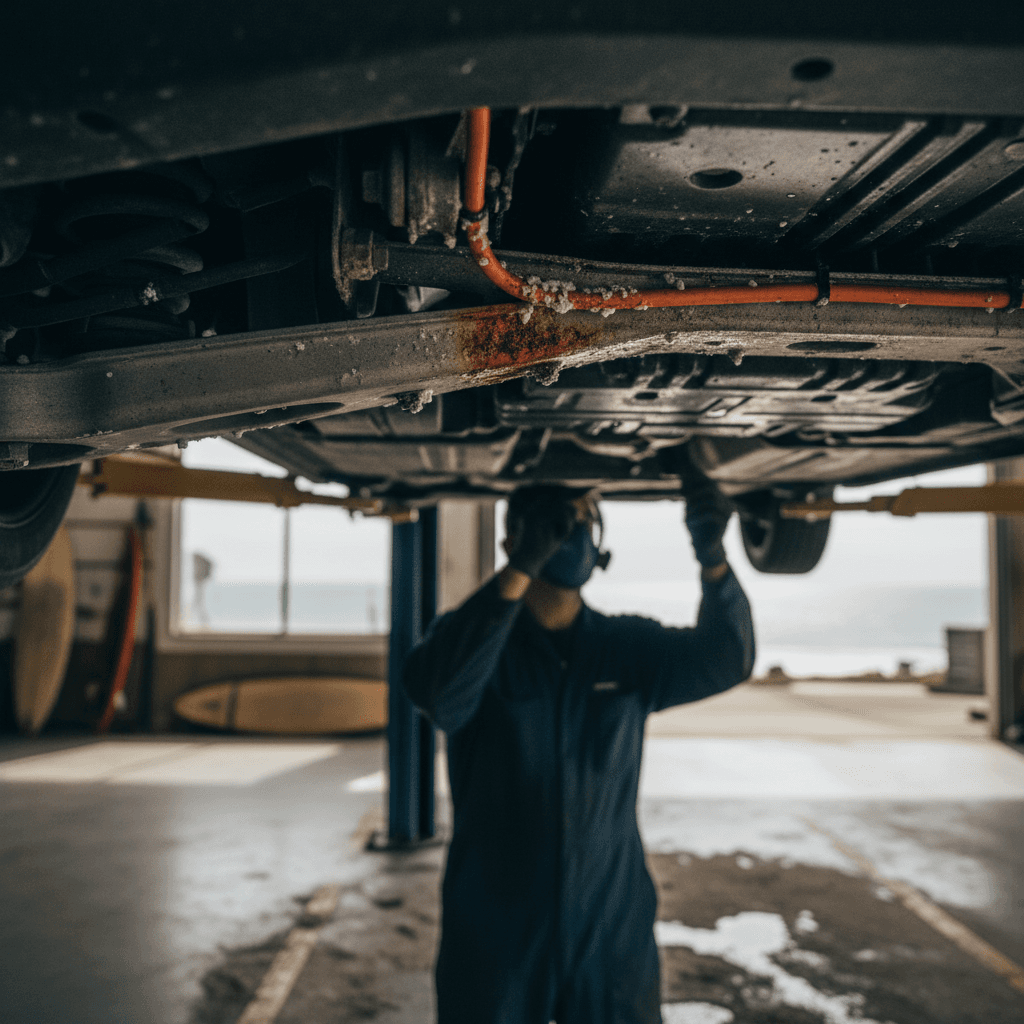
Look for rust or damage to the underbody, battery enclosure, and high‑voltage cabling; check glass, wipers, mirrors, and seat belts for obvious safety issues.
Battery and charging system: the EV-specific heart check
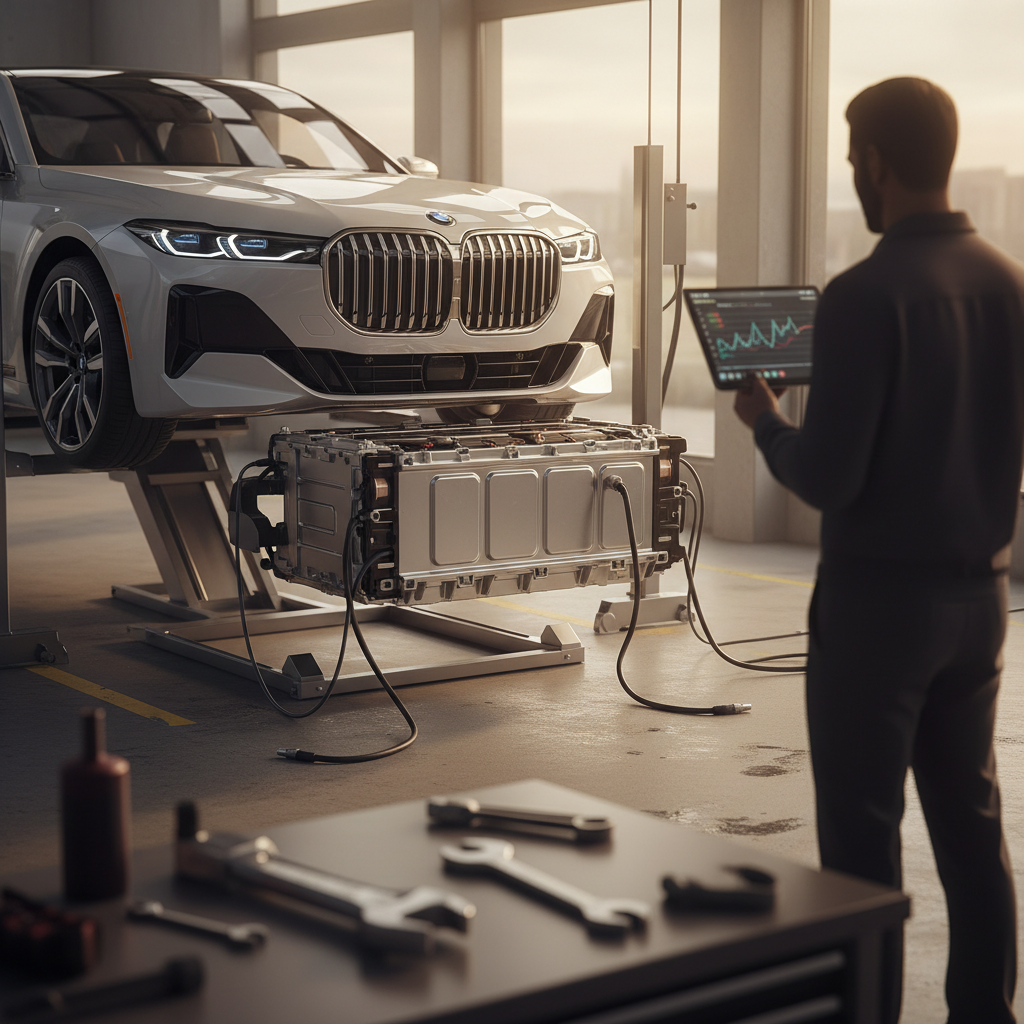
If the engine and transmission were the heart and lungs of a gas car, the traction battery and inverter take that role in an EV. An annual inspection that ignores the battery is like a physical that skips your blood pressure.
Core battery and charging checks
What a competent shop should evaluate at least once a year
| Area | What’s Checked | Why It Matters |
|---|---|---|
| Battery state of health (SOH) | Capacity vs. original rating using scan tools or OEM diagnostics | Shows long‑term battery degradation and impacts real‑world range. |
| Battery temperature behavior | Temps during DC fast charging or prolonged driving | Abnormal temps can hint at cooling issues or cell imbalances. |
| Range vs. trip distance | Miles driven vs. miles of range consumed on a controlled drive | A quick sanity check for hidden degradation or software mis‑calibration. |
| High‑voltage cables & seals | Visual inspection for damage, corrosion, or moisture | Protects against dangerous shorts and expensive HV component failures. |
| On‑board charger & inlet | Signs of overheating, wear, or loose connections at the charge port | Prevents arcing, failed charging sessions, and melted connectors. |
You don’t need to understand every line item, but you do want someone who does.
Make the most of your battery report
- If your EV supports it, bring recent energy‑consumption data or screenshots from the trip computer.
- Share how you normally charge (Level 1 vs. Level 2 vs. DC fast charging) and typical state‑of‑charge windows.
- Mention any charging weirdness: sessions that stop early, unusually slow DC charging, or hot smells at the charge port.
Brakes, tires, and suspension: heavier cars, higher stakes
EVs are often hundreds of pounds heavier than their gas counterparts. That extra weight rides on four postcard‑sized tire patches and a brake system that, thanks to regenerative braking, can rust quietly while you think everything’s fine. Your annual inspection is where someone gets under the car and tells the truth.
Why EV wear items deserve attention
Chassis and wear‑item inspection: what’s needed each year
Measure tire tread and inspect wear patterns
A good inspector won’t just quote remaining tread; they’ll flag <strong>uneven wear</strong> that hints at alignment or suspension issues. Inner‑edge wear is common on heavy EVs and easy to miss without a lift.
Check tire age and load rating
Even with tread left, tires older than six years can harden and crack. On EVs, you also want the correct <strong>load index</strong> and EV‑appropriate tires to handle weight and torque.
Inspect brake pads, rotors, and calipers
Because of regenerative braking, pads can last a very long time, but rotors may rust. The technician should measure thickness and look for corrosion, sticking calipers, or glazing that hurts stopping power.
Evaluate suspension and steering components
Shocks, struts, control‑arm bushings, ball joints, and tie‑rod ends should be checked for play, leaks, and torn boots. Extra EV mass can accelerate wear here, especially on rough roads.
Test parking brake and hill‑hold
Whether it’s an electronic parking brake or an older mechanical system, it should reliably hold the car on an incline and release smoothly.
Silent failures are the most dangerous
Software, safety systems, and high-voltage components
Your EV is as much software as hardware. An annual inspection is a good moment to confirm that the car isn’t quietly logging problems in a place only a scan tool can see.
- Full system scan for diagnostic trouble codes (DTCs), even if no warning lights are on.
- Verification that airbags and seat‑belt pretensioners show no faults and that recalls are addressed.
- Function tests for ABS, traction and stability control, and electronic parking brake features.
- Check that driver‑assistance systems (where equipped) like adaptive cruise or lane‑keeping operate without spurious warnings.
- Visual inspection of orange‑sheathed high‑voltage cables and connectors for chafing, damage, or amateur modifications.
Where Recharged fits in
Ready to find your next EV?
Browse VehiclesExtra inspection steps if you’re buying a used EV
If you’re standing in a driveway or showroom trying to decide whether a used EV is a good bet, you need everything in the annual checklist, plus a few deeper cuts. The question isn’t just “Is this car safe today?” It’s “What does its past say about the next 5–8 years?”
Used EV inspection: beyond the annual basics
The difference between a great deal and an expensive experiment
Battery history & charging habits
Real‑world range test
Collision and underbody damage
“An EV is still a car. The battery and motor are different, but tires still wear, brakes still rust, and suspension still sags. A good inspection just changes where you shine the flashlight first.”
Buying through Recharged?
How to prepare your EV for an annual inspection
Showing up prepared makes the inspection faster, cheaper, and more accurate. It also gives the technician the context they need to interpret what they see on the lift and the scan tool.
Pre‑inspection prep: a 20‑minute owner checklist
1. Note any noises, smells, or quirks
Write down anything odd: clicks while turning, shuddering under braking, charging sessions that end early, range estimates that swing wildly. Specific complaints help a tech zero in on problems quickly.
2. Charge to a realistic everyday level
Arrive with the car around <strong>60–80% state of charge</strong>. That’s high enough to run tests and short drives, but low enough that the shop can add a bit of charging if needed without wasting time.
3. Bring both keys and your charging cable
Technicians may need to test keyless entry, remote functions, or your portable EVSE if you’ve had charging issues. If you suspect a wall‑box problem, bring photos of your home setup.
4. Update software beforehand, if possible
If your EV supports over‑the‑air updates, try to install them a day or two before your appointment. That way, the inspection is based on the latest calibrations and bug fixes.
5. Gather records and warranties
Have your service history, tire invoices, and <strong>battery or powertrain warranty</strong> details handy. If the inspector spots a borderline issue under warranty, you may be able to get it addressed at low or no cost.
How often and how much: setting a smart inspection cadence
How frequently you need a deep dive depends less on the calendar and more on mileage, climate, and how you use the car. That said, most owners are well served by a once‑a‑year comprehensive check, with a quick look‑over at each tire rotation or seasonal change.
Typical EV inspection rhythm
- Annually: Full EV inspection covering battery, chassis, software, and safety.
- Every 6 months or 6–7k miles: Quick tire, brake, and fluid check, often combined with a tire rotation.
- Before long road trips: Fast once‑over of tires, wipers, washer fluid, and charging equipment.
What it may cost
Pricing varies widely by region and shop, but as a ballpark:
- Basic state safety inspection (where required): typically inexpensive, but not EV‑specific.
- Dedicated EV health check: often priced like a detailed used‑car inspection, a few hundred dollars for several hours of work and a written report.
If you’re already shopping for a used EV, remember that Recharged wraps this work into the buying price via its Recharged Score, which can be more efficient than commissioning a one‑off inspection yourself.
When to spend extra on inspection
FAQ: EV annual inspection basics
Frequently asked questions about EV annual inspections
The punchline is simple: an EV doesn’t free you from maintenance; it just changes the syllabus. Your annual EV inspection should trade oil changes and exhaust tests for battery health, charging behavior, and heavyweight chassis wear, but it’s no less important. Whether you’re keeping an EV for the long haul or shopping a used one, treat that yearly checkup as part of the cost of silence and instant torque. And if you’d rather bake that diligence into the purchase itself, consider starting your search with a used EV that already has a Recharged Score Report in hand.