If you’ve been Googling “electronic vehicle”, you’re not alone. A lot of drivers use that phrase when they really mean electric vehicle (EV), a car that runs on a battery and an electric motor instead of a gasoline engine. Whatever you call it, you’re probably wondering: how do these cars work, what do they really cost, and is a used EV a smart buy in 2025?
Quick Note on Terminology
What Is an “Electronic Vehicle,” Really?
An electric vehicle is any car that’s powered wholly or partly by electricity stored in a battery. The battery feeds an electric motor, which turns the wheels. There’s no gasoline engine doing the work in a fully electric car (also called a BEV, for battery electric vehicle).
- BEV (Battery Electric Vehicle) – 100% electric, no gas engine at all. Example: Tesla Model 3, Nissan LEAF, Hyundai Ioniq 5.
- PHEV (Plug‑in Hybrid Electric Vehicle) – Has both a battery you can plug in and a gasoline engine. Short trips on electricity; gas kicks in for longer drives.
- HEV (Hybrid, not plug‑in) – A gas car with a small battery that charges itself while driving. You don’t plug it in; it’s not considered an EV in the strict sense.
How to Sound Like You Know What You’re Talking About
Electric Vehicles Are Moving Mainstream
How Electric Vehicles Actually Work
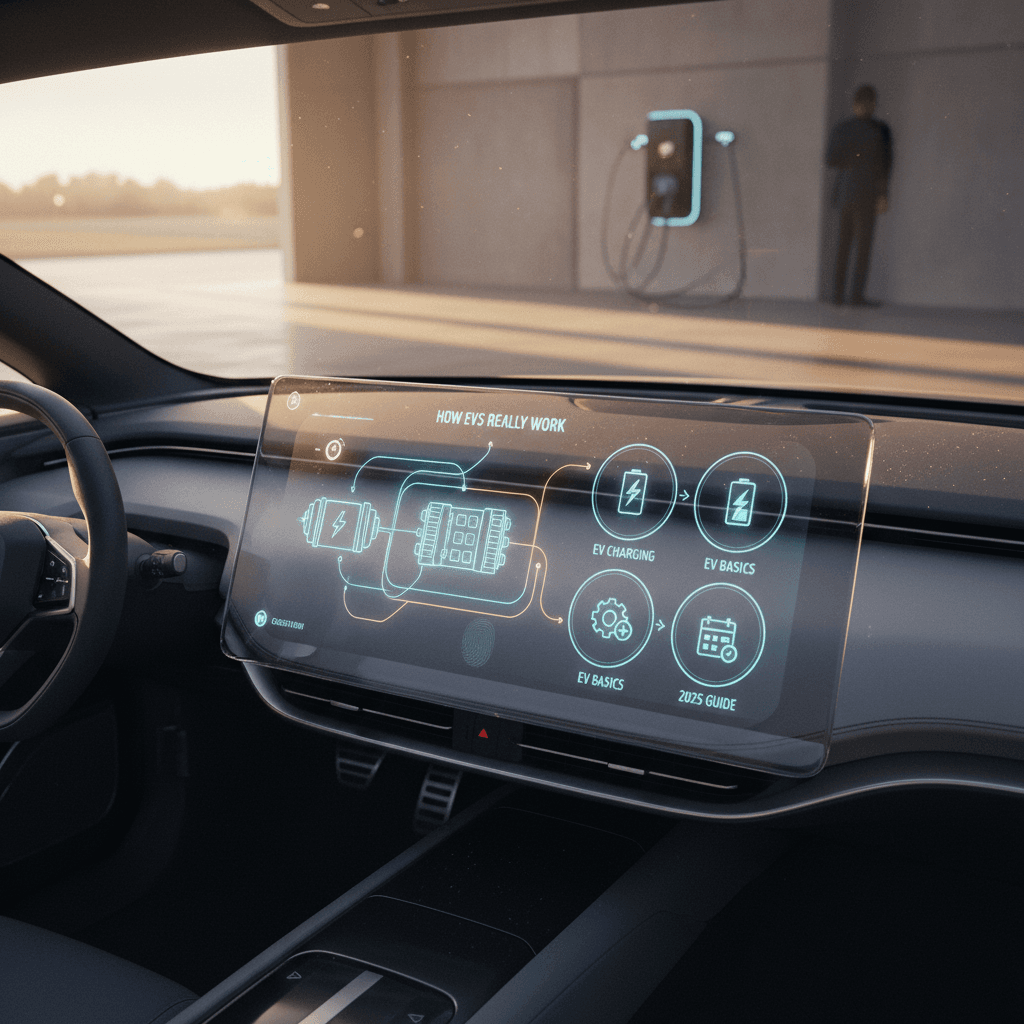
Under the skin, an electric vehicle is refreshingly simple. Instead of hundreds of moving parts in a gasoline engine, you get a big battery pack, one or more electric motors, and some power electronics to manage the flow of energy. The result is instant torque, smooth acceleration, and far less routine maintenance.
Electric Vehicle Drivetrain
- Battery pack under the floor stores energy in kilowatt‑hours (kWh).
- Inverter converts DC power from the battery to AC for the motor.
- Electric motor turns the wheels directly, often with a single‑speed gearbox.
- Onboard charger manages AC charging from home outlets or public Level 2 stations.
Gasoline Vehicle Drivetrain
- Engine burns fuel, creating heat, vibration, and emissions.
- Transmission with many gears tries to keep the engine in its sweet spot.
- Fuel system & exhaust add complexity and maintenance.
- Fluids & filters (oil, coolant, transmission, etc.) all require periodic service.
Why EVs Feel So Smooth
- Instant torque: EVs often feel faster around town than their horsepower numbers suggest.
- Regenerative braking: The motor runs in reverse as a generator when you lift off the accelerator, slowing the car and putting energy back into the battery.
- Fewer wear items: No oil changes, spark plugs, or timing belts. Brake pads last longer thanks to regen.
Battery, Range, and Real‑World Driving
The battery is the beating heart of any electronic vehicle. Its capacity, measured in kilowatt‑hours (kWh), largely determines how far you can drive on a charge. But real‑world range depends on how and where you drive, not just what’s printed on the window sticker.
Typical Electric Vehicle Battery & Range Examples
Ballpark figures to help you translate battery size into everyday driving range. Actual numbers vary by model, weather, and driving style.
| Battery Size (kWh) | Typical EPA Range | Feels Like (Use Case) |
|---|---|---|
| 40–50 kWh | 140–200 miles | City commute car, shorter trips, good second car |
| 60–77 kWh | 220–300 miles | Balanced daily driver, most U.S. commutes plus weekend trips |
| 80–100+ kWh | 280–350+ miles | Road‑trip capable SUV or premium sedan |
Battery capacity and range examples for modern EVs.
Weather and Range
- Highway vs city: At steady high speeds, air resistance eats into range. Many EVs get their best efficiency in mixed or slower driving, not 80 mph blasts.
- Driving style: Smooth acceleration and anticipating stops let regenerative braking recapture more energy.
- Accessories: Roof boxes, big wheels, or constant AC/heat all nibble at range margins.
Electronic Vehicle Charging Basics
Charging is where “electronic vehicle” ownership either feels like magic or a nuisance. The trick is understanding the three basic charging levels and how they fit into your life. Once you do, plugging in becomes as routine as charging your phone.

Charging Levels Explained
How long it takes to charge an electric vehicle depends on power level, measured in kilowatts (kW).
| Charging Level | Power Source | Typical Speed | Best For |
|---|---|---|---|
| Level 1 | 120V household outlet (~1.4 kW) | 3–5 miles of range per hour | Apartment dwellers or low daily mileage |
| Level 2 | 240V home or public (7–11 kW) | 20–40 miles of range per hour | Overnight home charging, workplace, public parking |
| DC Fast Charging | High‑power public stations (50–350 kW) | 0–80% in ~20–45 minutes | Road trips and quick top‑ups on the highway |
Rough charging times assume a modern EV with around 60–70 kWh of battery capacity.
Home Charging Rule of Thumb
Checklist: Getting Ready for Home Charging
1. Check Your Daily Mileage
If you typically drive under 40–50 miles per day, even Level 1 (a regular outlet) can cover you in a pinch, though Level 2 is more convenient.
2. Assess Your Electrical Panel
Look for available capacity in your breaker panel. A licensed electrician can tell you whether a 240V circuit for a home charger is straightforward or requires an upgrade.
3. Choose a Level 2 EVSE
Decide between a hard‑wired wall unit or a plug‑in Level 2 charger. Focus on reliability, amperage (32–48A), and a cord long enough to reach your parking spot.
4. Plan the Install
Keep cable runs short and routing simple to reduce cost. Avoid DIY for anything involving 240V, this is electrician territory.
Safety First
Cost of Owning an Electronic Vehicle
The sticker price of an EV can look intimidating, especially new. But total cost of ownership, the sum of fuel, maintenance, and depreciation, can be surprisingly favorable, particularly if you buy a used electric vehicle that’s already absorbed its early‑years depreciation.
Where the Money Goes (and Doesn’t)
Key cost categories for electronic vehicle ownership compared with gasoline cars.
Fuel vs Electricity
Electricity is usually cheaper per mile than gasoline, especially if you can charge at home during off‑peak hours. On a typical U.S. rate, you might spend the equivalent of paying around $1–$1.50 per gallon.
Maintenance
EVs skip oil changes, spark plugs, and a long list of under‑hood parts. You’re mostly dealing with tires, cabin filters, coolant service intervals, and brake fluid every few years.
Battery & Depreciation
Battery longevity and replacement cost are the big questions. The good news: most modern packs are holding up well, and buying used can mean you let the first owner take the steepest depreciation curve.
Incentives and Used EVs
Buying a Used Electronic Vehicle with Confidence
A used electronic vehicle can be a brilliant value, quiet, quick, and far cheaper to run than a comparable gasoline car. The catch is that you’re not just buying a car; you’re buying a battery with a car wrapped around it. Knowing that battery’s health is the whole ballgame.
Essential Used EV Buying Checklist
1. Verify Battery Health
Ask for a battery health report, not just a range estimate from the dashboard. Tools like the <strong>Recharged Score</strong> use diagnostics to measure battery condition beyond what you can see on a test drive.
2. Look at Actual Range
Charge the car near full and take a mixed‑driving test route. Compare the indicated range and efficiency with what the model delivered when new to get a feel for realistic range today.
3. Check Charging History
Frequent DC fast charging isn’t an automatic deal‑breaker, but a car that has lived on fast chargers its whole life may show a bit more battery wear. Steady home Level 2 usage is usually gentler on the pack.
4. Confirm Charging Port & Cables
Make sure the car comes with the correct charging cable and that the connector standard (CCS, NACS/Tesla, or CHAdeMO on older models) matches the infrastructure you’ll actually use.
5. Inspect for EV‑Specific Damage
Look under the car for signs of impact near the battery pack and check for warning lights related to high‑voltage systems. A pre‑purchase inspection by an EV‑savvy technician is worth every dollar.
Mind the Warranty Lines
How Recharged Makes Used EV Shopping Easier
If you’re intrigued by the idea of an electronic vehicle but wary of the unknowns, this is exactly the gap Recharged was built to fill. Instead of leaving you to guess at battery health or hunt through vague listings, Recharged treats used EVs like the high‑tech devices they are, something that deserves clear specs, honest diagnostics, and expert guidance.
What You Get with Recharged
Services designed around real‑world EV ownership, not just selling cars.
Recharged Score Battery Report
Every vehicle on Recharged includes a Recharged Score Report with verified battery health, detailed diagnostics, and fair‑market pricing insights. You’re not guessing whether the pack is healthy, you see data.
End‑to‑End EV Support
From financing and trade‑ins to nationwide delivery, an EV‑specialist team helps you evaluate models, compare range needs, and understand charging options. You can shop fully online or visit the Experience Center in Richmond, VA.
Ready to find your next EV?
Browse VehiclesEV Shopping, Minus the Guesswork
Common Myths About Electronic Vehicles
Electronic Vehicle Myths vs Reality
Let’s retire a few of the greatest hits.
“EVs Can’t Do Road Trips”
With today’s ranges and fast‑charging networks along major U.S. corridors, you can road‑trip an EV. You’ll spend more time planning stops up front, but for many routes it’s completely practical.
“Cold Weather Ruins EVs”
Cold reduces range temporarily, but it doesn’t “kill” the battery. Modern thermal management systems and pre‑conditioning keep packs in a healthy temperature window.
“Batteries All Need Replacing”
Battery packs degrade gradually, like phone batteries, but far more slowly. Many high‑mileage EVs still retain the majority of their original capacity after years of use.
What Actually Matters
Electronic Vehicle FAQ
Frequently Asked Questions About Electronic Vehicles
Bottom Line: Is an Electronic Vehicle Right for You?
Call it an electronic vehicle, call it an EV, the idea is simple: a quieter, smoother car that trades gasoline for electrons. Whether an EV fits your life comes down to a few practical questions: where you’ll charge, how far you drive, and how comfortable you are letting a battery, not a fuel tank, define your range.
If your daily driving is predictable and you can plug in at home or work, an electric vehicle can feel like an upgrade in every sense: performance, convenience, and running costs. If you’re EV‑curious but wary of battery health and charging complexity, starting with a used EV, backed by transparent diagnostics like the Recharged Score, is a smart way to experience the future of driving without paying new‑car prices.
From there, it’s simple: find the body style you like, confirm the range you need, and let the data, not the hype, tell you which electronic vehicle belongs in your driveway.