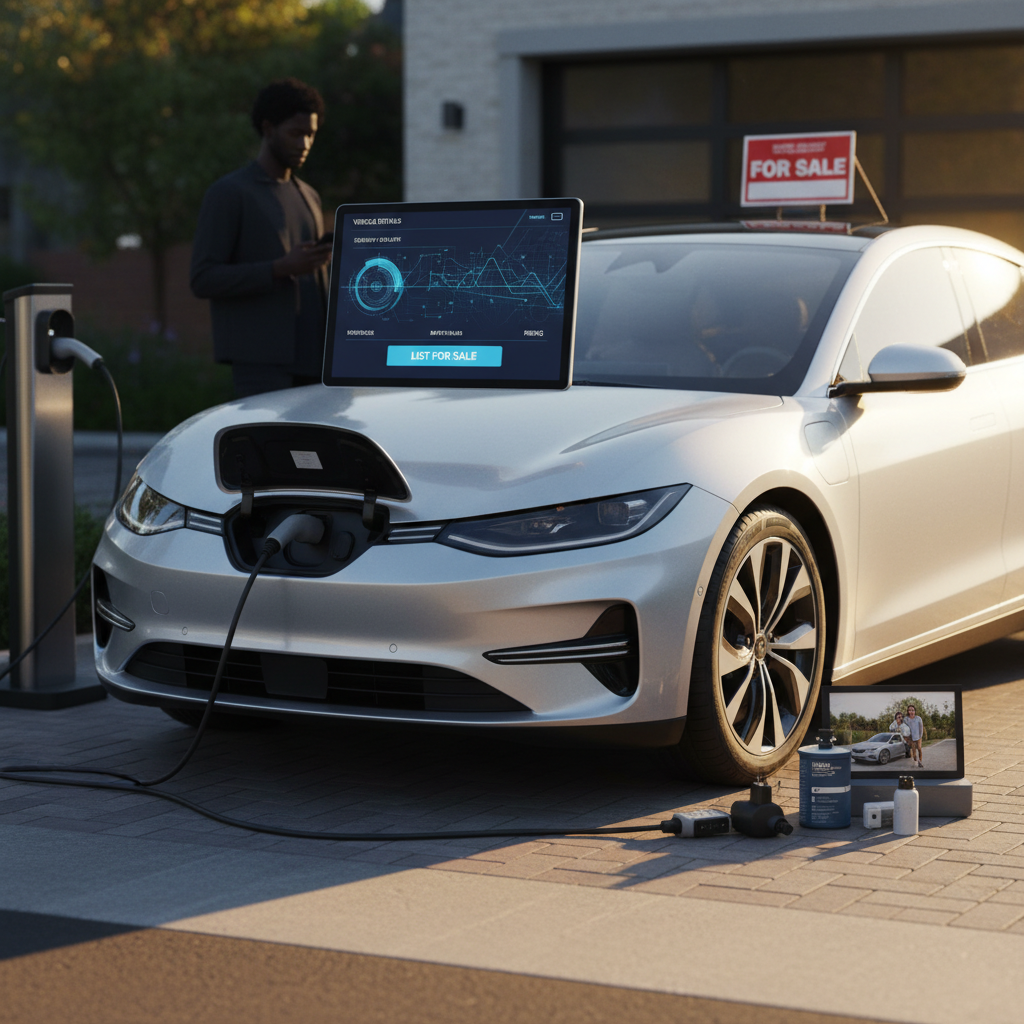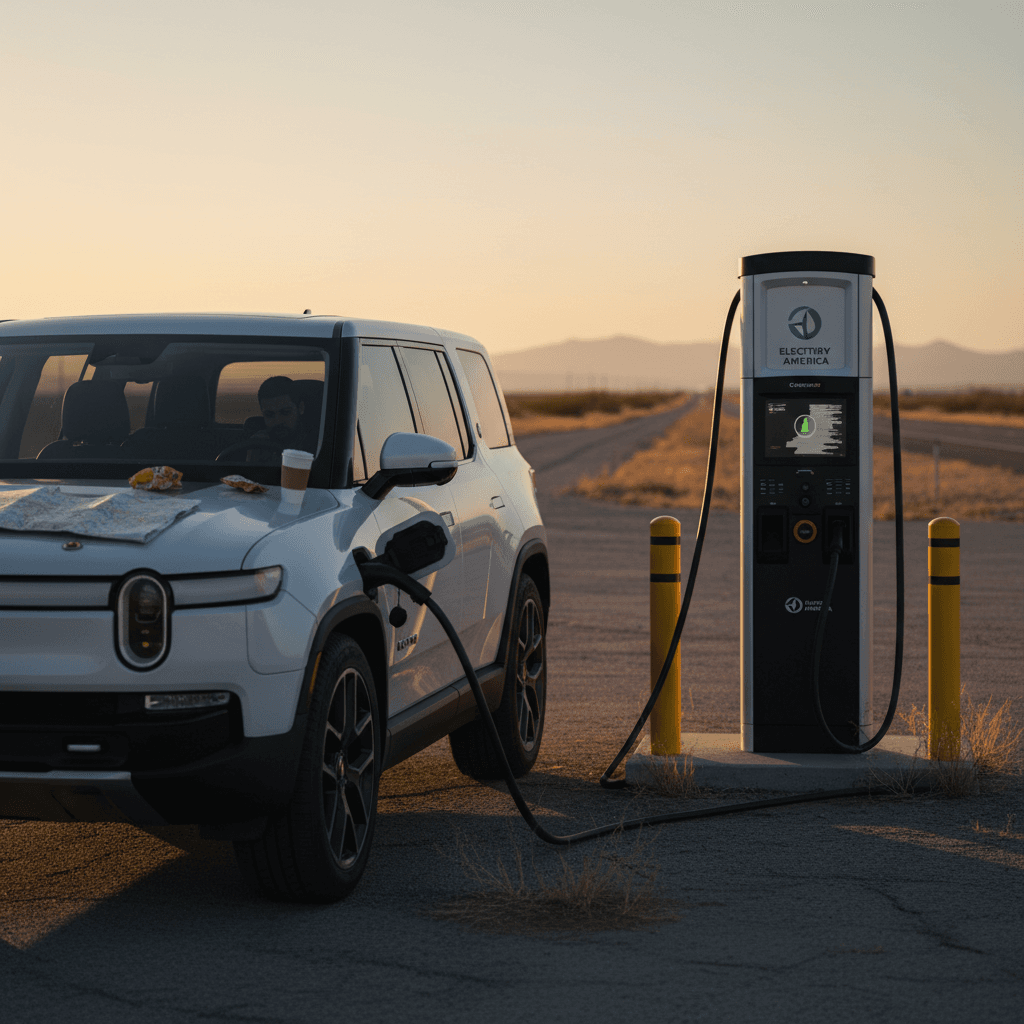
If you own a CCS‑equipped EV in the U.S., chances are your first serious highway road trip will lean heavily on Electrify America. At the same time, you’ve probably heard horror stories about broken chargers and stranded drivers. This guide takes a clear‑eyed look at Electrify America reliability issues on road trips, what’s actually improved by 2026, what’s still frustrating, and how to plan so your next trip is memorable for the scenery, not the charging drama.
The short version
Why Electrify America makes road‑trippers nervous
Electrify America (EA) was built quickly and at scale, with a mandate to deploy thousands of high‑power DC fast chargers along major corridors. That speed created two realities that matter to you as a road‑tripper:
- A large portion of the network was installed with first‑generation hardware that has proven finicky in the real world.
- The company built a lot of 150–350 kW stalls clustered at popular highway stops, which are heavily used and exposed to wide temperature swings, both of which stress the equipment.
- Non‑Tesla automakers have used a wide range of software and battery architectures, so charger‑to‑vehicle communication can be hit‑or‑miss depending on your car model and the specific EA site.
The result has been a reputation for “great when it works, maddening when it doesn’t.” Early independent audits and consumer surveys found significantly higher failure rates for non‑Tesla DC fast chargers compared with Tesla’s Supercharger network, and Electrify America was often singled out because it operates many of the highest‑power public chargers on U.S. highways.
How reliable is Electrify America in 2026?
Electrify America reliability snapshot (2025 data)
Two important things can be true at once: Electrify America today is far better than it was in 2020–2022, and yet you’ll still run into more problems on EA than you’re likely to see on Tesla Superchargers. Recent reports show EA expanding its network to over 5,600 fast‑charging stalls and upgrading more than 1,000 of them to new‑generation hardware, while also improving network uptime into the high‑80s and 90s percent range along key corridors.
At the same time, independent data and driver surveys across all non‑Tesla DC fast charging still show noticeably lower first‑try success rates than Tesla. Nationwide, public fast charging across networks still struggles to deliver a successful session on the first attempt in nearly 3 out of 10 tries. EA is no exception, but its newer sites are markedly better than its oldest locations.
Newer sites tend to be better
Common Electrify America issues you might see on a road trip
Most frustrated Electrify America stories follow a few familiar patterns. Knowing them lets you spot problems early and build a backup plan before you’re sitting at 7% state‑of‑charge in the middle of nowhere.
Typical road‑trip problems on Electrify America
What actually goes wrong, and how bad it really is
Dead or unavailable stalls
At many older sites, you’ll see 1–2 stalls marked “unavailable” or failing to start a session. If a site has only 3–4 chargers, losing half of them can mean long waits or no viable option during busy travel times.
Handshake & payment glitches
EA chargers and some EVs still occasionally struggle to “handshake” properly. Symptoms include repeated errors when you plug in, the session starting and then stopping, or app payment failing. Trying a different stall, different payment method, or a hard reset often fixes it.
Slower‑than‑expected speeds
Even when a session starts, you may see charging speeds far below your car’s rated peak. Causes include cold batteries, shared power cabinets, or older 150 kW hardware. It’s inconvenient, but usually not a trip‑ender if you plan larger time buffers.
App and back‑end hiccups
Like most networks, Electrify America occasionally pushes software changes that create widespread temporary outages or app issues. When that happens, stations can show as available in the EA app yet refuse to start a session, or third‑party apps lose access to status data.
Site design and congestion
Some early sites were built with tight parking layouts, short cables, and few pull‑through spots. When they get busy, larger vehicles and trailers may struggle to reach the plug without blocking others, and line‑ups can form quickly.
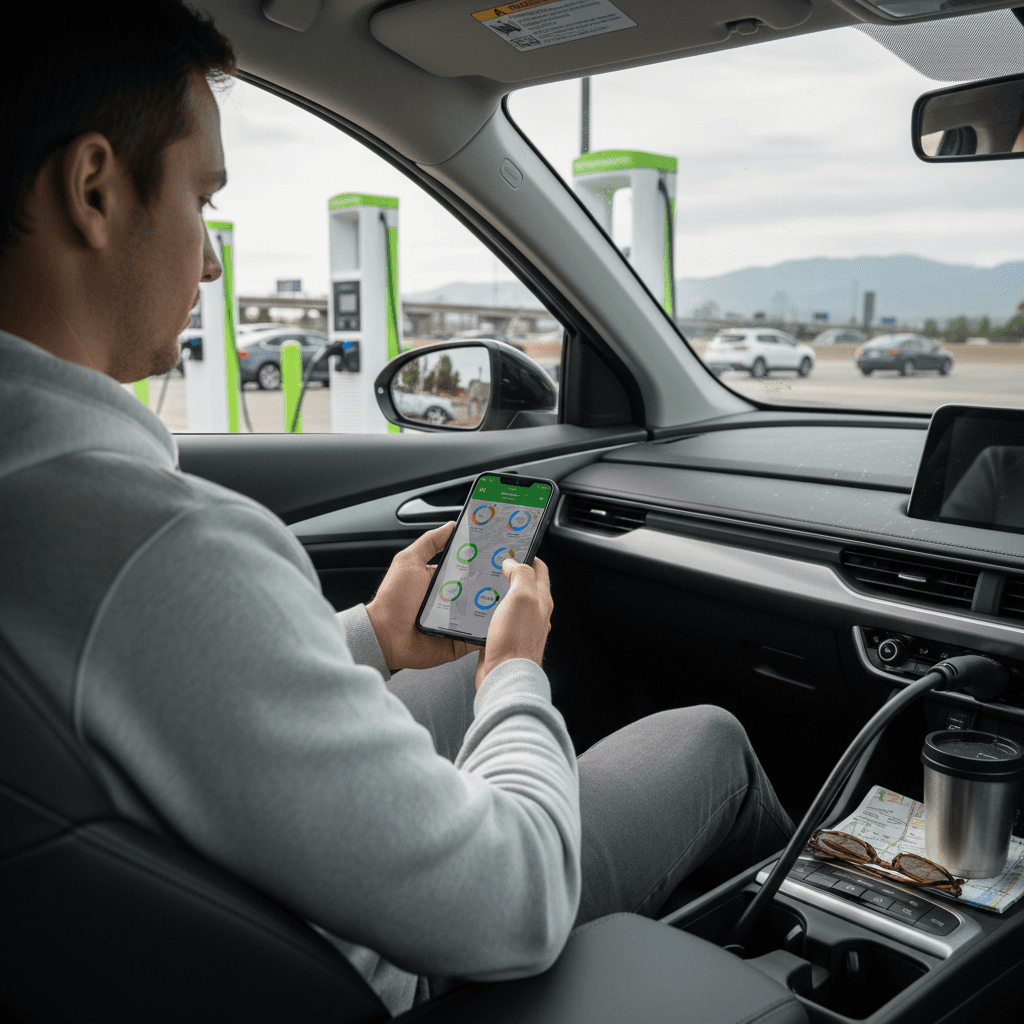
Why these issues feel worse on a road trip
Electrify America vs. Tesla Supercharger for road trips
Once you’ve driven both networks, the differences are obvious. Tesla’s Supercharger network still sets the standard for reliability and ease of use. Electrify America has narrowed the gap, but it hasn’t erased it, especially for older sites and for EVs that don’t perfectly follow the latest charging communication standards.
Electrify America vs. Tesla Supercharger (2025–2026 snapshot)
How the two key long‑distance networks compare for a typical U.S. EV driver.
| Factor | Electrify America (EA) | Tesla Supercharger |
|---|---|---|
| Typical reported uptime | High‑80s to low‑90s%, with some key corridors approaching ~99% at upgraded sites | ~98–99%+ globally on recent reports |
| Station count (U.S. fast chargers) | 5,600+ individual fast‑charging stalls, heavily weighted to 150–350 kW | Thousands of Supercharger stalls, nearly all DC fast; fewer locations but very dense on major routes |
| Connector types (2026) | Primarily CCS today; adding NACS ports and adapters as automakers transition | NACS standard; growing CCS support via adapters and network‑sharing agreements |
| Session success feel | Inconsistent by site; newer hardware solid, older locations more failure‑prone | Plug in and walk away; failures are rare and usually resolved quickly |
| App & payment | Multiple options (EA app, credit card, automaker apps), more steps for first‑time users | Integrated into vehicle and app; one‑tap, plug‑and‑charge experience for Tesla owners |
| Best use case | CCS cars on interstate corridors where EA has dense coverage and upgraded hardware | Tesla and NACS‑adapter drivers who want low‑stress, fast highway stops with minimal planning |
Numbers are approximate industry estimates; real‑world experience can vary by location, weather, and vehicle model.
Why this comparison matters for used‑EV shoppers
Planning a road trip around Electrify America
The key to a smooth CCS road trip in 2026 is to use Electrify America as your primary backbone but not your only option. Think like a pilot: plan for the route you expect, but always have alternates.
Pre‑trip checklist for an Electrify America‑heavy route
1. Map EA sites and true alternates
Use at least two tools, your car’s native planner, the Electrify America app, and an aggregator like PlugShare or ABRP, to identify EA sites plus non‑EA alternatives within 20–40 miles of each stop.
2. Favor clusters over single‑point failures
Whenever possible, choose charging stops in areas with <strong>more than one station or network</strong> nearby (for example, an EA site plus a competitor or a municipal DC fast charger). Avoid relying on a lone site in the middle of a long gap unless you carry significant buffer.
3. Build in 20–30% state‑of‑charge buffers
Don’t arrive at EA locations with 2–5% SOC if you can avoid it. Aim to roll in with 20–30% remaining so you have the flexibility to drive to a backup charger if a site is down or crowded.
4. Check recent check‑ins, not just “green icons”
Use community apps to look for recent driver comments. A site that shows “Available” but has no check‑ins for weeks is a red flag. Recent reports of successful sessions are a much better signal than the network’s own status icons.
5. Understand your car’s charging curve
Know at what percentage your EV starts to taper. If your car peaks at 150 kW only from 10–40% SOC, there’s little value in planning 0–90% charges. Multiple shorter hops often mean faster overall travel than one very long charge.
6. Test EA at home before your big trip
If you’ve never used Electrify America, do a “practice” session at a local site while you’re close to home. Get familiar with the app, RFID cards, payment options, and any quirks your specific car has with EA hardware.
A realistic planning target
On‑the‑road playbook: What to do when things go wrong
Even with good preparation, you will eventually meet the classic EA trifecta: a busy site, one or more dead stalls, and a charger that refuses to start your session. The difference between a minor inconvenience and a horror story is whether you have a script ready.
Step‑by‑step when an EA charger misbehaves
Move methodically and keep your options open
1. Try a different stall and connector first
Before you dive into support calls, move your car and try another stall. A surprising number of failures are single‑stall issues. If your car has front or rear charge ports, positioning may also affect cable reach and strain.
2. Switch payment methods
If app or credit‑card payment fails, try an EA membership card, your automaker’s charging interface, or another wallet (where supported). Sometimes the charger’s card reader is down even though the station itself is fine.
3. Call Electrify America support early
If two stalls fail in a row, call the number on the charger. The agent can often remotely reset a unit or start a session on your behalf. Get the stall ID ready before you call to save time.
4. Decide when to abandon the site
Set a personal line in the sand, if you can’t get a reliable session in, say, 15–20 minutes, it may be smarter to drive to your backup charger while you still have range rather than gambling on endless resets.
Don’t run your pack to nearly zero
Network changes, NACS adapters, and your future road trips
From 2024 through 2026, the North American charging landscape is shifting quickly as more automakers adopt Tesla’s NACS connector and sign deals for Supercharger access. That has three big implications for anyone currently relying on Electrify America for highway trips:
- More non‑Tesla EVs are gaining Supercharger access via NACS adapters, adding a second high‑reliability network to complement CCS options like Electrify America.
- Electrify America itself is beginning to add NACS ports and NACS‑compatible hardware, which should reduce adapter friction and eventually bring more plug‑and‑charge style experiences to non‑Tesla EVs.
- Federal programs such as NEVI are pushing all networks toward uptime requirements in the high‑90s, which should lift the floor for EA reliability over the next several years.
Check your specific vehicle’s NACS roadmap
How used EV buyers should think about public charging
If you’re shopping for a used EV in 2026, you’re not just buying a vehicle, you’re buying into a charging strategy. How comfortable you feel relying on Electrify America for road trips should influence what you choose and how you budget your time.
Questions to ask yourself
- How often will I actually road trip more than 150–200 miles from home?
- Can I charge reliably at home or work most days, using EA primarily for long‑distance travel?
- Will my car get NACS adapter support or native NACS ports in the next few years?
How Recharged can help
Every EV listed on Recharged comes with a Recharged Score battery health report so you know how much usable range you’re really starting with. Our EV specialists can also walk you through realistic charging strategies for a specific model, whether that means leaning on Electrify America, targeting Teslas for easier Supercharger access, or planning around home charging first.
You can even shop for used EVs by range and charging capability and have your car delivered nationwide.
FAQ: Electrify America reliability on road trips
Frequently asked questions
Bottom line: Can you road trip on Electrify America?
You can absolutely road trip on Electrify America in 2026, but you shouldn’t treat it like an indestructible safety net. Think of EA as a powerful, imperfect tool: excellent where it’s strong, frustrating where the infrastructure is thin or old. If you bring realistic expectations, leave yourself range margins, double‑check station status, and map backups, you can cross entire regions of the country without major drama.
Where you sit in the EV world matters. A used Tesla with native Supercharger access will still give you the easiest long‑distance experience. A CCS‑only used EV will rely more heavily on Electrify America and other third‑party networks, demanding more planning but rewarding you with a wide range of choices and often lower purchase prices. Whichever path you’re considering, Recharged can help you match the right car, the right battery health, and the right charging strategy to the way you really drive, so your next road trip is about the destination, not the downtime.