If you drive a non‑Tesla EV in the U.S., there’s a good chance your road‑trip fast charging will involve Electrify America. Understanding the Electrify America charging cost per kWh is the key to budgeting real‑world ownership costs, especially if you rely on DC fast charging more than the average driver.
First thing to know
How Electrify America pricing works in 2026
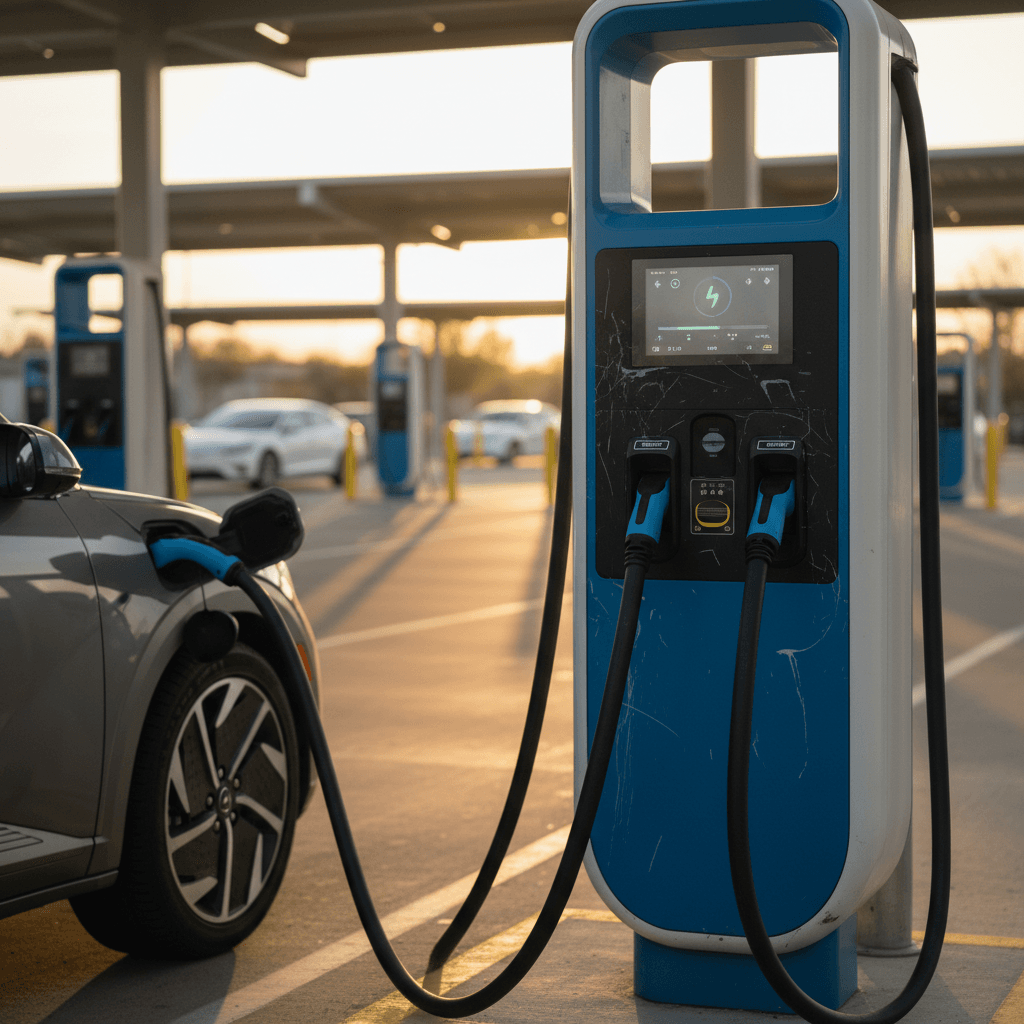
Electrify America is a nationwide DC fast‑charging network that sets pricing station by station. Instead of one universal rate, your cost per kWh depends on four levers:
- Your location (state and local utility rates)
- Whether the state allows per‑kWh charging or requires per‑minute pricing
- The maximum power level your vehicle can accept (e.g., 150 kW vs 350 kW)
- Your plan: standard Pass or discounted Pass+ membership
Electrify America’s own pricing page emphasizes that you must check the app or charger screen for the current rate. That said, most new stations in per‑kWh states follow a similar pattern: a base price per kWh, plus possible idle fees if you stay parked after your session ends.
Per‑minute vs per‑kWh states
Typical Electrify America cost per kWh (with real-world ranges)
Because Electrify America sets pricing by location, we can’t quote a single number that’s valid everywhere. However, based on current public rates and typical utility costs, most drivers in 2026 will see the following ballpark numbers for Pass (standard) pricing in per‑kWh states:
Typical Electrify America DC fast-charging prices in 2026
Approximate public prices for non‑members in per‑kWh states. Actual pricing may be higher or lower at a given station.
| Region / market | Typical Pass price (per kWh) | Notes |
|---|---|---|
| Lower‑cost electricity states (e.g., Midwest, parts of South) | $0.39–$0.45 | Relatively cheap grid power; less congestion |
| Average‑cost markets (wide swath of U.S.) | $0.45–$0.55 | Where many mainstream drivers fall today |
| High‑cost markets (California, New England, some coastal cities) | $0.55–$0.69+ | High utility rates and demand charges drive prices up |
Use this as a directional guide only. Always verify current pricing in the Electrify America app before you plug in.
If you sign up for Electrify America’s Pass+ subscription through the app, the company advertises savings of about 25% on your fast‑charging energy rate. In practice, that typically moves you from, say, $0.52/kWh down toward the low‑$0.40s, depending on the station.
Why fast charging costs more than home electricity
Think in terms of cost per mile
Pass vs Pass+ plans: how membership changes your cost per kWh
Electrify America offers two basic pricing tiers for most drivers: the free Pass plan and the paid Pass+ membership with discounted energy rates.
Electrify America Pass vs Pass+ at a glance
Which plan makes sense depends on how often you DC fast charge.
Pass (standard)
- Monthly fee: $0
- Energy price: Full station rate (highest $/kWh)
- Best for: Light public‑charging users, occasional road‑trippers
- Break‑even: If you DC fast charge only a few times a year, staying on Pass is usually fine.
Pass+ (membership)
- Monthly fee: modest subscription fee (check current amount in the app)
- Energy price: About 25% lower than Pass at the same station
- Best for: Apartment dwellers, commuters or rideshare drivers using DC fast charging several times per month
- Break‑even: Often reached in just a couple of 20–30 kWh sessions per month, depending on your local rates.
How to check your exact discount
Sample charging-session costs for common EVs
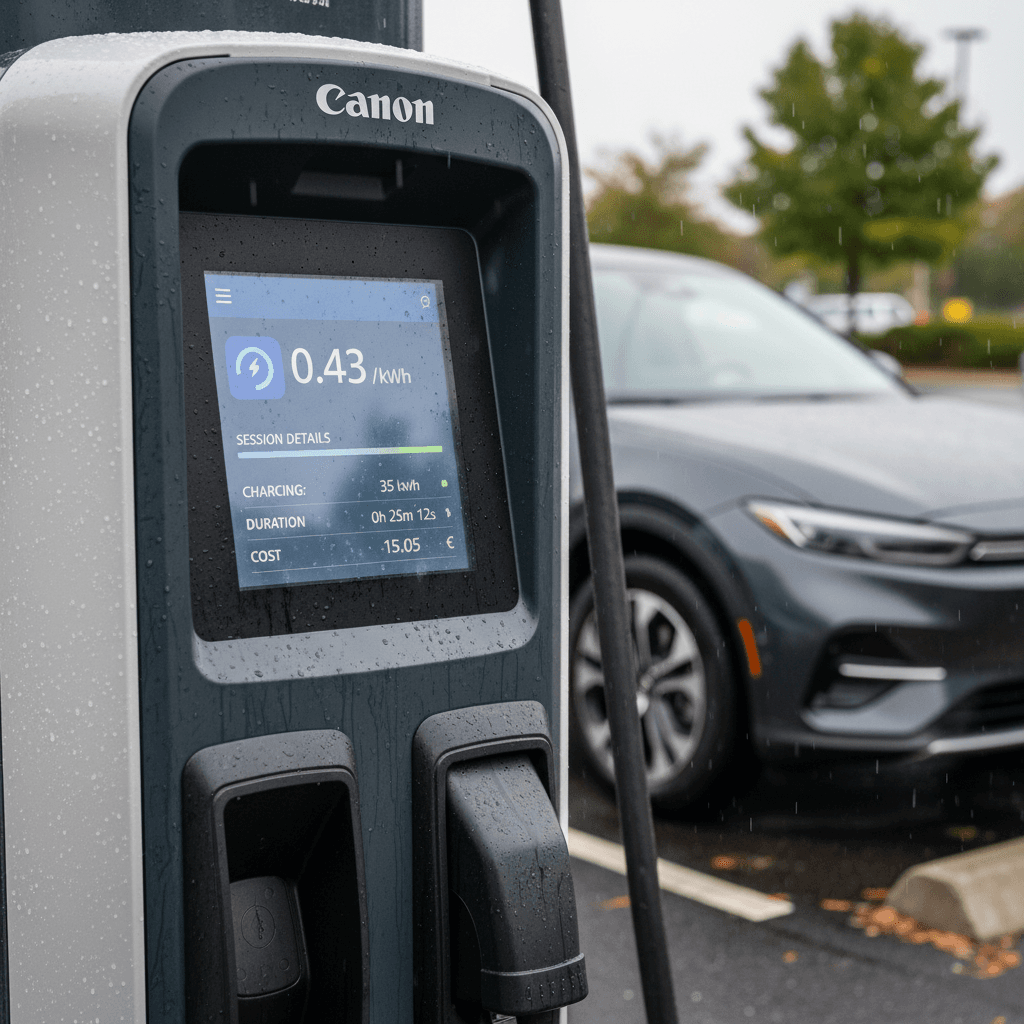
To turn cents per kWh into something more tangible, let’s look at some real‑world scenarios using a not‑uncommon fast‑charge price of $0.50/kWh for Pass and a discounted $0.38/kWh for Pass+ at the same station. Your exact numbers will vary, but the math holds up across models.
Example Electrify America session costs (mid‑priced market)
Illustrative DC fast‑charging sessions at $0.50/kWh for Pass and $0.38/kWh for Pass+. Assumes roughly highway‑speed energy use and modern EVs.
| Scenario | Energy added | Approx. range added | Pass cost | Pass+ cost |
|---|---|---|---|---|
| Compact EV top‑up (e.g., Chevy Bolt EUV from 20% to 60%) | 25 kWh | ~70–80 miles | $12.50 | $9.50 |
| Mid‑size crossover stop (e.g., Hyundai IONIQ 5 from 15% to 70%) | 45 kWh | ~130–150 miles | $22.50 | $17.10 |
| Big battery road‑trip leg (e.g., Ford F‑150 Lightning from 10% to 70%) | 80 kWh | ~160–190 miles | $40.00 | $30.40 |
These examples are for planning only. Always confirm pricing in the app before you start a session.
If your local Electrify America rates run higher, say $0.60–$0.70/kWh in parts of California or the Northeast, just scale these numbers up accordingly. A 45 kWh stop at $0.65/kWh is about $29.25 on Pass and closer to the low‑$20s with Pass+.
Electrify America vs home charging: what you’ll really pay
To put DC fast‑charging prices in perspective, it helps to compare them to what you’d pay to add the same energy at home.
Home charging costs
In early 2026, the average U.S. residential electricity rate is around $0.18–$0.19 per kWh, with some states well below that and others, like California and many New England states, well above it.
At $0.19/kWh, adding 40 kWh of energy at home would cost about $7.60, or roughly the price of a fast‑casual lunch.
Electrify America DC fast charging
At a typical public DC fast charger in that same market, you might pay $0.45–$0.55/kWh on the standard Pass plan. That same 40 kWh stop could cost $18–$22, two to three times the home‑charging cost.
On Pass+, you can trim that bill by around 25%, but you’ll still pay meaningfully more than you would at home in most states.
Why home charging is still king
At Recharged, we bake this cost difference into ownership guidance. When you’re evaluating a used EV, our team will help you understand what portion of your driving you can reasonably cover at home versus public fast charging, so you’re not surprised by your monthly “fuel” bill.
Fees, idle pricing, and the fine print
On top of the base price per kWh (or per minute), Electrify America may charge idle fees if your car stays plugged in after charging completes. These are similar to parking tickets from the charger itself: they’re meant to keep stalls available.
- Idle fees usually kick in a few minutes after your session stops delivering power.
- They’re typically charged by the minute, separate from energy pricing.
- Exact idle‑fee amounts and grace periods vary by station and are listed on the charger screen and in the app.
Don’t ignore idle fees
In some regions, you’ll also see different pricing tiers by power level, for example, one rate for chargers up to 90 kW and a higher rate for 150 kW and 350 kW units. If your EV can’t charge faster than 80–90 kW, there’s often no reason to pay more for a 350 kW stall if a lower‑power unit is available at the site.
Practical tips to lower your Electrify America bill
Seven ways to pay less for Electrify America charging
1. Do most of your charging at home
Every kWh you add at home for $0.18–$0.20 is one you don’t have to buy at a DC fast charger for $0.45–$0.60. Even a 120‑volt outlet can meaningfully cut your public‑charging spend if you’re patient.
2. Use Pass+ only if it pencils out
If you use Electrify America regularly, say more than two or three 20–40 kWh sessions per month, run the math on Pass+ in your local market. The roughly 25% energy‑rate discount can easily outweigh the membership fee.
3. Arrive low, leave at a sensible state of charge
Fast chargers work best, and are most cost‑effective, when you’re adding energy between roughly 10% and 60–70% state of charge. Topping up all the way to 100% takes longer, which can raise your effective cost per kWh and increase idle‑fee risk.
4. Don’t pay for more power than your car can use
If your EV maxes out at 80 kW, paying a higher rate for a 350 kW unit doesn’t make sense unless the lower‑power stalls are full and you truly need the charge.
5. Check pricing in the app before you navigate
A quick glance at the Electrify America app will show you both the current prices and how many stalls are available. If a nearby station is significantly cheaper or less congested, it might be worth the short detour.
6. Watch for promo pricing
From time to time, Electrify America runs regional promotions or off‑peak discounts. If your schedule is flexible, charging during promo windows can noticeably cut your cost per kWh.
7. Combine stops with errands or meals, carefully
Planning a meal or grocery run while you charge can make road trips more pleasant. Just keep an eye on your app so a leisurely lunch doesn’t turn into an expensive idle‑fee surprise.
What Electrify America pricing means when you buy a used EV
For many shoppers, Electrify America’s cost per kWh isn’t an everyday concern, it’s a question of how expensive road trips and occasional long days will be. But if you don’t have reliable home charging, public DC fast‑charging prices can materially change the total cost of owning an EV.
If you have home charging
Your Electrify America usage will mostly be road‑trips and the odd unplanned detour. In that case, the higher per‑kWh cost is a manageable line item, important but not a deal‑breaker.
Our Recharged Score Report can show you how a specific used EV’s range and charging speed affect those occasional public‑charging costs, so you can compare models on more than just sticker price.
If you rely heavily on public charging
Apartment dwellers and urban drivers without a home plug should assume a bigger share of their energy will come from higher‑priced DC fast charging or Level 2 public stations.
When you browse used EVs on Recharged, our specialists can walk you through realistic monthly fueling scenarios, home, workplace and public, so Electrify America’s pricing doesn’t catch you off‑guard after you buy.
Bring charging questions to your test drive
Electrify America cost per kWh: FAQ
Frequently asked questions about Electrify America pricing
Electrify America’s charging cost per kWh will never be as simple as a single nationwide number, and that’s okay. What matters is understanding the factors that drive pricing in your area, how membership changes your bill, and how public fast‑charging fits into your broader charging strategy. Get those pieces right, and public DC fast charging becomes a powerful convenience, not a budget shock. When you’re ready to explore used EVs, Recharged can help you pair the right car with the right charging plan so your costs stay predictable for years to come.