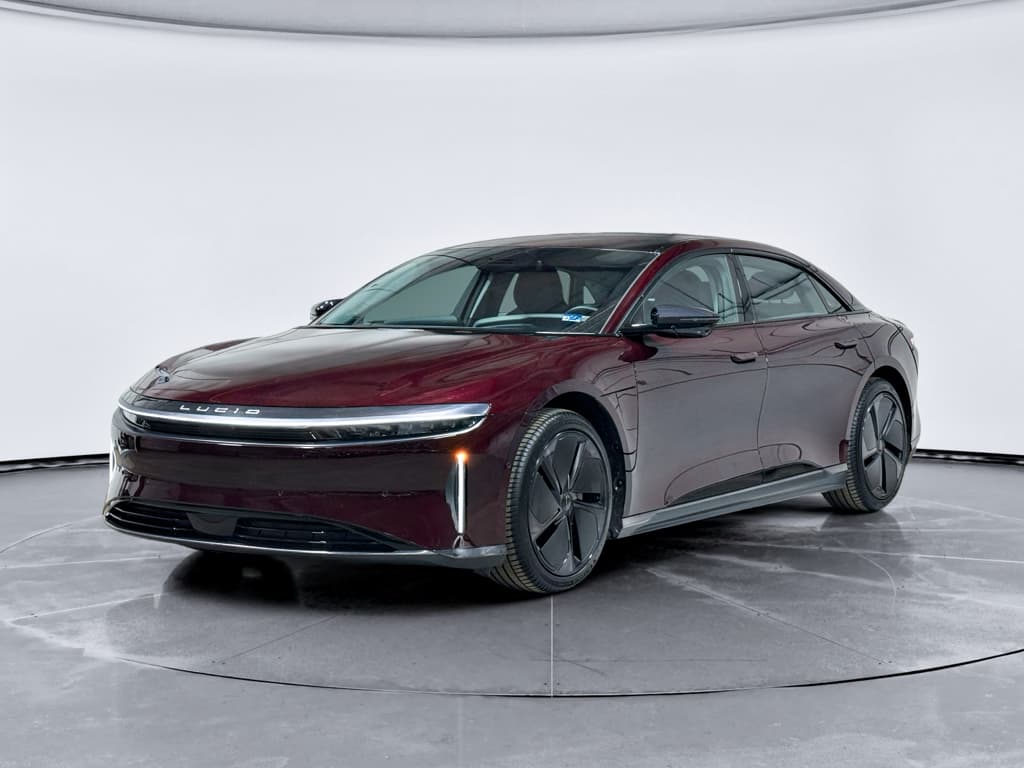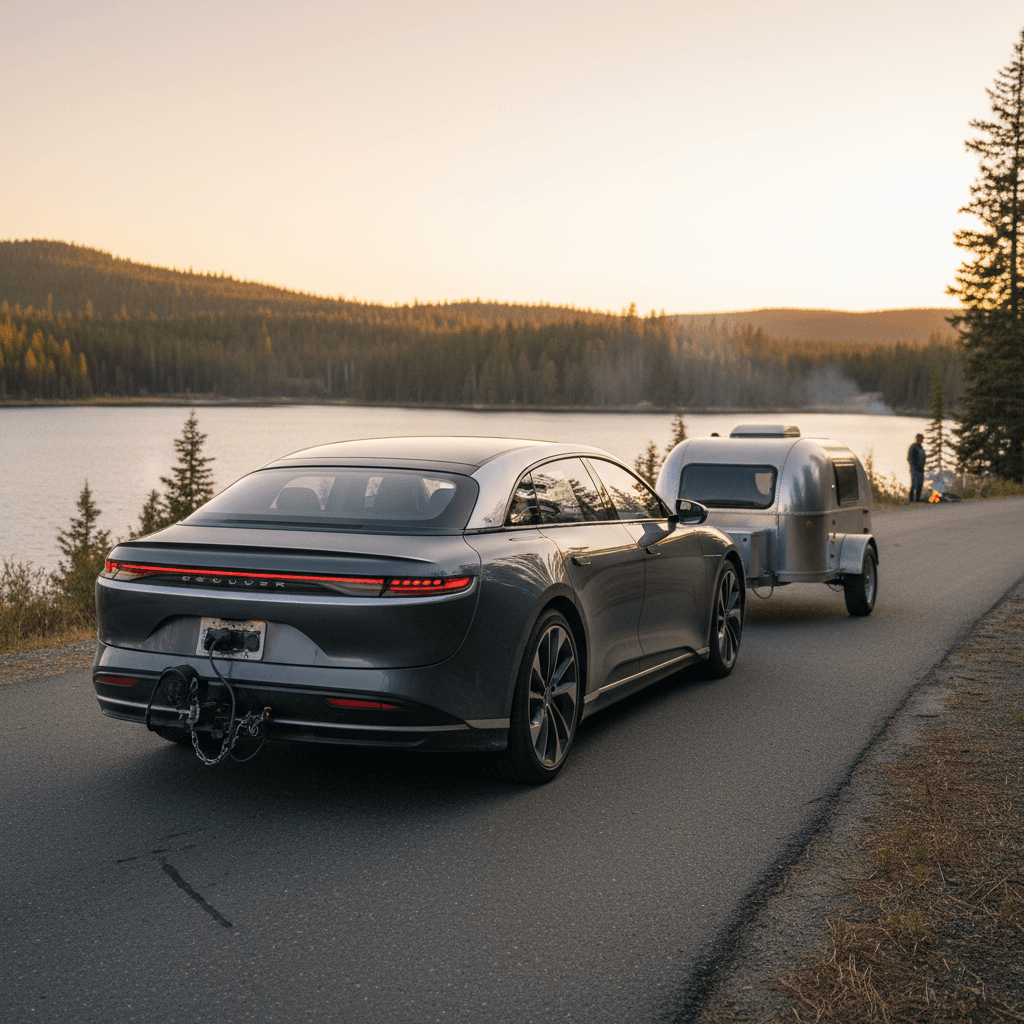
If you own a Lucid Air, or you’re thinking about buying one, it’s natural to wonder whether this sleek, long‑range sedan can also tow a trailer. Maybe you’re picturing a small camper, a lightweight utility trailer, or at least a hitch‑mounted bike rack. Before you bolt anything to the back of the car, it’s worth understanding what the Lucid Air is actually engineered and approved to do.
Short version
Quick answer: can a Lucid Air tow a trailer?
From the factory, the **Lucid Air is not approved to tow a trailer**. There’s no tow package, no published towing capacity, and no official hitch option for current U.S. models. On specification sheets, the towing field is typically blank or listed as "N/A," and Lucid’s own documentation focuses on passengers, cargo, and efficiency, not hauling.
- Lucid does **not** publish a tow rating (0 lb official capacity).
- The owner’s manual includes a warning not to tow a trailer with the vehicle.
- There is **no factory tow hitch or tow mode** on the Air sedan.
- Aftermarket hitches exist, but they do **not** change Lucid’s official stance or rating.
Important safety note
What Lucid’s manual actually says about towing
Lucid’s own documentation is very clear. In the Lucid Air owner’s manual under **“Towing a Trailer”**, you’ll find a bold warning that the vehicle is **not designed to have a trailer hitch fitted to it** and that you should **not tow a trailer with your vehicle**. The manual notes that adding a hitch or towing can cause serious damage and increase the risk of an accident or injury.
"Do not tow a trailer with your vehicle. The vehicle has not been designed to have a trailer hitch fitted to it."
That’s strong language, and it sets the baseline for everything else in this guide: **any trailer towing you do with a Lucid Air is outside the manufacturer’s tested and approved use case.**
Why manuals use such strong wording
Why the Lucid Air has no tow rating
On paper, the Lucid Air looks like it *should* be a capable tow rig: massive torque, a long wheelbase, and a big battery. But engineering a car for towing is about far more than horsepower.
What goes into a tow rating (and where the Air falls short)
Towing requires validation on hardware, software, and safety, not just power.
Cooling & powertrain
Trailering generates heat in the motors, inverter, and battery. Tow‑rated EVs are validated for those loads and extended grades with a trailer. The Air’s priority was ultra‑high efficiency and range, not sustained tow duty.
Structure & hitch mounts
Vehicles with tow ratings have reinforced rear structures and clearly defined hitch attachment points. Lucid hasn’t published any such provisions for the Air sedan in North America.
Brakes & stability systems
Trailer weight changes braking distances and vehicle dynamics. Tow‑focused EVs add trailer sway control, specific ABS tuning, and often factory trailer brake controllers. The Air’s software is not set up for that.
From a product‑planning standpoint, Lucid split the roles: the **Air** is the ultra‑efficient luxury sedan, while the **Gravity SUV** is the Lucid model built with **a factory tow package and tow ratings up to 6,000 lb** on certain trims. If towing is a must‑have, Lucid wants you in a Gravity, not an Air.
Aftermarket hitches for Lucid Air: what they really mean
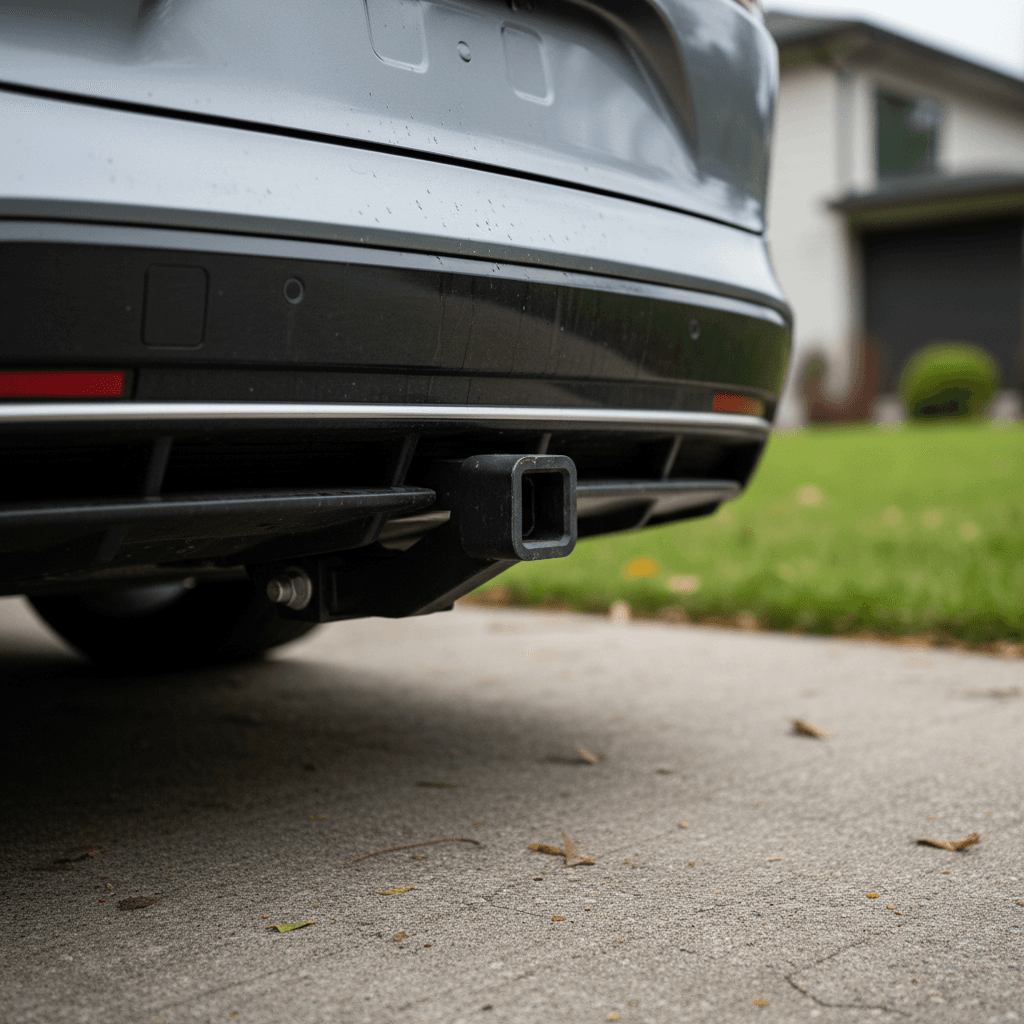
Despite Lucid’s "no towing" stance, at least one aftermarket supplier now offers a **bolt‑on hitch for the Lucid Air**. Typical marketing language for these products looks like this:
- 2" receiver hitch designed to fit the Lucid Air’s underbody mounting points.
- Advertised **tongue weight rating around 400 lb** and **tow rating around 4,000 lb** for light trailers, cargo carriers, or bike racks.
- Installation that often requires trimming underbody panels and working around the rear diffuser and sensors.
How to interpret those ratings
Used cautiously, these hitches can make sense for **bike racks or cargo carriers** where the load is modest and you’re not pulling a trailer. But when you start treating those numbers as a green light to tow, you’re mixing two very different rulebooks: one from the hitch maker, and one from the vehicle manufacturer.
Can I tow a small trailer with my Lucid Air anyway?
From a purely mechanical perspective, a Lucid Air equipped with a solid aftermarket hitch **can probably move a very small trailer**, a lightweight utility trailer, a small cargo box, maybe a teardrop camper. The motors won’t break a sweat pulling a few thousand pounds at low speeds.
What’s realistically possible
- A quality aftermarket hitch properly attached to the structure.
- A very light, well‑balanced trailer with good brakes.
- Short distances on familiar roads, ideally in good weather.
- A cautious driving style with extra following distance and reduced speed.
What you’re risking
- Operating the car outside Lucid’s published limits.
- Potential conflicts with warranty coverage if damage occurs.
- Unknown vehicle behavior in emergency maneuvers or crosswinds.
- Liability questions if an accident is blamed on improper towing.
Bottom line for trailers
Using a hitch only for bike racks or cargo carriers
Where an aftermarket hitch on a Lucid Air **does** make more practical sense is with **non‑towing accessories**, especially if you want to avoid roof racks entirely. Owners often look at hitches for:
- Platform or hanging‑style **bike racks**, including heavier e‑bikes that are hard to lift overhead.
- Small **cargo carriers** for extra luggage or a cooler on road trips.
- Occasional use of accessory trays or boxes when the trunk and frunk are full.
Typical accessory loads vs common hitch ratings
Stay conservative on tongue weight
If all you need is a better way to carry bikes or a bit of overflow cargo, a carefully chosen hitch and rack setup can be a reasonable compromise, as long as you understand you’re still stepping outside Lucid’s formal guidance.
How towing or racks could affect warranty and safety
Two big questions usually come up the moment you consider a hitch on a non‑tow‑rated EV: **“Will this void my warranty?”** and **“Is it actually safe?”** The honest answer to both is: *it depends how far you push things and what fails.*
Key risk areas to think through first
1. Read the manual’s towing and loading sections
If your Lucid Air’s manual says "do not tow" or "do not fit a trailer hitch," assume Lucid may point to that language if a related component fails after you install one.
2. Understand how warranties work in practice
In the U.S., manufacturers typically have to show that a modification contributed to the failure they’re denying. Installing a hitch doesn’t instantly kill your warranty, but it can complicate claims involving the rear structure, suspension, or high‑voltage cooling.
3. Think about emergency handling
Lucid’s stability control, traction, and braking systems weren’t tuned with a trailer in mind. Sudden evasive maneuvers, crosswinds, or slick roads all become higher‑stakes events when there’s a trailer pushing the car around.
4. Don’t forget insurance and liability
If a crash investigator or insurer points to "improper towing" as a factor, you may have a tougher road ahead, especially if the owner’s manual explicitly prohibited towing.
Play it safe if you’re unsure
Range and performance if you pull a trailer
Even if we set Lucid’s "no towing" warning aside for a moment and speak hypothetically, you should expect a **substantial range penalty** if you ever tow with an Air. That’s true for almost every EV on the market.
- Small, aerodynamic camper or cargo trailer: **30–40% range loss** at highway speeds is common among EVs.
- Tall, boxy trailer (like a toy hauler): **40–50%+ range loss** is not unusual, especially at 70+ mph.
- Stop‑and‑go city towing: Often a bit easier because aerodynamic drag matters less than rolling resistance.
Why EVs lose so much range when towing
If you’re planning long road trips with a trailer, you’ll not only stop more often to charge, you’ll also need to be methodical about **charger spacing, backup options, and grades**. That’s one more reason many owners choose a tow‑rated SUV or pickup instead of trying to turn the Air into something it isn’t.
Better EV options if you need to tow regularly
For shoppers who love the idea of a premium EV but **truly need towing capability**, it’s worth looking at models that were engineered and validated for that job from day one.
Examples of EVs designed with towing in mind
Always confirm exact ratings and tow‑package requirements for the year and configuration you’re considering.
| Model | Type | Max Tow Rating (approx.) | Notes |
|---|---|---|---|
| Lucid Gravity | Luxury SUV | Up to 6,000 lb | Factory tow package, integrated wiring and tow mode on certain trims. |
| Tesla Model X | 3‑row SUV | Up to 5,000 lb | Available tow package; strong Supercharger access for road trips. |
| Hyundai Ioniq 5 / Kia EV6 | Compact CUV | Around 2,000–2,300 lb | Good fit for small campers or utility trailers when properly equipped. |
| Ford F‑150 Lightning | Pickup | Up to 7,700–10,000+ lb | Serious tow machine; big range penalties but built for the job. |
| Rivian R1T / R1S | Adventure truck/SUV | Up to 11,000 lb (R1T) | Overbuilt frames, built‑in trailer profiles, strong off‑road focus. |
Tow ratings shown are typical maximums for well‑equipped trims; check the specific vehicle you’re shopping.
Lucid’s own answer: Gravity
Shopping used EVs for towing: how Recharged can help
If you’re currently in a Lucid Air and bumping into its towing limitations, or you’re cross‑shopping used EVs and want to get this decision right the first time, it helps to look beyond glossy spec sheets. That’s where a platform like Recharged comes in.
Why towing‑minded shoppers use Recharged
Used EVs with transparent battery health and real‑world insight.
Verified battery health
Every vehicle listed on Recharged comes with a Recharged Score Report, including detailed battery diagnostics. That’s critical if you plan to tow and care about maintaining as much range as possible.
Fair, data‑driven pricing
Recharged benchmarks pricing against the used‑EV market, so you can compare a tow‑capable EV, like a Gravity, Model X, or Lightning, against non‑tow‑rated options with fewer surprises.
Trade‑in & nationwide delivery
Already driving a Lucid Air or another EV that can’t tow? Recharged can evaluate your trade‑in, help you sell or consign it, and then coordinate nationwide delivery of a tow‑ready replacement.
Ready to find your next EV?
Browse VehiclesYou can handle the entire process digitally, lean on **EV‑specialist support** for questions about towing, charging, and range, and avoid guessing whether an older battery pack is up for the trailer you have in mind.
FAQ: Lucid Air towing and hitches
Frequently asked questions about Lucid Air towing
The Lucid Air is one of the most advanced long‑range EVs on the road, but it was never meant to be a tow vehicle. Lucid’s own manual says not to tow, and while aftermarket hitches open the door to bike racks and light accessories, they don’t rewrite what the car was engineered to do. If you occasionally need extra cargo room, a carefully chosen rack system can bridge the gap. If you truly need to pull a trailer, though, your best move is to shop for a tow‑rated EV, and if you’re looking in the used market, Recharged can help you find one with transparent battery health, fair pricing, and the real‑world capability your lifestyle demands.