When people say “electric vehicle tracker,” they might mean a GPS box hidden under a delivery van, a smartphone app that remembers where you parked, or a dashboard that tells you exactly how much every commute costs in electricity. The good news: you don’t have to be a fleet manager or a data nerd to put this tech to work for you.
What this guide covers
What is an electric vehicle tracker, really?
At its core, an electric vehicle tracker is any tool that records where your EV goes and how it uses energy, then turns that into useful information. Traditionally, “vehicle tracker” meant a GPS device bolted under the dash. In the EV world, the definition has widened to include apps and cloud dashboards that can show you trips, charging sessions, costs, and sometimes the health of your battery.
Modern trackers use a mix of GPS location, the car’s onboard sensors, and the cloud. Some live in your phone (think route and charging apps), some live in the car itself (Tesla, Rivian, Hyundai, and others have detailed energy monitors), and some are add‑on devices that plug into a data port or the 12‑volt system for fleets.
Tracker vs. charging app
4 types of electric vehicle trackers
The main flavors of electric vehicle tracker
From simple apps to full-blown telematics platforms
1. EV tracking apps
Smartphone apps that log trips and charging automatically or with a tap. Examples include mapping apps that remember charging stops, or community apps that track which chargers you’ve used.
Good for solo drivers who want basic history and planning.
2. Built-in car trackers
Most newer EVs include detailed energy and trip reports in their native apps and dashboards, showing consumption by trip, climate control, and more.
No extra hardware, but data is usually locked to that brand.
3. Plug-in GPS units
Small add-on devices powered by the car that send back location and driving data over cellular networks.
Popular with small businesses and parents tracking teen drivers.
4. Full telematics platforms
End‑to‑end systems for fleets: hardware in each EV plus a cloud dashboard with routing, driver behavior, maintenance alerts, and cost reporting.
Best for fleets running multiple EVs or mixed EV/ICE operations.
How fast vehicle tracking is growing
Why electric vehicle tracking matters for everyday drivers
You don’t need a delivery fleet to benefit from tracking. Even a basic electric vehicle tracker can answer everyday questions: How much does my commute actually cost? Did I really lose that much range in the cold? Where did I park at the airport last week? When you can see patterns, it’s easier to adjust your habits instead of guessing.
- Range confidence: Track how far you actually drive on a charge in different weather, so you can stop worrying about the number on the window sticker.
- Cost clarity: See what each trip or month of driving costs in electricity, and how that compares with gas.
- Charging behavior: Notice when you’re relying too much on expensive DC fast charging instead of cheaper home charging.
- Parking peace of mind: Simple trackers and apps remember your last location so you’re not wandering a parking garage with groceries melting in the cart.
Where Recharged fits in
Ready to find your next EV?
Browse Vehicles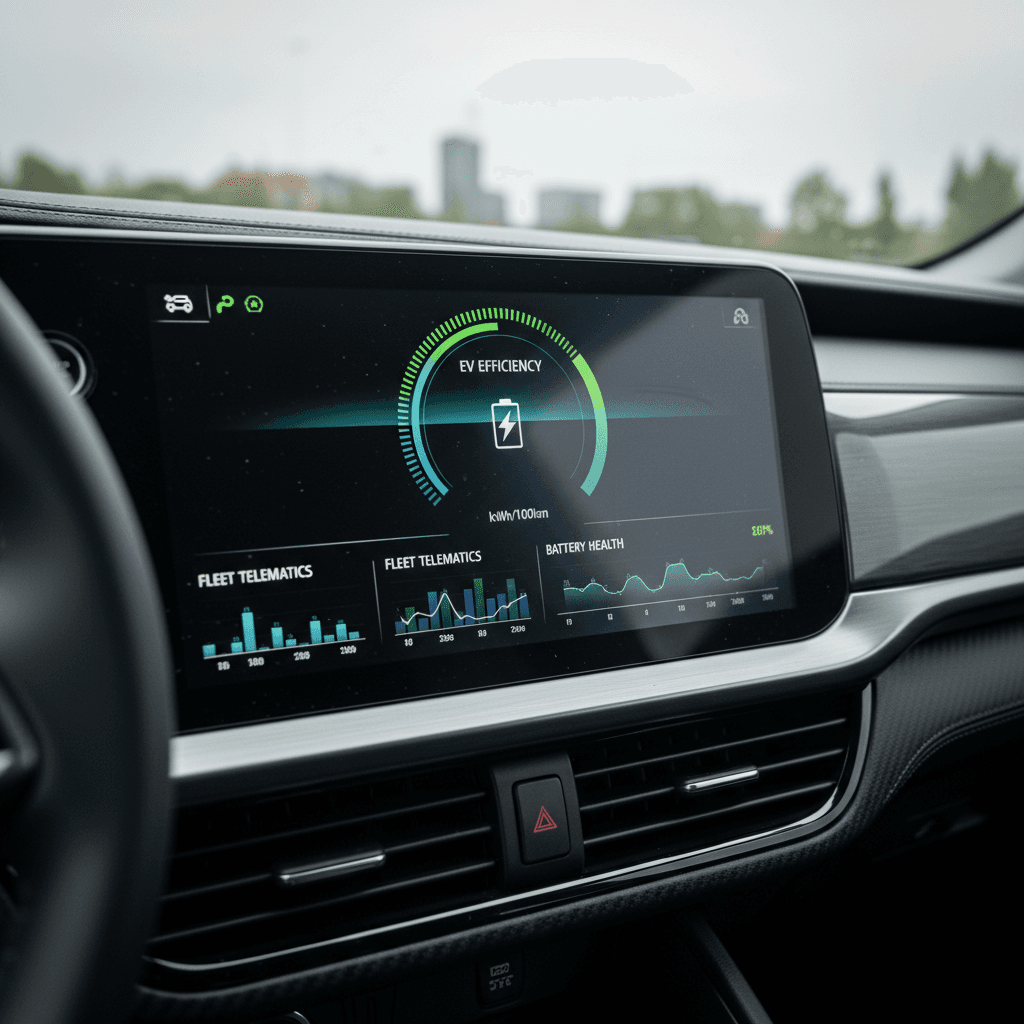
Key electric vehicle tracker features to look for
The phrase “EV tracker” shows up on everything from $5 phone apps to enterprise telematics contracts. Instead of getting lost in buzzwords, focus on a handful of features that actually make ownership easier.
Must-have features in an EV tracker
What matters for personal EVs
Trip and route history
Look for automatic trip logging with date, distance, and average efficiency (kWh/100 mi or mi/kWh). Bonus points if it tags trips as work vs. personal.
Charging session tracking
A good electric vehicle tracker logs where you charged, how long, how many kWh you added, and estimated cost, whether at home or on public DC fast chargers.
Cost per mile reporting
Some tools combine energy use with your electric rates to estimate cost per trip or per mile. That’s gold if you’re comparing staying in your EV versus going back to gas.
Battery usage insights
Even without deep diagnostics, basic trackers can show how often you charge to 100%, how low you run the pack, and how much energy climate control consumes.
Alerts & reminders
Useful trackers nudge you when you forget to plug in, when a charge session stops unexpectedly, or when you’re bumping up against your departure time.
Privacy & export
Make sure you can export your own data, delete it if you want, and control who sees what. A transparent privacy policy is a must‑have, not a luxury.
Don’t overpay for features you’ll never use
Electric vehicle trackers for fleets and businesses
For fleets, from three electrician vans to a few hundred last‑mile delivery EVs, an electric vehicle tracker is less about curiosity and more about staying in business. Fleet telematics blends location, driver behavior, charging management, and maintenance into one screen so managers know what’s happening without 20 phone calls.
What fleets get from EV tracking
- Live location and ETAs: Know where each vehicle is and when it’ll arrive, critical for service and delivery promises.
- Routing & dispatch: Assign the closest EV with enough charge to reach the customer and get back.
- Charging orchestration: Stagger charging so you don’t overload the panel or pay peak rates with every truck.
- Driver coaching: Some systems score acceleration, braking, and speeding to improve safety and efficiency.
Trends shaping EV telematics
- AI‑assisted routing & video: Dashcams and sensors flag risky driving and capture incidents automatically.
- 5G connectivity: Faster, more reliable data streaming from vehicles cuts the lag between road and dashboard.
- Mixed fleets: Many systems now handle EVs and combustion vehicles, so operators see everything in one place.
- Faster ROI: Studies show a majority of fleets see payback on tracking tools within a year through saved fuel, fewer miles, and lower insurance claims.
If you’re running a small business…
How trackers help you understand EV battery health
Battery health is the big question hanging over every used EV, and it’s one of the trickiest things to see from the driver’s seat. Most factory apps show state of charge (how full the battery is right now), not long‑term state of health (how much capacity it has left compared with new). Electric vehicle trackers can’t magically fix that, but they can give you better clues.
- Capacity trend over time: By logging how many kWh you add during charges and how far you drive between them, some tools can estimate gradual capacity loss.
- Charging habits: Trackers reveal how often you fast‑charge, charge to 100%, or let the battery sit at a very low state of charge, habits that can affect longevity.
- Temperature and climate load: Energy apps in newer EVs show how much is going into heating or cooling versus moving the car, helping you understand range loss in winter or extreme heat.
- Diagnostic reports: Specialist tools and services (like the Recharged Score battery health diagnostics) tap directly into the vehicle to read factory data and run controlled tests. That’s the most accurate view of battery health you can get without taking the pack apart.
Trackers vs. full diagnostics
Privacy, data, and who actually sees your EV info
The flip side of all this rich data is a fair question: who else can see it? With an electric vehicle tracker, you’re potentially sharing location history, driving behavior, and sometimes home charging patterns. Before you connect apps or install hardware, it’s worth reading the privacy fine print instead of just scrolling to “accept.”
Quick privacy checklist for EV trackers
1. Know what’s collected
Is the tracker saving precise GPS coordinates, or just trip summaries? Does it gather VIN, driver identity, or video from inside the cabin?
2. Check who owns the data
Some services let you export and delete your history; others treat it as theirs to analyze. Look for clear language about ownership and retention.
3. Look for granular controls
The best tools let you toggle location sharing, anonymize reports, or restrict which users (or departments) can view sensitive data.
4. Understand third‑party sharing
If data is shared with insurers, advertisers, or partners, that should be spelled out. Opt‑out options are a good sign the company respects your choice.
5. Secure the account
Turn on multi‑factor authentication where available and avoid reusing passwords. Tracking data is only as safe as the account protecting it.
Special case: tracking other drivers
How to choose the right electric vehicle tracker
Choosing an electric vehicle tracker is less about the fanciest feature list and more about matching the tool to how you actually live with your car. The right answer looks very different for a family with a single used Nissan Leaf than it does for a contractor running a dozen electric vans.
Pick your path: which electric vehicle tracker fits you?
Daily commuter or family driver
Start with your EV’s built‑in app and energy reports, many owners never realize how much is already there.
Layer on a tracking‑friendly charging app that logs trips and charge sessions automatically.
Focus on features like parking location, cost per trip, and charging reminders instead of fleet tools.
Road‑trip and adventure driver
Choose an app that combines <strong>route planning</strong> with charger availability, reviews, and session logging.
Look for offline maps and the ability to save favorite routes and charging stops.
Use trip histories to refine your packing and driving style so you’re not limping into stations with 1% left.
Side‑gig or small‑business owner
Consider an OBD‑style tracker or hard‑wired GPS for reliable location data and trip classification.
Prioritize simple dashboards that show which EV is where, with how much charge, and which jobs are assigned.
As you grow, migrate to a telematics platform that supports EV‑specific metrics and smart charging controls.
Used EV buyer or seller
If you’re shopping used, ask for trip and charging histories and any battery health reports available.
Look for vehicles that have been charged mostly at home, rarely fast‑charged to 100%, and driven regularly, patterns a tracker can reveal.
When you buy through <strong>Recharged</strong>, the Recharged Score Report packages this kind of data into a clear picture of battery health and fair pricing, so you’re not left guessing.
5 questions to narrow down your EV tracker options
1. What problem are you solving?
Is your main goal to stop losing your car in parking decks, understand running costs, protect a teenager, or coordinate a fleet? Name the problem before you shop.
2. How many vehicles are you tracking?
One or two EVs can live happily in app‑only solutions. Once you’re into five or more, it’s time to look at hardware‑plus‑software telematics.
3. Do you need hard proof for taxes or reimbursement?
If you’re logging miles for work or client billing, prioritize tools that export clean CSV or PDF reports broken down by trip category.
4. What’s your comfort level with installation?
App‑only trackers are as simple as logging in. Hardware devices may require access to the OBD port, 12‑volt wiring, or professional installation.
5. How sensitive is your location data?
If you’re uneasy about sharing daily routes, choose trackers that keep data local to your phone or offer strong anonymization controls.
Electric vehicle tracker FAQ
Common questions about electric vehicle trackers
Bottom line: Are electric vehicle trackers worth it?
If an electric vehicle tracker sounds like overkill, think about how much of your EV experience is already digital, navigation, charging, billing, even unlocking the doors. A good tracker doesn’t add complexity; it pulls that scattered information into one story you can actually use to make decisions.
For everyday drivers, that might be as simple as a route and charging app plus your car’s native energy screen. For small businesses and fleets, it’s a full telematics platform that knows where every van is and which ones need charge tonight. And if you’re buying used, pairing tracking‑style data with a Recharged Score Report is one of the fastest ways to turn battery anxiety into confidence.
Whichever path you’re on, the goal is the same: fewer surprises, more transparency, and an EV that quietly does its job in the background while the data makes ownership cheaper, calmer, and easier to trust.