If you’ve heard that electric vehicle tire wear is worse than on gas cars, you’re not imagining things. Many EV owners are surprised when their first set of tires is gone sooner than expected, sometimes well before 25,000 miles. The good news: once you understand what’s going on, there’s a lot you can do to keep tire wear under control and avoid nasty surprises, especially if you’re buying a used EV.
Quick takeaway
EV tire wear basics: what’s really different?
At a glance, EV tires look just like the rubber on any other car. Under the surface, though, things are different enough that tire wear patterns on electric vehicles surprise a lot of drivers, especially those who drive the same commute they did in a gas car and expect the same tread life.
- EVs are typically 15–25% heavier than a similar gas model because of the battery pack.
- Electric motors deliver maximum torque almost instantly, which scrubs rubber off the tire when you launch hard from a stop.
- Regenerative braking means the tires are handling more of the slowing and less of the coasting you’re used to in a gas car.
- Many EVs ship with soft, low-rolling-resistance tires to maximize range and keep road noise down, great for comfort, tougher on longevity.
Don’t assume “normal” wear
How much faster do electric vehicle tires wear?
EV tire wear by the numbers
These are broad ranges, not promises. A high-torque performance EV on sticky tires, driven hard, can destroy a set in under 15,000 miles. A lighter, efficiency-focused EV with careful driving, regular rotations, and well-chosen replacement tires can get surprisingly close to gas-car tread life.
Think in years, not just miles
5 reasons electric vehicles chew through tires
What’s really eating your EV tires?
Five forces working against your tread, and how much control you have over each.
1. Extra weight
2. Instant torque
3. Regenerative braking
4. Quiet, soft compounds
5. Alignment & torque steer
What you can influence
EV-specific tires vs regular tires
Browse any tire site in 2025 and you’ll see more and more products labeled as EV-specific. That’s not just marketing spin. Tire makers have been rapidly redesigning tread patterns and rubber compounds to deal with the particular abuse that electric vehicles dish out while still protecting range and ride comfort.
What makes an EV tire different?
- Reinforced construction to handle extra curb weight and high torque.
- Compounds tuned for lower rolling resistance so you don’t lose driving range.
- Noise-reducing features like acoustic foam or specialized tread blocks.
- Sidewall markings or badges indicating EV suitability from brands like Michelin, Pirelli, Goodyear, and others.
Can you run non-EV tires?
In many cases, yes, if the tire meets your EV’s load and speed rating. But a conventional tire may:
- Wear 5–20% faster on an EV than an EV-optimized tire of similar quality.
- Add road noise that stands out in a quiet cabin.
- Shave miles off your real-world range due to higher rolling resistance.
If in doubt, ask a trusted tire shop or your EV’s service advisor to cross-check load ratings and recommendations.
Smart replacement strategy
Signs your EV tires are wearing too fast
You don’t need a lab to spot premature electric vehicle tire wear. A few quick checks in your driveway can tell you whether it’s time to rotate, realign, or replace your tires, before you get into unsafe territory or start eating into your range.
Quick driveway checks for EV tire wear
1. Measure tread depth regularly
Use a tread depth gauge or the old penny test. When you’re down to 4/32" of tread, especially on the front tires, it’s time to plan a replacement, even if the legal limit is lower.
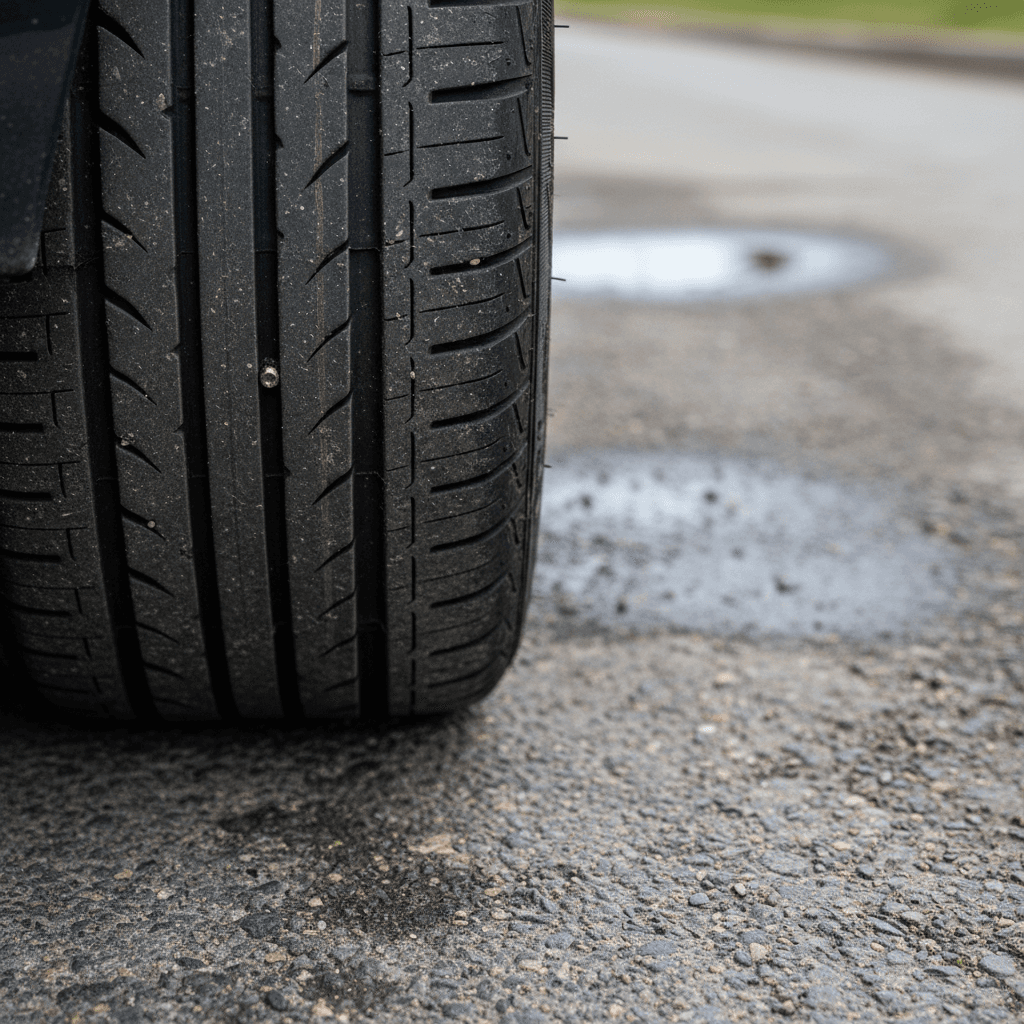
2. Look for edge vs center wear
Heavier EVs often show outer-edge wear from hard cornering and extra weight. Center wear can indicate overinflation; shoulder wear can point to underinflation or alignment issues.
3. Watch for cupping or scalloping
Irregular high and low spots around the tread usually mean a suspension or balance issue. EVs can be particularly sensitive here because of their weight and low-profile tires.
4. Pay attention to noise changes
A sudden increase in road roar or humming that changes with speed can be tire wear talking to you. In a quiet EV cabin, these noises are easier to notice, use that to your advantage.
5. Track mileage between sets
Write down your odometer reading at each tire purchase. If your second set of tires is wearing out much faster than the first with similar driving, something in your setup or habits has changed.
How to make your EV tires last longer
You can’t shrink the battery pack in your driveway, but you have a lot of influence over how long your tires last. A few small changes to how you drive and maintain the car can easily stretch a set of tires by thousands of miles.
Seven habits that add miles to your EV tires
None of these require special tools, just a bit of attention and consistency.
1. Smooth launches
2. Dial back regen (sometimes)
3. Check pressures monthly
4. Rotate on time
5. Get an alignment yearly
6. Choose the right tire
Don’t stretch worn tires on a heavy EV
Tire wear and buying a used EV
If you’re shopping for a used EV, tire condition is one of the fastest ways to understand how the previous owner treated the car, and what maintenance might be coming due right after you sign the papers.
What worn tires can tell you
- Even wear, decent tread: The car was likely aligned and rotated on schedule. Good sign.
- Outer edges worn, centers OK: Aggressive cornering or chronic underinflation, budget for alignment and a fresh set soon.
- Inner edges shredded: Strong clue that alignment or suspension has been neglected. You’ll want a thorough inspection.
- Mismatched brands or sizes: Could mean piecemeal replacements, curb damage, or an owner chasing the cheapest option.
How Recharged helps
Every vehicle on Recharged comes with a Recharged Score Report that includes verified battery health plus a transparent look at wear items like tires and brakes. You see where the tires stand today and how that lines up with the vehicle’s mileage, so you can plan for upcoming costs before you buy.
If you’re comparing two similar EVs and one will need a $1,200 set of tires in the first year while the other won’t, that’s real money. Our EV specialists can walk you through those tradeoffs so you choose the car that fits your budget and driving style.
Blend tire cost into your deal
What EV tire wear means for your budget
Tires are one of the few maintenance items that can cost more on an EV than on a similar gas car, especially on heavier crossovers and performance models running big wheels. It’s worth doing a little math up front so the first replacement set doesn’t feel like a surprise tax on going electric.
Typical EV tire wear and cost ranges
Real numbers will vary by brand, size, and where you live, but this gives you a ballpark to plan around.
| Vehicle type | Typical size | Approx. life on EV | Ballpark set cost (installed) | Notes |
|---|---|---|---|---|
| Compact EV hatchback | 16–17" | 25k–35k mi | $700–$900 | Smaller wheels and narrower tires keep costs down. |
| Mid-size EV sedan | 18–19" | 20k–30k mi | $900–$1,200 | Common sweet spot for comfort, range, and price. |
| EV crossover/SUV | 19–21" | 15k–25k mi | $1,000–$1,500 | Heavy vehicles on large wheels eat tires fastest. |
| Performance EV | 20–21" summer tires | 10k–20k mi | $1,200–$2,000+ | Soft, grippy tires wear quickly, factor this into the fun budget. |
Use this as a planning tool, not a quote, shop local prices before you budget.
Offsetting costs with lower maintenance
Electric vehicle tire wear: FAQ
Common questions about EV tire wear
Bottom line: EV tires wear faster, but you’re in control
Electric vehicle tire wear is one of those ownership realities that doesn’t always make the brochure: EVs are harder on tires than most gas cars, and the first replacement bill can sting if you weren’t expecting it. But it’s also one of the most manageable parts of EV ownership. With smart driving habits, the right tires, and a little proactive maintenance, you can keep your EV safe, efficient, and predictable to budget for, whether you’re already driving electric or about to pick up a used EV from Recharged.
If you’re comparing used EVs and wondering how tire wear, battery health, and maintenance history all fit together, a Recharged Score Report can make the math much clearer. Combine that with expert EV guidance, financing options, and nationwide delivery, and you can focus on the fun part: finding the electric car that fits your life, without getting blindsided by the rubber it rides on.