If you grew up on 3,000‑mile oil changes and timing belts, an electric vehicle maintenance schedule can feel almost suspiciously simple. No engine oil, no spark plugs, no exhaust, far fewer moving parts, yet there are still a few critical service items that keep your EV safe, efficient, and under warranty.
EVs Need Less Maintenance, Not No Maintenance
Why an EV Maintenance Schedule Looks Different From Gas Cars
Under the skin, a battery‑electric vehicle is a very different animal from a gas car. A typical internal‑combustion drivetrain has thousands of moving parts; an EV’s motor and single‑speed reduction gear have a few dozen at most. That mechanical simplicity is why most EVs need roughly 40–50% less routine maintenance over their lifetime than similar gas vehicles.
Key Maintenance Differences: EV vs. Gas Car
Why your service booklet looks so much thinner now
No Engine, No Oil Changes
Simpler Drivetrain, Fewer Wear Items
Regenerative Braking Extends Brake Life
Hybrids Are Different
Core Electric Vehicle Maintenance Items
Every EV brand has its own maintenance chart, but the same handful of items show up again and again. Think of these as the backbone of any electric vehicle maintenance schedule.
The Core EV Maintenance List
Tires: rotation, alignment, and pressure
EVs are heavy and deliver instant torque, which can chew through tires if you ignore them. Plan on <strong>rotations every 5,000–7,500 miles</strong>, plus annual alignment checks if you see uneven wear.
Brake system: pads, rotors, and fluid
Pads and rotors usually last longer thanks to regeneration, but brake fluid still absorbs moisture. Most EV makers call for <strong>brake fluid replacement around every 2–3 years</strong>.
Coolant for the battery and electronics
Liquid‑cooled batteries and inverters rely on specialized coolant. Intervals vary widely, often around <strong>8 years/100,000 miles</strong> or more, so the owner’s manual rules here.
Cabin air filter and HVAC service
Your HVAC system works hard to heat and cool the cabin (and sometimes the battery). Expect to replace the cabin air filter <strong>every 1–2 years</strong>, more often in dusty or urban areas.
Software updates and system checks
Over‑the‑air updates can improve efficiency, charging, and safety. Periodic system checks at the dealer or EV‑certified shop catch issues with sensors, seals, and high‑voltage components early.
High‑voltage battery and drive unit inspection
The big-ticket items are usually covered by an <strong>8‑year/100,000‑mile or longer battery warranty</strong>. Routine inspections and battery health reports help document condition, especially important if you plan to sell or trade in later.
Electric Vehicle Maintenance Schedule by Mileage
No two EVs have identical service charts, but you can build a reliable schedule around a few key mileage and time milestones. Always cross‑check against your owner’s manual, but use this as a practical roadmap.
Typical Electric Vehicle Maintenance Schedule
Approximate intervals for a modern battery‑electric vehicle. Follow whichever comes first: time or mileage.
| Interval | Key Maintenance Tasks | Notes |
|---|---|---|
| Every month | Check tire pressure and tread; check washer fluid | Do this at home in 5 minutes, especially with seasonal temperature swings. |
| Every 5,000–7,500 miles or 6–12 months | Rotate tires; inspect brakes, suspension, steering; top off washer fluid | Many owners pair this with seasonal tire swaps in snow‑belt states. |
| 12,000–15,000 miles or annually | Replace cabin air filter (some brands every 2 years); full multi‑point inspection | Urban driving or allergies may justify more frequent cabin filter changes. |
| 24,000–30,000 miles or every 2 years | Brake fluid test/flush as recommended; check coolant levels; alignment check | If you tow frequently or drive in mountains, ask for more frequent brake checks. |
| 60,000 miles or every 4 years | Deeper inspection of suspension, steering, and drivetrain; check seals and boots | Good time to baseline the car before a long warranty road trip. |
| 8 years / 100,000 miles (typical) | Battery coolant service (if required); comprehensive high‑voltage system inspection | Critical to keep your battery warranty intact, don’t skip this interval. |
| As needed | Tire replacement, wiper blades, 12‑volt battery, bulbs (if not LED) | Heavy EVs often need tires sooner than comparable gas cars. |
Use this as a starting template, then refine it to match your specific EV’s manual.
Mark Your Calendar, Not Just Your Odometer
The Few Fluids Your EV Still Uses
You’ll never sit in a quick‑lube waiting room again, but an EV isn’t completely fluid‑free. A smart electric vehicle maintenance schedule keeps these systems on your radar.
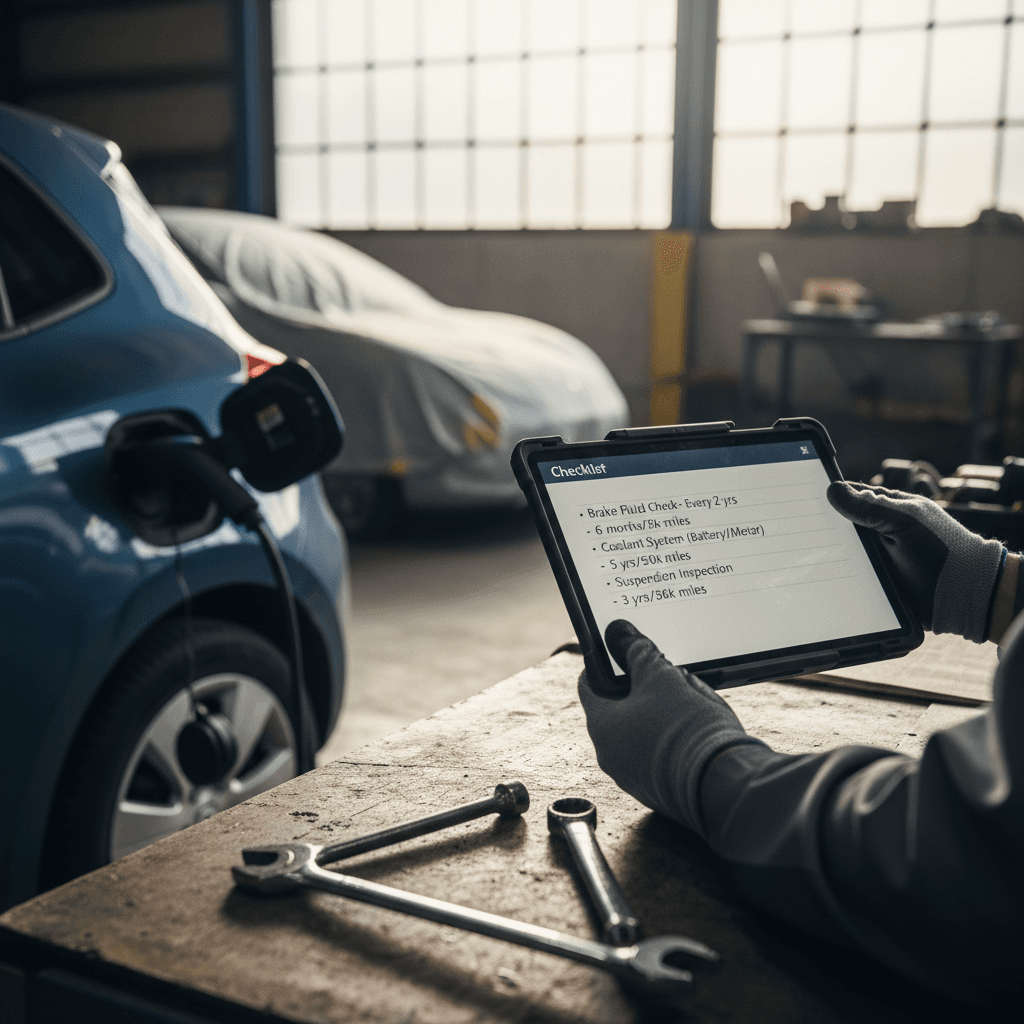
- Battery and power‑electronics coolant: Keeps your pack, inverter, and onboard charger in their happy temperature zone. Interval is often 8–10 years or 100,000+ miles. Use only the exact coolant type specified by the manufacturer.
- Brake fluid: Hygroscopic (it absorbs moisture), which can hurt braking performance and corrode components over time. Testing and replacement every 2–3 years is common.
- Windshield washer fluid: The unsung hero, especially if you’re clocking highway miles. Top it up whenever you check tire pressures.
- Gear oil in the reduction drive (if serviceable): Some EVs have “lifetime” fluid, others specify inspections or changes at high mileage. Your service booklet will spell it out.
- HVAC refrigerant: Usually sealed for life, but leaks or performance issues require professional service, don’t try to DIY high‑voltage HVAC work.
Do Not DIY High‑Voltage Work
Brakes, Tires, and Suspension: Where EVs Still Need Love
Where EVs save you money on maintenance, they can quietly spend it on tires and suspension if you ignore them. Instant torque, heavy battery packs, and city potholes are not a gentle combination.
How Often to Service Brakes and Tires
The parts of your EV that still live a hard life
Tires & Alignment
Brakes & Parking Brake
Good News for City Drivers
Battery Health and Long-Term Care
Your high‑voltage battery pack is the most expensive component in the car, but it’s also heavily protected. In the U.S., most EVs carry at least an 8‑year/100,000‑mile battery warranty that guarantees a minimum capacity level. Treat the battery well and it should outlast many owners.
- Avoid living at the extremes. It’s fine to fast‑charge, but don’t park at 100% or run to 0% every day. Many owners live between about 20–80% for daily driving.
- Use scheduled charging when possible so the car reaches your target state of charge shortly before you leave, especially in very hot or cold weather.
- Pay attention to software updates that mention thermal management or charging improvements, they often quietly extend battery life.
- If you’re storing the car for weeks, park it cool, dry, and partially charged (around 40–60%) rather than full.
- Ask for a battery health report during major services or when you’re preparing to sell or trade the vehicle. At Recharged, this data feeds directly into the Recharged Score so buyers can shop with confidence.
“Battery health is like tire wear, it’s predictable if you know how the car was used. The right maintenance schedule simply keeps the odds in your favor.”
Maintenance Checklist for Used EV Buyers
Shopping used is where a clear electric vehicle maintenance schedule really pays off. You’re not just buying a car, you’re inheriting someone else’s service habits. Here’s how to separate the carefully maintained gems from the mystery machines.
Used EV Maintenance Checklist
1. Confirm battery warranty and health
Ask for documentation on the battery warranty start date, remaining coverage, and any previous high‑voltage repairs. A professional battery health report, like the Recharged Score, gives you a clear view of current capacity and projected range.
2. Review service records against the schedule
Has the cabin filter been changed? Any brake fluid service? Were recalls or software campaigns completed? A car that hits the key intervals is usually the one that’s been cared for elsewhere too.
3. Inspect tires, brakes, and suspension
Uneven tire wear or pulsing brakes may point to alignment issues, worn bushings, or sticky calipers. These are fixable problems, but they’re also negotiation leverage if you know what you’re looking at.
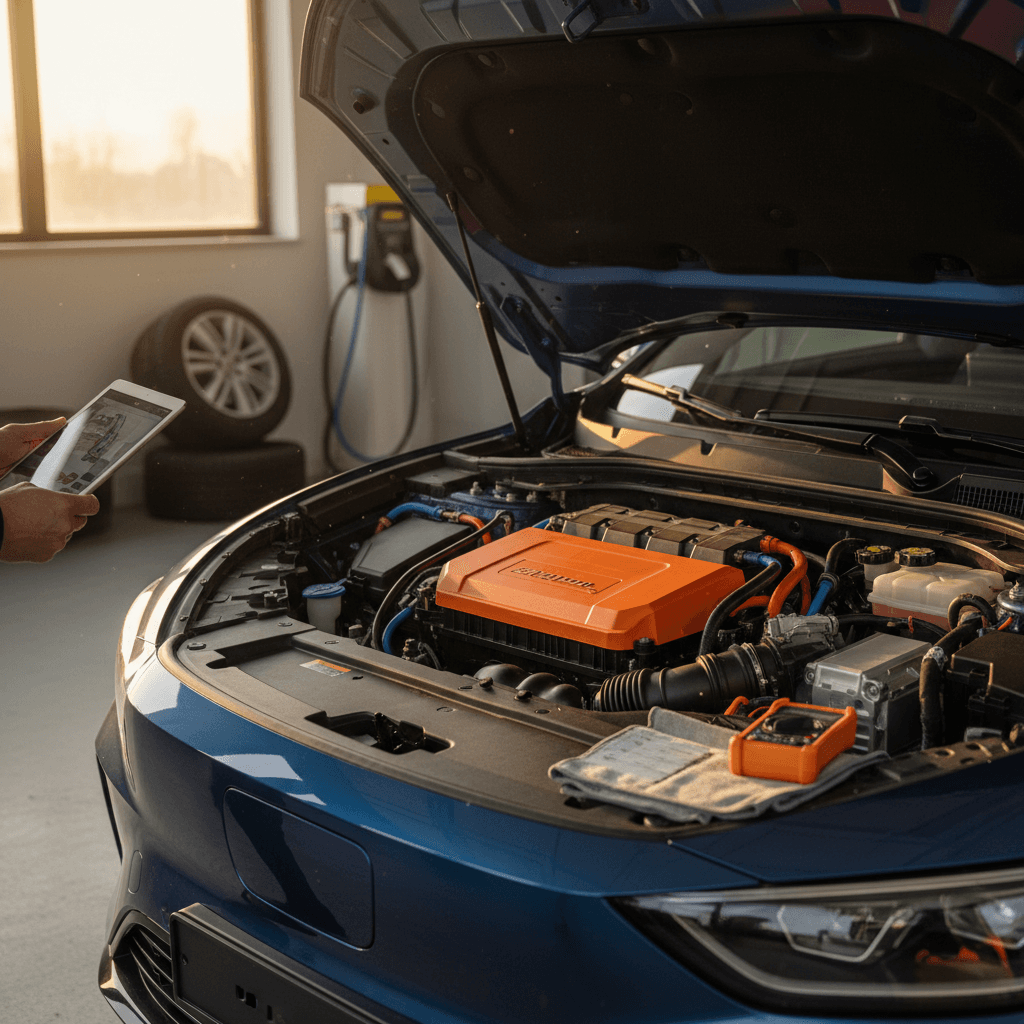
4. Check coolant and under‑hood condition
Look for correct coolant level, no crusty buildup around caps or hoses, and no signs of DIY coolant “experiments.” EV coolant formulas are specific, mixing the wrong fluid can get expensive.
5. Verify charging hardware and port condition
Inspect the charge port, seals, and cables for damage or corrosion. Confirm that the included home or portable charger works and is appropriate for your electrical service.
6. Take a range‑focused test drive
Start at a known state of charge, drive a familiar loop, and compare indicated range before and after. You’re looking for any wildly inconsistent readings or warning messages.
How Recharged Simplifies Used EV Maintenance History
What EV Maintenance Really Costs
Let’s talk dollars. Multiple studies from government agencies and consumer groups have found that EVs typically spend 30–50% less on routine maintenance than comparable gas cars over the long haul. You’re deleting oil changes, exhaust work, and transmission service from the budget, even if tires and insurance nibble back a bit on the edges.
EV Maintenance Cost Snapshot
Where You Save
- No oil changes or engine tune‑ups
- No exhaust, fuel‑system, or timing‑belt work
- Fewer moving parts mean fewer surprise failures
- Brake pads and rotors typically last longer
Where Costs Can Rise
- More frequent or pricier tires on heavy, high‑torque EVs
- Higher body‑shop and insurance costs on some models
- Out‑of‑warranty battery or electronics repairs if the car is abused
- Premium pricing at shops not yet comfortable with EVs
Plan Your Maintenance into the Purchase
Electric Vehicle Maintenance Schedule: FAQ
Frequently Asked Questions About EV Maintenance
The Bottom Line: Keep It Simple, Stick to the Schedule
Owning an EV doesn’t mean memorizing a complicated service chart, it means paying attention to a shorter list of important items and letting the car’s software and warranty guide the rest. A smart electric vehicle maintenance schedule focuses on tires, brakes, fluids, and battery health, checked at reasonable intervals instead of every other tank of gas.
If you’re driving a used EV, or thinking about buying one, this schedule becomes your roadmap. Match the car’s service history against these intervals, budget for anything that’s due soon, and lean on experts when high‑voltage systems are involved. At Recharged, every vehicle comes with a Recharged Score Report and EV‑specialist support, so you can understand exactly where a car stands today and what it will need tomorrow. That’s how maintenance turns from a question mark into just another predictable line in your ownership budget.