You’re seeing more electric vehicles on the road, and maybe one in your own driveway. If you’re searching for electric vehicle charging stations for sale, you’re probably trying to answer one of two questions: “What should I install at home?” or “Can I make money offering charging at my property?” This guide walks you through real-world hardware options, costs, incentives, and pitfalls so you can buy the right charger, not just the shiniest box on the shelf.
Big picture: charging is now infrastructure
Why EV charging stations for sale are booming in 2025
EV charging infrastructure by the numbers
For you as a buyer, all this activity means more choice and better pricing on EV charging stations for sale, but also more noise. Hardware ranges from $300 plug‑in home units to six‑figure DC fast chargers. The trick is matching the station to how drivers will actually use it, and to the electrical service you already have on site.
Types of electric vehicle charging stations for sale
The three main categories of EV charging stations
Every charger for sale fits into one of these buckets
Level 1 (120V)
Who it’s for: Drivers with short daily trips and overnight parking.
- Uses a standard household outlet
- 2–5 miles of range per hour
- Often included with the car
- Good backup, poor primary solution
Level 2 (240V)
Who it’s for: Most homes and many workplaces.
- Requires a 240V circuit (like an electric dryer)
- 25–40 miles of range per hour
- Hardware typically $400–$1,200
- Sweet spot for daily charging
DC Fast Charging
Who it’s for: High‑traffic commercial, highway, and fleet sites.
- High‑power DC directly to the battery
- 50–400 kW and beyond
- Equipment + install can run $50,000–$250,000+ per port
- Overkill for single‑family homes
Don’t buy more charger than you can power
Home EV charging stations for sale: what to expect
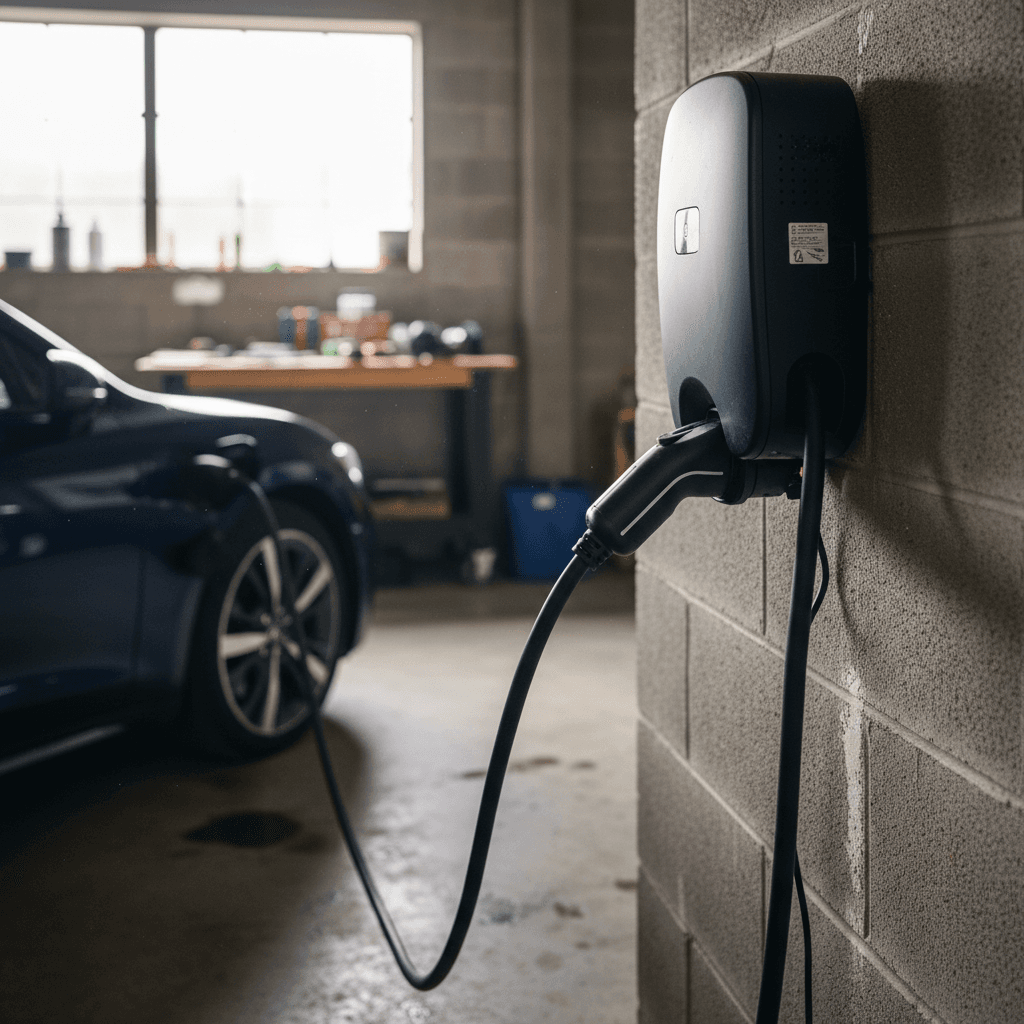
If you’re shopping for a home charger, almost everything you’ll see labeled as an “EV charging station for sale” is a Level 2 wallbox or portable 240V unit. They all do the same basic job: convert AC power from your house into controlled power for your car. The differences are in amperage, features, and how they’re installed.
Typical home Level 2 EV charging station options
Use this to gut‑check what you’re seeing on product pages.
| Option | Hardware Cost (Approx.) | Install Cost (Approx.) | Typical Power | Best For |
|---|---|---|---|---|
| Basic plug-in Level 2 | $350–$600 | $300–$800 (new 240V outlet) | 32–40A (7–9.6 kW) | Renters, simple garages |
| Hardwired Level 2 smart charger | $500–$1,200 | $700–$2,000 | 40–48A (9.6–11.5 kW) | Homeowners, long‑term setups |
| High-amp premium charger | $900–$1,500 | $1,500–$4,000 (may require panel upgrade) | 60–80A (14–19 kW) | Multiple EVs, future‑proofing |
| DIY portable 240V adapter setup | $300–$700 | $0–$300 (if outlet exists) | 24–32A (5.7–7.7 kW) | Budget‑focused, occasional drivers |
Actual prices vary by brand, installer, and local permit requirements.
Rule of thumb: match your car, not your ego
- Smart vs “dumb” chargers: Smart chargers connect to Wi‑Fi, let you schedule charging for off‑peak utility rates, and can track cost per kWh. Basic units skip the cloud features but are often cheaper and simpler.
- Plug‑in vs hardwired: Plug‑in units use a NEMA 14‑50 or similar outlet and are easier to replace or move. Hardwired units look cleaner and are often required outdoors, but they’re more expensive to relocate.
- Cable length & ergonomics: A 20–25 ft cable makes life easier if your parking spot shifts. Look for robust cable strain relief and a holster that’s easy to use with one hand in the dark.
Commercial EV charging stations for sale: costs and ROI
If you own a hotel, restaurant, strip mall, office building, or multi‑unit residence, you’re in a different game. You’re not just charging a car; you’re designing an amenity, or a revenue stream. Commercial electric vehicle charging stations for sale fall into two broad buckets: networked Level 2 and DC fast charging.
Networked Level 2 (AC)
- Typical hardware: $800–$2,500 per port
- Installed cost: roughly $3,000–$8,000 per port depending on trenching, panels, and networking
- Charge times: 4–8 hours for a substantial top‑up
- Best for: workplaces, hotels, apartments, long‑dwell retail
You can often start with 2–4 ports, then add more as adoption grows.
DC Fast Charging (DCFC)
- Hardware: $30,000–$150,000+ per dispenser
- All‑in project cost: $80,000–$250,000+ per fast‑charging port including utility upgrades
- Charge times: 20–40 minutes for 20–80% on many EVs
- Best for: highway sites, high‑volume travel centers, fleets
Utility coordination and demand charges matter as much as the sticker price of the equipment.
Beware of demand charges
How to choose the right EV charging station for your situation
Match the station to the stop, not the headline power
Think about how long cars sit, not just how fast they could charge
Home overnight parking
Typical dwell: 8–12 hours.
A 32–40 amp Level 2 station easily fills the battery before morning. Anything faster is nice, but rarely necessary.
Workplaces & offices
Typical dwell: 4–9 hours.
Networked Level 2 stations allow employees to share chargers and track usage without the cost and complexity of DC fast charging.
Highway & travel centers
Typical dwell: 20–40 minutes.
This is where DC fast charging shines. Drivers expect to gain 100+ miles while they grab a meal or use the facilities.
Start with a pilot, then scale
Installation, permits, and ongoing operating costs
When you see EV charging stations for sale online, the hardware price is only half the story. A clean, safe installation is where the real money goes, especially for commercial and DC fast projects.
Key installation steps you can’t skip
1. Assess your electrical service
Check your main panel size (in amps) and whether there’s spare capacity. Many homes can add a 40‑amp circuit easily; older homes may need panel upgrades. Commercial sites might require new transformers or service feeds.
2. Pull permits and follow code
Most jurisdictions require permits for new 240V or high‑power circuits. Your installer should follow National Electrical Code (NEC) requirements and any local amendments.
3. Choose indoor vs outdoor‑rated hardware
Outdoor parking demands NEMA 3R or better enclosures, robust cable management, and often bollards or wheel stops to protect equipment.
4. Plan for signage and striping
Clear markings (“EV charging only”) reduce conflicts and improve utilization. In some areas, signage is required to enforce parking rules.
5. Budget for networking and software
Commercial stations often charge monthly network fees for payment processing, monitoring, and access control. Factor this into your operating costs from day one.
Typical ongoing costs
Incentives, rebates, and new funding realities
Government funding has been a major tailwind for public EV charging, but the landscape is shifting. Federal highway‑corridor programs have been slow to roll out new stations, and some future funding is uncertain. The good news: utilities, states, and provinces still offer meaningful rebates, particularly for Level 2 stations at homes, multi‑unit buildings, and workplaces.
- Residential rebates: Many utilities and regional programs offer a few hundred dollars toward a home Level 2 charger and installation, sometimes more if you enroll in off‑peak charging programs.
- Commercial make‑ready programs: Some utilities will cover part of the cost to bring power to your parking lot (trenching, conduit, transformers) if you install qualified charging hardware.
- Tax incentives: In the U.S., certain commercial charging projects may qualify for federal tax credits when they meet location and labor requirements. States and provinces may layer additional incentives on top.
- Time‑of‑use rates: Even without rebates, shifting charging to off‑peak hours can dramatically cut your operating costs, especially for fleets and high‑utilization sites.
Always confirm incentives before you buy
EV charging business models that actually work
Putting an EV charging station for sale in your online cart is easy. Turning that station into a profitable or strategically valuable asset takes more thought. Here are business models that tend to pencil out, and a few that rarely do.
Common EV charging business models
Mix and match based on your property type
Amenity to drive core business
You install Level 2 or DC fast charging primarily to attract and retain customers.
- Hotels, restaurants, shopping centers
- Pricing: free or low‑cost charging
- ROI comes from longer stays and higher spend
Direct paid charging
Charging itself is the product; drivers pay per kWh, per minute, or per session.
- Best with high traffic and limited nearby competition
- Works for DC fast or clusters of Level 2
- Requires reliable hardware and 24/7 access
Resident & employee billing
Multi‑unit buildings and workplaces use networked Level 2 stations to fairly allocate costs.
- Drivers pay for what they use
- Property recovers electricity costs
- Often combined with access control and waitlists
Fleet and depot charging
Businesses electrifying their fleets build dedicated charging where vehicles park overnight or between shifts.
- Careful load management reduces demand charges
- Scheduling software is critical
- Often combines Level 2 for overnight and DCFC for turn‑backs
Think lifetime value, not just payback period
EV charging station buying checklist
Before you click “buy now” on that station…
Confirm your use case and dwell time
Are you serving overnight guests, daytime employees, or quick‑turn highway traffic? Your answer determines whether you need Level 2 or DC fast charging, and how many ports.
Check vehicle compatibility and connector types
In North America, new EVs are rapidly shifting to the NACS (Tesla‑style) connector, but CCS and J1772 remain common. Look for stations with the connector types your drivers actually need, or consider dual‑standard hardware.
Verify electrical capacity and upgrade costs
Have an electrician confirm that your panel and service can support the additional load. Get a written estimate for any required upgrades, not just the charger hookup.
Decide on networking and payment features
For commercial use, choose hardware supported by a reputable network or software platform. Confirm monthly fees, contract length, and how drivers will pay.
Plan for future expansion
Even if you start small, design conduit and panel space so you can add more ports later without tearing up the whole parking lot again.
Frequently asked questions about EV charging stations for sale
EV charging station buyer FAQ
How Recharged fits into your charging plan
You can buy the perfect electric vehicle charging station and still be disappointed if the car on the other end of the cable doesn’t meet your needs. That’s where Recharged comes in. Every used EV we list comes with a Recharged Score Report that verifies battery health, explains real‑world charging performance, and benchmarks fair market pricing, so you can match the right car to the charger you plan to install. With digital financing, trade‑ins, nationwide delivery, and EV‑specialist guidance from first click to first charge, we make it easier to get both sides of the equation right: the vehicle and the infrastructure that powers it.