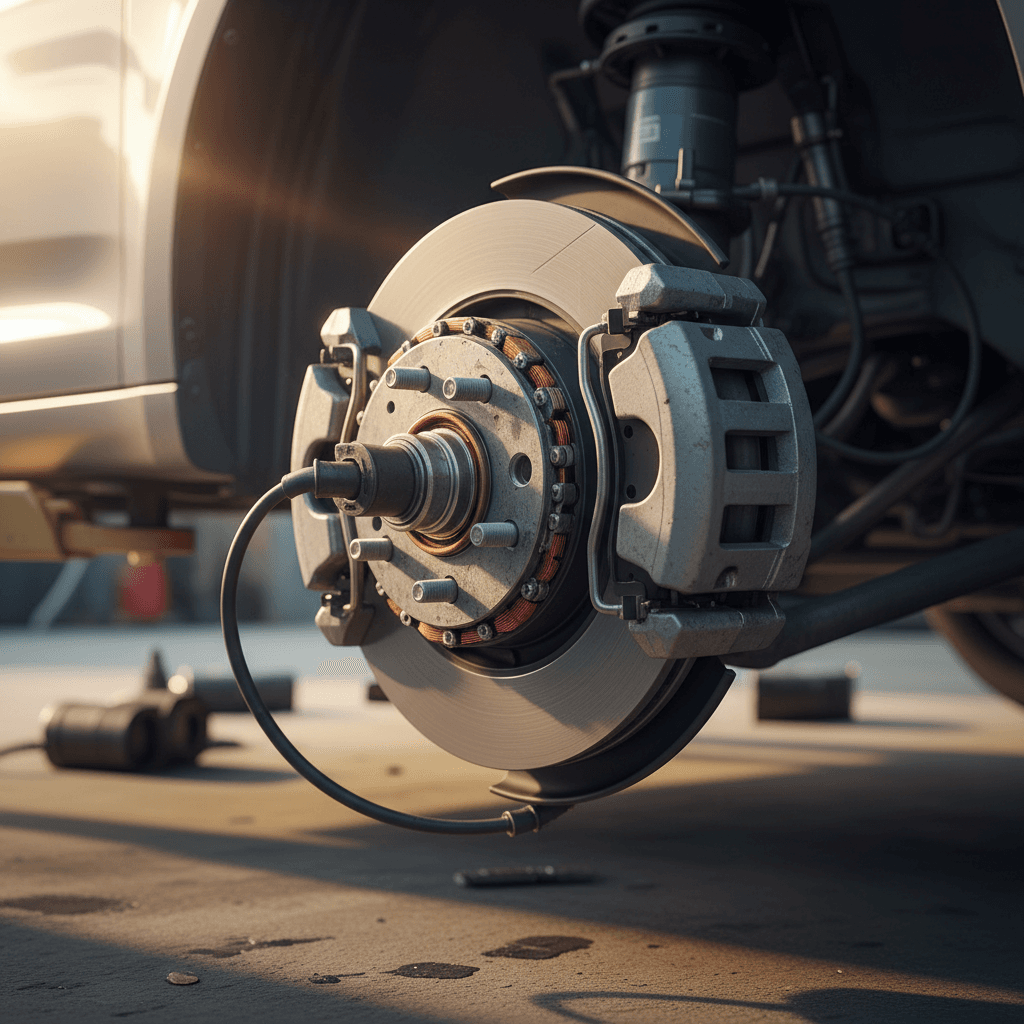
Electric vehicle brakes are one of those topics that seem simple until you actually drive an EV. The car slows when you lift off the accelerator, you hear almost nothing, and the brake pads seem to last forever. So what’s really happening with electric vehicle brakes, how does regenerative braking fit in, and what should you watch for, especially if you’re considering a used EV?
Quick takeaway
How electric vehicle brakes are different
On a mechanical level, electric vehicle brakes look very familiar. You still have brake pedals, hydraulic lines, calipers, pads, rotors, and brake fluid. The crucial difference is that EVs add a powerful regenerative braking layer on top of that hardware. When you lift off the accelerator, the drive motor instantly switches roles: instead of consuming electricity, it acts as a generator that resists the wheels’ rotation and feeds energy back into the battery.
How regenerative braking changes the game
Practically, this is why electric vehicles feel so different when you come off the throttle. Instead of coast-and-then-brake like a gas car, many EVs start slowing the moment you lift off, often strongly enough to illuminate the brake lights. The friction brakes are still there as backup and for hard stops, but your daily deceleration is handled mostly by the motors.
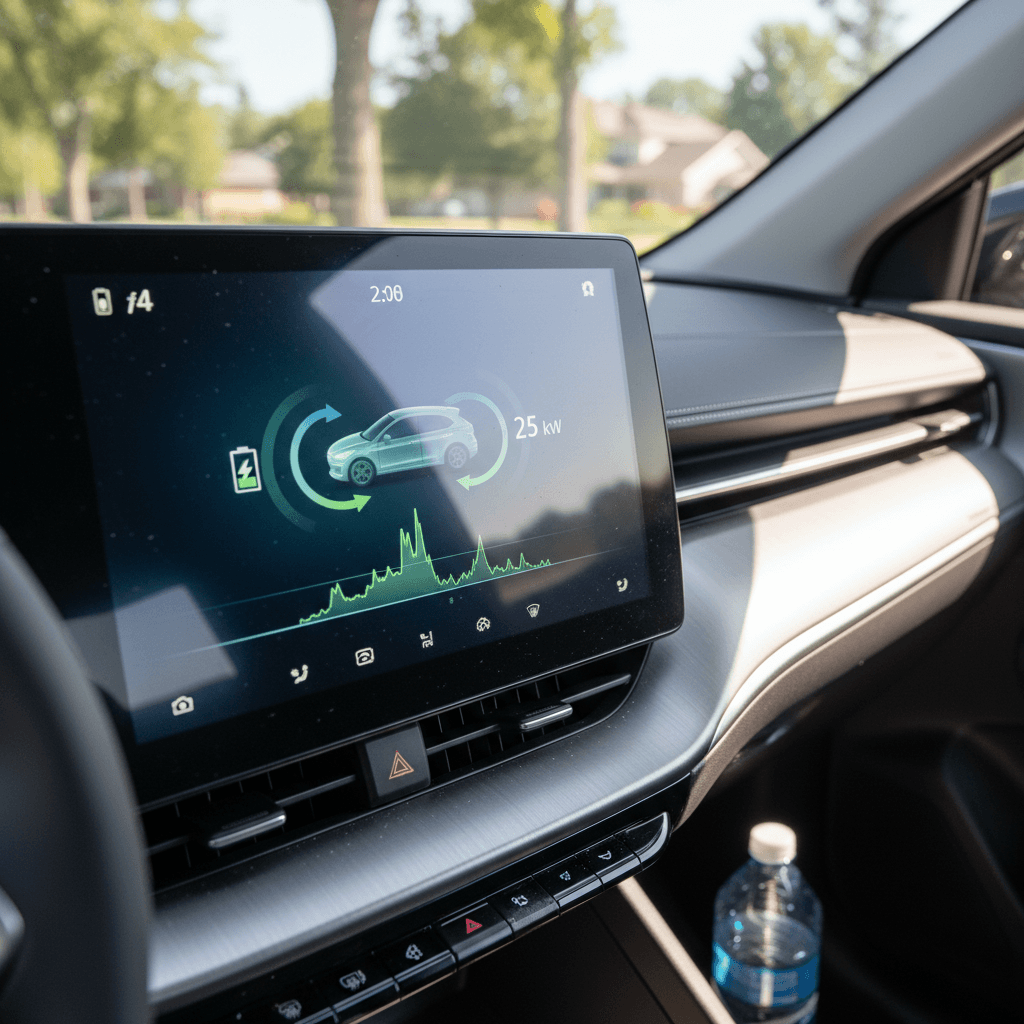
Regenerative braking 101
Regenerative braking turns your EV’s traction motor into a generator during deceleration. Instead of wasting kinetic energy as heat in the rotors, the system converts part of that energy into electrical power and routes it back into the high‑voltage battery. That’s why regenerative braking directly increases range rather than just slowing the car.
- You lift off the accelerator or press the brake pedal.
- The power electronics command the motor to generate instead of drive.
- The motor resists rotation, slowing the wheels.
- Electrical energy flows back into the battery (as long as it can accept charge).
- If more stopping power is needed, the car blends in friction brakes.
Use regen to your advantage
Many modern EVs let you fine‑tune this feel. GM, for example, offers multiple levels of One‑Pedal Driving that change how aggressively the car slows when you lift off the pedal, while others use steering‑wheel paddles, drive modes, or touchscreen sliders. Underneath those options is the same principle: deciding how much of your deceleration comes from regeneration versus coasting and friction braking.
Why EVs still need conventional friction brakes
Because regenerative braking runs through the motor and battery, it has some hard limits. At very low speeds there isn’t much kinetic energy left to recapture, and when the battery is full or near full, it can’t accept much additional charge. In those situations, the car automatically relies more on conventional friction brakes to finish the stop or handle emergency braking.
Regenerative vs. friction brakes in an EV
They work together, not in competition
Regenerative braking
- Uses the drive motor as a generator.
- Recovers energy and boosts range.
- Best at moderate speeds and gentle to medium deceleration.
- Limited when the battery is full or very cold.
Friction (hydraulic) brakes
- Pads clamp onto metal rotors at each wheel.
- Turn kinetic energy into heat, not electricity.
- Provide consistent, predictable stopping power at any speed.
- Handle hard stops, high‑speed braking, and ABS/ESC interventions.
Don’t count on regen in emergencies
Automakers spend a lot of time tuning how these systems blend. Earlier EVs sometimes felt inconsistent when the battery reached 100% and regen suddenly dropped off; newer generations aim for smoother transitions by blending friction brakes more intelligently so pedal feel stays predictable.
Do electric vehicle brakes really last longer?
In many cases, yes, electric vehicle brake pads can last dramatically longer than those on a comparable gas car, especially if most of your slowing is done by regeneration. It’s not unusual to see EV owners go 70,000–100,000 miles before needing pads and rotors, whereas an internal‑combustion car driven in the same conditions might need them at 30,000–50,000 miles.
Why they often last longer
- Regen handles a large share of everyday deceleration, so pads touch the rotors less often.
- City and stop‑and‑go driving, which is hard on brakes in gas cars, actually favors regen in EVs.
- One‑pedal driving lets experienced drivers almost never touch the brake pedal except at the very end of a stop.
Why they can still wear (or even fail early)
- Light pad contact means moisture on rotors can linger, encouraging corrosion.
- Salt, humidity, and road grime can attack pad backing plates and calipers.
- On some EVs, rusted hardware, not friction material wear, ends up killing the brakes first.
The EV brake paradox
EV brake maintenance: what actually matters
Regenerative braking doesn’t eliminate brake maintenance, it just changes what you should pay attention to. The key is to think about condition rather than just pad thickness. Here’s what a solid EV brake maintenance plan looks like.
Core EV brake maintenance tasks
1. Annual visual inspection
Ask your shop (ideally an EV‑savvy one) to pull the wheels at least once a year. They should check pad thickness, rotor condition, caliper sliders, and any signs of uneven wear or binding.
2. Exercise the friction brakes
Every week or two, do a few firm stops from moderate speed using the brake pedal rather than just regen. This helps clean rust off rotor surfaces and keeps caliper mechanisms moving freely.
3. Don’t ignore brake fluid
Brake fluid absorbs moisture over time, and EVs often don’t get hot enough in normal use to boil that moisture off. Follow your manufacturer’s brake‑fluid change interval, typically every 2–3 years, even if you rarely use the brakes hard.
4. Listen for noise or changes in feel
Squeals, scraping sounds, or a softer pedal can indicate rust buildup, sticking calipers, or air/moisture in the system. Because regen masks light friction‑brake issues in daily driving, treat new noises as an early warning.
5. Watch for software and firmware updates
Carmakers sometimes refine braking behavior via over‑the‑air updates, especially around regen blending and one‑pedal driving. If your EV supports OTA updates, staying current can improve both efficiency and brake feel.
Don’t skip service because “it’s an EV”
Brake feel, one‑pedal driving, and modes
One of the biggest learning curves for new EV drivers isn’t how the brakes work, it’s how they feel. That’s where drive modes, one‑pedal settings, and regen levels come into play. They don’t change the fundamental safety of the system, but they dramatically affect how you use both regenerative and friction braking day‑to‑day.
Common EV braking modes and what they do
You can usually tailor brake feel to your preference
Coast / low regen
Mimics a gas car when you let off the accelerator. The EV coasts with minimal drag and mostly uses friction brakes when you press the pedal. Good for highway cruising or drivers who dislike strong lift‑off decel.
Standard / high regen
Lift‑off deceleration is stronger; many EVs will slow quickly and enable one‑pedal‑style driving. Great for city traffic and maximizing energy recovery, but it takes a few days to get used to.
One‑pedal drive
In the most aggressive settings, simply lifting off the accelerator can bring the car all the way to a stop and hold it there. The physical brake pedal is still available for emergencies or fine control, but you rarely need it.
Experiment in a quiet parking lot
Different manufacturers make different design choices here. Some, historically including Tesla, have leaned heavily on lift‑off regen for slowing, with the brake pedal mostly commanding friction brakes. Others blend regen and friction through the pedal itself, so braking feels more like a conventional car even though the underlying tech is different. There’s no single “correct” philosophy; what matters is that you’re comfortable with your car’s behavior.
Buying a used EV? Brake checklist
If you’re shopping the used market, understanding electric vehicle brakes goes from “nice to know” to mission‑critical. Regen can hide light issues in a short test drive, and the brakes on older EVs may have seen years of stop‑and‑go, salty winters, or long periods of sitting. Here’s how to sanity‑check the brake system on a used electric vehicle.
Used EV brake inspection checklist
1. Take at least one hard stop
On a safe road, do a firm stop from 40–50 mph using the brake pedal. The car should track straight, with no pulsing, grinding, or pulling to one side. Any vibration in the pedal or steering wheel can indicate warped rotors or uneven pad deposits.
2. Turn regen down temporarily
If the car allows it, set regen to a lower level for part of your test drive. This forces the friction brakes to do more work and can reveal noises or roughness that strong regen might otherwise mask.
3. Inspect rotors and pads visually
Look through the wheel spokes (or ask for the wheels to be pulled) and check for heavy rust, deep grooves, or uneven wear. Surface rust is normal; flaky, chunky, or heavily pitted rotors are not.
4. Ask for service records
Look for documented brake fluid changes and brake inspections at least every 2–3 years. A car with no brake service history at 60,000–80,000 miles is a red flag, even if it ‘drives fine’ on a short spin.
5. Lean on expert evaluation
With Recharged, every vehicle comes with a <strong>Recharged Score Report</strong> that includes verified brake condition and overall health, so you’re not guessing based on a five‑minute drive and a seller’s assurances.
How Recharged helps
Ready to find your next EV?
Browse VehiclesElectric vehicle brakes: FAQ
Frequently asked questions about EV brakes
The bottom line on electric vehicle brakes
Electric vehicle brakes are a great example of how electrification changes the rules without changing the fundamentals. Under the skin, you still have pads, rotors, and hydraulic fluid, but regenerative braking lets the motors shoulder most of the everyday work, stretching service intervals and turning every slowdown into free range.
For you as a driver or used‑EV shopper, the practical takeaways are straightforward: learn how your EV’s regen and one‑pedal settings behave, don’t skip brake inspections just because the pads look thick, and pay attention to fluid changes and corrosion. If you’d rather not play detective, buying through Recharged means every car comes with expert‑verified brake and battery health, transparent pricing, and support from EV specialists who live this technology every day.