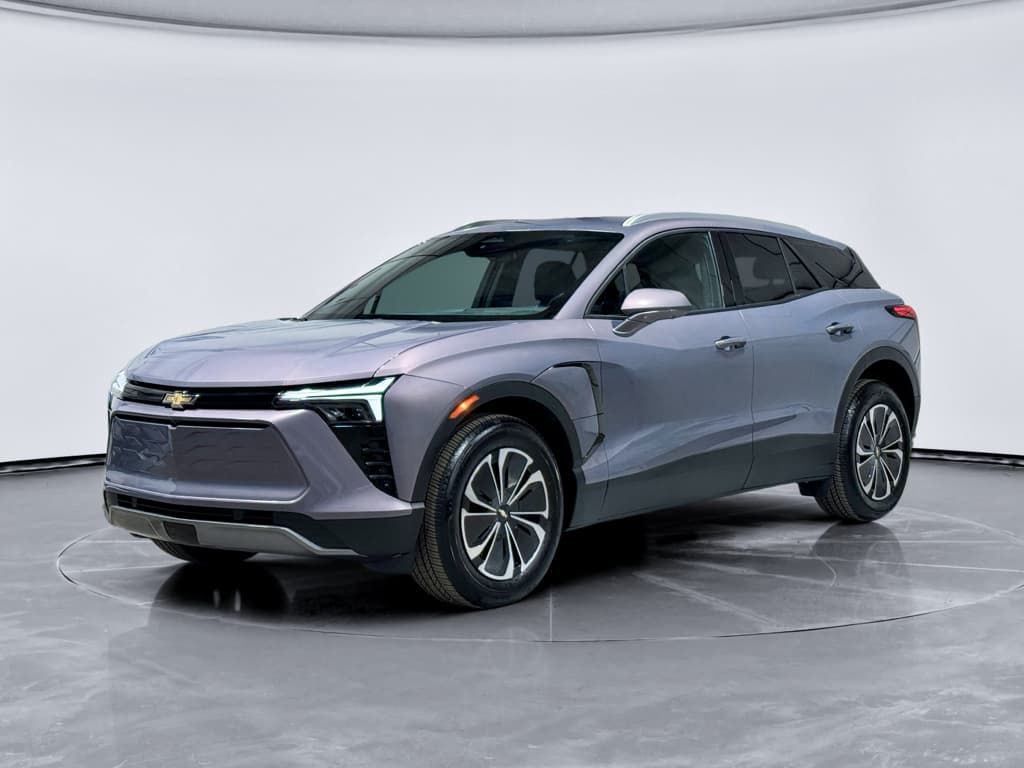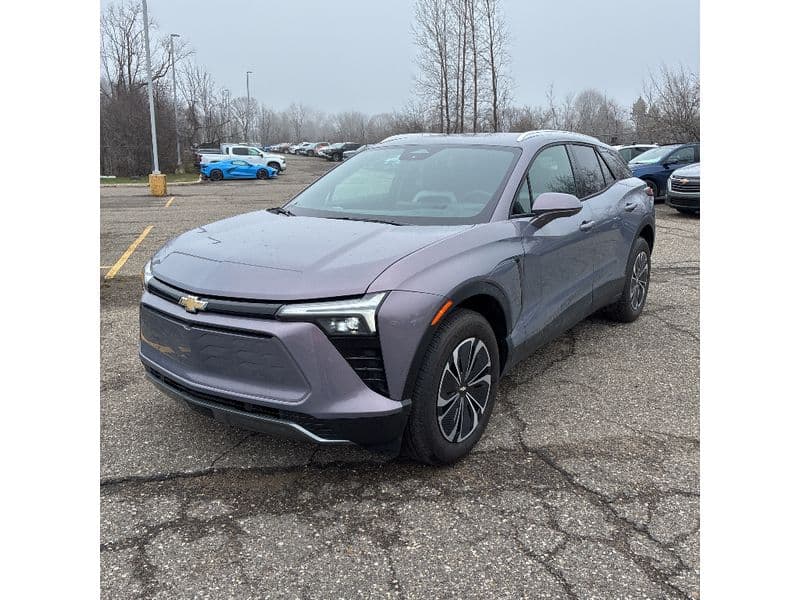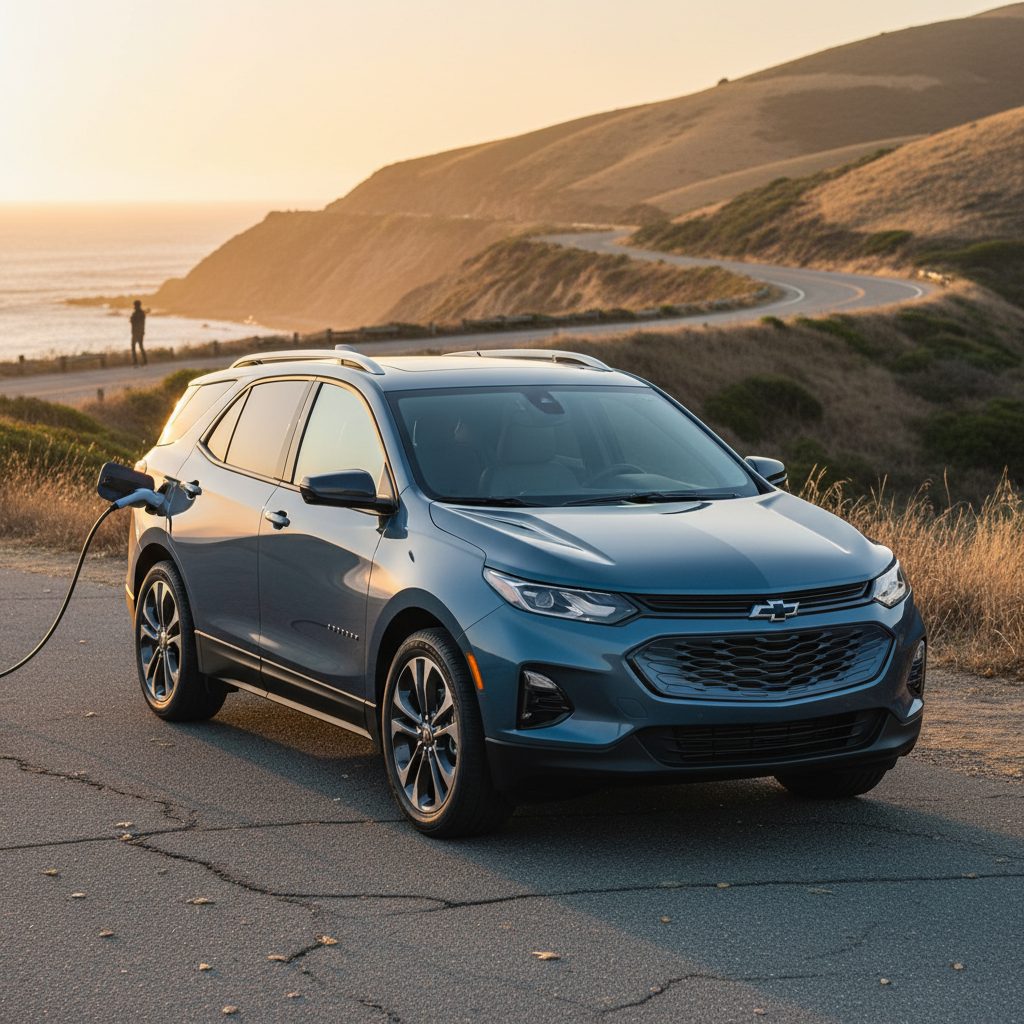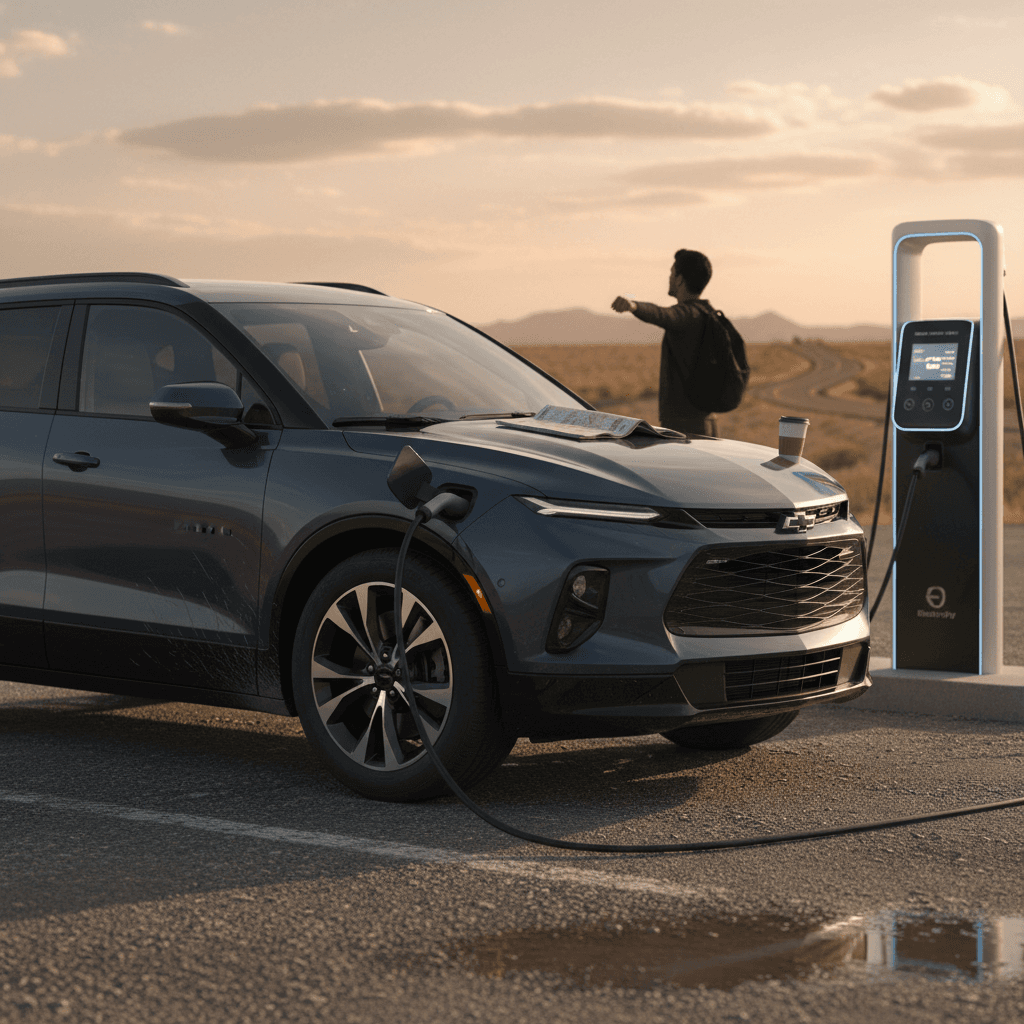
If you’re cross-shopping electric SUVs, you’ve probably asked a simple question: is the Chevrolet Blazer EV actually good for road trips? On paper it has big battery options, solid range, and Ultium tech. In the real world, what matters is how often you have to stop, how long you sit at chargers, and whether the cabin keeps you and your passengers happy after hours on the highway. This Chevrolet Blazer EV road trip review pulls together independent testing, owner reports, and Recharged’s own charging and range analysis to give you a clear, no‑nonsense answer.
Who this review is for
Chevrolet Blazer EV road trip overview
Blazer EV road trip numbers at a glance
The high‑level story is that the Blazer EV is a strong road‑tripper for range and comfort, but only an average performer at DC fast charging. It shines when you start the day with a full battery and knock out long first legs. Where it lags is in how long you sit at the plug once you run the battery down to low states of charge, especially compared with the latest 800‑volt rivals.
Early reliability and software caveats
Real-world Blazer EV highway range on a road trip
When you’re road‑tripping, what matters isn’t the EPA window‑sticker number, it’s how far you can actually go at 70–75 mph with climate control running and a full load of people and cargo. The Blazer EV’s real‑world highway range is generally 10–20% below EPA estimates, which is totally normal for modern EVs driven at U.S. interstate speeds.
Blazer EV EPA vs real-world range (typical trims)
What road testers and owners usually see at 70–75 mph in decent weather
RS AWD (mid‑size pack)
EPA: commonly quoted around the high‑200s (mi)
Real world: ~230–260 miles at 70+ mph depending on wheel size and weather.
RS RWD / big‑battery trims
EPA: roughly in the 300+ mile ballpark.
Real world: road tests have seen ~270–300 miles on long highway legs in mild temps.
Smaller‑battery LT / fleet variants
EPA: mid‑200s.
Real world: think ~200–230 miles at freeway speeds before you’re ready to stop.
In independent highway loops, a Blazer EV has returned around 2.5–2.7 mi/kWh at 70+ mph in mild temperatures, right in line with other midsize electric SUVs. That means a big‑battery Blazer EV can realistically cover 250–300 miles between charges if you start the day at 100% and run down into the teens before a stop.
How to translate mi/kWh into trip legs
- In warm, dry weather on relatively flat highways, many owners manage 250–280 miles between DC fast‑charge stops with the larger pack.
- In heavy rain, winter temps, high speeds, or strong headwinds, you may see efficiency dip into the low‑2 mi/kWh range, trimming legs below 230–240 miles.
- Wheel choice matters: big 21–22 inch wheels and performance tires look great, but they cost a noticeable chunk of range versus more modest setups.
DC fast charging: Is the Blazer EV quick enough for road trips?
Here’s where the Chevrolet Blazer EV becomes more polarizing. It uses a 400‑volt architecture, and while peak DC power in the 150–190 kW range looks fine on a spec sheet, the average power over a 5–80% session is closer to ~100–110 kW on the stronger trims. That’s good enough to road trip, but it’s not “get-coffee-and-go” quick like the best 800‑volt SUVs.
Typical Blazer EV DC fast-charge behavior (big-battery trims)
Approximate real‑world results from independent tests on high‑power DC chargers in good conditions.
| Charge window | Approx. time | Peak power seen | Average power | Highway miles added* |
|---|---|---|---|---|
| 5–60% | ~30–35 min | ~170–180 kW | ~120–130 kW | ~150–180 mi |
| 5–80% | ~45–50 min | ~170–180 kW | ~100–110 kW | ~200–220 mi |
| 5–100% | ~90–100 min | ~170–180 kW | ~65–75 kW | Full rated range |
Times are rounded and will vary with station quality, temperature, and your specific trim and software version.
The good news is that those are respectable, mid‑pack numbers. The less‑good news is that several owner reports show inconsistent results on public infrastructure, especially in winter or on tired hardware, where average speeds tumble into the 50–70 kW range. That’s not unique to the Blazer EV, but the car’s charge curve seems particularly sensitive to temperature and station quality.
Cold-weather charging reality check
Tips to keep Blazer EV road-trip charging painless
1. Aim for 10–70%, not 100%
The Blazer EV, like most EVs, charges fastest in the middle of the battery. It’s often quicker to stop twice from 10–70% than to sit for ages from 80–100% at one station.
2. Prioritize newer high-power sites
Look for newer 150–350 kW stations from major networks or Tesla Superchargers with CCS/NACS access. Older 50–62.5 kW sites will feel painfully slow in a big‑battery SUV.
3. Precondition the battery
Use built‑in route planning or manual pre‑conditioning (if available in your software build) to warm the pack before arriving at a DC fast charger, especially in cold weather.
4. Avoid arriving nearly empty in extreme cold
Try not to pull into a fast charger at 1–3% in sub‑freezing temps. Give the car time at moderate loads beforehand so the battery isn’t ice‑cold when you plug in.
5. Watch the charge curve in your first weeks
On your first long trip, pay attention to the power display and time from 10–80%. If you’re consistently far below expected speeds on multiple stations, have a dealer check for software or hardware issues.
Using Tesla Superchargers and other networks
For U.S. road‑trippers, access to Tesla’s Supercharger network is a big deal. Later‑build Blazer EVs can use Tesla stations via a CCS‑to‑NACS adapter today, and GM is transitioning to NACS ports on future model years. Practically speaking, that means your Blazer EV can combine the depth of the Tesla network with CCS sites from Electrify America, EVgo, ChargePoint and regional players.
On Tesla Superchargers (via adapter)
- Often the most reliable DC fast chargers on U.S. highways.
- Plenty of 250 kW V3 sites; your 400‑volt Blazer EV will peak well below that but still benefit from solid hardware.
- Usually easy on/off access from major interstates with good amenities nearby.
- You’ll use Tesla’s app or integration for session start and payment, depending on rollout stage and adapter.
On CCS networks
- Coverage varies regionally; some corridors are well‑served, others patchy.
- Station reliability can range from great to frustrating, so plan backups.
- Charging speeds depend heavily on cable limits and maintenance, some "350 kW" cabinets are bottlenecked by older 250A cables.
- You may need multiple apps or cards (EA, EVgo, ChargePoint, etc.) unless you rely on roaming through GM’s integrated services.
Plan A, B, and C for each stop
Comfort, cabin tech, and driver assistance on long drives
Numbers only tell half the road‑trip story. The other half is how you and your passengers feel after three or four hours between stops. Here, the Blazer EV generally scores well: it’s spacious, quiet, and feels closer to a sporty crossover than a soft minivan.
How the Blazer EV cabin works on a road trip
Strengths and quirks that matter after a few hundred miles
Seating & space
Front seats are supportive enough for long days, and rear legroom is generous for adults. Cargo space is competitive with other midsize crossovers, though the sloping roof can limit bulky items.
Noise & refinement
Ultium packaging and a stiff structure give the Blazer EV good highway manners. Wind and road noise are well‑controlled, especially on trims without the most aggressive wheel/tire combos.
Infotainment quirks
Early software builds had bugs, including nav and Android Automotive issues that affected in‑car route planning. Later updates and 2025 builds improve this, but if you’re buying used you’ll want to confirm everything is up to date.
Driver‑assistance tech is another key road‑trip factor. Depending on trim and options, you’ll see a mix of adaptive cruise, lane‑keeping, and in some cases GM’s hands‑free systems on mapped highways. When it’s all working correctly, that takes a lot of strain out of long interstate days.
Navigation & trip-planning are non‑negotiable
How to plan a smooth road trip in a Blazer EV
Planning around the Blazer EV’s strengths, and weaknesses, turns it from a question mark into a confident road‑trip machine. The key is to leverage its long legs while being realistic about charging times.
Blazer EV road trip planning playbook
1. Start day one at 100% at home
Use your Level 2 home charger to leave at full battery on the morning you depart. That first leg is where the Blazer EV shines; a big‑battery trim can often clear 250+ miles before its first DC stop.
2. Target 10–70% SoC windows on DC
Once you’re living on fast chargers, plan legs that drop you to around 10–20% and stop charging once you reach ~70–80%. Beyond that, power quickly tapers and you’re paying a steep time penalty for the last few percent.
3. Use multi-network routing tools
Run your route through tools like A Better Routeplanner or PlugShare ahead of time and star stations that look reliable, have recent check‑ins, and offer amenities you like. Cross‑check with the myChevrolet app and Tesla’s map if you have adapter access.
4. Bundle meals and rest with charges
Given the Blazer EV’s roughly 45–50 minute 5–80% stops, treat each fast‑charge as a combined meal, bathroom, and stretching break. That way the time isn’t just "waiting", it’s time you’d spend off the road anyway.
5. Be conservative on new routes or in bad weather
On your first long trip in unfamiliar territory, or in winter, keep a larger buffer (arrive with 15–20% instead of 5–10%). Once you’ve seen how your Blazer EV behaves, you can tighten the margins.
6. Verify software and updates before you leave
Before a big trip, especially in a recently purchased used Blazer EV, confirm that all open recalls and software updates are completed. Fixing nav or charging bugs at home is far less stressful than discovering them at a rural charger.
Chevy Blazer EV vs rivals as a road-trip SUV
The easiest way to understand the Blazer EV as a road‑trip machine is to compare it directly with its peers. It tends to trade blows: excellent range, average‑plus comfort, mid‑pack charging.
Blazer EV vs popular EV road-trip rivals
High‑level comparison focused on long‑distance driving experience, not detailed specs.
| Model | Highway range feel | Typical 10–80% DC time** | Road-trip comfort & space | Overall road-trip impression |
|---|---|---|---|---|
| Chevy Blazer EV (big pack) | Strong: 250–300 mi legs realistic in good conditions. | ~35–45 min on good DC sites; slower on weak stations. | Spacious, quiet, more sporty than soft; good family space. | Great legs but average charging; best if you like fewer, longer stops. |
| Hyundai Ioniq 5 / Kia EV6 | Moderate: 220–260 mi in many real‑world tests. | ~18–25 min thanks to 800‑V hardware on strong chargers. | Comfortable and airy cabins; slightly less cargo space than Blazer. | Outstanding charger speed; best for frequent, shorter fast‑charge hops. |
| Tesla Model Y | Strong: similar or slightly better real‑world range than Blazer trims. | ~25–30 min on V3 Superchargers for big packs. | Good space and efficiency but firmer ride on some trims. | Supercharger integration and efficiency still make it one of the easiest road‑trip EVs. |
| Ford Mustang Mach‑E (big pack) | Moderate: 220–260 mi legs typical on highway. | ~35–45 min depending on software and station quality. | Comfortable cabin, slightly tighter rear space than Blazer. | Similar road‑trip profile to Blazer EV: good legs, mid‑pack DC speed. |
Exact numbers vary by trim, wheel size, and model year. This is meant as a directional comparison for typical long‑range versions.
Where the Blazer EV excels for road trips
Buying a used Blazer EV for road trips: key checks
Because the Blazer EV is still relatively new, many of the first examples to hit the used market are early‑build 2024 models, the very ones most affected by initial quality and software issues. If you’re shopping a used Blazer EV specifically with road trips in mind, be extra diligent.
Used Chevrolet Blazer EV road-trip readiness checklist
1. Confirm build date and recall history
Ask for the VIN and run it through GM’s recall site. You want all campaign and software actions completed, especially those related to charging, high‑voltage components, and infotainment.
2. Review battery health & usable range
Have the seller show you typical daily range at a given state of charge, and look at long‑term efficiency. On Recharged, every Blazer EV comes with a <strong>Recharged Score battery health report</strong> so you know how much real‑world range you’re actually buying.
3. Test DC fast charging before you buy
If possible, run a short DC session (say, 20–60%) on a known‑good high‑power station. You’re looking for reasonable power levels (well over 100 kW at mid‑SoC on big‑battery trims) and stable charging behavior.
4. Verify navigation and trip planning
On a test drive, enter a long route that requires at least one charge stop. Make sure the car is actually suggesting chargers, showing realistic arrival SoC, and not crashing or freezing midsession.
5. Check home charging behavior
Plug into a 40–48A Level 2 station and confirm the Blazer EV pulls near its rated 11.5 kW. For most owners, reliable overnight charging is what makes road trips practical and stress‑free.
6. Consider warranty and roadside coverage
Look at remaining battery and powertrain warranty, and any included roadside assistance. Being able to get towed to a DC fast charger or dealer if something goes wrong is reassuring on long drives.
How Recharged simplifies buying a road-trip-ready Blazer EV
Chevrolet Blazer EV road trip FAQ
Frequently asked questions about road‑tripping in a Blazer EV
Bottom-line road trip verdict
Viewed purely through a road‑trip lens, the Chevrolet Blazer EV is a long‑legged, comfortable, but not ultra‑fast‑charging electric SUV. Its real‑world range and cabin comfort stack up well against the class, and access to both CCS and Tesla Supercharger infrastructure gives you plenty of routing options. Its weak spots are mostly about consistency, charging speeds that can sag on marginal infrastructure, and early software quirks you’ll want to avoid when shopping used.
If your ideal trip profile is knocking out 250‑mile highway stints with family or friends, then taking real breaks while you charge, the Blazer EV fits that use case well. If you’re the kind of driver who wants to stop for just 15–20 minutes every 120–150 miles and get back on the road as fast as possible, you’ll be happier in an 800‑volt SUV.
And if you’re considering a used Chevrolet Blazer EV specifically for road trips, working with a specialist matters. Recharged pairs every Blazer EV with a Recharged Score battery health report, transparent pricing, and EV‑savvy guidance so you know exactly what kind of range, charging behavior, and ownership experience to expect before you set out on your first big electric road trip.