Electric vehicle battery replacement has become the EV world’s favorite campfire horror story. Somewhere between the YouTube comments and the dealership waiting room, the idea took hold that your battery will die at year eight and hand you a five‑figure repair bill. The reality in 2025 is very different: modern EV packs are lasting far longer than early skeptics predicted, and outright battery replacement is rare, especially within warranty.
The big-picture reality
Do EV batteries really need replacing often?
Let’s start by clearing the air: EV batteries don’t “time out” and die the way many people assume. They slowly lose usable capacity, think of it as your fuel tank gradually shrinking, not suddenly disappearing. Real‑world studies of tens of thousands of vehicles show that total battery failure is uncommon. The vast majority of EVs on the road today are still running their original packs with plenty of range left.
EV battery lifespan and replacement, by the numbers
Think like a used‑car shopper, not a lab tech
How long do electric vehicle batteries last?
Most modern electric vehicles are designed so that the battery outlasts the rest of the car. Today’s lithium‑ion and newer lithium iron phosphate (LFP) chemistries are engineered to survive thousands of charge cycles, assisted by sophisticated thermal management and software that protects the pack from abuse.
- In typical U.S. conditions, EV batteries are modeled to last around 12–15 years in moderate climates and still provide usable range.
- In harsher hot or very cold climates, practical life is often closer to 8–12 years before drivers notice more significant range loss.
- Across multiple large studies, most EV packs lose roughly 2% of capacity per year, so an EV that started with 300 miles of range might still deliver around 260–270 miles after five years of mixed use.
That’s the quiet story the data tells: batteries are aging slowly and predictably, and in many cases they’ll still be going strong long after the second or third owner has moved on.
Climate still matters
What does electric vehicle battery replacement cost in 2025?
Now to the part that launched a thousand forum threads: electric vehicle battery replacement cost. In 2025, a full pack replacement out of warranty typically runs somewhere in the mid‑four to low‑five figures, depending on vehicle, battery size, and whether you opt for new, remanufactured, or salvaged parts.
Typical EV battery replacement costs in 2025
Approximate out‑of‑warranty replacement costs for a full high‑voltage pack, including parts and labor. Actual quotes vary by region and supplier.
| Vehicle type | Typical battery size | Approx. replacement cost (parts) | Estimated total with labor |
|---|---|---|---|
| Compact EV (Leaf, Bolt) | 30–65 kWh | $3,000–$8,000 | $4,000–$10,000 |
| Mid‑size EV (Model 3, Ioniq 5) | 60–80 kWh | $8,000–$12,000 | $9,000–$15,000 |
| Luxury / long‑range (Model S, Lucid Air) | 90–120+ kWh | $12,000–$20,000+ | $14,000–$23,000+ |
| Electric pickups (F‑150 Lightning, Rivian) | 120–130+ kWh | $15,000–$25,000+ | $17,000–$28,000+ |
These are ballpark figures, not official prices. Many owners will never see these costs thanks to long battery warranties.
Why the wide price range?
It’s also worth remembering that battery prices are falling over time as manufacturing scales. Analysts expect pack costs per kWh to keep dropping through the decade, which makes future replacement less daunting than today’s sticker‑shock anecdotes would suggest.
When do you actually need a new EV battery?
Unlike an engine failure, EV battery replacement is rarely a binary “it runs/it doesn’t” affair. Most owners only consider a new pack when range loss becomes a real quality‑of‑life problem, not just a number on a report.
- Your real‑world range has dropped to the point where you can’t comfortably cover your daily routine, even with planning.
- Fast‑charging speeds have become painfully slow because the battery can’t accept power like it used to.
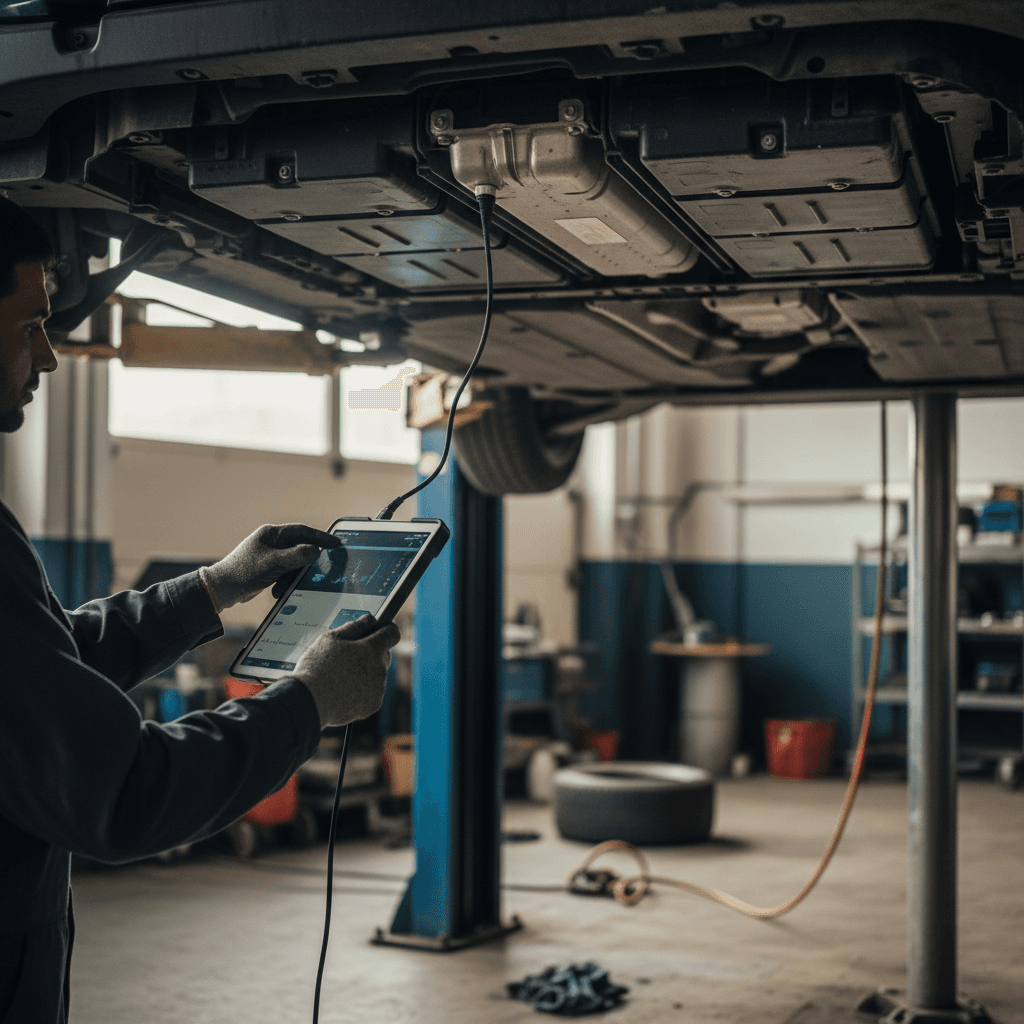
- Diagnostic tools show abnormal cell imbalance or serious defects, not just gradual aging.
- You’re outside the battery warranty window and repair options are patchwork or uneconomical compared with a full pack.
Don’t confuse a bad 12‑volt battery with a bad high‑voltage pack
In practice, many owners simply adapt to some degradation, charging more often, planning trips differently, or eventually trading into another EV, long before a full battery replacement is truly necessary.
Factors that speed up or slow down battery degradation
You have more control over battery health than you might think. The same common‑sense rules that keep a laptop or phone happy work for EVs, just at a larger scale.
What really affects EV battery life?
Habits and environment matter as much as the hardware.
Temperature extremes
Charging habits
Driving & usage
Easy habits that pay off
How to check battery health on a used EV
Shopping for a used electric car? Battery health is the single most important mechanical question, and, unlike with engines, it’s something we can actually measure with real data instead of sniffing exhaust and kicking tires.
Used EV battery health checklist
1. Look at the range display, carefully
Set the car to 100% charge and note the estimated range. Compare it to the original EPA rating for that trim. A healthy used EV might show 5–15% less range than new; much more than that warrants deeper investigation.
2. Review a battery health report if available
Third‑party analytics and OEM tools can show remaining usable capacity, cell balance, and charge history. On Recharged vehicles, this is baked into the <strong>Recharged Score</strong> so you don’t have to guess.
3. Check the charging history and habits
Ask how the previous owner charged: mostly home Level 2, or lots of DC fast charging? Neither is automatically bad, but heavy fast‑charge use in hot climates can accelerate wear.
4. Inspect for warranty eligibility
Verify the in‑service date and mileage. Many used EVs still have <strong>years of battery warranty</strong> left. That coverage dramatically changes the risk calculus.
5. Test‑drive for normal charging and thermal behavior
Monitor how quickly the car takes on energy at a public fast charger and listen for the cooling system. Wild fluctuations, warnings, or unusual noises may indicate underlying battery issues.
How Recharged derisks used EV batteries
EV battery warranties: what they really cover
Battery warranties are the quiet hero of EV ownership. In the U.S., federal rules require that EV and hybrid batteries be covered for at least 8 years or 100,000 miles, and several automakers go further in time, mileage, or both.
- Coverage usually applies when the pack drops below a set capacity threshold, often around 70% of original capacity within the warranty period.
- Some brands offer 8 years/150,000 miles on bigger packs or in certain states, and California‑aligned states are pushing for even more stringent long‑term capacity requirements.
- Warranties typically cover defects and abnormal degradation, not self‑inflicted damage from floods, collisions, or unauthorized modifications.
Fine print worth reading
Repair, recondition, or replace: your options
Full electric vehicle battery replacement is only one tool in the box. Increasingly, owners have a spectrum of options, from minor repairs to full pack swaps, depending on what’s actually wrong and how they use the car.
1. Module or cell repair
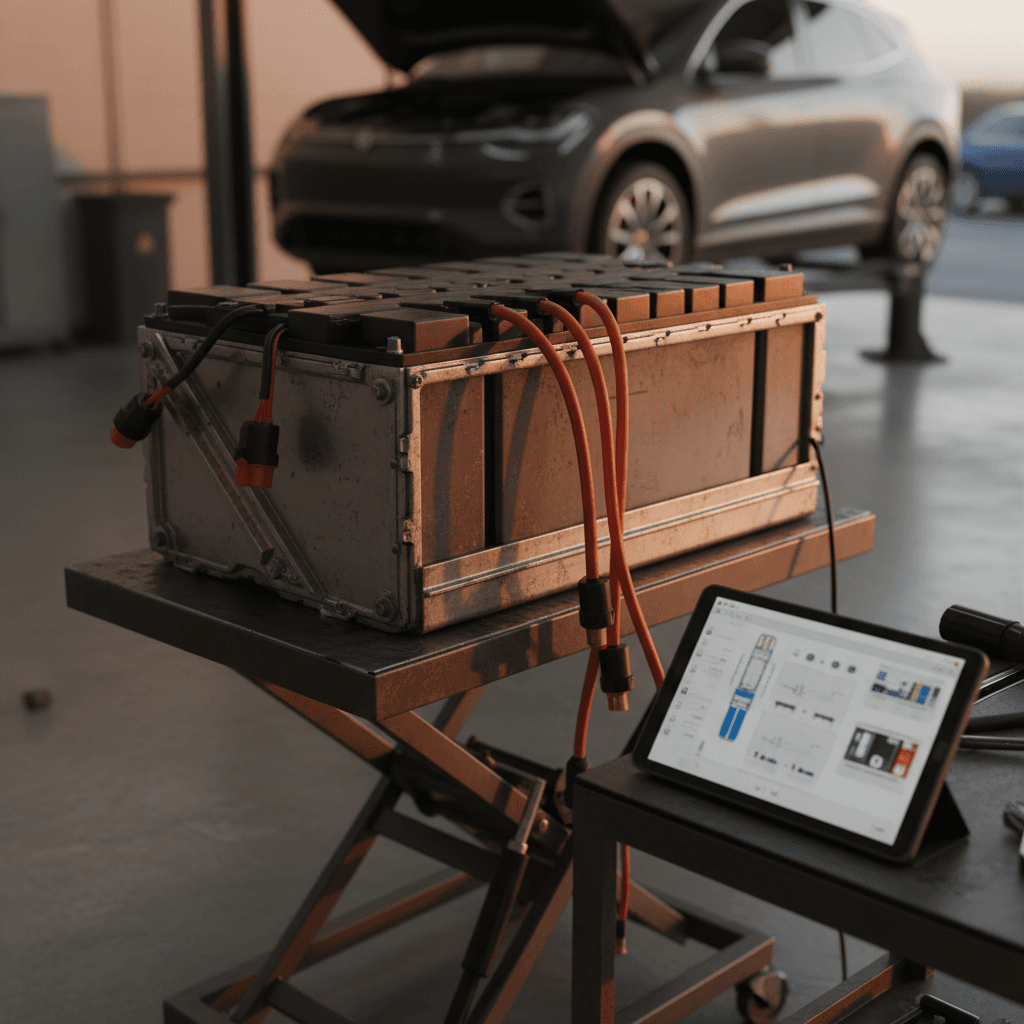
Many EV packs are built from modules. If a few modules go bad while the rest are healthy, a specialist may be able to replace just those sections instead of the entire pack. This is more complex work, but it can dramatically cut costs.
2. Refurbished or salvage packs
Some shops offer refurbished packs sourced from low‑mileage wrecked vehicles. These can cost substantially less than brand‑new OEM batteries while still providing years of usable life, especially if your car doesn’t need maximum original range.
3. Full new pack replacement
This is the nuclear option: installing a brand‑new pack from the manufacturer. It’s the most expensive route but restores the car’s range and performance to like‑new levels and often carries its own warranty.
The rise of EV battery second lives
How Recharged handles battery health on used EVs
Battery condition is the heart of a used EV’s value. At Recharged, we treat it that way. Every vehicle we list goes through a battery‑focused evaluation that’s deeper than a basic test drive and a hunch.
What you get with a Recharged EV
Transparency on the part of the car that matters most.
Recharged Score battery diagnostics
Pricing that reflects real battery health
Nationwide delivery & EV‑savvy support
Trade‑in and instant offer options
Ready to find your next EV?
Browse VehiclesFAQ: electric vehicle battery replacement
Frequently asked questions about EV battery replacement
Bottom line: should battery replacement scare you away from EVs?
If you only skimmed the headlines, you’d think EV ownership is a ticking battery‑replacement time bomb. The real story is quieter and much more encouraging: EV batteries are lasting longer than most people keep their cars, replacement is rare, and when it does happen, you now have more repair and refurbishment options than ever.
Yes, a full electric vehicle battery replacement can be expensive if it ever comes to that. But for the average driver, and especially for someone buying carefully in the used market, it’s a manageable, low‑probability event, not a guarantee. The more important questions are whether the car’s current range fits your life and whether the price you’re paying reflects the actual state of the battery.
That’s exactly where Recharged tries to tilt the game in your favor: by pairing verified battery health, fair‑market pricing, EV‑savvy support, financing, and nationwide delivery into one clean, digital experience. If you’re EV‑curious but battery‑anxious, you don’t need to wait for the technology to “mature”, you just need better information. And that, at least, is already here.