If you’re hunting for electric cars under $10k in 2025, you’re not alone. Used EV prices have fallen sharply, and older city-focused models are now cheaper than many used hybrids. But at this end of the market, the difference between a smart buy and an expensive mistake usually comes down to one thing: the battery.
What this guide covers
Are electric cars under $10k realistic in 2025?
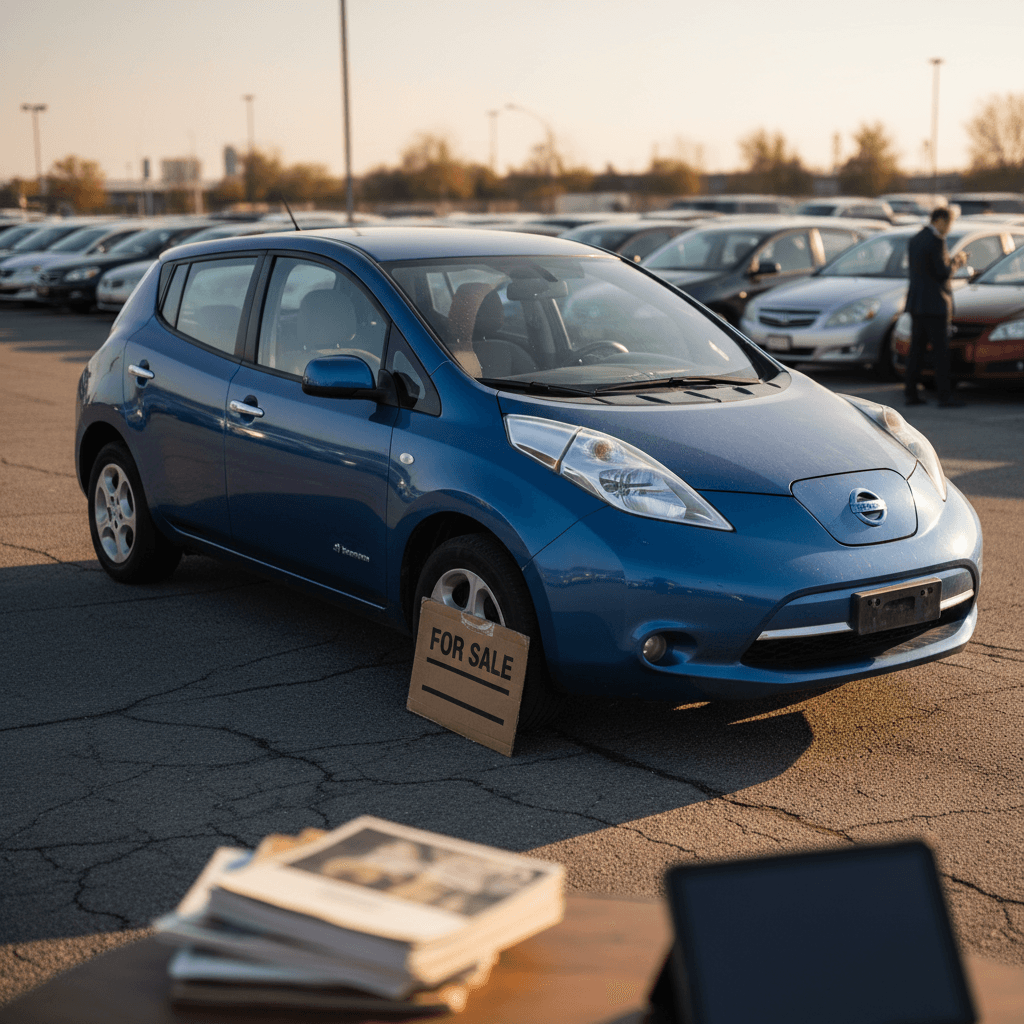
Short answer: yes, but mostly for older, shorter‑range EVs. Listings from major used‑car sites regularly show sub‑$10,000 prices for cars like the 2013–2017 Nissan Leaf, 2014–2016 BMW i3, Chevrolet Spark EV, Fiat 500e, Ford Focus Electric, and Volkswagen e‑Golf. In some cases, high‑mileage Chevrolet Bolt EVs and Kia Soul EVs also dip under $10k in certain regions.
Snapshot of the sub-$10k used EV market (2025)
So there are definitely electric cars under $10k out there. The real question is whether a given car’s remaining battery life, charging standard, and overall condition fit your use case. That’s where a structured approach, and objective battery data, matters more than chasing the absolute lowest sticker price.
Best electric cars under $10,000 right now
In this price bracket, you’re primarily shopping 2011–2019 compact hatchbacks and city cars. Here are the models you’re most likely to see under $10k in the U.S. and how they stack up for daily use.
Common sub-$10k used EVs and what to expect
Typical experiences, not guarantees, actual prices and ranges vary widely based on mileage, climate history, and battery health.
| Model | Typical sub-$10k years | Original EPA range | Realistic range today* | Fast charging | Good for |
|---|---|---|---|---|---|
| Nissan Leaf | 2011–2017 | 73–107 mi | 45–80 mi | CHAdeMO | Short commutes, in‑town errands |
| Fiat 500e | 2013–2019 | 84 mi | 55–75 mi | None (AC only) | City driving, second car |
| Chevrolet Spark EV | 2014–2016 | 82 mi | 55–75 mi | CCS (select years) | Urban driving, short hops |
| BMW i3 / i3 REx | 2014–2017 | 81–114 mi (EV) | 60–90 mi (EV) | CCS | Style‑conscious city drivers, light commuting |
| Volkswagen e‑Golf | 2015–2016 | 83–83 mi | 55–75 mi | CCS | Golf‑like feel, predictable hatchback practicality |
| Ford Focus Electric | 2012–2018 | 76–115 mi | 55–85 mi | CCS (later years) | Commuters who like a conventional car feel |
Focus less on the original EPA range and more on the battery’s current, measured capacity.
About the range estimates
Quick pros & cons of popular sub-$10k EVs
Use these as starting points, not one‑size‑fits‑all verdicts.
Nissan Leaf
Pros: Plentiful, very cheap, simple to drive, low running costs. Lots of parts and community knowledge.
Cons: Early air‑cooled batteries degrade faster, CHAdeMO fast‑charging is fading from new infrastructure, range can be limited.
Fiat 500e
Pros: Fun and torquey, stylish, perfect for dense cities, often very affordable.
Cons: No DC fast charging, small back seat and cargo area, range limits it to local use.
BMW i3
Pros: Distinctive design, upscale interior, nimble RWD handling, some have DC fast charging.
Cons: Costly specialized parts, unusual doors, range still modest; REx adds complexity and maintenance.
Spark EV & e-Golf
Pros: Drive a lot like conventional small cars, good torque, CCS fast‑charging on many examples.
Cons: Limited availability in some regions, modest range, some parts are model‑specific.
Ford Focus Electric
Pros: Feels just like a regular Focus, easy transition from gas, decent later‑year range.
Cons: Smaller trunk due to battery, earlier cars lack fast charging, availability can be spotty.
Regional wild cards
Examples: Kia Soul EV, Hyundai Ioniq Electric, early Bolt EVs.
These sometimes dip near $10k in specific markets, but you’ll see fewer of them than the core six models above.
What you give up at this price point
Under $10,000, you’re not getting a 300‑mile crossover with cutting‑edge driver‑assist tech. You’re buying an older appliance‑grade EV that trades range and refinement for low cost. That can be a perfectly rational choice, as long as you’re clear about the trade‑offs.
- Shorter range: Most sub‑$10k EVs realistically offer 50–90 miles per charge, depending on battery health and weather.
- Older charging standards: Many use CHAdeMO fast charging or have no DC fast charging at all, limiting road‑trip options.
- Limited safety & ADAS tech: Expect basic airbags and ABS, but not the latest lane‑keeping or adaptive cruise systems.
- More wear on everything: Tires, suspension, interior plastics, and infotainment tech will all feel a generation old.
- Potentially expensive battery issues: The rest of the car might be cheap; high‑voltage repairs are not.
Think of it as an appliance, not a forever car
Battery health: the make-or-break factor
With a used gas car, you can get away with a quick test drive and a mechanic’s inspection. With an old EV, battery health is the entire ballgame. A 10‑year‑old Nissan Leaf with a strong battery and 70–80 miles of real range is a useful tool; the same car with a badly degraded pack that only does 35–40 miles may be a liability.
How EV batteries age
- Cycling: Every charge and discharge slightly wears the pack.
- Heat: High temperatures accelerate degradation, especially in air‑cooled packs like early Leafs.
- Time: Even lightly‑driven packs lose capacity slowly every year.
- Fast charging: Frequent DC fast charging can add extra stress.
By years 8–12, the gap between a well‑cared‑for pack and a neglected one can easily be tens of miles of range.
Why traditional inspections fall short
- Most shops can’t read detailed battery health metrics or cell‑level data.
- A quick test drive tells you almost nothing about long‑term capacity.
- Dashboard “bars” or simplistic range estimates are rough indicators at best.
- Battery replacement often costs as much as the whole car in this price bracket.
This is why Recharged builds every purchase around a Recharged Score battery health report, you see real, measured capacity and projected range before you commit.
The nightmare scenario
How to shop smart for a sub-$10k EV
Done right, buying an electric car under $10k can slash your running costs and nearly eliminate fuel and maintenance headaches. Done wrong, it can lock you into a car you don’t trust beyond your neighborhood. Here’s how to tilt the odds in your favor.
Step-by-step playbook for buying a cheap used EV
1. Define your real daily range needs
Log your typical weekday driving and your longest regular trip. If you rarely drive more than 30–40 miles in a day, a 70‑mile EV can work. If you routinely do 80–100 miles, you’re probably better off raising your budget.
2. Decide where you’ll charge
Do you have off‑street parking and a regular outlet? A Level 1 (120V) plug works for very short daily use, but most owners appreciate a 240V Level 2 setup. Make sure your home situation supports the car you’re considering.
3. Prioritize battery reports over cosmetic condition
Scratches and faded plastics are cheap problems. A weak battery isn’t. Ask for recent battery health data. With Recharged listings, the Recharged Score Report gives you a verified snapshot of usable capacity and projected range.
4. Check charging standard and networks near you
Search your area for CHAdeMO, CCS, and Tesla NACS (for EVs with adapters). If the car only supports a fading standard and you need public charging, factor that into your decision, or treat the car strictly as a home‑charged commuter.
5. Avoid unknown or salvage EVs unless you’re expert
Flood titles, high‑voltage repairs, and DIY battery tinkering can all introduce hidden risks. Unless you’re deeply experienced, stick to clean‑title cars with transparent service histories and professional inspections.
6. Use total cost, not just price, to compare
Compare $8,500 for a car with a strong battery against $6,000 for a tired pack plus a possible future replacement. In many cases, the “more expensive” car is dramatically cheaper over the next few years.
How Recharged fits in
Ready to find your next EV?
Browse VehiclesFinancing & total cost of ownership
One advantage of electric cars under $10k is that they can dramatically lower your monthly operating cost. Electricity is usually cheaper than gasoline on a per‑mile basis, and EVs have fewer moving parts to service. But because these cars are older, you need to think about cash flow, not just sticker price.
Cash vs. financing
- Paying cash: Simplest option, but ties up money you might need elsewhere.
- Financing: Spreads the cost across predictable monthly payments; helpful if you’re also budgeting for a home charger.
- Credit health: A small, well‑managed auto loan can help build credit, especially if you’re moving from an older paid‑off car.
Through Recharged, you can pre‑qualify for EV financing online with no impact on your credit score, then compare payment options before you commit to a specific car.
Operating costs to consider
- Electricity: Estimate your cost per kWh and multiply by the car’s typical kWh/100 miles.
- Home charging: A basic Level 2 setup can often be installed for less than a year of gasoline spend for many drivers.
- Maintenance: No oil changes, fewer filters; tires and brake fluid still matter.
- Insurance: Often similar to a comparable gas compact, but get quotes, some older EVs can be pricey to repair after a crash.
When you add it up, many owners find that a used EV’s all‑in monthly cost compares favorably to keeping an aging, thirsty gas car on the road.
When you should spend more than $10k
The “$10k” line is a useful psychological anchor, but it’s not a magic threshold. In many real‑world scenarios, spending a bit more is actually the cheaper decision over the time you’ll own the car.
Situations where $12k–$18k might be smarter than $8k
Look at use case first, then budget.
You regularly drive 70–100 miles/day
You rely heavily on public fast charging
You need a one‑car solution
You’re risk‑averse
You qualify for good financing
You plan to keep it 5+ years
The Recharged angle
FAQ: Electric cars under $10k
Frequently asked questions about sub-$10k EVs
Electric cars under $10k aren’t for everyone, but for the right driver, they can be an incredibly cheap, low‑maintenance way to cover daily miles while cutting fuel bills to the bone. The key is to treat range and battery health as your primary shopping criteria, then layer in price, features, and styling. If you’d like a curated set of options with verified battery diagnostics, fair pricing, and EV‑savvy guidance, explore used EVs at Recharged and let the Recharged Score do the heavy lifting for you.