If you’re a senior driver, or helping a parent choose their next car, electric cars for seniors can look both exciting and intimidating. The good news is that today’s EVs can be quieter, easier to drive, and less work to maintain than many gas cars. The key is picking the right model and features so the car fits an older driver’s comfort, safety, and budget needs.
Who this guide is for
Why electric cars can work well for seniors
Less noise, less stress
Electric motors are nearly silent and deliver power smoothly. There’s no gear hunting, engine vibration, or waiting for the car to "warm up." For many seniors, that means less fatigue and more confidence, especially in stop‑and‑go traffic.
Simpler to operate and maintain
EVs have no oil changes, fewer moving parts, and far fewer routine services. You shift into drive, press the pedal, and go. Regenerative braking also means less brake wear and smoother deceleration, which can be easier on reflexes and joints.
What older drivers say about EVs
Reality check on hesitations
Key electric car features seniors should prioritize
Instead of chasing the longest range or flashiest tech, seniors are better served by comfort, visibility, and intuitive controls. Here are the features that should be at the top of your list.
Senior-friendly EV features that matter most
Focus here before you worry about 0–60 times or giant touchscreens.
Easy entry & seating height
Look for a small SUV or crossover with a hip point that lets you slide in and out without "climbing up" or "dropping down." For many seniors, that sweet spot is a compact SUV rather than a low sedan or tall truck.
Excellent visibility
Big windows, thin pillars, large mirrors, and a clear rear view reduce neck strain and blind‑spot worries. A rearview camera is a must; a surround‑view camera is even better in parking lots.
Light, predictable controls
Choose a car with light steering effort, smooth braking, and a normal shifter layout. Overly sensitive or "grabby" controls can be tiring for older hands and feet.
Active safety tech
Features like automatic emergency braking, blind‑spot monitoring, lane‑keeping assist, and adaptive cruise control can backstop slower reaction times, as long as they’re tuned gently, not aggressively.
Range that matches your life
If you mostly run errands and visit friends nearby, you may only need 150–220 miles of range. Aim for more if you routinely drive between cities or have limited charging access.
Simple infotainment & buttons
Older eyes and hands benefit from physical knobs and dedicated buttons for volume, temperature, and defrost. Huge touchscreens with deep menus can be frustrating if not laid out clearly.
Bring your glasses & hearing aids
Body style & comfort: getting in, out, and staying relaxed
For many seniors, the biggest difference between a good car and a bad one isn’t horsepower, it’s how the car feels to live with. Pay close attention to ride comfort, seats, and how you physically move in and out of the vehicle.
Crossovers vs. sedans
- Small crossovers (like the Hyundai Ioniq 5 or Nissan Ariya) usually offer higher seating and easier entry.
- Sedans (like the Hyundai Ioniq 6 or BMW i5) ride lower but may be easier to see over the hood and park in tight spaces.
- If you have hip, knee, or back issues, favor vehicles where your hips stay roughly level with the seat as you get in.
Comfort details to evaluate
- Seat firmness and adjustability, including lumbar support.
- Height of the door sill and any "step up" into the cabin.
- Door weight and how wide doors open in small parking spots.
- Ride quality over potholes and expansion joints on your normal roads.
Don’t rush this, sit in the car for 15–20 minutes as if you were on a real drive.
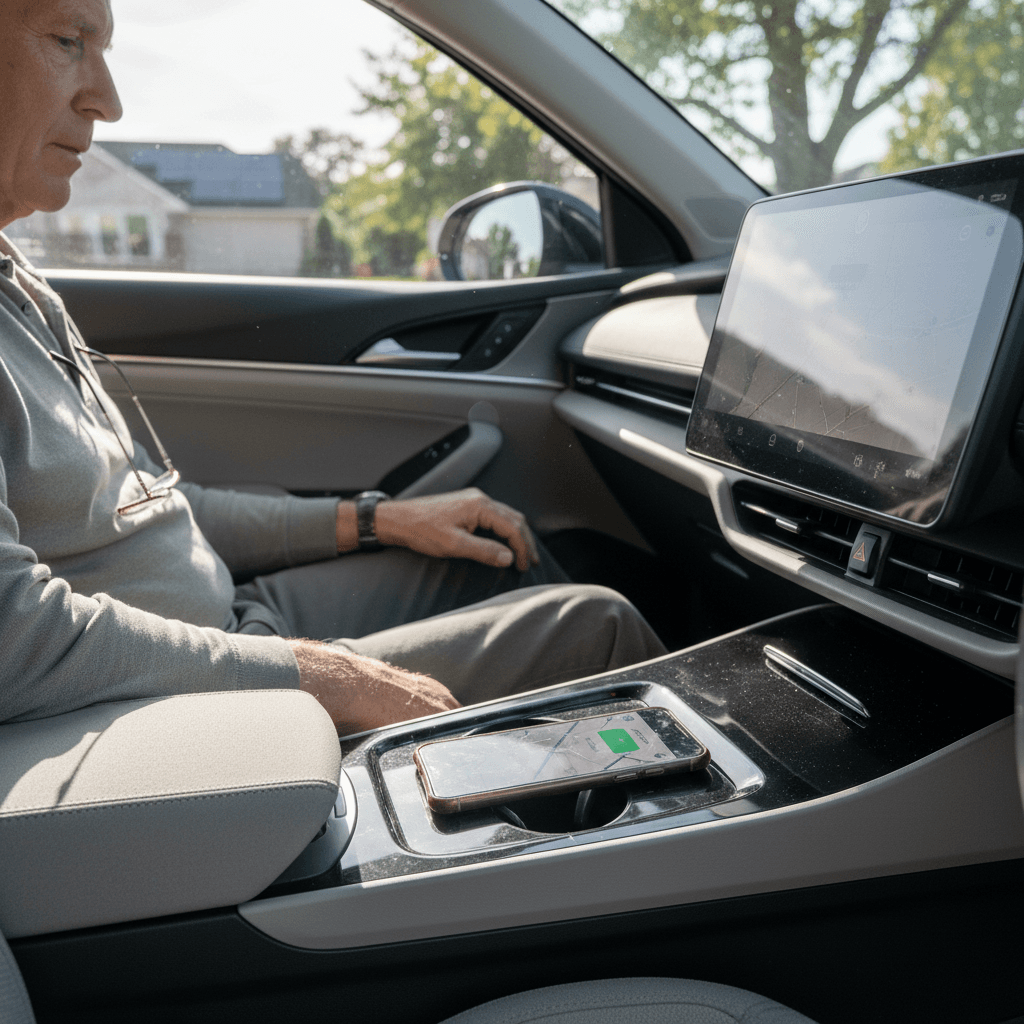
Senior-friendly electric cars to consider in 2025
No single EV is “the best” for all seniors. Your height, mobility, budget, and where you drive all matter. But some models consistently stand out for comfort, safety, and ease of use for older drivers.
Electric cars seniors often like
A starting shortlist, always test‑drive to confirm what feels right for your body and driving style.
| Model | Type | Why it works for seniors | Est. Range | Approx. Base Price |
|---|---|---|---|---|
| Hyundai Ioniq 5 | Compact crossover | Comfortable cabin, great visibility, lots of safety tech, smooth ride. | 245–303 mi | $44K |
| Hyundai Ioniq 6 | Midsize sedan | Easy, quiet highway cruiser with excellent range and clear controls. | 270–340+ mi | $44K |
| Nissan Ariya | Compact crossover | Spacious, gentle ride, accessible seating height, intuitive tech. | 216–289 mi | $41K |
| Audi Q4 e-tron | Compact luxury SUV | High seating position, refined ride, clear view out, upscale comfort. | 250–265 mi | $50K |
| Nissan Leaf (current gen) | Compact hatchback | Simple, affordable, easy to park, good for short‑range city/suburban use. | 150–212 mi | $28K |
| Chevrolet Bolt EUV (used) | Small crossover | Excellent value used, upright seating, easy visibility and controls. | 247 mi | Used from mid‑$20Ks |
Approximate prices are for new 2025 model‑year vehicles before incentives; used examples can be significantly less.
About range numbers
As an older driver, the right EV is the one that feels calm and predictable every single day, not the one with the flashiest spec sheet.
Are used electric cars a good choice for seniors?
For many seniors, a used EV can be the smartest route. You avoid the steepest part of new‑car depreciation, and many mainstream models have proven track records. The key question is battery health, because the battery is the single most expensive component in the car.
Used EVs for seniors: pros & cons
Understand the trade‑offs before you shop.
Why used EVs can shine for seniors
- Lower purchase price makes it easier to stay within a retirement budget.
- Many seniors drive fewer miles per year, so a slightly reduced range may still be more than enough.
- Models like the Chevrolet Bolt EV/EUV and older Nissan Leaf are widely available and easy to park.
- Insurance and registration costs can be lower than for a brand‑new EV.
Risks to manage carefully
- Unknown battery health can turn a bargain into a headache.
- Some early EVs had limited fast‑charging speed or lacked modern safety tech.
- Out‑of‑warranty repairs can be expensive if you pick the wrong vehicle.
- Not all local mechanics are comfortable servicing EVs yet.
How Recharged de‑risks used EVs
Ready to find your next EV?
Browse VehiclesTest-drive checklist for older drivers
A quick spin around the block isn’t enough, especially if you’re an older driver who plans to keep the car for many years. Use this checklist to make sure the EV you’re considering truly fits your body and your lifestyle.
Senior-focused EV test-drive checklist
1. Practice getting in and out repeatedly
Open the door fully and partially (as in a tight parking space). Is stepping in and out comfortable? Do you have to duck your head or twist your knees? Repeat it three or four times to mimic real errands.
2. Adjust the seat and mirrors slowly
Take time to set seat height, lumbar support, and steering wheel position. Can you find a position that supports your back and lets you see the hood and road edges clearly?
3. Evaluate visibility and cameras
Check blind spots, rear window size, and camera clarity. Try parking with the rearview camera and, if available, the 360° view. Make sure the screen is bright and easy to see in daylight.
4. Test low-speed smoothness
Drive through a parking lot and neighborhood streets. Are throttle and brakes predictable, or jerky? EVs with well‑tuned one‑pedal driving can feel very natural once you’re used to them.
5. Try simple driver-assist features
On a safe, familiar road, test adaptive cruise control and lane‑keeping assist. Do the alerts feel like helpful nudges, or do they startle or annoy you? You want calm support, not constant beeping.
6. Judge noise and ride comfort
On rough pavement and at highway speeds, listen for wind and road noise and pay attention to how bumps feel. A comfortable, quiet EV is less tiring on long days out.
Bring a co-pilot
Charging made simple: what seniors really need
Charging is where many seniors get nervous, and it doesn’t have to be complicated. Most retired or semi‑retired drivers aren’t commuting 60 miles a day, so the charging solution can be surprisingly simple.
Home charging basics
- Level 1 (120V): Using a normal household outlet, you add roughly 3–5 miles of range per hour. Enough for very light use.
- Level 2 (240V): A dedicated circuit (similar to a dryer outlet) adds 20–40+ miles per hour, ideal if you own a home and drive regularly.
- Many seniors find that plugging in overnight two or three times a week keeps the battery comfortably topped up.
Public charging as a backup
- DC fast chargers can take many EVs from 10–80% in 25–45 minutes, useful on road trips.
- Apps from networks like Electrify America, ChargePoint, or Tesla (for compatible models) show station locations and availability.
- If you rarely drive long distances, think of fast charging as an occasional tool, not something you depend on every week.
Check home electrical capacity first
Budget, incentives, and financing in retirement
Electric cars still tend to cost more up front than comparable gas models, but smart shopping can narrow the gap, and their lower running costs can help month to month. As a senior, your priorities are typically predictable payments and avoiding surprises.
Making the money side work
How to fit an EV into a retirement budget.
Understand total cost
Consider the monthly payment or cash price plus charging costs, insurance, and maintenance. Many EV owners spend less per mile on energy and routine service than in a comparable gas car.
Look for incentives & tax credits
Federal and state EV incentives change frequently. Check current rules for clean‑vehicle tax credits, state rebates, and utility discounts on home charging equipment before you commit.
Choose flexible financing
If you’re on a fixed income, flexible terms and competitive rates matter. Some retirees prefer a modest monthly payment and preserving savings; others pay cash to avoid debt entirely.
Used EV + strong battery report
How Recharged helps seniors shop used EVs with confidence
If you’ve mostly bought gas cars from traditional dealers, the idea of shopping for a used EV online can feel like a big leap. Recharged is built to make that process simpler and more transparent, especially for older buyers who value clarity and support.
- Every vehicle includes a Recharged Score Report with verified battery health, so you’re not guessing about range or longevity.
- Pricing is benchmarked against fair‑market data, so you can quickly see whether a car is a good value without haggling.
- EV‑specialist advisors can walk you through model differences, charging options, and financing over the phone or online, ideal if you’d rather ask questions than click buttons.
- Trade‑in and instant offer options make it easy to move out of your current car, even if it’s a gas model.
- Nationwide delivery and a Richmond, VA Experience Center let you choose between a fully digital purchase or an in‑person visit.
Designed for clarity, not pressure
FAQs: electric cars for seniors
Frequently asked questions about electric cars for seniors
Electric cars can be an excellent fit for seniors when you focus less on hype and more on day‑to‑day comfort, safety, and simplicity. Start with an honest look at how far you actually drive, how you’ll charge, and which body styles are easiest for you to live with. From there, test‑drive a handful of senior‑friendly EVs and insist on clear information about battery health if you’re shopping used. Done right, your next car can be quieter, easier to own, and a lot less stressful, leaving you free to enjoy the drives that really matter.