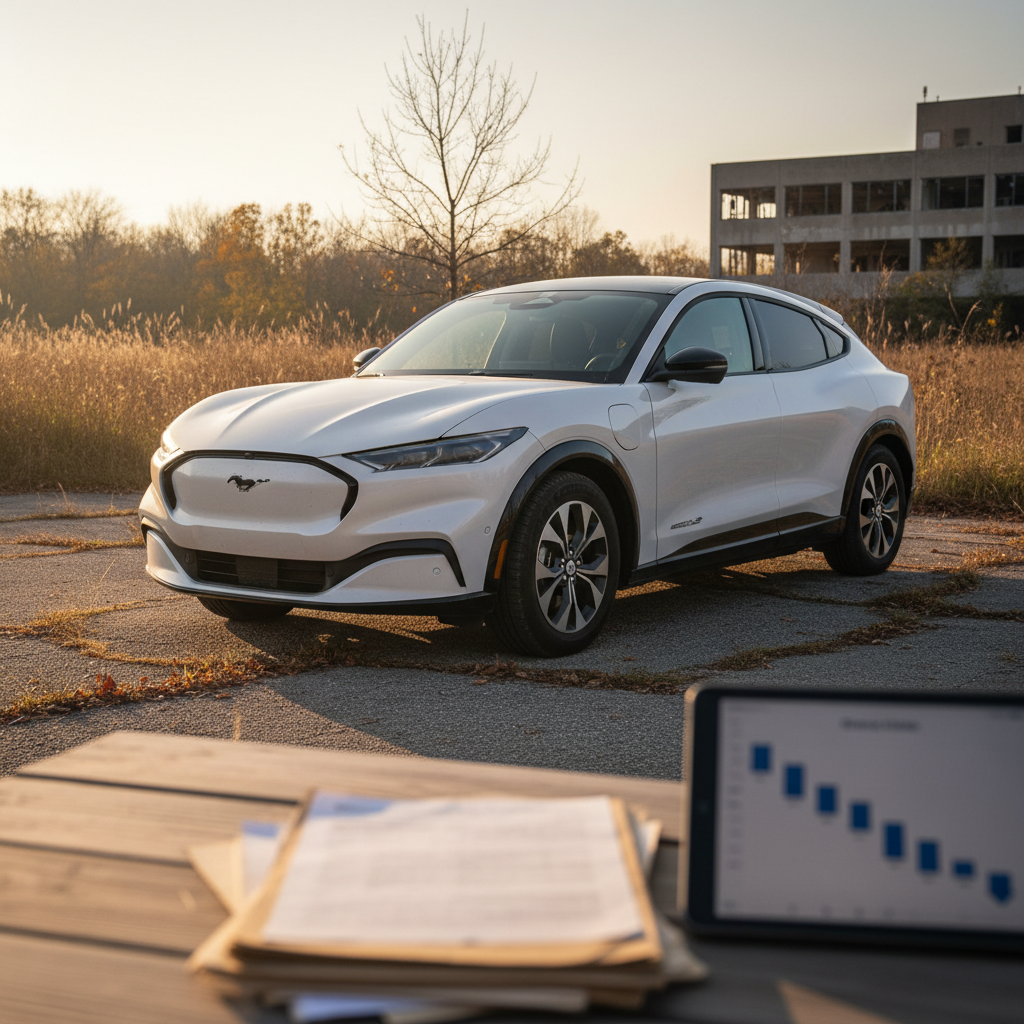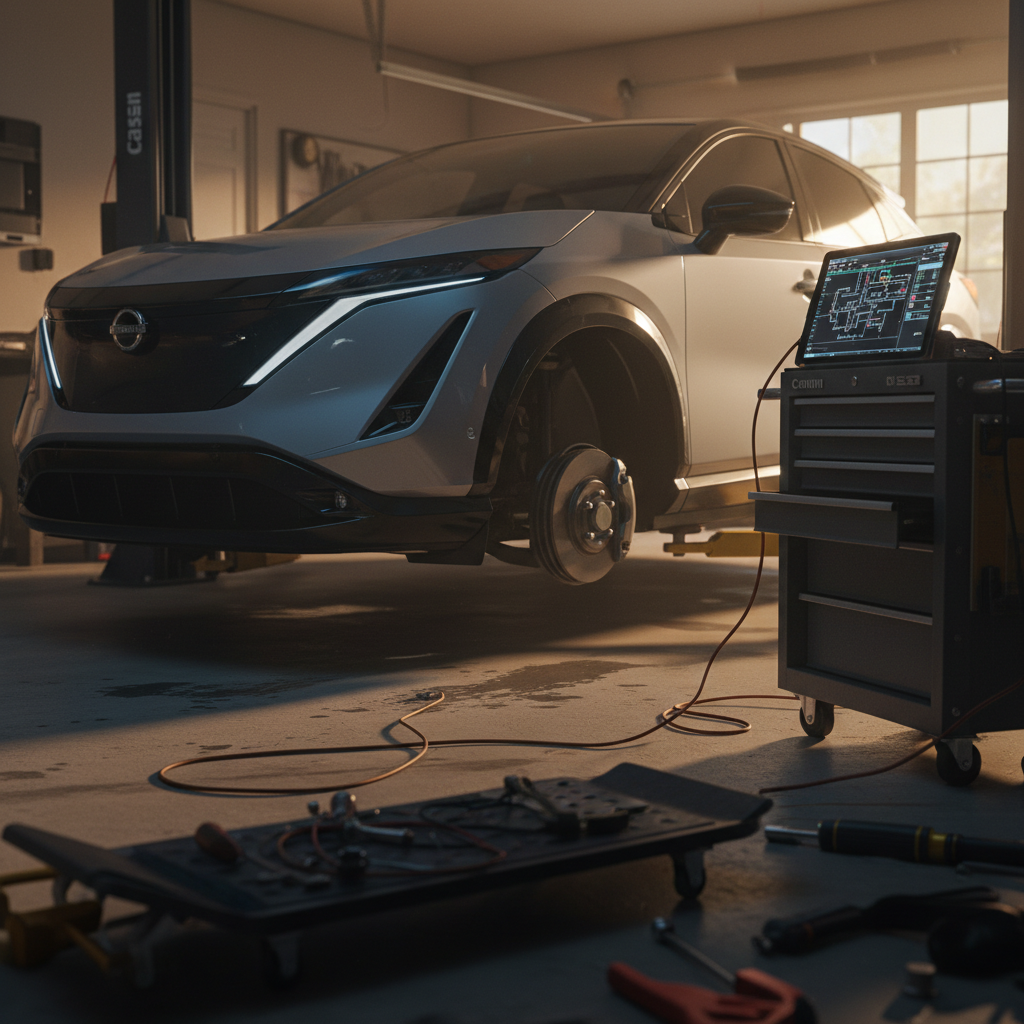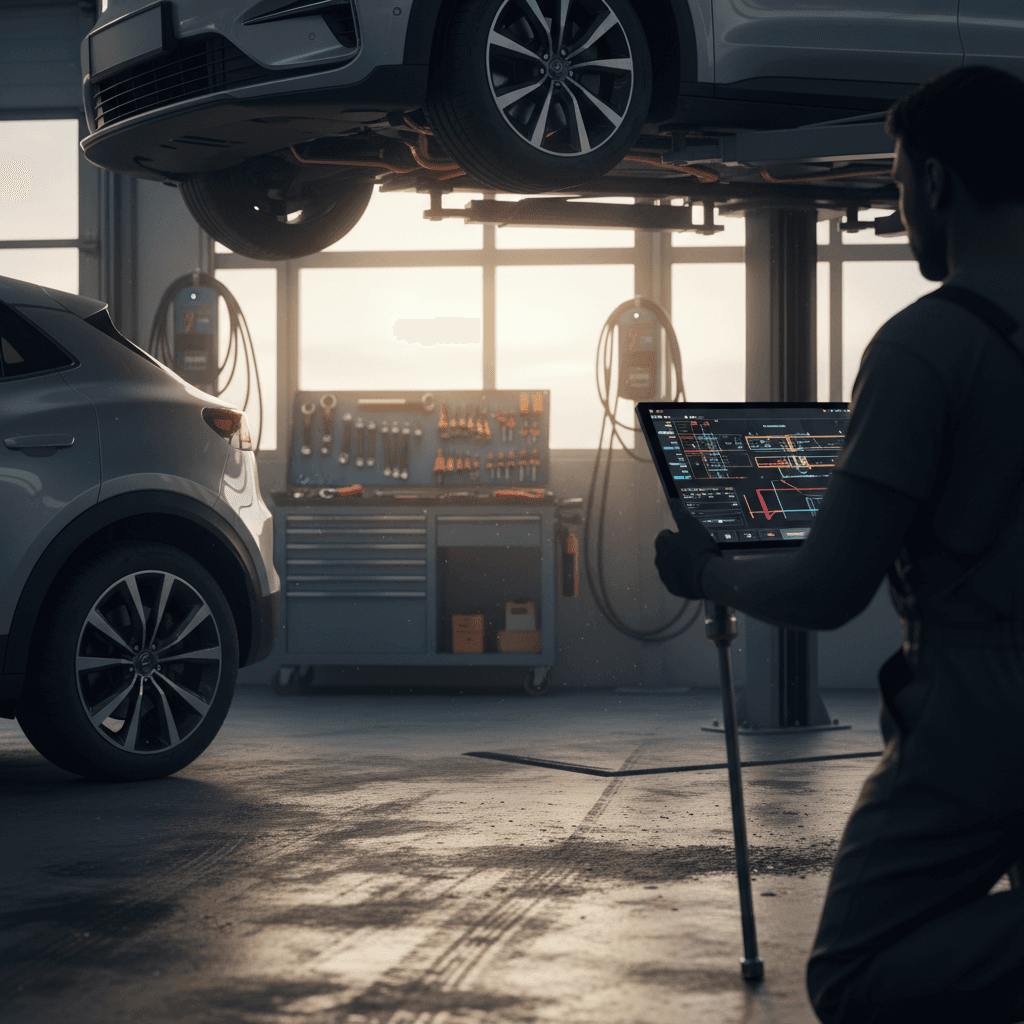
Electric car maintenance looks very different from what you’re used to with a gas vehicle. There’s no engine oil to change and no exhaust system to rust out, yet you still have tires, brakes, coolant, and a big high‑voltage battery to think about. Understanding how electric car maintenance actually works is the key to keeping costs low and your EV on the road for years.
Quick takeaway
How electric car maintenance differs from gas cars
What electric cars don’t need
- No oil changes or oil filters
- No spark plugs, ignition coils, or timing belts
- No multi‑gear automatic transmission service in most models
- No exhaust, mufflers, or catalytic converter repairs
What they still (or newly) need
- Tires and brakes, often heavier wear from instant torque
- Cabin air filters and wiper blades
- Battery and thermal system checks
- Software updates and occasional sensor calibration
Because an EV has far fewer moving parts than a comparable gas car, there’s simply less to service. Industry analyses in 2024–2025 consistently show EVs cutting scheduled maintenance costs by roughly 30–50% over the first five years of ownership. At the same time, newer EVs can be more complex electronically, which is why choosing the right service provider matters, especially once the car is out of warranty.
Think in miles, not months
What actually needs maintenance on an electric car
The main electric car systems you’ll service
No oil changes, but there’s still a short list to stay on top of.
High‑voltage battery & cooling
Mostly inspection and monitoring. Coolant changes are typically needed every 5–10 years, depending on the manufacturer. Technicians will also check for leaks, pump operation, and software‑reported battery temps.
12‑volt battery
Your EV still has a traditional 12‑volt battery running electronics, locks, and computers. Expect to replace it every 3–6 years, similar to a gas car, but watch closely in hot or very cold climates.
Brakes & regenerative system
Regenerative braking dramatically cuts pad and rotor wear, so many EVs go 70,000+ miles before a brake job. You still need periodic inspections and brake fluid changes, usually around every 3–5 years.
Tires & alignment
EVs are heavy and make full torque from a standstill, so tires often wear faster than you expect. Plan on rotations every 6,000–7,500 miles and keep an eye on alignment to avoid uneven wear.
Cabin filters & HVAC
The cabin air filter usually needs replacement every 1–2 years to keep HVAC efficient and odors under control. On heat‑pump systems, technicians will also look for refrigerant leaks and verify proper operation.
Software & driver‑assist systems
Over‑the‑air updates handle a lot, but sensors, cameras, and radar still need occasional cleaning or calibration after collisions, glass replacement, or suspension work.
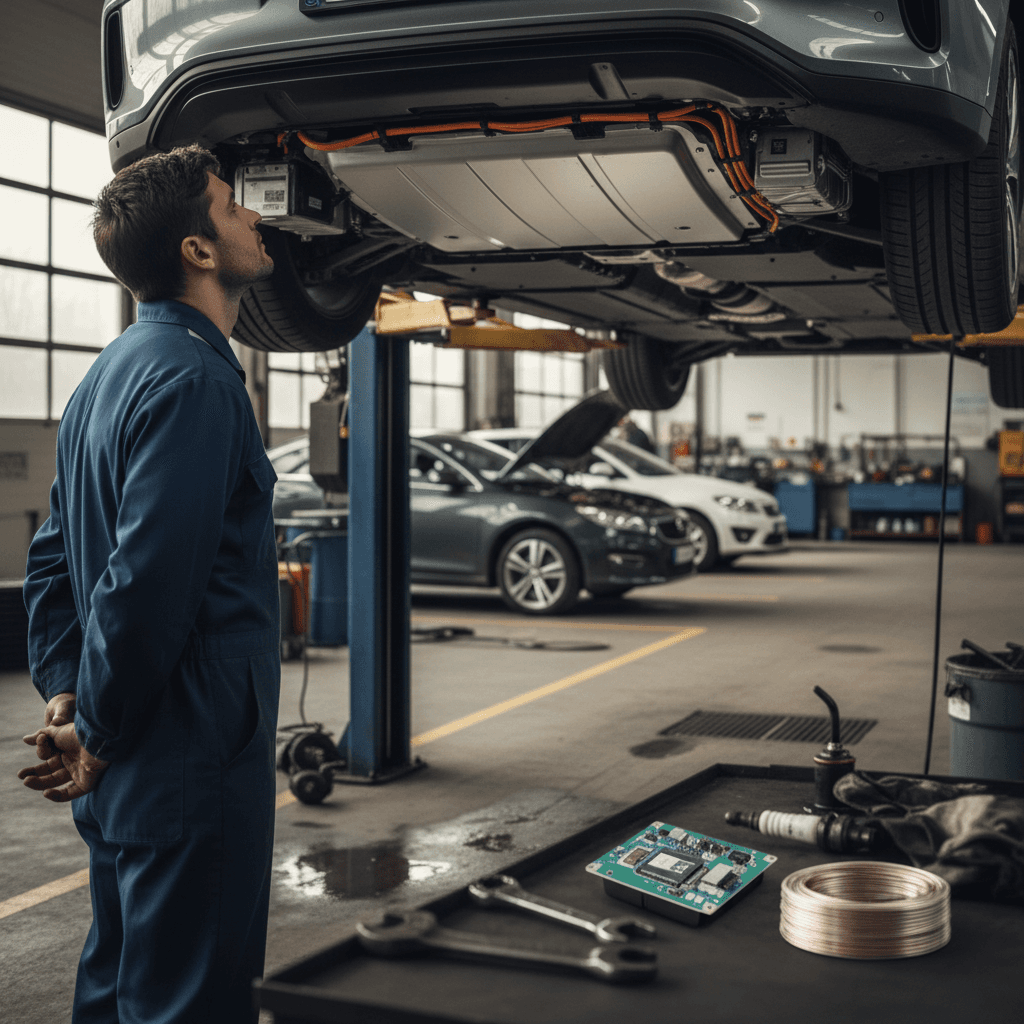
Your owner’s manual will outline the manufacturer’s schedule, but in practice, the bulk of your routine visits will be for tire rotations, inspections, and simple wear items. Bigger jobs, like coolant service for the battery, or replacement of a drive unit, are rare events for most drivers and often covered by long powertrain warranties in the early years.
Electric car maintenance costs vs gas cars
What you’re likely to spend on maintenance
Electric vs gas maintenance: a simplified comparison
Approximate averages for a mid‑size vehicle driven 12,000 miles per year in the U.S.
| Item | Typical EV (per year) | Typical gas car (per year) |
|---|---|---|
| Routine oil service | $0 | $100–$150 |
| Engine & exhaust repairs | $0 (no engine/exhaust) | $300–$400 |
| Brake service | $80–$120 (inspection, long pad life) | $200–$300 |
| Tires & rotation | $200–$350 | $200–$300 |
| Fluids & filters | $50–$150 | $150–$250 |
| Estimated total | $300–$500 | $800–$1,200 |
Real‑world numbers vary by model, driving style, and local labor rates, but the pattern, a simpler maintenance schedule for EVs, is consistent across brands.
Don’t ignore repair costs
EV battery health and long-term care
The traction battery is the most valuable single component in an electric car, and naturally it’s where most shoppers focus their anxiety. The good news: modern EV packs are aging more gracefully than early skeptics predicted. Many studies now show average capacity loss in the low single‑digits over several years of typical driving, often well under 2% per year for mainstream models. The even better news: you have far more control over battery health than you might think.
- Avoid living at 100% charge. Daily charging to 70–90% is easier on the battery than a full pack. Save 100% charges for road trips.
- Don’t run to 0% on purpose. Regularly letting the car sit near empty or full stresses the pack.
- Limit frequent DC fast charging. Fast charging on road trips is fine, but relying on it daily, especially in hot weather, can accelerate degradation.
- Watch temperature extremes. Park in the shade when possible, and let the vehicle manage its own pre‑conditioning before DC fast charging.
- Keep software up to date. Automakers routinely refine battery management strategies via over‑the‑air updates.
Battery warranties are long for a reason
“Battery costs keep falling and longevity keeps improving. For many EVs, the pack will comfortably outlast the first owner’s loan term.”
Maintenance tips for high‑mile and used EVs
The fastest‑growing part of the electric market right now is used EVs, where prices fell sharply in 2024 and 2025 and made electric cars genuinely affordable for more buyers. That shift makes maintenance history, and current battery health, more important than ever. A 5‑year‑old EV with 70,000 miles can be a fantastic buy if it’s been charged and serviced correctly, or a headache if it hasn’t.
Checklist: evaluating maintenance on a used EV
1. Review service records
Look for documentation of tire rotations, brake inspections, coolant checks, and any warranty repairs. Gaps don’t automatically mean trouble, but a consistent record is a strong positive sign.
2. Ask about charging habits
Frequent DC fast charging, especially in hot climates, can accelerate battery wear. Ideally, the prior owner charged mostly at home to a moderate state of charge.
3. Verify battery warranty coverage
Check the in‑service date and mileage to see how much factory battery coverage remains. Some brands offer separate capacity retention guarantees (for example, coverage if the pack drops below a certain percentage).
4. Get an objective battery health report
A proper battery health assessment goes beyond the dash estimate. At Recharged, every vehicle comes with a <strong>Recharged Score Report</strong> that includes verified battery diagnostics so you can see real usable capacity, not just guesses.
5. Inspect tires, brakes, and suspension
Just like any used car, worn tires or uneven brake wear can indicate hard use, alignment issues, or lack of rotation. Those are negotiable items, or reasons to walk away on a private sale.
6. Test all software and driver‑assist features
Glitches in infotainment, camera systems, or driver assistance can hint at bigger electronic issues. Confirm that key features work as intended and that the car is on the latest software version.
Where Recharged fits in
DIY vs dealer: where to service an EV
When a dealer or EV specialist makes sense
- High‑voltage system work: Anything involving the main battery, orange‑cable wiring, or drive units should be left to trained technicians.
- Software faults and warning lights: EV‑specific scan tools and factory procedures are often required.
- Warranty and recall work: These repairs should go through an authorized dealer network.
What many owners handle themselves
- Tire pressure checks and seasonal wheel swaps
- Cabin air filter replacement (often a simple access panel)
- Wiper blades and washer fluid
- Routine cleaning of cameras and sensors
If you’re not comfortable doing DIY work, an independent shop familiar with EVs can handle these basics at competitive rates.
High‑voltage caution
Your annual electric car maintenance checklist
Once‑a‑year (or mileage‑based) EV maintenance items
1. Rotate and inspect tires
Every 6,000–7,500 miles, rotate tires front‑to‑rear and inspect for uneven wear. Ask for an alignment check if you see feathering, cupping, or inside‑edge wear.
2. Inspect brakes and suspension
Even if pads last a long time, calipers and parking brakes can seize when underused. A quick inspection catches rust or sticking components before they become expensive.
3. Test the 12‑volt battery
A weak 12‑volt battery can strand an EV just like a gas car, even if the main pack is full. Have it tested annually after year three and budget for replacement around the 4–6‑year mark.
4. Check coolant and HVAC performance
Have a shop familiar with your model confirm battery and inverter coolant levels and condition. Make sure the cabin heats and cools quickly, weak HVAC can signal refrigerant or heat‑pump issues.
5. Replace the cabin air filter
Swap this every 12–24 months, depending on your climate and how dusty your roads are. It’s an inexpensive way to keep HVAC efficient and interior air clean.
6. Review software and recalls
Confirm you’re on the latest software version and check for open recalls or service campaigns. Many manufacturers list these by VIN on their websites.
Common EV maintenance mistakes to avoid
- Ignoring tires because “EVs don’t need maintenance.” Rapid torque and higher curb weight can chew through tires surprisingly fast.
- Driving with warning lights on. EVs rely heavily on software and sensors; a persistent warning message deserves a proper diagnostic scan.
- Assuming any shop can service high‑voltage systems. Many independent shops are still ramping up EV training, ask about their EV experience before authorizing major work.
- Skipping brake service entirely. Regenerative braking reduces wear, but brake fluid still absorbs moisture and hardware can corrode if never inspected.
- Leaving the car parked for months at 0% or 100% state of charge. Long‑term storage at extremes is one of the fastest ways to stress a lithium‑ion pack.
Use the car’s own data
FAQ: Electric car maintenance questions, answered
Frequently asked questions about electric car maintenance
Bottom line: Should electric car maintenance worry you?
If you’re used to owning gas cars, the maintenance profile of an EV takes a mental reset. You’ll visit shops less often, skip whole categories of engine service, and rely more on software alerts than paper schedules. In exchange, you’ll want to be more disciplined about tire care, keep an eye on your 12‑volt battery, and treat the high‑voltage pack with a bit of respect.
For most drivers, that trade‑off is a win: simpler ownership, lower routine costs, and fewer surprises between now and the day you sell or trade in the car. And if you’re stepping into a used electric vehicle, buying from a seller that provides verified battery health, like the Recharged Score Report on every vehicle we list, turns EV maintenance from a worry into just another line item in a predictable ownership budget.