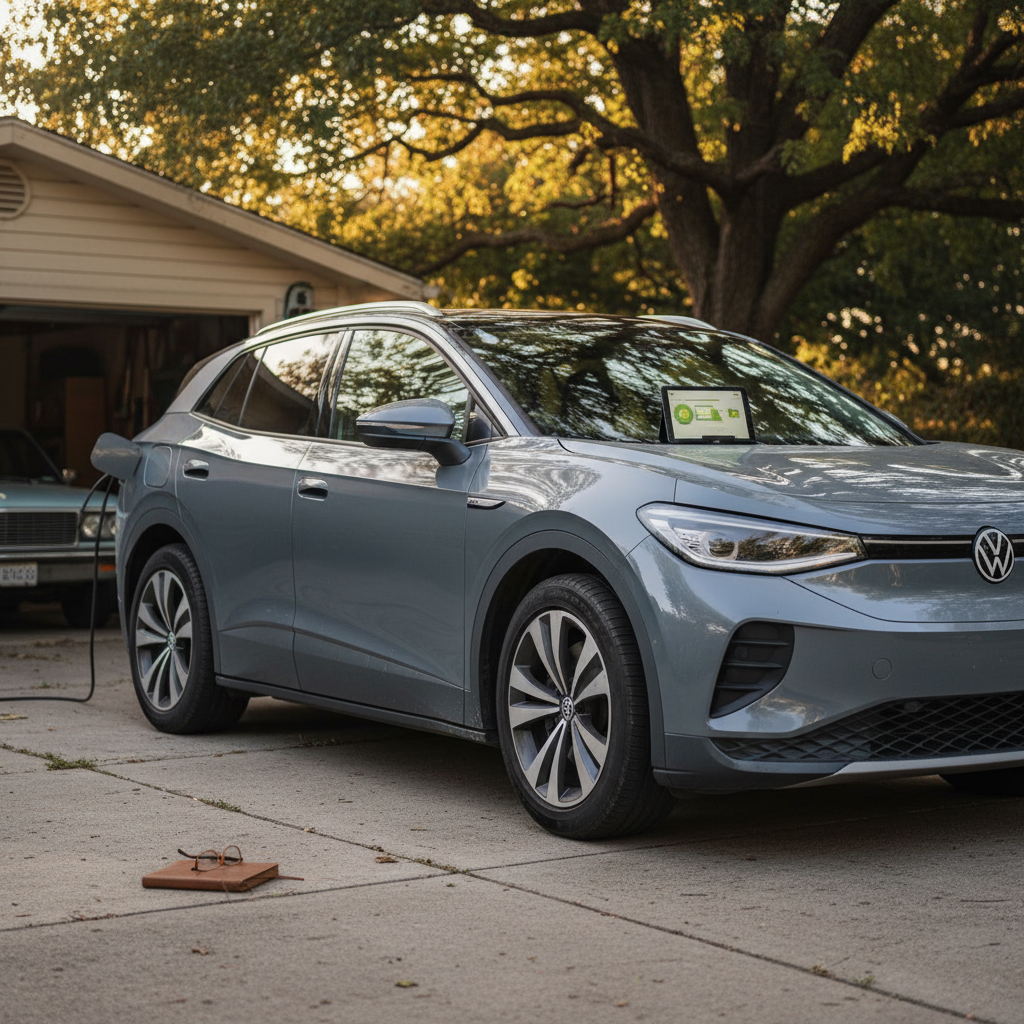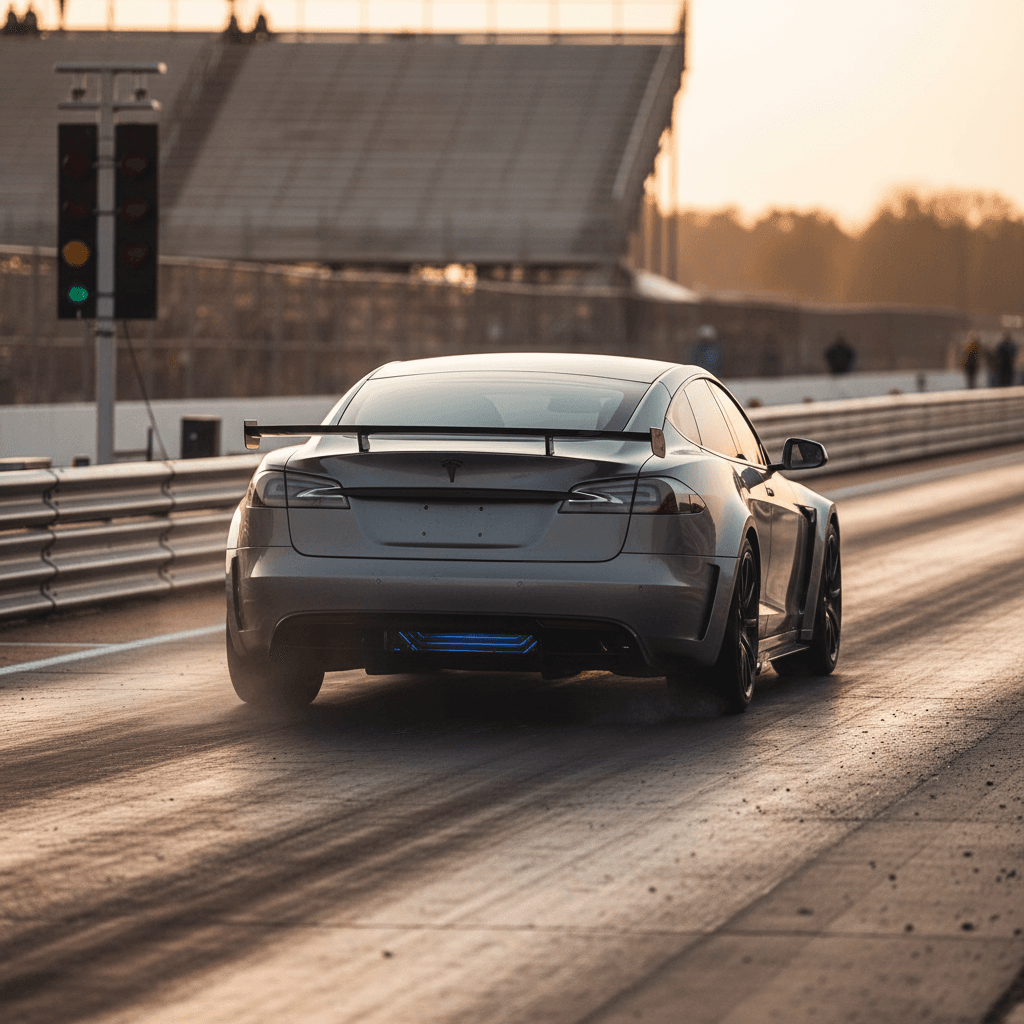
Electric cars have quietly become the kings and queens of the drag strip. From family crossovers running 12s to Lucid Air and Tesla Plaid sedans dipping into the 9s, the quarter-mile has turned into an EV playground. This electric car drag racing guide walks you from your first night at a local strip all the way to chasing your personal-best ET, safely, legally, and without cooking your battery.
EVs at the strip are nothing new
Why electric cars make great drag racers
How quick are modern electric drag cars?
On paper, an electric car is almost tailor-made for drag racing. You have **instant torque**, a single gear in most models, and software that handles launch, traction control, and power delivery. Instead of learning how to slip a clutch or build boost, you’re managing **battery temperature**, **state of charge (SoC)**, and **traction**.
- Instant peak torque makes launches brutally quick, even in stock daily drivers.
- No gear changes mean smooth, repeatable passes with fewer driver errors.
- Sophisticated traction and stability control help you focus on the tree, not wheelspin.
- Regenerative braking reduces wear on brakes between runs.
Good driver, great car, better numbers
Street to strip: what you need to run your EV
Here’s the good news: if your electric car is street legal and in good mechanical condition, you can probably run it at a local test-and-tune night with minimal changes. Tracks care about **safety and containment**, not whether you’re burning gasoline or electrons.
Minimum checklist before your first EV pass
Valid license, registration, and insurance
Tech inspectors want to know this is a real street car, not a science project. Bring your driver’s license, current registration, and proof of insurance.
Helmet that meets track rules
Most tracks require at least a Snell-rated helmet once you’re quicker than a certain ET (often 13.99 or faster). Call ahead or check the website so you don’t get turned away at the gate.
Proper footwear and clothing
Closed-toe shoes are mandatory. Some tracks may require long pants and a cotton shirt, especially if you’re running very quick ETs.
Charge plan to and from the track
Drag racing is short but intense. Make sure you arrive with a **high state of charge** and know where you’ll top up afterward, especially if the track is far from home.
Basic tools and charging adapters
A torque wrench for your wheels, tire pressure gauge, and any portable EVSE or adapters you might need if the track offers Level 2 charging onsite.
Call your track before you go
Safety first: EV drag racing rules and tech inspection
Your first stop at the strip will be **tech inspection**. For electric cars, officials focus on the same basics as gas cars, plus a few EV-specific checks. Sanctioning bodies like the NHRA have published safety guidelines for production EVs, and most tracks pattern their rules after those.
What inspectors look for on an electric car
If your daily driver is healthy, you’re already most of the way there
Chassis & safety
- No loose items in cabin or trunk.
- Seatbelts and airbags functional.
- No fluid leaks from cooling system or brakes.
High-voltage system
- Factory HV covers intact.
- No warning lights or HV fault messages.
- Charge port door closes securely.
Wheels & tires
- Tread depth safe and even.
- No visible damage or cords.
- Lug nuts properly torqued.
Respect high voltage
If your EV is heavily modified, coil-overs, aftermarket brakes, roll cage, you may be held to stricter safety requirements once you go below certain ET or trap-speed thresholds. The closer you get to 10-second and 9-second times, the more you’ll need to read the fine print in your track’s rulebook.
Prepping your electric car for the quarter-mile
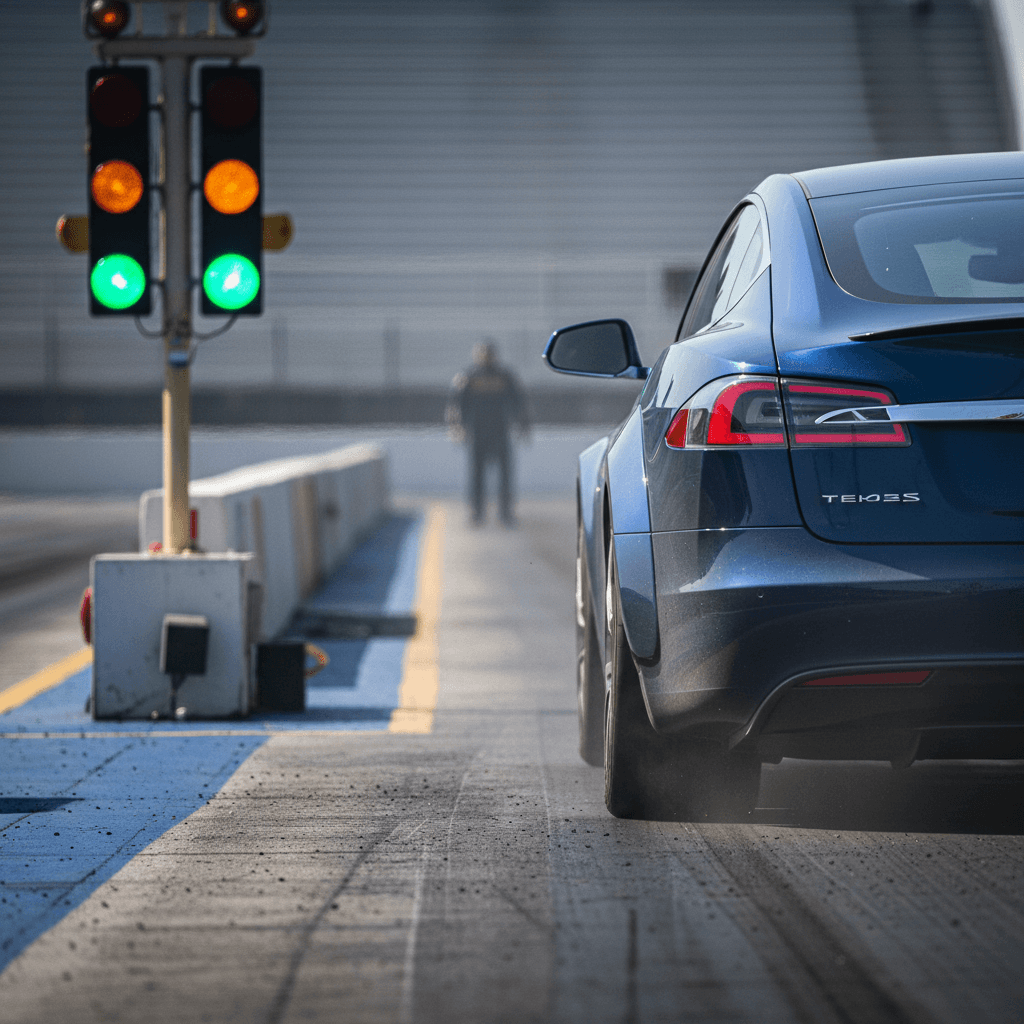
You don’t need a trailer, open exhaust, or a trunk full of tools to enjoy drag racing your EV. Focus on **light prep, consistency, and battery management**, and you’ll surprise a lot of people in the other lane.
- Arrive with your battery at 80–95% SoC. Many EVs actually launch best slightly under 100% as software begins to manage power near a full pack.
- Remove loose items: child seats you don’t need, cargo, floor mats that can slide under pedals.
- Check tire pressures. For most street tires, running near the factory spec or a few psi lower in the rear improves traction without feeling sloppy.
- Make a cool-down plan. Hard launches heat the battery quickly; plan gaps between runs so thermal management can do its job.
- Turn off heavy accessory loads you don’t need (max AC, rear defroster) to reduce unnecessary power draw.
Battery sweet spot for power
How an EV runs a pass, step by step
The mechanics of a drag pass are the same whether you’re in a big-block Camaro or a dual-motor crossover. What changes in an EV is what you’re busy doing behind the wheel. Here’s how a typical run looks from the driver’s seat.
1. Staging the car
Roll forward until the first bulb (pre-stage) comes on, then creep a couple of inches more to light the second bulb (stage). In an EV, it’s easy to be **too smooth**, don’t overthink it. Once you’re staged, keep your foot firmly on the brake.
2. Launch mode or drive mode selection
Depending on your car, you might enable a launch or "drag strip" mode, or simply select the most aggressive performance setting. Do this before you bump into the beams so you’re not fumbling with screens while staged.
3. Watching the tree
Most beginners react to the green light; experienced racers react to the last amber. In an EV with almost no lag, you’ll learn how your car responds and time your reaction accordingly.
4. The run itself
Once you’re rolling, keep the wheel straight, look far downtrack, and let the car work. There’s no shifting in most EVs, so your job is to stay smooth and ready to lift if something feels off.
5. Shutdown and return
At the top end, ease out of the throttle and apply the brakes firmly but smoothly. Follow the track’s exit instructions, pick up your timeslip, and head back to the pits for a cooldown.
Good habits beat hero runs
Reading your timeslip and improving your ETs
The strip hands you data after every run. Learning to read it is the key to getting quicker **without** throwing money at parts. An EV’s single-speed drivetrain simplifies things: most of your gains will come from the first 60 feet and from keeping the car in its happy temperature window.
Key drag strip numbers and what they tell you
These are the usual suspects printed on a quarter-mile timeslip, and how they relate to electric cars.
| Metric | What it is | Why it matters for EVs |
|---|---|---|
| Reaction Time (RT) | Delay between last amber and when you break the beam | Doesn’t change ET, but wins races. Smooth, predictable launches help more than risking red lights. |
| 60-foot time | Time from launch to 60 feet out | Best indicator of your launch. Small gains here usually mean big drops in ET. |
| 330 / 660 ft (1/8 mile) | Intermediate elapsed times | If 60-ft is good but these are slow, you may be spinning after the launch or the car is pulling power. |
| ET (Elapsed Time) | Total time from launch to finish line | Your headline number, used for classing and bragging rights. |
| Trap speed (MPH) | Speed at the finish line | Shows how much power you’re making. If ET improves but trap speed doesn’t, your launch got better but the car isn’t making more power. |
Focus first on improving the early part of the run; it pays off all the way to the finish line.
Simple ways to chip away at ET
Managing battery heat and state of charge
Drag racing is short, but it’s savage. Asking for maximum power from a standstill hammers the battery and the inverter. Most modern performance EVs will happily make one or two hero passes, then quietly start to **limit power** to keep temperatures in check.
Battery management: what you can control
Treat your pack like the heart of your race car
State of charge (SoC)
- Plan to run when you’re between about 60–90% SoC.
- Avoid doing back-to-back runs from a full 100% unless your car’s manual says it’s fine.
- Watch for reduced-power or temperature warnings on the dash.
Temperature and cooldown
- Give the car time to circulate coolant and cool the pack between runs.
- Park in the shade if it’s hot; in cold weather, precondition the battery before your first pass.
- If the car says it’s too hot, believe it, no record pass is worth a cooked pack.
Cold batteries are slow batteries
Tuning modes, tires, and common mods
One of the great things about EV drag racing is how much performance you get **before** you touch a wrench. Still, there are smart ways to sharpen your car without ruining its street manners, or voiding the warranty.
Smart upgrades for quicker, safer EV passes
Start with software and tires before you think hardware
Software & drive modes
- Use factory performance or launch modes where available.
- Many cars allow you to tailor traction and stability control, avoid fully disabling them until you really understand the car.
- Keep firmware up to date; manufacturers often refine launch behavior.
Tires and wheels
- Stickier street tires can dramatically improve 60-ft times.
- Avoid mismatched sizes or non-OEM load ratings; your EV is heavy and needs proper rubber.
- Dedicated drag radials may require more suspension and alignment tuning.
Suspension & brakes
- Quality dampers and bushings can reduce squat and wheel hop.
- Upgraded pads and fluid improve confidence on shutdown.
- For anything beyond mild changes, consult a shop familiar with EVs.
Think twice before power mods
Costs, wear, and tear of drag racing an EV
Drag racing an electric car is surprisingly budget-friendly compared with a fuel-burning bracket car. You’re not buying race gas or rebuilding transmissions, but you are putting stress on **tires, axles, and the battery**.
What you’ll actually spend
- Track fees: Typical test-and-tune nights run from $30–$60 for as many passes as you reasonably make.
- Energy: Even a fast EV only uses a few kWh per run; the bigger cost is charging at public fast chargers if home charging isn’t handy.
- Consumables: Tire wear is your big item, especially on sticky surfaces. Brakes see less abuse thanks to regen.
What takes the abuse
- Tires and wheels: Heavy EVs plus sticky prep chew up tread quickly.
- Driveline components: CV joints, half-shafts, and wheel bearings all feel those hard launches.
- Battery longevity: Occasional drag nights won’t ruin a healthy pack, but constant max-power runs will age it faster than gentle commuting.
Street car vs. race car balance
Buying a used EV you plan to race
If you’re shopping for a used electric car with weekend drag racing in mind, you’re playing a different game than someone who just wants maximum range. You care about **battery health, cooling capacity, and repeatability** more than just EPA numbers.
Shopping checklist for a future EV drag car
Battery health and thermal history
Look for documented battery tests and pay attention to any history of overheating or power-limiting events. With Recharged, every vehicle includes a <strong>Recharged Score</strong> with verified battery health, so you know what kind of power the pack can reliably deliver.
Performance trim and motor configuration
Dual- or tri-motor cars are drag-strip monsters, but even single-motor models can be fun. Make sure the trim level actually includes the performance hardware you want, not just cosmetic packages.
Cooling and braking hardware
Bigger brakes and more robust cooling systems help with back-to-back passes and confidence at the top end. Check for factory performance packages that quietly add this hardware.
Wheel and tire options
Verify that common wheel sizes are available, and that the car can accept stickier tires without clearance problems. Heavy, unusual wheel sizes can limit your tire choices.
Support and warranty
Some manufacturers are more track-friendly than others. Read the fine print: a casual test-and-tune outing is usually okay, but repeated abuse can raise eyebrows on warranty claims.
How Recharged can help
Ready to find your next EV?
Browse VehiclesEV drag racing FAQ
Common questions about electric car drag racing
Final thoughts: From street car to strip hero
Electric cars haven’t just joined the drag racing world, they’ve reset the scoreboard. The beauty is that you don’t need a trailer, a crew, or a second mortgage to enjoy it. With this electric car drag racing guide, some basic prep, and a healthy respect for safety and battery management, you can drive to the track, run a handful of quick, consistent passes, and glide home in the same quiet, comfortable car you commute in.
If you’re still in the shopping phase, consider how a potential EV will behave not just on the daily grind but **at full tilt**, battery health, cooling, and traction matter as much as quoted 0–60 numbers. A used EV with a strong Recharged Score and a transparent history can be the perfect foundation for years of Friday-night fun at the strip. Charge up, buckle in, and let the timeslips tell your story.