If you’re new to electric vehicles, the electric car brake system can feel a bit mysterious. You hear terms like “regenerative braking,” “one‑pedal driving,” and “brake‑by‑wire” and wonder what’s actually stopping the car, and how safe and durable these systems really are. Let’s walk through how EV brakes work in the real world, what you need to maintain, and what to look for when you’re buying a used electric car.
Big picture
How electric car brake systems actually work
Conventional car brakes
- Driver presses the pedal.
- Hydraulic fluid sends pressure to calipers.
- Brake pads squeeze rotors to create friction.
- Car’s kinetic energy turns into heat and brake dust, energy is lost.
Electric car brake systems
- Driver lifts off the accelerator or presses the brake pedal.
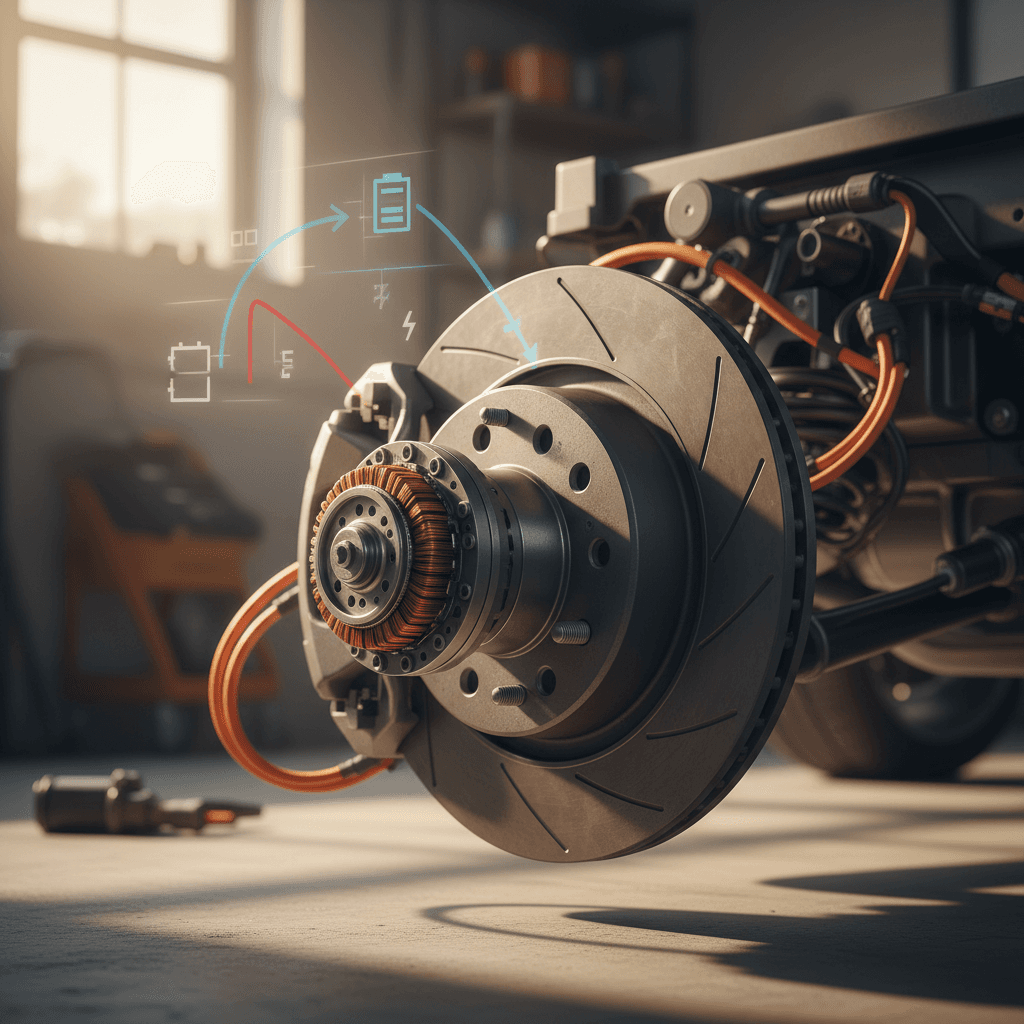
- The electric motor runs as a generator, creating drag and sending power back into the battery.
- Electronic controls blend in hydraulic disc brakes when needed.
- You still get strong stopping power, but you also recover energy instead of wasting it as heat.
Think of an EV’s brake system as two layers working together. The first layer is regenerative braking, handled by the drive motor. The second is a conventional hydraulic brake system with pads, rotors, and calipers very similar to what you’ll find on a gasoline car. The real magic is the software that decides, millisecond by millisecond, how much of each to use so that the pedal feels natural while maximizing efficiency.
Why electric car brake systems are different
Regenerative braking: the heart of an electric car brake system
In an electric car, the traction motor is reversible. When you accelerate, it consumes electrical energy to create torque. When you lift off the pedal or press the brake, the control system can flip the motor’s role so it becomes a generator. That generator resists rotation, slowing the wheels while sending electricity back into the battery.
- You ease off the accelerator or touch the brake pedal.
- The inverter tells the drive motor to operate as a generator.
- As the wheels turn the motor, it creates electrical energy and resistance.
- That resistance slows the car while the recovered energy flows into the battery.
- If you need more stopping power than regeneration can provide, the friction brakes automatically join in.
Use regen to your advantage
How much range can regenerative braking really add?
Real‑world numbers vary, but many EVs recapture roughly 5–30% of the energy that would otherwise be lost as heat in the brakes. You won’t double your range with regen, but over a week of commuting in traffic or descending long grades, it can meaningfully cut your energy use. That’s part of why EPA city range ratings for EVs are often better than you’d expect from their highway numbers.
Regen has limits
Why EVs still need traditional friction brakes
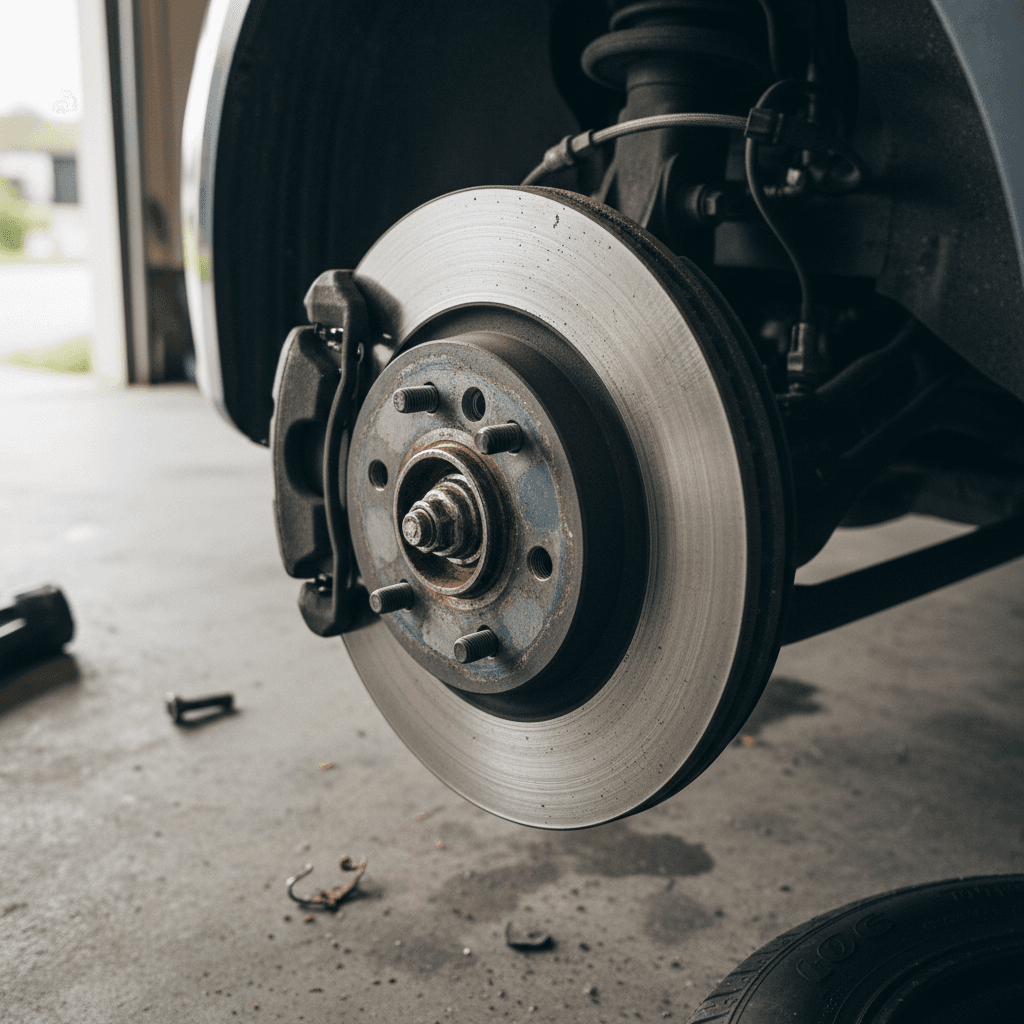
Despite the focus on regeneration, every modern electric vehicle still uses familiar disc brakes with pads, rotors, calipers, and brake fluid. They’re essential for emergency stops, low‑speed maneuvering, and as a backup when regen is limited.
When your EV relies more on friction brakes
Situations where the hydraulic system does the heavy lifting
Hard, emergency stops
Cold or full battery
Very low speeds
From a service perspective, that means an EV still needs regular brake fluid checks, inspection of pads and rotors, and occasional replacement. The difference is how often. Because regeneration handles much of the everyday slowing, pads and rotors typically last far longer than they do on a comparable gasoline vehicle.
Typical EV brake life
Brake-by-wire technology in modern EVs
Most modern electric cars blend regenerative and friction braking using some form of brake‑by‑wire. Instead of a simple mechanical link between your foot and the calipers, sensors measure pedal position and force, and an electronic control unit decides exactly how much regeneration and hydraulic pressure to use at each wheel.
- A pedal sensor measures how hard and how quickly you press the brake.
- The control unit looks at vehicle speed, wheel speeds, steering angle, stability control status, and battery state of charge.
- It commands the motor to provide as much regenerative braking as conditions allow.
- If more deceleration is needed, it sends pressure to the hydraulic calipers via an electric pump and valves.
- Anti‑lock braking (ABS) and stability control are integrated into the same system, modulating each wheel individually.
Why brake-by-wire suits EVs
Dry vs. electro-hydraulic brake-by-wire
Today’s EVs mostly use electro‑hydraulic systems: there’s still brake fluid and conventional calipers, but an electric pump and valves do the work of distributing pressure. The latest engineering trend is toward so‑called “dry” brake‑by‑wire systems that eliminate fluid entirely and use electric actuators at each wheel. These can shorten stopping distances, improve regeneration, and simplify packaging, advantages that line up neatly with software‑defined EV platforms coming to market later this decade.
Brake feel, drive modes, and one-pedal driving
Because braking in an EV is largely software‑controlled, automakers can tune how the car responds when you lift off the accelerator or press the pedal. That’s why you’ll see options like “High,” “Standard,” or “Low” regeneration, and in some models, full one‑pedal driving where lifting off the accelerator can bring the car all the way to a stop without touching the brake.
One-pedal driving
- Strong regenerative braking as soon as you lift off the accelerator.
- The car can come to a complete stop using regeneration and friction blending.
- Great for city traffic and downhill grades.
- Reduces fatigue once you get used to it.
Conventional-feel modes
- Milder regen when you lift off; car coasts more like a gasoline vehicle.
- More of your slowing happens when you actually press the brake pedal.
- Often preferred on the highway or by new EV drivers.
- You still get regenerative braking, the system just delivers it differently.
Give yourself an adjustment period
Safety, stopping distance, and redundancy in EV brakes
From a safety standpoint, a well‑engineered EV should stop every bit as quickly as a comparable gasoline car, and often faster. Regeneration adds a helpful first layer of deceleration, but engineers design around the worst‑case scenario: a panic stop using the friction brakes alone, with ABS and stability control managing traction.
Layers of safety in an electric car brake system
More than just pads and rotors
Redundant braking paths
ABS & stability control
Diagnostics & warnings
Don’t ignore brake warnings
EV brake maintenance: what’s different (and what isn’t)
One of the pleasant surprises for many owners is that an electric car’s brake system typically needs less frequent mechanical service than a comparable gasoline vehicle. But “less frequent” doesn’t mean “never.” In fact, because EVs rely heavily on software and sensors, basic brake checks are even more important to keep everything working as intended.
Core brake maintenance tasks for EV owners
1. Inspect pads and rotors regularly
Have a technician check pad thickness, rotor condition, and caliper operation at least every 12–18 months, or per your owner’s manual.
2. Service slide pins and calipers
Because friction brakes in EVs sit idle more of the time, slide pins can corrode or stick, especially in wet or salty climates. Periodic cleaning and lubrication prevent drag and uneven wear.
3. Flush brake fluid on schedule
Brake fluid still absorbs moisture over time, which can corrode components and reduce performance under hard braking. Follow your manufacturer’s recommended interval for fluid replacement.
4. Watch for uneven tire wear
Excessive rear or front tire wear can hint at brake drag or stability‑control intervention. It’s a good excuse to have the brake system evaluated.
5. Keep software up to date
Automakers often refine brake blending and stability‑control strategies via over‑the‑air updates. Applying updates can enhance both feel and safety.
6. Test the parking brake
Electronic parking brakes are common on EVs. Periodically confirm they engage and release smoothly, and have noises or warning messages checked.
Rust is the EV brake’s quiet enemy
Buying a used EV? Brake inspection checklist
When you’re evaluating a used electric car, it’s easy to focus on battery health and forget the brake system. But brakes are central to safety, and a neglected set can wipe out the savings on a seemingly good deal. At Recharged, every vehicle receives a detailed Recharged Score Report that covers battery health and key safety systems, brakes included.
What to look for in a used EV’s brake system
1. Pedal feel and response
During the test drive, the pedal should feel firm and consistent, with smooth transitions between light and hard braking. Spongy feel or pulsing can indicate air in the lines, warped rotors, or other issues.
2. Noise during braking
Listen for grinding, squealing, or scraping sounds, especially at low speed. Because EVs are quiet, brake noises stand out, and often point to worn pads or rusty rotors.
3. Brake warning lights or messages
Walk away from any used EV with active brake system warnings unless the seller provides documentation of a recent professional repair you trust.
4. Physical inspection of pads and rotors
If possible, have a technician pull the wheels and measure pad thickness, inspect rotor surfaces, and check for seized calipers, particularly on low‑mileage cars that may have sat unused.
5. Parking brake function
Confirm that the electronic parking brake engages and releases properly on a grade. Hesitation, noise, or failure to hold the vehicle can signal costly repair down the road.
6. Service history
Review invoices for any brake work, fluid flushes, or corrosion repairs. Regular brake inspections are a good sign of a careful previous owner.
How Recharged can help
Ready to find your next EV?
Browse VehiclesElectric car brake system FAQs
Frequently asked questions about EV brake systems
Key takeaways for EV owners and shoppers
- An electric car brake system combines regenerative braking from the drive motor with a conventional hydraulic brake system.
- Regenerative braking can recover a meaningful amount of energy and greatly extend brake pad life, but it doesn’t replace friction brakes.
- Brake‑by‑wire technology lets EVs blend regen and friction seamlessly while integrating ABS, stability control, and drive modes.
- Routine brake maintenance still matters: fluid flushes, caliper lubrication, and inspections are essential, especially in harsh climates.
- When buying a used EV, evaluate the brake system just as carefully as you evaluate battery health, preferably with a professional inspection or a transparent condition report like the Recharged Score.
Understanding how an electric car brake system works is more than a technical curiosity, it’s a practical way to drive more efficiently, maintain your vehicle wisely, and shop smarter for a used EV. With regeneration doing much of the everyday work and modern brake‑by‑wire controls watching in the background, a well‑maintained EV can deliver confident stopping, lower maintenance costs, and a quieter, cleaner driving experience. And if you’re comparing used electric cars, leaning on expert tools like the Recharged Score Report and EV‑specialist guidance can help you find a vehicle whose battery and brakes are ready for the miles ahead.