If you live where it snows, you enjoy spirited driving, or you simply like the added security of four driven wheels, electric all wheel drive cars are probably on your radar. The good news is that AWD has become common in EVs, from compact crossovers to luxury sedans and three-row family haulers. The trick is understanding how electric AWD works, what it really buys you in the real world, and how to shop without overpaying for capability you might not need.
Quick takeaway
Why AWD Matters in Electric Cars
All-wheel drive has been around for decades in gas-powered cars, but electric AWD changes the game. Instead of mechanically linking the front and rear axles, most EVs simply add another motor. That brings a few meaningful benefits: better traction, better performance, and, in many cases, better stability in bad weather. For buyers cross-shopping gasoline AWD crossovers and electric AWD SUVs, those differences are worth understanding before you sign a contract.
Key benefits of AWD in an EV
Why buyers choose dual‑motor electric cars
Instant traction
Electric motors deliver peak torque from 0 rpm. With one motor per axle, the car can shuffle torque to whichever wheels have grip almost instantly, helping you launch confidently on rain, snow, or gravel.
Stronger acceleration
Most AWD EVs add power as well as traction. A dual‑motor Hyundai Ioniq 5, Tesla Model Y, or Kia EV6 typically shaves 1–2 seconds off the 0–60 mph time versus its single‑motor equivalent.
Confidence in bad weather
On slick roads, AWD helps you get moving and keep your line through a corner. Modern stability and traction control systems in EVs work hand‑in‑hand with the motors to keep things tidy.
AWD can’t defy physics
How Electric All-Wheel Drive Works
In a traditional gas car, an AWD system uses driveshafts, differentials, and clutches to send engine power to the other axle. In an EV, things are cleaner. The most common setup is a dual‑motor powertrain: one electric motor on the front axle and one on the rear. Each motor drives its own set of wheels, and software decides how much torque to send front or rear in real time.
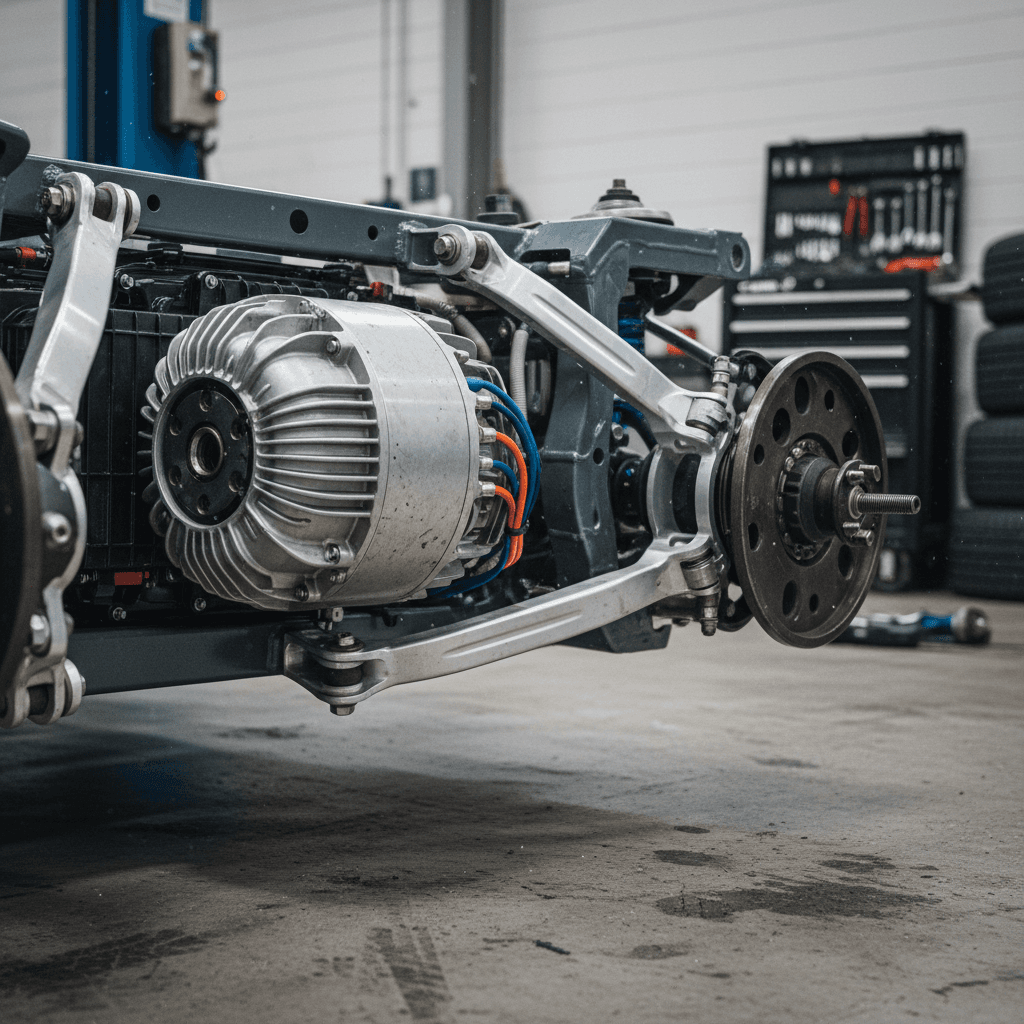
- Sensors monitor wheel slip, steering angle, throttle position, and yaw (how the car rotates).
- The control software calculates the best torque split front‑to‑rear, and sometimes left‑to‑right, many times per second.
- Because there’s no mechanical connection, torque can be ramped up or down at each axle almost instantly.
Why this feels different from gas AWD
AWD vs RWD in EVs: Pros and Cons
A lot of the best‑driving EVs are rear‑wheel drive, and for many drivers they’re all the car they’ll ever need. Electric AWD adds capability, but it isn’t free. Before you decide, it’s smart to weigh the trade‑offs between a single‑motor rear‑drive EV and a dual‑motor all‑wheel‑drive version of the same car.
Electric AWD vs RWD: What changes when you add a second motor?
Typical differences when you compare AWD and RWD versions of the same EV (actual numbers vary by model).
| Factor | RWD (single motor) | AWD (dual motor) | What it means for you |
|---|---|---|---|
| Traction in snow/rain | Good with proper tires | Stronger launches, more secure exits | AWD gives you extra margin when roads are slick. |
| 0–60 mph time | Moderate (e.g., 6–7 sec) | Quicker (e.g., 4–5 sec) | If you care about passing power or fun launches, AWD helps. |
| Range per charge | Highest | Typically 5–10% lower | The extra motor and power draw cost a bit of efficiency. |
| Purchase price | Lower | Higher | AWD trims often cost more but may bundle extra features. |
| Towing capacity | Lower or unavailable | Higher on many SUVs | If you tow, AWD often comes with the higher tow rating. |
Expect modest range loss and a noticeable bump in performance when you choose AWD.
Don’t buy AWD as a band‑aid for bad tires
Types of Electric AWD Systems
Not every electric AWD system is the same. Automakers are using the flexibility of electric motors to create systems tailored to efficiency, performance, or off‑road capability. Understanding the basic types will help you read between the lines of the brochure.
Common electric AWD setups
From efficiency‑minded commuters to wild four‑motor off‑roaders
Dual‑motor symmetric
One motor on each axle, often similar in size. This is the most common layout in mainstream AWD EVs like the Hyundai Ioniq 5, Kia EV6, and many others.
Asymmetric “booster” motor
A powerful rear motor handles most driving with a smaller front motor that wakes up only when needed. This can keep efficiency high while still delivering strong traction.
Three‑ or four‑motor systems
High‑end performance and off‑road EVs use one motor per wheel or three motors total. This enables precise torque vectoring and serious performance, but at a much higher price point.
Torque vectoring
Some advanced systems do more than just send power front and rear, they can over‑speed an individual wheel to help the car rotate through a corner. On a twisty back road, that can make a heavy electric SUV feel more agile and secure than its size suggests.
On‑demand vs always‑on AWD
In some EVs, the second motor is largely dormant at highway speeds to save energy. In others, both motors pull all the time. The former approach tends to be more efficient; the latter often feels more responsive. Test‑driving both is the only way to know which you prefer.
Notable Electric All-Wheel Drive Cars in 2025
By late 2025, there’s an AWD EV in almost every segment, from compact crossovers to ultra‑luxury SUVs and performance sedans. Rather than list every model, let’s break them into categories so you can focus on vehicles that match your needs and budget.
AWD EV examples by segment
Representative models to put on your test‑drive list
Compact & city‑friendly AWD EVs
- Volvo EX30 Twin Motor – Small footprint, big punch from its dual‑motor AWD setup.
- Hyundai Ioniq 5 AWD – Spacious cabin, fast charging, and available HTRAC all‑wheel drive.
- Subaru Uncharted AWD (coming 2026) – Subaru’s electric SUV pairs dual motors with the brand’s traction focus.
Family crossovers & midsize SUVs
- Tesla Model Y Long Range AWD – One of the most common dual‑motor EVs on American roads, with strong range and access to the Supercharger network.
- Kia EV9 AWD – Three-row electric SUV with dual motors, optional off‑road‑oriented trims, and family‑friendly packaging.
- Polestar 3 – Dual‑motor luxury crossover with Scandinavian design and standard AWD.
Luxury and performance AWD EVs
For drivers who want speed as much as traction
Performance sedans and GTs
- Tesla Model S Dual‑Motor / Plaid – AWD with muscle‑car‑shaming acceleration.
- BYD Han EV AWD (global markets) – Dual‑motor sedan with supercar‑level acceleration.
- Porsche Taycan variants – Several dual‑motor trims with sophisticated torque vectoring.
Electric SUVs with serious power
- Cadillac Escalade IQ – Massive battery, dual‑motor AWD, and available “Velocity Max” mode for big‑SUV performance.
- Jeep Wagoneer S – Dual‑motor AWD with robust power and range aimed at luxury off‑roading.
- Mercedes EQE/EQS SUVs – 4MATIC dual‑motor setups blending comfort and traction.
Used AWD EV sweet spots
Range, Efficiency, and Charging Considerations
Adding a second motor almost always affects range, but the impact is usually smaller than shoppers fear. Many AWD versions of popular EVs give up roughly 5–10% range compared with their rear‑drive siblings while delivering a meaningful bump in performance and capability. The key is to look beyond the headline range figure and think about how, and where, you actually drive.
How AWD changes the numbers (typical patterns)
AWD and winter range
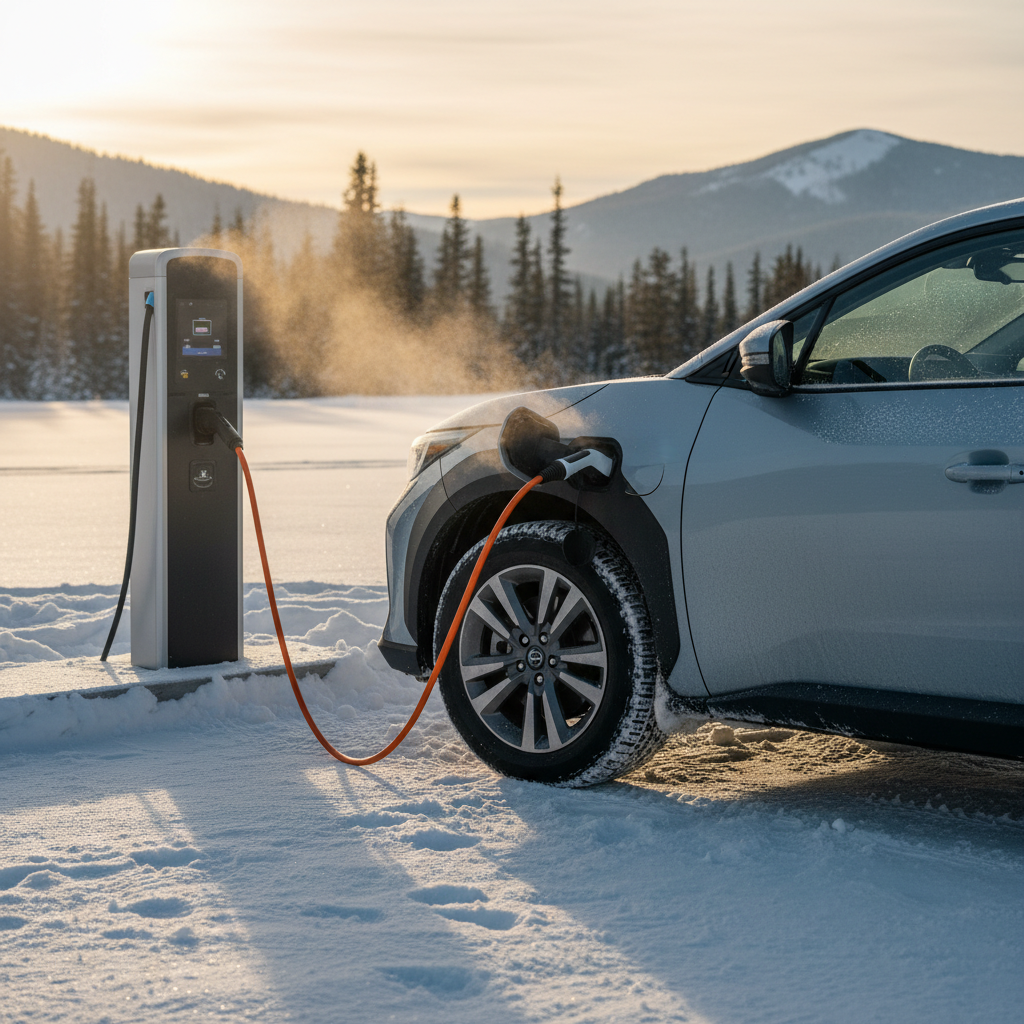
Cold weather knocks range down for every EV, AWD or not. The extra motor doesn’t change the physics of lithium‑ion chemistry, so plan on 20–40% less range in freezing conditions. Preconditioning the battery and cabin while plugged in, driving in Eco mode, and using seat heaters instead of blasting the HVAC are all smart habits.
Home vs public charging
AWD doesn’t really change your charging strategy. What matters more is battery size and charging speed. A mid‑size AWD crossover with a 77–85 kWh pack will typically recharge overnight on a 240‑volt Level 2 charger. On road trips, look for DC fast chargers that can deliver at least 150 kW to keep stops short.
Leverage NACS access
Shopping Tips for New and Used AWD EVs
Once you’ve decided an electric all wheel drive car fits your lifestyle, the next step is buying smart. That means matching the vehicle to your climate, driving patterns, and budget, while keeping an eye on battery health and total cost of ownership. Here’s a practical checklist to work through before you put down a deposit.
Checklist: Choosing the right AWD EV for you
1. Be honest about your weather and terrain
If you’re in the Sun Belt and rarely see snow, a rear‑drive EV with good tires may be plenty. In snow‑belt states, frequent trips to the mountains, or long gravel driveways, AWD moves higher on the priority list.
2. Look at range in the worst case
Take the EPA range, knock off a conservative 30% for winter, and then ask whether the car still covers your daily duties comfortably. If it doesn’t, step up in battery size or consider a more efficient model before you lock in AWD for peace of mind alone.
3. Compare total cost, not just the monthly payment
AWD trims often bundle larger batteries and extra features. That can be a good value, or it can push you into paying for options you don’t care about. Line up two or three configurations side‑by‑side and compare MSRP, equipment, and estimated fuel savings over 5–7 years.
4. Check real‑world owner feedback
Professional tests are useful, but owner forums and reviews reveal how a specific AWD EV behaves after a few winters and thousands of miles. Pay attention to comments on traction, stability control tuning, and winter range.
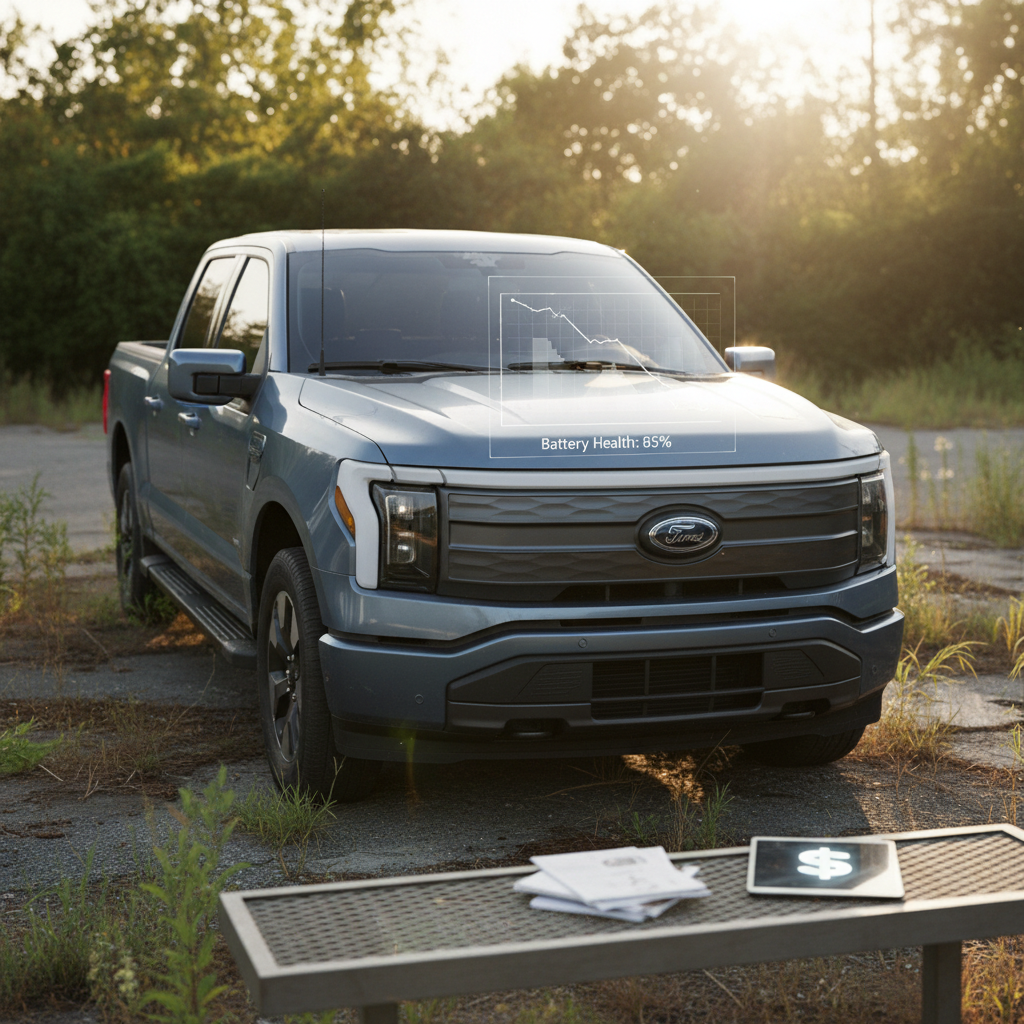
5. Prioritize battery health on used AWD EVs
A dual‑motor system relies on healthy high‑voltage components. When you shop used, you’ll want more than a quick test drive, you need data on battery capacity, fast‑charging history, and any thermal‑management issues. Services like the <strong>Recharged Score</strong> pull that together in a report that’s easy to understand.
6. Think ahead about resale value
In snowier regions, used AWD EVs tend to draw more interest than comparable RWD models, which can bolster resale value. In warmer markets, range and charging speed may matter more than the badge on the tailgate.
How Recharged can help
Ready to find your next EV?
Browse VehiclesIs Electric AWD Worth the Extra Cost?
There’s no one‑size‑fits‑all answer, but you can come pretty close if you look at three things: climate, driving style, and towing or cargo needs. For a commuter in Phoenix who rarely leaves paved roads, a rear‑drive EV with good safety tech and tires may be the smarter buy. For a family in Denver who skis every other weekend and tows a small camper, an AWD electric SUV with a healthy tow rating makes a lot more sense.
When AWD is usually worth it
- You regularly drive in snow, slush, or heavy rain.
- You live in a hilly or mountainous area.
- You plan to tow a trailer or small boat a few times a year.
- You value brisk acceleration and effortless highway passing.
When RWD often makes more sense
- You live in a warm climate with well‑maintained roads.
- Your driving is mostly suburban and highway commuting.
- You prioritize maximum range and efficiency over performance.
- You’re watching the budget and want the lowest total cost of ownership.
FAQ: Electric All-Wheel Drive Cars
Frequently Asked Questions About Electric AWD
The Bottom Line on Electric AWD
Electric all wheel drive cars bring real‑world advantages: quicker acceleration, extra traction in bad weather, and, when paired with the right tires, a calmer, more confident driving experience when conditions turn ugly. The trade‑offs are modestly higher upfront cost and a small range penalty. If you regularly face snow, hills, or towing duty, dual‑motor AWD is often money well spent. If you live in a mild climate and chase maximum range per dollar, a rear‑drive EV might be your smarter play.
Either way, the fundamentals are the same: focus on battery health, charging access, and how the car fits your daily life. When you’re ready to explore used AWD EVs, with verified battery diagnostics, transparent pricing, and one‑on‑one help from EV specialists, Recharged is built to make that process simple and stress‑free.