Search data shows more and more people are typing “elec cars” when they really mean electric cars. If that’s you, you’re probably trying to figure out whether now is the right time to go electric, what it actually costs, and how to avoid getting burned, especially if you’re looking at the growing used EV market.
Quick definition
What people really mean by “elec cars”
The phrase “elec cars” has become a kind of shorthand for electric cars in general, Teslas, Hyundai Ioniqs, Ford Mustang Mach-Es, Chevy Bolts, and the growing list of EVs from nearly every major brand. These are vehicles powered primarily or entirely by electricity stored in a battery pack.
- Battery-electric vehicles (BEVs) – run only on electricity; you plug them in to charge (what this article focuses on).
- Plug-in hybrids (PHEVs) – have a small battery you can plug in plus a gasoline engine as backup.
- Conventional hybrids – use a battery to assist the engine but cannot be plugged in; they’re not usually what people mean by “elec cars.”
Terminology tip
Are elec cars really taking over the market?
Elec car adoption by the numbers
Globally, elec cars are no longer a niche experiment. They’ve gone from rounding error a decade ago to around one in five new cars sold worldwide. China leads the pack, electric cars are already close to half of new sales there, while Europe sits around 20% and the U.S. has recently crossed the 10% threshold.
The U.S. picture is more mixed
How elec cars work: the basics
What powers an elec car?
An electric car is built around a large battery pack, an electric motor, and power electronics that control how energy flows. There’s no engine, no multi-speed transmission, and far fewer moving parts than in a gas car.
- The battery stores energy in kilowatt-hours (kWh).
- The motor converts that energy into motion, instantly.
- Power electronics manage charging, acceleration, and regenerative braking.
Key differences vs. gas cars
- Instant torque: smooth, quick acceleration with no gear shifts.
- Less maintenance: no oil changes, timing belts, spark plugs, or exhaust system.
- Energy efficiency: EVs convert far more of the energy in the battery into motion than engines do with gasoline.
- Quiet drive: less vibration and noise, which some drivers love and others take time to get used to.
About range and efficiency
Charging elec cars at home and on the road
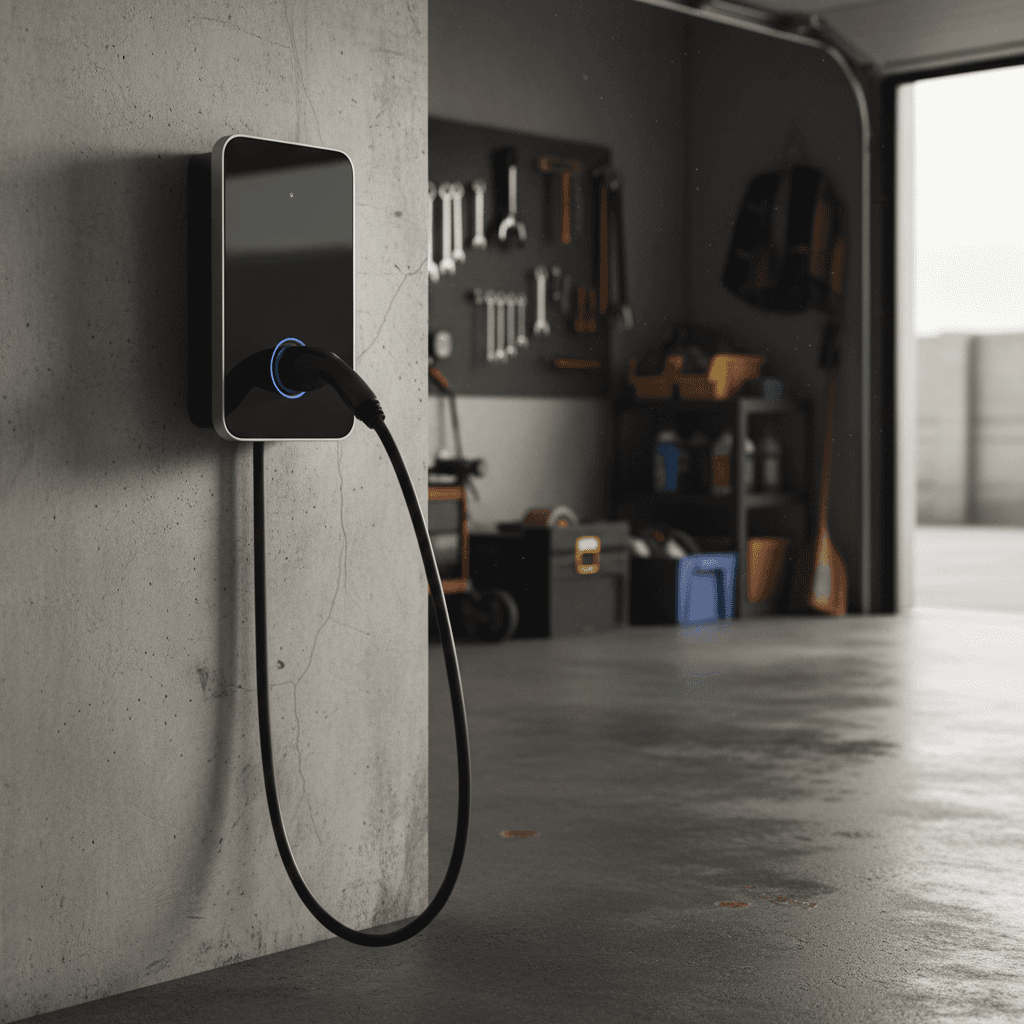
Charging is where elec cars feel most different from what you’re used to. Instead of 5-minute gas stops every week, you mostly "refuel" while you sleep or work. Public fast chargers are there for road trips and unusual days, but daily driving is usually handled at home or work.
Three main ways to charge an elec car
From a regular outlet to ultra-fast DC chargers
Level 1 (120V)
Uses a standard household outlet.
- ~3–5 miles of range per hour.
- Best for low-mileage drivers.
- Works in most garages and driveways.
Level 2 (240V)
Similar power to an electric dryer circuit.
- ~20–40 miles of range per hour.
- Common for home and workplace charging.
- Requires a 240V circuit and wallbox.
DC fast charging
High-power public stations along highways and in cities.
- ~150–250 kW common; some higher.
- 10–80% charge in 20–40 minutes for many EVs.
- Used mainly for road trips or quick top-ups.
Plan around where you park, not where you drive
- Check whether your home’s electrical panel can support a 240V circuit for Level 2 charging. This is usually a one-time installation cost.
- If you rent, ask your landlord about adding shared chargers or look for existing outlets you can use safely.
- On the road, get familiar with major charging networks (Tesla Supercharger, Electrify America, ChargePoint, and others) through their apps.
What elec cars actually cost to own
Headline prices for new elec cars still tend to be higher than comparable gas vehicles, especially in the U.S. But that’s only part of the story. You have to look at total cost of ownership: purchase price, fuel, maintenance, financing, and resale value.
Typical cost differences: new elec car vs. gas car (US)
Illustrative averages for a mid-size crossover over 5 years, assuming 12,000 miles per year and home charging where applicable.
| Cost area | Typical gas car | Typical elec car |
|---|---|---|
| Purchase price (before incentives) | $35,000 | $42,000 |
| Federal/State incentives | None | Up to $7,500 federal plus possible state rebate |
| Fuel cost per mile | ~$0.14 | ~$0.05–$0.08 with home charging |
| Routine maintenance | Higher (oil changes, engine components) | Lower (tires, brake fluid, cabin filters) |
| Resale value trend | Stable, but exposed to fuel price swings | Improving as EVs become mainstream and incentives stabilize |
Real costs vary by model, electricity and gasoline prices, and incentives. Use this as a directional comparison, not a quote.
Where elec cars save you money
How to sanity-check costs before you buy
1. Estimate your annual mileage
Know roughly how many miles you drive per year. High-mileage drivers benefit most from EV fuel savings.
2. Compare electricity vs. gas prices
Look at your $/kWh on your utility bill and local gas prices. Online calculators can convert that into cost per mile for different EVs.
3. Price home charging installation
Get a quote for a 240V outlet or wallbox installation if you own your home. In many cases, the payback period is only a few years.
4. Check insurance and taxes
Insurance can be slightly higher for some EVs; check quotes by VIN. Also verify registration fees, some states add small EV surcharges.
5. Factor in incentives and rebates
Federal, state, utility, and local incentives can meaningfully reduce your net price. Don’t evaluate EVs on sticker price alone.
Battery life, degradation and warranty basics
Battery health is the number one concern people have about elec cars, especially used ones. The short version: modern EV batteries are holding up better than early skeptics predicted, but how the car is used and charged still matters.
What affects elec car battery health?
The big levers you control as an owner
Heat and fast charging
- High temperatures and frequent DC fast charging put more stress on the pack.
- Occasional fast charging is fine; daily use will generally accelerate degradation.
State of charge habits
- Keeping the battery between ~10% and 80–90% is generally healthier than constant 100% charging.
- Many EVs include charge limit settings for daily use.
Age and mileage
- Like any component, batteries slowly lose capacity over time.
- Real-world data suggests many packs retain 70–80% capacity after 8–10 years, depending on use.
Manufacturer warranty
- Most brands offer 8-year battery warranties with a minimum capacity promise.
- Details vary by automaker, model, and market, always read the fine print.
Used EV red flag
Incentives and tax credits in the U.S.
In the U.S., the federal government and many states still offer meaningful incentives for elec cars, but the rules have become more complex. Battery sourcing requirements, income limits, vehicle price caps, and lease loopholes all shape what you can claim.
- New EV federal credit: Up to $7,500 at the point of sale for qualifying models that meet battery and assembly rules, income limits, and MSRP caps.
- Used EV federal credit: Up to $4,000 (capped at 30% of sale price) for qualifying used EVs, subject to price and income limits.
- Leasing: Leased EVs are often treated as commercial vehicles, allowing dealers to pass through credits even when the car wouldn’t qualify if you bought it outright.
- State and local incentives: Many states and utilities offer extra rebates, discounted off-peak charging rates, HOV lane access, or reduced registration fees.
Practical incentive advice
Buying a used elec car with confidence
Used elec cars can offer excellent value: you avoid the steepest new-car depreciation and still get modern tech. But you also inherit the previous owner’s charging habits and any hidden battery wear. That’s why a used EV purchase should be more data-driven than a typical gas car.
Used elec car buying checklist
1. Get a battery health report
Odometer readings aren’t enough. Look for a <strong>third-party or OEM-backed battery health report</strong> that gives you remaining capacity and estimated range.
2. Review charging history
Ask how the car was charged: mostly at home Level 2, or constantly on DC fast chargers? Frequent fast charging and extreme heat are risk factors.
3. Check warranty status
Confirm how many years and miles remain on the battery and powertrain warranties. Some coverage is transferable; some isn’t.
4. Inspect charging hardware
Verify the car comes with the correct charging cable, adapters, and that the charge port and door work smoothly.
5. Test real-world range
On a test drive, note energy use (kWh/100 miles) and projected range at your typical speeds. Compare it to the original EPA rating.
6. Compare pricing to similar EVs
Because EV technology moves quickly, compare model year, battery size, and range, not just mileage, when evaluating whether the price is fair.
How Recharged helps used EV buyers
Traditional dealers and person-to-person classifieds weren’t designed for elec cars. They rarely surface the data you actually need, battery health, charging history, and a transparent view of fair market value. That’s exactly the gap Recharged was built to fill.
What you get with a Recharged used EV
A simpler, more transparent way to buy or sell elec cars
Recharged Score Report
Every vehicle on Recharged comes with a Recharged Score Report that includes verified battery health diagnostics, range estimates, and overall condition.
Fair, data-backed pricing
Recharged benchmarks each car against real EV market data so you can see how the price compares to similar listings nationwide.
Specialist EV support
EV-trained specialists can walk you through charging, incentives, and ownership questions, whether you’re financing, trading in, or selling on consignment.
Ready to find your next EV?
Browse VehiclesFlexible ways to buy and sell
- Financing: Pre-qualification and financing options tailored for used EVs.
- Trade-in or instant offer: Get an offer on your current car, gas or electric.
- Consignment: Let Recharged market and sell your EV for you while you continue driving it.
Nationwide, digital-first experience
- Online shopping: Browse, compare, and complete most of the process digitally.
- Nationwide delivery: Have your elec car delivered to your driveway.
- Experience Center: Prefer to see cars in person? Visit the Recharged Experience Center in Richmond, VA for expert, no-pressure help.
From research to driveway
FAQ: Common questions about elec cars
Frequently asked questions about elec cars
The bottom line on elec cars in 2025
Elec cars have moved from curiosity to mainstream reality. They’re not perfect for every driver or every housing situation yet, but for a growing share of people they offer lower day-to-day costs, smoother performance, and a quieter drive, without the tailpipe.
If you’re running the numbers, remember to look beyond sticker price. Home charging access, local electricity and gas prices, federal and state incentives, and battery health on used vehicles often matter more than whether the badge on the hood is the latest model year.
When you’re ready to step from research into reality, consider browsing elec cars that come with a Recharged Score Report, fair market pricing, and expert EV support. It’s a way to enjoy the upside of this technology shift while managing the risks, and get from your first Google search for “elec cars” all the way to a plug in your own driveway with a lot less uncertainty.