If you drive an electric car, your tyres are doing far more than keeping you glued to the tarmac. The right efficient tyres in electric vehicles can quietly add double-digit miles of range, reduce running costs, and keep the cabin calm and quiet, while the wrong set can undo a chunk of your battery’s hard work.
Quick takeaway
Why tyres matter more on electric vehicles
In a combustion car, a lot of the energy you pour into the tank is lost as heat and noise. In an EV, the powertrain is so efficient that tyres and aerodynamics suddenly move to center stage. Rolling resistance, the energy needed to keep a tyre rolling, becomes one of the largest line items on your energy budget.
Electric vehicles
- Heavier because of large battery packs
- Instant torque that can scrub tread quickly
- Quieter cabins that amplify tyre noise
- Range display makes efficiency losses painfully obvious
Petrol & diesel cars
- Engine and exhaust noise mask tyre roar
- More energy wasted in heat and friction
- Drivers rarely see real-time efficiency
- Tyre choice still matters, but the impact feels smaller
Heavier cars, harder-working tyres
How efficient tyres boost EV range
Tyre engineers talk about rolling resistance, and for EV drivers, that’s really just code for range. The lower the rolling resistance, the less energy your battery spends simply turning the wheels.
What efficient tyres can do for an EV
Recent EV-specific tyre tests highlight just how big the gap can be. In one 2025 comparison, a highly efficient EV tyre with the lowest measured rolling resistance delivered about 410 km of range, while a grippier competitor on the same test car managed around 344 km, a swing of more than 65 km from tyres alone. That’s not theoretical; that’s one highway leg of your next road trip.
Think in miles, not percentages
EV-specific tyres: what makes them different?
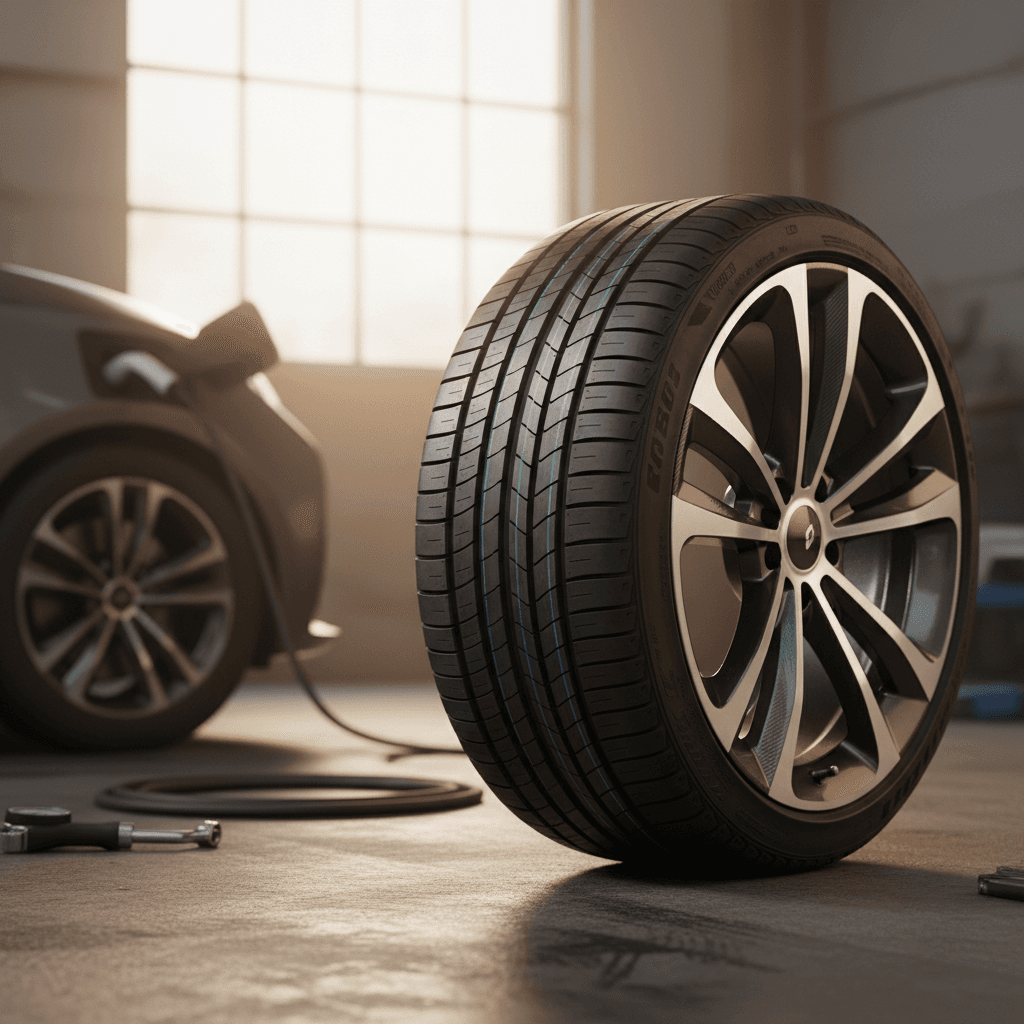
You’ll see more and more tyres marketed as EV, EV ready, or wearing an OEM mark from brands like Tesla, Hyundai, or Volkswagen. These aren’t just rebadged standard tyres; they’re built around the demands of electric cars.
Key design features of efficient EV tyres
What you’re paying for when you choose an EV-optimised tyre
Low rolling resistance compounds
Rubber blends and silica fillers are tuned to flex less as the tyre rolls, turning less energy into heat. The goal is less drag without giving up wet grip.
Reinforced construction
Stronger sidewalls and internal structures support EV weight and instant torque. That helps stability, especially on heavy crossovers and SUVs.
Noise-reducing tech
Foam inserts, tuned tread patterns, and clever cavity shapes can cut cabin noise several decibels, something you’ll really notice in an otherwise quiet EV.
Recent award-winning EV tyres, from models like Falken e.Ziex, Michelin e·Primacy, or Hankook iON lines, show what this looks like in practice: very low rolling resistance ratings, carefully balanced wet-braking scores, and noise levels tuned specifically for electric cars.
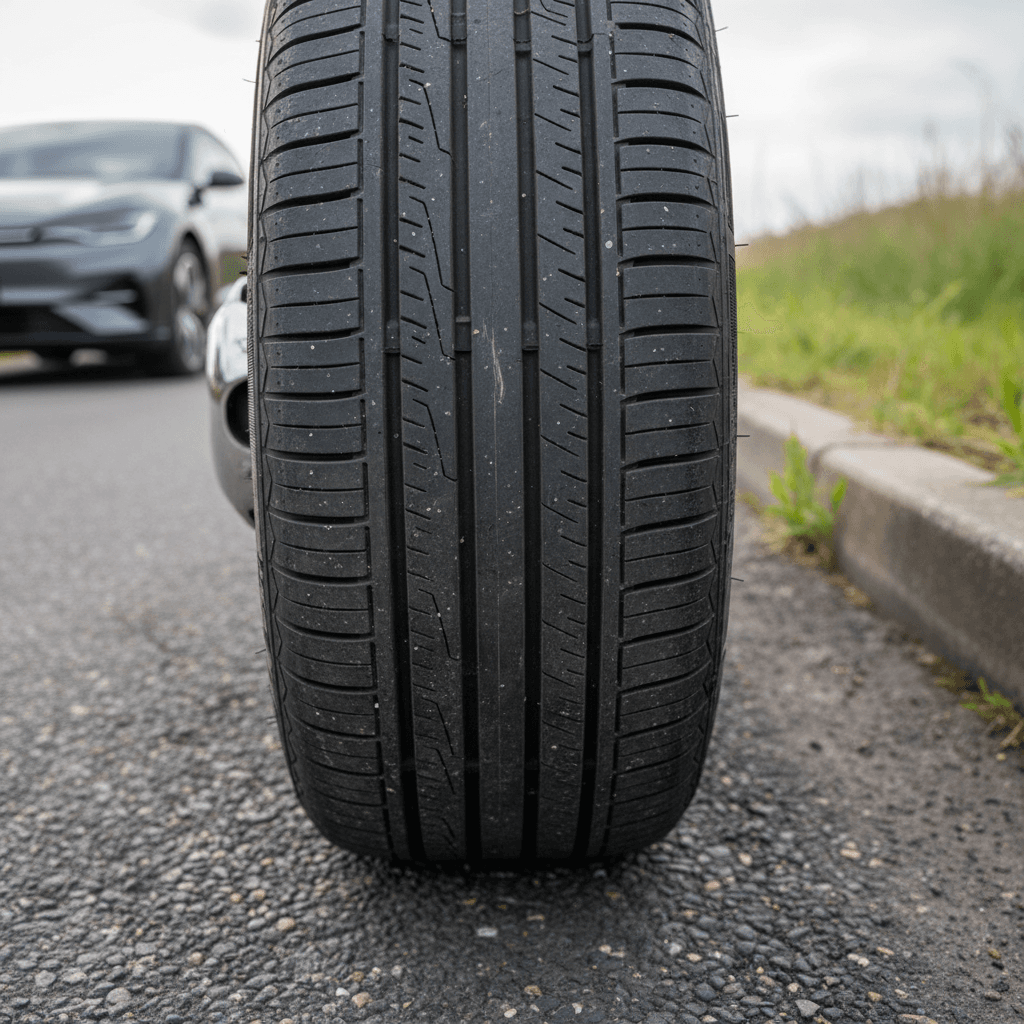
Do you <em>need</em> an EV-labelled tyre?
Efficiency vs safety and comfort: finding the balance
Here’s the hard truth: the most miserly, efficiency-obsessed tyre won’t be the best choice for everyone. Tyre design is a three-way tug of war between grip, efficient rolling, and comfort/noise.
Typical trade-offs when choosing EV tyres
How leaning toward efficiency, performance, or comfort affects your experience.
| Tyre focus | Pros on an EV | Cons on an EV |
|---|---|---|
| Maximum efficiency (low rolling resistance) | Best range and energy consumption; quieter ride on smooth roads | Longer wet braking distances, less ultimate grip in emergency manoeuvres |
| Balanced all-rounder | Predictable handling, good wet grip, decent range and comfort | Not the absolute best in any one category |
| Performance & grip | Short stopping distances, confident cornering, strong traction | Higher energy use, more road noise, faster wear on powerful EVs |
Real tyres blend these traits, but it helps to start by knowing what you value most.
Never trade safety for a few miles
Choosing efficient tyres for your electric vehicle
So how do you turn all of this into a smart buying decision? Think of it like choosing an EV itself: start with how and where you actually drive, then match the tyre to your priorities.
Step-by-step checklist for picking efficient EV tyres
1. Confirm the correct size and load rating
Check the tyre sidewall or door-jamb sticker for size (e.g. 235/45R18) and load index. EVs often need higher load ratings, dropping below spec isn’t an option.
2. Decide your priority: range, grip, or quiet
If you’re doing long motorway runs, efficient tyres with good wet ratings make sense. City drivers might value comfort and braking feel more than every last mile of range.
3. Look for low rolling resistance labels
In many markets, energy classes (like A–E) or rolling-resistance ratings can guide you. Independent EV-focused tyre tests are even better, because they show real-world range differences.
4. Check wet grip and braking scores
An efficient tyre is only worth it if it can stop confidently in the rain. Look for strong wet-braking results in tests, not just marketing promises.
5. Consider noise ratings and reviews
A few decibels quieter doesn’t sound like much on paper, but inside a silent EV, it’s the difference between relaxed and tiring on long drives.
6. Don’t forget wheel choice
Narrower tyres and aero wheels can substantially improve efficiency. Carmakers have shown that wheel and tyre packages alone can add 10–20 miles of range on some EVs.
How this plays out when buying used
Maintenance habits that protect your range
You can bolt on the most efficient tyres money can buy and still throw away range if you neglect them. The good news: the basics are simple and cheap.
Three simple habits that pay off every drive
Small changes that keep range, safety, and tyre life heading in the right direction
Check pressures monthly
Even a small drop in pressure increases rolling resistance and heat build-up. Aim for the manufacturer’s recommended PSI, and check after big temperature swings.
Rotate tyres regularly
Heavy EVs and strong acceleration can chew through front or rear tyres faster. Rotating on schedule evens wear and keeps handling and efficiency consistent.
Inspect alignment & suspension
If your EV pulls to one side or shows uneven wear, get an alignment. Misalignment drags down efficiency and can destroy a set of tyres long before their time.
Pro move for road-trippers
Efficient tyres and used EVs: what shoppers should check
When you’re eyeing a used EV, tyres tell a story. They hint at how the previous owner drove, whether the suspension and alignment are healthy, and how much range you can realistically expect on day one.
Tyre clues about the car
- Uneven wear can suggest alignment issues or hard driving.
- Mismatched brands or budget tyres may indicate cost-cutting maintenance.
- Very new tyres on a low-mileage car warrant questions, were the originals worn unusually fast?
Questions to ask the seller
- When were the tyres replaced, and with what model?
- Have they ever repaired sidewall damage or run a tyre flat?
- How often do they check tyre pressure or rotate tyres?
At Recharged, every vehicle comes with a Recharged Score Report that includes verified battery health and a deep look at the car’s condition. While the focus is on the pack and drivetrain, it’s also the perfect moment to ask our EV specialists about the current tyres, expected range, and what you might gain by moving to a more efficient set once they wear out.
FAQ: Efficient tyres in electric vehicles
Frequently asked questions about efficient EV tyres
The bottom line on efficient tyres for EVs
Tyres might not be as glamorous as battery chemistry or charging speeds, but they’re one of the most powerful tools you have to shape how your EV behaves in the real world. The right efficient tyres in electric vehicles quietly stretch your range, calm your cabin, and keep you safer when the road turns ugly.
If you’re already an EV owner, start with the basics: correct pressures, regular rotations, and a clear idea of whether you value range, grip, or quiet the most. If you’re shopping for a used EV, make tyres part of the conversation, alongside battery health and charging habits. And when you’re ready, Recharged is here with verified battery diagnostics, transparent pricing, and EV specialists who can help you understand how something as simple as a set of efficient tyres fits into the bigger picture of stress-free electric ownership.