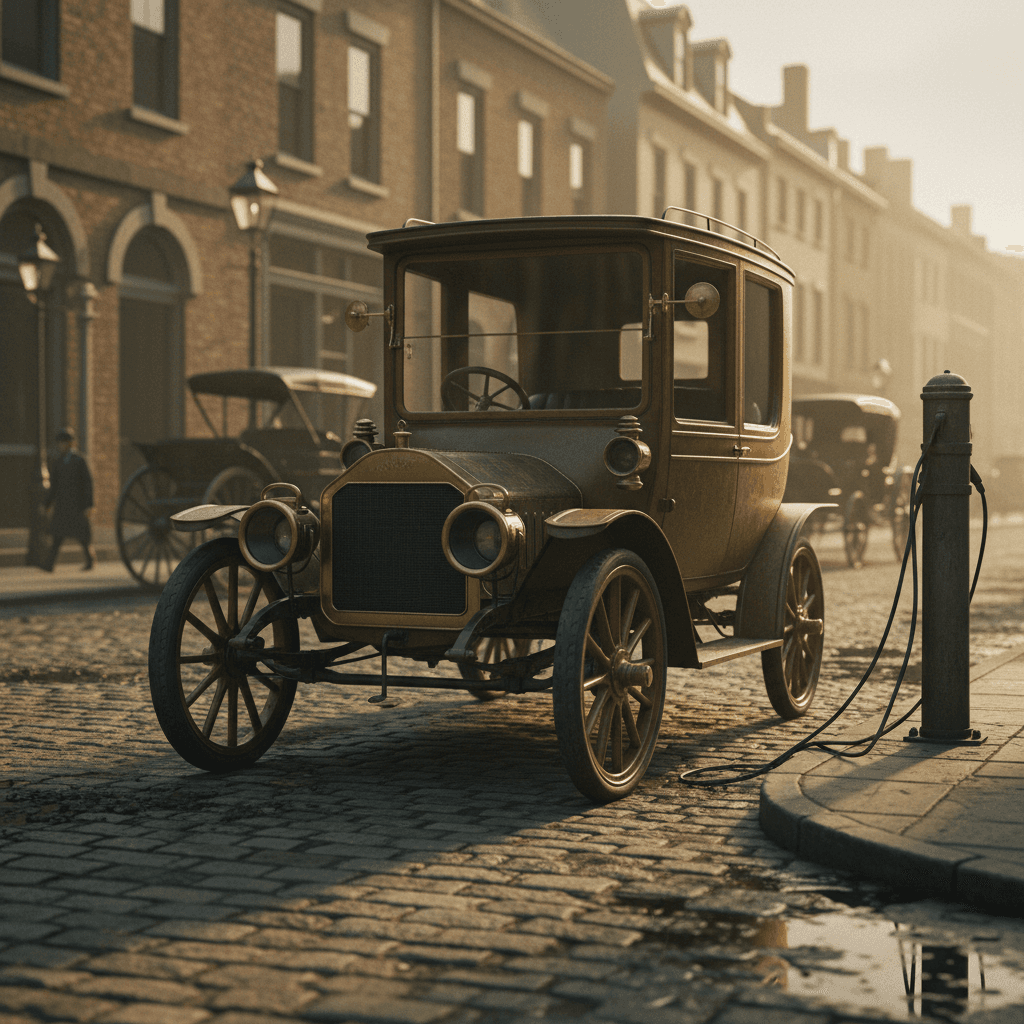
Before there was Tesla, before the roar of V8s and the romance of gas stations on Route 66, there were early electric cars gliding almost silently through city streets. At the turn of the 20th century, battery-powered carriages were the refined way to travel, clean, quiet, and surprisingly practical for urban life. In some years, they even outsold gasoline cars in the United States.
A forgotten headline
Why early electric cars matter now
You’re living through what feels like an EV revolution, but in many ways, this is the second act. Understanding early electric cars isn’t just trivia for museum-goers. It explains why people loved EVs the first time around, why they disappeared, and what might threaten, or secure, the EV transition today.
- They show that technology alone doesn’t determine which cars win; infrastructure and policy do.
- They reveal how quickly public opinion can swing from excitement to indifference.
- They highlight themes that still matter when you buy an EV now: range, charging access, battery life, and resale value.
Read this like a buyer, not a historian
A quick timeline of early electric cars
Early electric car milestones at a glance
Birth of the electric car: 1830s–1890s
The story of early electric cars starts long before there were “cars” in any modern sense. In the early 1800s, engineers in Hungary, the Netherlands and the United States built small electric carts and experimental vehicles powered by primitive batteries. These were lab curiosities, proof that wheels could turn without horses, coal, or steam.
By the 1880s, things get more recognizable. French carriage makers such as Charles Jeantaud were selling bespoke electric buggies in Paris, while German technician Andreas Flocken produced the Flocken Elektrowagen in 1888, often cited as one of the first practical four‑wheeled electric cars. In the U.S., chemist William Morrison’s 1890 six‑passenger electric wagon, with a blistering top speed of about 14 mph, set off a wave of American interest.
Why the 1890s mattered
The golden age: when early electric cars ruled the city
From roughly 1897 to the early 1910s, early electric cars enjoyed what you could fairly call a golden age, especially in dense cities. New York and London both fielded electric taxi fleets. In 1897, for instance, a dozen electric cabs began operating in Manhattan; within a few years, dozens more joined them. Electric taxis were quieter, cleaner, and easier to drive than their gasoline or steam rivals.
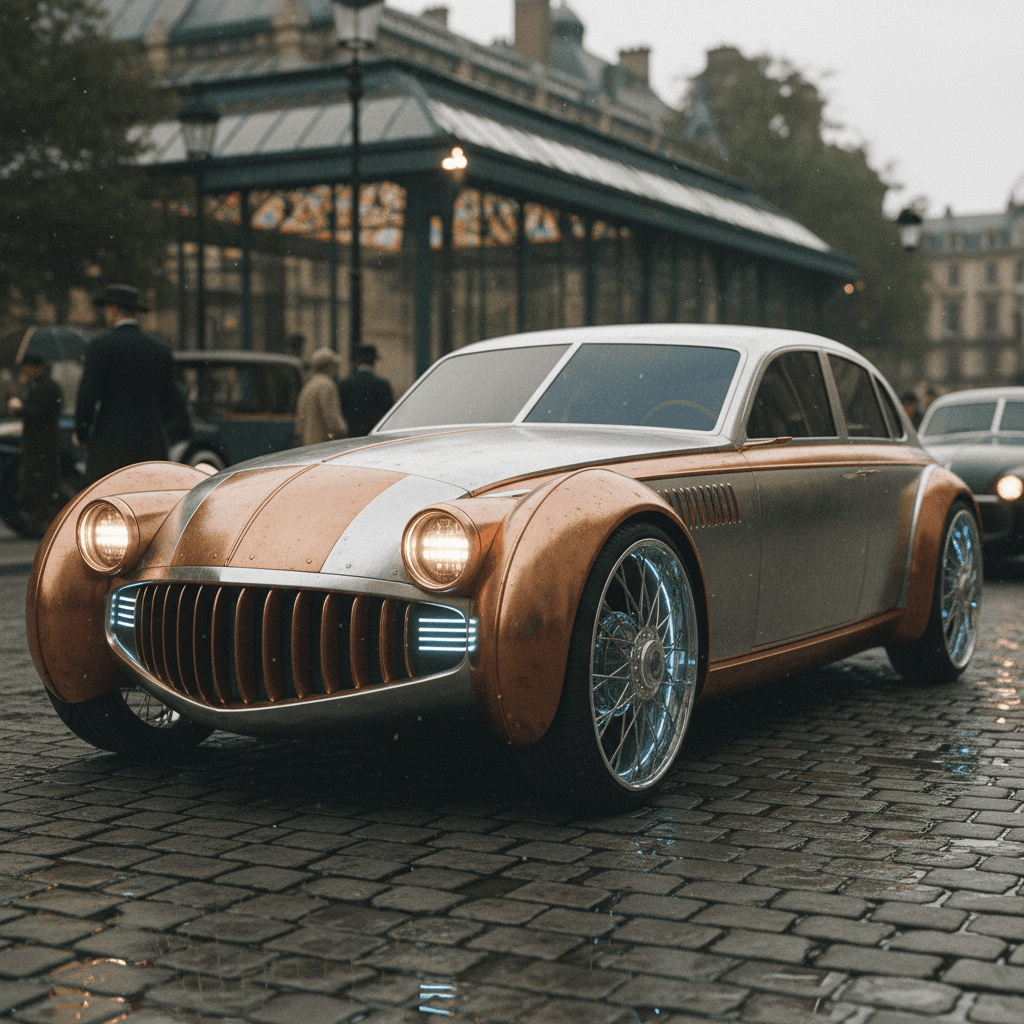
At the consumer level, the market split into three familiar camps: steam, gasoline, and electric. Steam cars were powerful but demanding; gasoline cars were fast and increasingly rugged; electrics were civilized. Around 1899, U.S. production totals show that electric and steam cars together outnumbered gasoline cars, proof that electricity wasn’t a niche, it was a contender.
In the city
- Short trips: Typical daily runs were well within a 40–80 mile range.
- Smooth roads: Paved streets favored the softer, more fragile tires and suspensions.
- Charging access: Power could be brought to depots, hotels, and wealthy homes.
In the country
- Long distances: Rural roads demanded range that batteries couldn’t yet provide.
- Rough terrain: Early EVs struggled on hills and unpaved tracks.
- No grid: Rural electrification lagged far behind cities; gasoline was easier to haul in cans.
Early EVs had a clear niche
Iconic early electric cars you should know
Four early electric cars that tell the story
Each one solved a different problem, and reveals a different slice of EV history.
Baker Electric (U.S., 1900s)
Built in Cleveland, Baker cars became status symbols for urban elites. A 1909 Baker Electric coupe could cruise around 20–25 mph and manage roughly 80 miles on a charge, respectable even by today’s city‑car standards.
Jay Leno’s well‑known Baker still drives, a rolling rebuttal to the idea that old batteries are automatically junk.
Detroit Electric (U.S., 1907–1930s)
Detroit Electric produced thousands of elegant town cars and coupes, many with ranges advertised up to 80–100 miles under ideal conditions.
A 1917 Model 62A Cabriolet could reportedly do about 100 miles on a single charge and about 23 mph flat out, slow, yes, but perfect for genteel city traffic.
Electric taxis in New York & London
Companies like the Electric Vehicle Company in New York and Bersey in London fielded fleets of electric cabs in the late 1890s.
They were reliable enough for daily commercial use, and the quiet hum earned London’s Bersey cabs the nickname “hummingbirds.”
La Jamais Contente (Belgium, 1899)
The rocket‑shaped electric racer that first shattered the 60 mph barrier, driven by Camille Jenatzy. It wasn’t practical transport, it was a statement.
Its existence undercuts the notion that early EVs were inherently slow; the real constraints were batteries and infrastructure, not motors.
In the first decade of the 1900s, if you wanted a car that started every time and didn’t drip oil on your driveway, you bought an electric.
Who bought early electric cars, and why
The buyer profile for early electric cars reads like a Gilded Age guest list: doctors making house calls, urban professionals, and especially affluent women in major cities. Advertisers leaned hard into this, pitching electrics as clean, safe, and easy, no hand‑cranking, no hot boiler, no fumes, no grease.
Why early adopters chose electric over gasoline
1. Ease of use
Hand‑cranking a gasoline engine was dangerous, tiring, and sometimes injurious. Early electric cars started with a lever or switch, no sweat, no bruised shoulders.
2. Cleanliness and image
In an era of coal smoke and horse manure, a silent carriage with no exhaust was both high tech and high status. Owners could step into evening wear without smelling like the stables.
3. Short, predictable trips
Most buyers lived in cities, making short journeys to offices, shops, and social calls. A 40–80 mile range wasn’t a compromise; it was abundant.
4. Chauffeur compatibility
Many cars were chauffeured. Electric controls were simple to learn, making it easier to hire and train drivers, important when the car itself was a household’s showpiece asset.
The gendered marketing trap
Why early electric cars lost to gasoline
So if early electric cars were pleasant, practical city machines, why did they vanish? Not because they “didn’t work,” but because the rest of the world changed around them. Three forces, in particular, stacked the deck in favor of gasoline.
Key reasons electric cars lost the first round
Technology, infrastructure, and policy quietly pushed buyers toward gasoline.
| Factor | Electric cars (circa 1910) | Gasoline cars (circa 1910) | Outcome |
|---|---|---|---|
| Range & speed | Typically 40–80 miles, modest top speed; great in town, weak on tours | Increasingly capable of long trips and higher speeds over rough roads | Gasoline wins long‑distance, aspirational buyers |
| Starting & ease of use | Instant start, simple controls | Hand‑crank start was difficult and dangerous, until 1912 | EV advantage erased by electric starter |
| Fuel & infrastructure | Needed urban electricity and fixed charging locations | Gasoline widely distributed via cans, then stations; rural compatible | Oil network scales faster than charging |
| Cost & mass production | Built in relatively small numbers, often coach‑built | Ford’s Model T slashes prices through assembly‑line production | Gasoline becomes dramatically cheaper to buy |
| Policy & economics | Little direct support; batteries remain expensive | Oil industry gets favorable tax treatment and political clout | Capital flows to gasoline ecosystem, not batteries |
Many of these pressures have modern echoes, just with new names and numbers.
The killer app: the electric starter (1912)
By the mid‑1910s, the script was flipped. Gasoline cars were cheaper to buy thanks to mass production, easier to start, and far more flexible outside cities. Electric makers clung on in niches, delivery vans, some luxury town cars, but by the 1930s, the early generation of electric passenger cars was effectively gone.
What early electric cars got right (and we’re rediscovering)
If you park a 1912 Detroit Electric next to a 2025 Hyundai Ioniq 5, the family resemblance is uncanny. Not in styling, but in philosophy. Early electric cars were optimized for ease, refinement, and everyday usability, the same virtues modern EV owners rave about.
- Instant torque and smooth acceleration (within their modest speed envelope).
- Near‑silent running and no tailpipe emissions at the point of use.
- Predictable, overnight “refuelling” at home or at a depot.
- Lower mechanical complexity than contemporary gasoline and steam cars.
They basically invented the modern city EV
From Baker Electric to Tesla Model 3: what’s actually changed
Hardware: familiar ideas, new ingredients
- Motors: Still electric, still capable of huge torque. The physics didn’t change.
- Batteries: Lead‑acid packs have given way to lithium‑ion and newer chemistries, multiplying range and cutting weight.
- Brains: Early EVs had simple switches and resistors. Modern EVs are rolling computers managing power, traction, and thermal loads.
Infrastructure: finally catching up
- Then: A few charging depots, private garages, and hotel facilities, mostly in big cities.
- Now: Widespread public fast‑charging networks, plus home Level 2 charging that turns every driveway into a “fuel station.”
- Future: Bidirectional charging and smarter grids may make EVs part of the power infrastructure, not just users of it.
The big leap is chemistry, not concept
How early EV history helps you shop for a used EV today
So what does any of this mean when you’re standing in a lot, or scrolling a marketplace, trying to choose between a used Bolt, Leaf, Model 3 or Ioniq 5? More than you’d think. The same forces that made or broke early electric cars, range, infrastructure, cost of ownership, are exactly what you should interrogate now.
Lessons from early electric cars for modern buyers
1. Match the car to your real driving
Early owners thrived when they used EVs for city trips that fit easily within the battery’s range. Do the same math: what’s your true daily mileage, including surprises? Choose range based on reality, not ego.
2. Treat infrastructure as part of the car
An early Baker Electric with no place to charge was just an expensive ornament. Likewise, a modern EV without reliable home or workplace charging is a compromise. Confirm how and where you’ll plug in before you fall in love with a listing.
3. Prioritize battery health, not just model year
Early EVs lived or died by their batteries, and so will your used EV. Tools like the <strong>Recharged Score</strong> give you verified battery health data, so you’re not guessing about degradation based on mileage alone.
4. Think about resale and regulation
Early EV makers were wiped out when regulations, tax policy, and infrastructure leaned hard toward gasoline. Today, cities are moving in the opposite direction, toward low‑emission zones and EV incentives. When you buy, think not just about what works now, but what will be attractive in 5–8 years.
Where Recharged fits in
Early electric cars: FAQ
Frequently asked questions about early electric cars
Closing thoughts: The second life of the electric car
Early electric cars weren’t a failed experiment; they were an unfinished one. They proved that people loved quiet, low‑maintenance, battery‑powered cars, then ran into the hard limits of early 20th‑century batteries, infrastructure and policy. A century later, we’ve solved much of the chemistry and most of the infrastructure. What’s left is making smart, informed choices as buyers and voters so the technology doesn’t get sidelined a second time.
If the story of early electric cars resonates with you, it’s probably because you see yourself in those first adopters: curious, pragmatic, unwilling to tolerate clatter and fumes if there’s a better way to move. When you’re ready to find your next EV, one with proven battery health and a clear report of its life so far, Recharged is built to make that choice simpler, more transparent, and a lot less like guesswork.