You’re sitting at a charger, watching the numbers creep up, and you start to wonder: does an EV charge faster when it’s off? Or are you better off leaving the car “on” with climate running while you wait? The answer is a little more nuanced than a simple yes or no, but once you understand what actually controls charging speed, it’s easy to build better habits.
Key takeaway in one line
Short answer: does an EV charge faster when it’s off?
In most modern EVs, the car does not truly “turn off” while charging. The high‑voltage system, battery management and cooling are awake regardless of whether your dash screen is lit or the start button is “on.” What changes is how many extra systems you’re powering, things like cabin heating or cooling, seat heaters, lights and infotainment.
- On a Level 2 home charger, leaving the car “on” with climate running can steal 1–3 kW (or more in extreme heat or cold) that could otherwise go into the battery.
- On a DC fast charger, the station is often capable of supplying extra power for cabin climate, so turning the car “off” usually changes charging time by only a few minutes, if at all.
- So: your EV doesn’t magically charge faster just because it’s “off,” but cutting unnecessary loads means more of the available power actually reaches the battery.
Practical rule of thumb
What actually limits how fast your EV can charge
Before you worry about whether the car is on or off, it helps to know the big levers that actually control charging speed. Every EV uses a mix of hardware and software limits to protect the battery, and those are what set your real‑world charging times.
Four main factors that set your EV’s charging speed
These matter more than whether the car is on or off
1. Charger power (kW)
This is the maximum the equipment can deliver:
- Level 1: ~1–1.4 kW (standard 120V outlet)
- Level 2: typically 7–11 kW at home in the US
- DC fast: 50–350 kW depending on station
2. Your EV’s onboard limits
Your car sets its own ceiling:
- Onboard AC charger size (e.g., 7.2 kW, 11 kW)
- Max DC fast‑charge rating (e.g., 120 kW, 250 kW)
- Battery chemistry and thermal limits
3. Battery temperature
Too cold or too hot, and the car slows charging to protect the pack. Many newer EVs precondition the battery when you navigate to a DC fast charger so you hit the plug at the ideal temperature.
4. State of charge (SoC)
EVs typically charge fastest between roughly 10–50% SoC, then taper. Above 80%, speeds can drop dramatically, which is why road‑trippers often unplug around 70–80% and get back on the road.
Don’t confuse the dash number with power
On vs off: how cabin climate and accessories affect charging
Where the on/off question does matter is auxiliary power draw, all the things your car runs that are not the traction motor. In an EV, those systems are surprisingly powerful, because they’re heating and cooling an entire cabin using electricity alone.
When the car is “on” with climate running
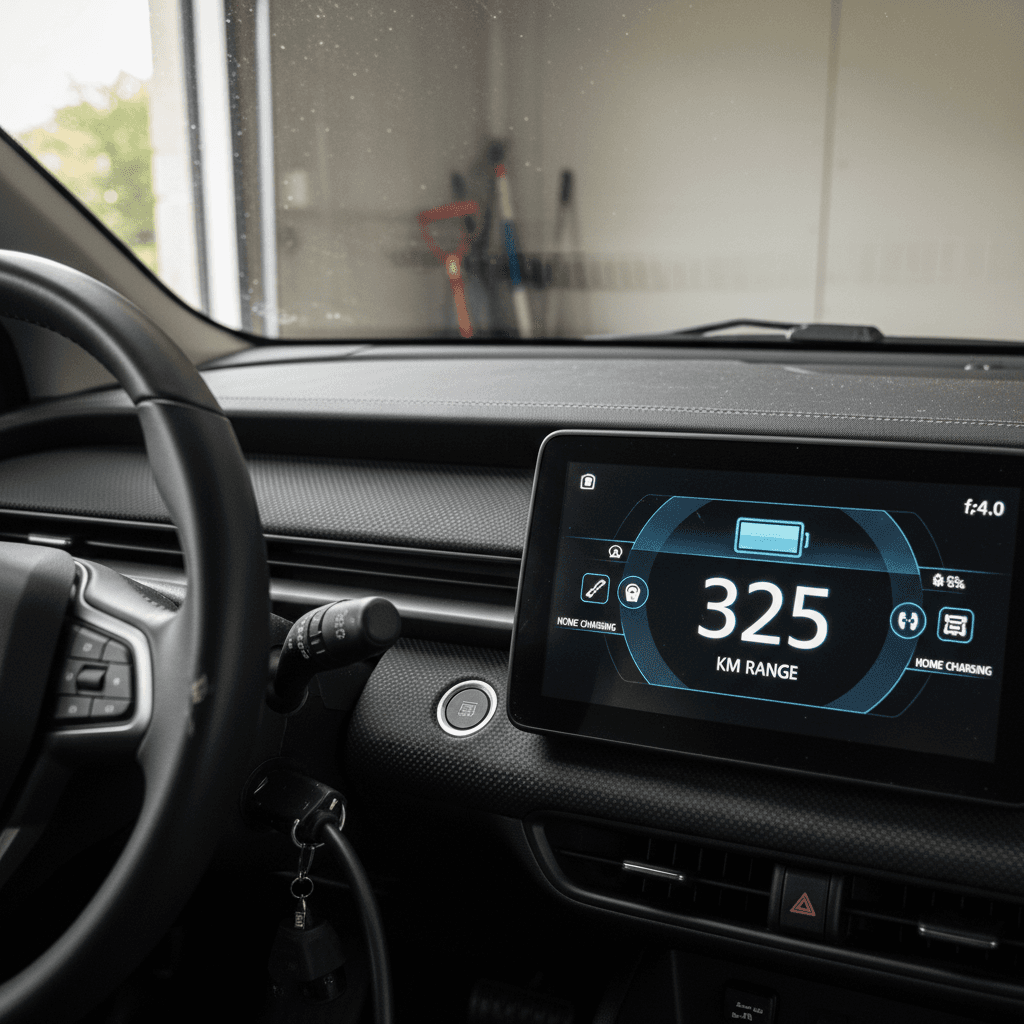
- The heat pump or resistive heater can draw 1–7 kW depending on temperature.
- Seat and steering‑wheel heaters are smaller but still add up.
- Infotainment, lights and accessories sip a few hundred watts.
On a 7 kW Level 2 charger on a cold day, a 3 kW cabin heater can effectively cut your net charging power in half.
When the car is “off” or in sleep/charging mode
- Battery management, pumps and fans stay on as needed.
- The car may quietly cool or warm the battery while charging.
- Cabin climate usually remains off unless you enable special modes (like Tesla’s Dog or Camp modes).
You still use some overhead power, but far less than when blasting heat or A/C.
Cold‑weather hack
Home charging: tips to maximize speed and efficiency
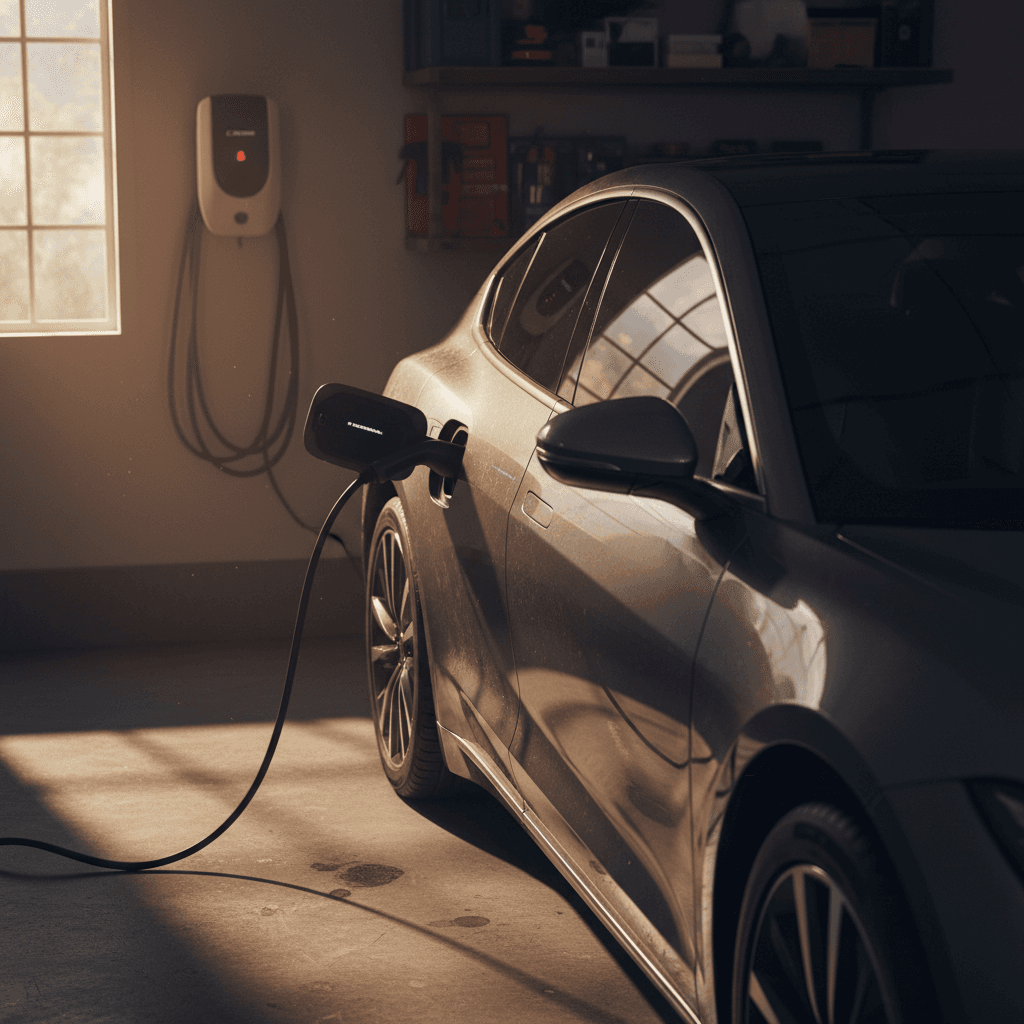
At home, you’re usually on Level 1 or Level 2 AC charging, where every kilowatt counts. The question “does an EV charge faster when off?” really becomes “how do I avoid wasting precious power on non‑essentials while I’m plugged in?”
Smart habits for faster, cleaner home charging
You don’t need to babysit the car, just set things up well once.
Use a dedicated Level 2 circuit
If you can, install a 240V Level 2 charger on its own breaker. That alone can turn an overnight trickle charge into a full refill in 6–10 hours for most EVs.
Schedule charging
Many EVs let you schedule charging to start at night. That can line up with cheaper time‑of‑use rates and gives the battery time to cool down after a drive.
Limit climate while plugged in
Unless you’re preconditioning right before departure, keep cabin climate off or low. The battery doesn’t care if the cabin is toasty at 2 a.m., but your power bill will.
Home charging checklist: get the most from every plug‑in
Confirm your EV’s max AC charging rate
Check your owner’s manual or in‑car menu. If your car only accepts 7 kW on AC, there’s no point paying for an 11 kW wall box unless you want future‑proofing.
Use the thickest, shortest cable you reasonably can
Long, thin extension cords are a bad idea for EVs. They add resistance, reduce power and can overheat. A properly sized, directly wired charger is safer and more efficient.
Dial back climate when you plug in
If you’re leaving the car for hours, switch off seat heaters and fan, and close apps on the main screen. Let the car settle into its low‑power charging mode.
Precondition before departure, not all night
Most EVs can warm or cool the cabin using grid power if they’re plugged in. Schedule that for 15–30 minutes before you leave, not for the whole charging session.
Let the car sleep between checks
Constantly opening the app can wake the car and keep systems running. If you’re plugged into reliable home power, resist the urge to refresh every few minutes.
Where Recharged fits in
Ready to find your next EV?
Browse VehiclesPublic DC fast charging: what really makes it fast or slow
On a DC fast charger, you’re dealing with much higher power, often 50 kW to well over 200 kW. Here, the question “does an EV charge faster when off?” matters a lot less, because the car and charger can usually supply enough power for both the battery and the cabin at the same time.
On vs off at a DC fast charger: what actually changes
Exact behavior varies by brand, but this is how many EVs treat auxiliary loads while DC fast charging.
| Scenario | Charger power | Cabin climate | Effect on charge time |
|---|---|---|---|
| Car off, no climate | 150 kW station | Off | Battery gets nearly all available power. This is as fast as your car and charger allow. |
| Car on, mild climate | 150 kW station | Low fan or seat heat | Battery still gets close to max power; the car may draw a bit extra from the station for climate. |
| Car on, max heat or A/C | 150 kW station | High | On many newer EVs, the car pulls extra power from the charger. You might see a few extra minutes on a 20–80% session, but rarely more. |
| Car on, max climate | 50 kW station | High | On a lower‑power DC charger, heavy climate use may slightly reduce net power into the battery, stretching the session a bit. |
Most drivers won’t see a dramatic time difference between on vs off at a high‑power DC charger, especially when starting below 50–60% state of charge.
Watch out in extreme heat or cold
Battery health: does charging while on hurt the pack?
For long‑term battery life, what matters most is how often you fast‑charge, how hot the pack gets, and how long you sit at high states of charge. Whether the dash is lit up or the start button is on has almost nothing to do with chemistry wear.
- Short, occasional DC fast‑charge sessions (10–60% or 20–80%) are generally fine for modern packs.
- Living at 100% SoC in extreme heat, or repeatedly fast‑charging from nearly empty to full, is harder on the battery.
- A bit of climate use while charging is not a battery killer; it just uses energy that could have gone into the pack.
Bad charging habits to avoid
Used EV shopping: how to spot a healthy fast‑charging car
If you’re looking at a used EV, fast‑charging behavior is a clue to the battery’s history. A healthy pack should be able to take roughly the charging speeds the manufacturer advertised, at least when it’s warm and in the right state‑of‑charge window.
Three signs an EV will still charge well
Questions to ask and things to look for on a test drive
1. Consistent fast‑charge curve
If you can, plug into a DC fast charger and watch how the speed behaves from around 20–60%. Sudden, early tapering or unusually low peak speeds could point to a tired pack, or just a very cold one.
2. Honest battery health report
Look for documentation of state of health (SOH). With Recharged, every car comes with a Recharged Score battery report, so you’re not guessing about how that pack has been treated.
3. Transparent charging history
Ask how the car was used: mostly home charging or constant DC fast‑charging at the highway rest stop? Neither is automatically bad, but a seller who can’t answer basic questions is a red flag.
Buying used through Recharged
FAQ: does an EV charge faster when off, and related questions
Frequently asked questions about EVs charging on vs off
Bottom line: smart habits matter more than on vs off
So, does an EV charge faster when it’s off? Not magically. The big determinants of charging speed are charger power, your EV’s limits, battery temperature and state of charge. Turning the car “off” mainly helps by cutting unnecessary cabin and accessory loads, which matters most on slower home charging and in extreme weather.
If you remember nothing else, remember this: keep climate reasonable while charging, aim your fast‑charge sessions at the low‑to‑mid state‑of‑charge range, and don’t camp at 100% in hot weather. Whether you’re shopping for your first EV or your next used one, those habits will give you quicker, cleaner charge stops and happier batteries.
And if you’re ready to make the jump into a used EV, Recharged is built to make that easy: transparent pricing, verified battery health and EV‑savvy support from first search to delivery. That way, you can spend less time worrying about charging myths, and more time enjoying electric miles.