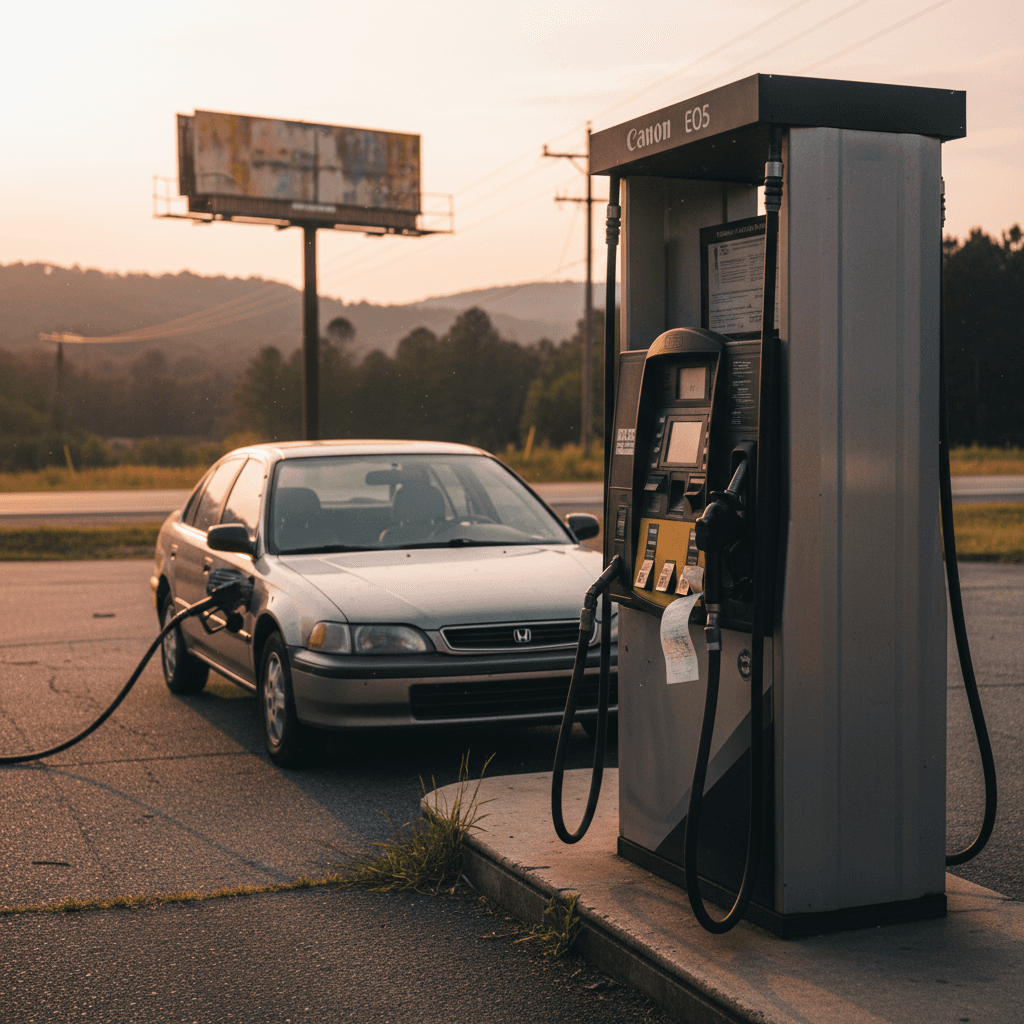
If you live in Georgia, you don’t need a headline to tell you that gas prices in Georgia in 2026 have gotten ugly. In just a few weeks, regular gas has jumped well past the three‑dollar mark and into four‑dollar territory at many Atlanta‑area stations, with volatility that makes it hard to budget from one fill‑up to the next. Let’s break down what’s driving prices, how long this may last, and what you can realistically do about it, including whether it’s time to put a used EV on your short list.
Dates to keep in mind
Overview: Gas prices in Georgia in 2026
Quick snapshot of Georgia fuel costs in 2026
In March 2026, the national average price of regular gasoline pushed above $4.00 per gallon, the highest since 2022. Georgia, usually a relatively low‑cost state for fuel, saw averages around $4.06 per gallon, and higher at brand‑name and freeway stations. Prices have been whipsawing with every fresh headline from the Middle East, leaving Georgia drivers trying to guess what the pump will say on Friday based on what it cost on Monday.
Why this year feels different
What are gas prices in Georgia right now?
On March 12, 2026, average gas prices in Georgia were reported around $4.06 per gallon for regular. By the end of March, the U.S. national average had surged to roughly $4.02, and Georgia has been hovering in that same rough neighborhood, sometimes a few cents below the national number, sometimes a hair above depending on local competition and supply.
- Urban areas like metro Atlanta and Savannah tend to run higher, especially near interstates and airports.
- Rural areas can be a few cents cheaper, but price gaps have narrowed as wholesale costs jump across the board.
- Brand‑name stations (Shell, Chevron, BP) often post higher prices than discount chains and warehouse clubs.
- Premium fuel can be 60–80 cents per gallon more than regular, which adds up fast if your vehicle requires it.
Check local prices, not just the state average
Why are Georgia gas prices so high in 2026?
Every spike at the pump has a story. In 2026, that story is dominated by the Iran war and global oil markets. When conflict shuts down or threatens key shipping lanes in the Middle East, crude oil prices jump. Since crude is the main ingredient in gasoline, that jump flows straight through to the rack price refineries charge distributors, and ultimately to you at the corner station.
What’s pushing Georgia gas prices higher?
Some factors you can’t control, and a few you can plan around.
Middle East conflict
War in Iran has rattled global oil markets, sending crude prices sharply higher. Traders build a "risk premium" into every barrel when they’re not sure how much supply might be disrupted next week.
Refining & distribution costs
Even after crude is purchased, refiners and transport companies are paying more for labor, insurance, and compliance. Those higher costs show up as a few extra cents, sometimes dimes, per gallon at retail.
Seasonal blends & demand
Spring and summer usually bring pricier gasoline as refiners switch to summer blends and Americans drive more. In 2026, that normal seasonal bump is landing on top of war‑driven price spikes.
Global forces you can’t change
- Crude oil prices respond instantly to wars, sanctions, and OPEC decisions.
- Exchange rates and global economic growth change how much demand there is for fuel.
- Shipping bottlenecks at chokepoints like the Strait of Hormuz ripple into wholesale prices everywhere, including Georgia.
Local forces that shape Georgia’s prices
- State and local taxes add fixed cents per gallon on top of wholesale costs.
- Competition among nearby stations influences how quickly prices move up, or back down.
- Pipeline and terminal access in the Southeast can make some regions of Georgia slightly cheaper than others.
The uncomfortable truth
How Georgia gas taxes affect what you pay
Even before international headlines hit the price boards, every gallon of gasoline in Georgia carries a mix of state, local, and federal taxes. These don’t move as fast as crude oil, but they’re baked into every price you see on the marquee.
Georgia gas tax components in 2026
Key taxes that are typically included in the pump price for regular gasoline.
| Component | Approx. amount per gallon | Notes |
|---|---|---|
| Federal gasoline tax | 18.4¢ | Applies in every state; funds federal highway programs. |
| Georgia state excise tax | ~33¢ | Baseline motor fuel tax on gasoline before temporary suspensions in 2026. |
| Additional GA sales/local taxes | Varies (often a few cents) | Local option sales taxes can apply to the fuel price, including the federal tax. |
| Total typical taxes | ~50–55¢ | Combined federal + state + local taxes per gallon in normal conditions. |
Exact local add‑ons vary by county and city, but the state and federal pieces are broadly consistent across Georgia.
Temporary 2026 gas tax relief
Tax suspensions feel great at the pump, but they don’t fix the underlying volatility. When the suspension ends, the tax snaps right back onto every gallon, and unless crude oil happens to be cheaper that week, you’ll feel the full jump.
2026 and beyond: Gas price outlook for Georgia
Before the Iran war escalated, federal energy forecasters expected U.S. regular gasoline to average about $3.10–$3.35 per gallon in 2025 and roughly $3.10 in 2026. Georgia typically runs a bit below the national average thanks to relatively low taxes and good pipeline access.
Then came the conflict. In early 2026, the national average jumped into the high $3s and then over $4.00. Some analysts now expect the actual 2026 average to land significantly higher than those earlier forecasts if the conflict and shipping disruptions drag on for months instead of weeks.
Possible gas price paths for Georgia
No crystal ball, just scenarios to help you plan.
Best‑case scenario
Hostilities ease and crude prices retreat. Georgia’s average could slide back toward the low‑$3 range by late 2026, with temporary dips below $3 on price‑war days.
Middle‑of‑the‑road
Conflict drags on but doesn’t worsen. Georgia spends much of 2026 in the mid‑$3s to low‑$4s, with spikes around holidays and hurricane season.
Worst‑case
Supply disruptions deepen or spread. Short‑term, Georgia could see sustained prices well above $4, and a few scary days closer to $5, before markets stabilize.
Plan based on your budget, not the forecast
Gas vs. EV in Georgia: What does “fueling” really cost?
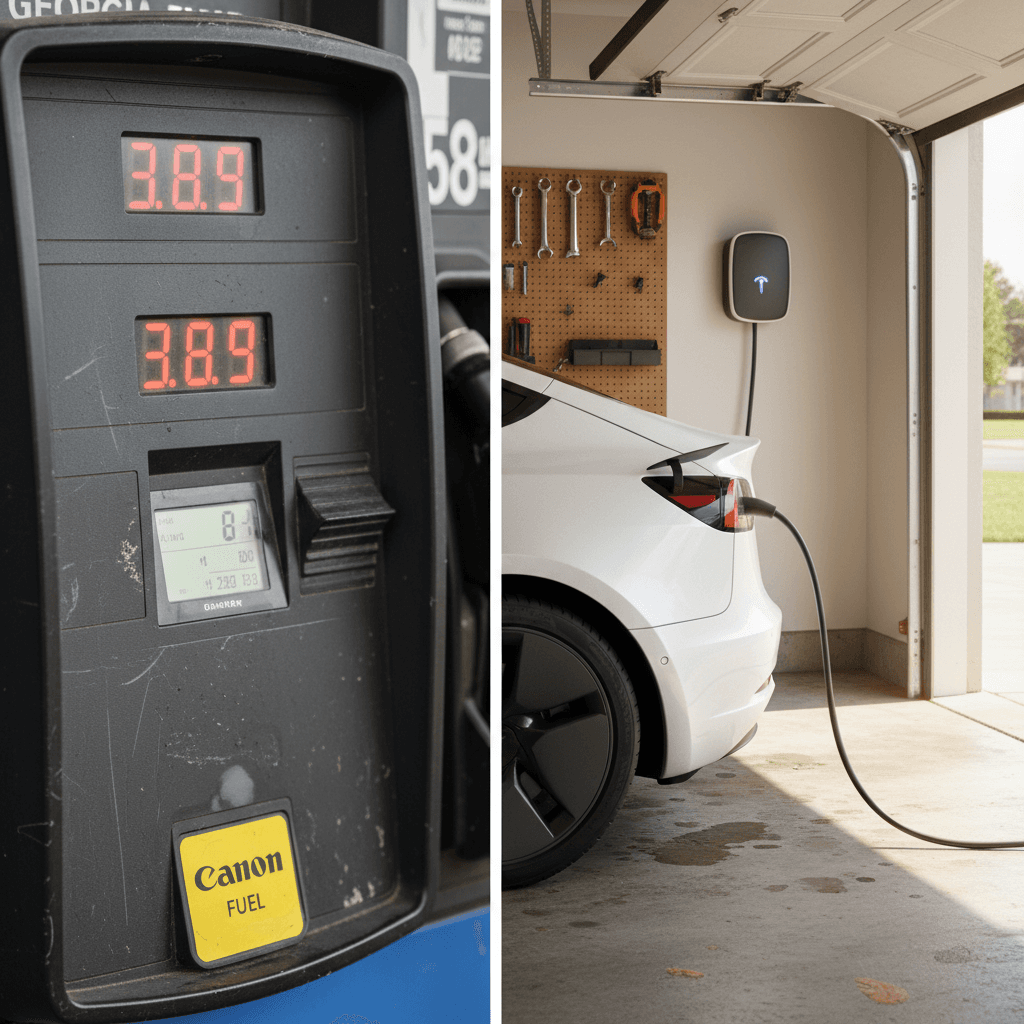
If you’re tired of watching gas prices in Georgia yo‑yo every time there’s breaking news, it’s worth looking at how an electric vehicle behaves in the same environment. Spoiler: electrons don’t care what OPEC did this week.
Typical gas car in Georgia, 2026
- Fuel economy: 25 mpg (a realistic, mixed‑driving average).
- Gas price assumption: $4.00–$4.25 per gallon.
- Cost per mile: About $0.16–$0.17.
- 12,000 miles/year: $1,900–$2,000+ in gasoline.
Push prices to $4.50, and you’re staring down $2,160 per year just in fuel.
Typical EV in Georgia, home charging
- Efficiency: Roughly 3–3.5 miles per kWh for many modern EVs.
- Residential electricity: Roughly 13–15¢ per kWh in much of Georgia.
- Cost per mile: Often around $0.04–$0.05 when charging mainly at home.
- 12,000 miles/year: Around $500–$600 in electricity.
Even if you mix in some public DC fast charging, total "fuel" costs usually stay well below gas, without the headline drama.
Why more Georgians are looking at used EVs
Ready to find your next EV?
Browse VehiclesStrategies to lower your fuel bill in 2026
Practical ways to fight high gas prices in Georgia
1. Tighten up your driving habits
Combine errands, avoid unnecessary trips, and use real‑time traffic to stay out of jams. Cutting even 10–15% of your weekly miles is like getting a permanent mini fuel‑economy upgrade.
2. Drive smoother, not slower
Aggressive starts and hard braking can hammer your fuel economy. Smooth acceleration, early coasting, and using cruise control where it’s safe can trim your gallons burned without adding much time to your commute.
3. Check tire pressure and maintenance
Under‑inflated tires and overdue maintenance quietly eat fuel. Keep tires at the recommended pressure, change air filters, and address check‑engine lights quickly, especially ones tied to emissions or sensors.
4. Shop stations, not just brands
In many Georgia neighborhoods, the spread between the cheapest and priciest station can be 20–30 cents a gallon on the same day. Use price apps and warehouse clubs when you can, but don’t burn extra gas driving across town for a tiny savings.
5. Consider a second vehicle that’s electric
You don’t have to replace your gasoline vehicle tomorrow. A used EV as a second car can soak up the bulk of your daily miles, school runs, commutes, errands, while your gas car handles the occasional road trip or towing duty.
6. Run the total‑cost‑of‑ownership numbers
Look beyond the sticker price. Compare insurance, maintenance, fuel or electricity, and expected resale value over at least three to five years. Tools like a <strong>Recharged Score Report</strong> on a used EV make it easier to project real‑world costs.
Don’t chase cheap gas across half the state
How Recharged helps Georgia drivers control costs
If 2026 has convinced you that you’re done budgeting around wars and OPEC meetings, moving to an EV, and especially a used EV, can be a smart next step. That’s where Recharged comes in.
Turn pump anxiety into predictable costs
What Recharged adds to the used‑EV equation for Georgia drivers.
Verified battery health
Every vehicle on Recharged comes with a Recharged Score Report, including verified battery diagnostics. That helps you avoid surprises and estimate real‑world range and charging costs instead of guessing.
Transparent pricing & financing
Because Recharged is built around fair‑market pricing and EV‑savvy financing, you can compare a monthly EV payment plus electricity directly against your current gas spend, without any fuzzy math.
Digital buying, real‑world support
Shop entirely online, get expert EV guidance, arrange trade‑in or consignment for your gas car, and have your vehicle delivered in Georgia. There’s even an Experience Center in Richmond, VA for hands‑on shoppers.
Use today’s gas price spike as a benchmark
FAQ: Gas prices in Georgia 2026
Frequently asked questions about Georgia gas prices in 2026
Bottom line: Should you plan around gas, or go electric?
Gas prices in Georgia in 2026 are reminding all of us that gasoline is a global commodity with local consequences. You can’t vote in OPEC meetings or negotiate with the Strait of Hormuz, but you can decide how exposed your household budget is to every new headline.
If you’re staying with gasoline for now, focus on the levers you control: driving fewer wasted miles, keeping your car in top shape, and shopping smart for fuel. If you’re ready to step off the roller coaster, start running the numbers on a used EV. With verified battery health, fair pricing, and EV‑savvy support from Recharged, you can turn a year of wild gas prices into the moment you took back control of your monthly costs.