If you drive an electric vehicle in Delaware, you’ve probably wondered whether owning an EV lets you use HOV (high‑occupancy vehicle) lanes by yourself. The phrase “Delaware EV HOV lane rules” gets tossed around in forums and at charging stations, but the reality is more nuanced, and, for most Delaware drivers, simpler, than you might think.
Quick answer
Overview: How Delaware EV HOV Lane Rules Work
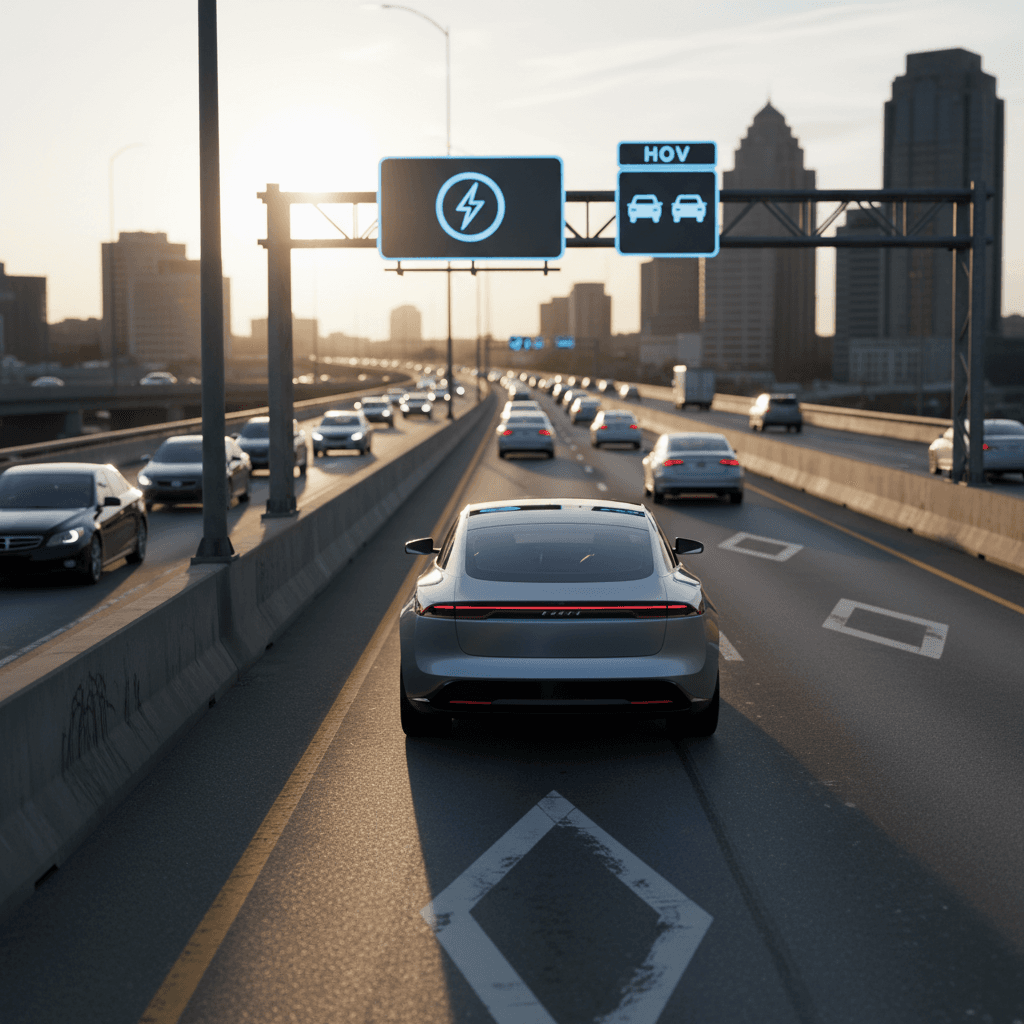
Start with this principle: Delaware follows standard HOV rules based on vehicle occupancy. Under Delaware’s transportation regulations, “preferential” or HOV lanes are governed by signs that spell out the minimum number of occupants, usually 2+ or 3+. Delaware’s version of the Manual on Uniform Traffic Control Devices includes an option for an Inherently Low Emission Vehicle (ILEV) sign that can allow qualified low‑emission vehicles into an HOV lane regardless of occupancy, but that’s an option for agencies to use, not an automatic right written into every lane.
Where EVs Fit in Delaware’s Transportation Picture
These numbers matter because they explain Delaware’s direction: the state is aggressively promoting EVs through rebates and infrastructure, while also shoring up road funding with new EV fees. But so far, that effort has not translated into a broad HOV advantage for EV drivers.
Does Delaware Let EVs Use HOV Lanes With a Single Occupant?
What most drivers assume
Many EV owners have seen programs in other states, like older clean‑pass or green‑sticker schemes, that once let solo EVs use HOV lanes. It’s easy to assume Delaware has something similar.
What Delaware actually does
Delaware does not currently run a general program that lets every EV drive solo in HOV lanes. If an HOV lane exists, you still need the posted minimum number of occupants, unless a specific sign or decal program says a certain class of vehicle is exempt.
No blanket EV carpool privilege
Delaware’s rules line up with a broader national trend. As of late 2025, many states have scaled back or ended the perk of letting single‑occupant EVs use HOV lanes. Instead, they focus on tolls, registration fees, and purchase incentives to manage traffic and encourage cleaner vehicles. Delaware has leaned into those levers, not HOV lane perks, so far.
Where HOV Lanes Actually Exist for Delaware Drivers
- Commute into Pennsylvania (for example, around Philadelphia)
- Drive through New Jersey or Maryland toward metro areas
- Travel on express lanes around Washington, D.C. or New York City
For Delaware residents, that means “Delaware EV HOV rules” really breaks into two parts: what Delaware’s own law says, and what neighboring states require once you cross the border.
HOV Reality for a Delaware-Based EV Driver
Think regionally, not just state‑by‑state
Inside Delaware
HOV lanes are rare. Daily congestion is usually managed with standard lanes and tolls, not big HOV corridors.
Cross‑border commutes
Head toward Philadelphia, Baltimore, DC, or NYC and you’ll hit HOV or express lanes that apply their own EV rules.
Multi‑state rules
Your Delaware registration doesn’t override local HOV rules in other states. Always follow posted signs where you’re driving.
Plan before your first new commute
ILEV Signs, Special Plates and What They Mean
Delaware’s administrative code explicitly references an ILEV (Inherently Low Emission Vehicle) sign that can be used on HOV facilities. When an agency decides it’s appropriate, it can post an ILEV plaque alongside the HOV occupancy sign to show that labeled ILEVs may use that lane even when they don’t meet the passenger requirement.
- The base HOV sign (R3‑10, R3‑13 series) tells you the minimum number of occupants and the hours the rule applies.
- An optional ILEV sign (R3‑10a) can be added where the agency has created a program for low‑emission vehicles.
- Only vehicles that are properly labeled and certified under that program get the benefit; just being an EV is not enough.
- As of early 2026, Delaware has focused on EV rebates, fees and charging infrastructure, not a widely publicized ILEV‑HOV decal program.
Look for more than a diamond
If you happen to see a sign that explicitly calls out low‑emission vehicles, read the fine print. Some programs are limited to in‑state registrations only or require special license plates or decals. A Delaware plate on an EV won’t automatically qualify you for a Pennsylvania‑ or New Jersey‑only program.
How to Read HOV and Preferential Lane Signs in Delaware
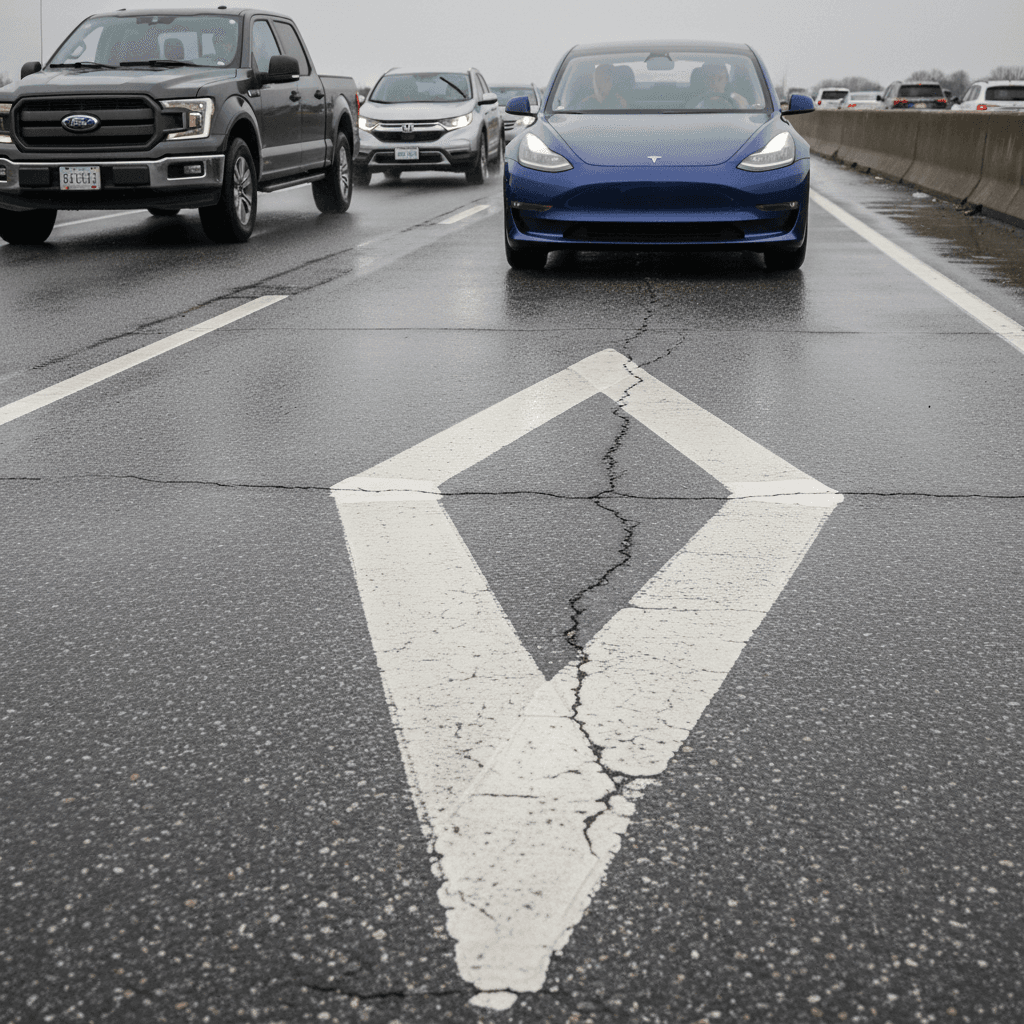
Even if you rarely see HOV lanes in Delaware itself, you’ll encounter the same sign designs across much of the East Coast. Understanding them is essential if you commute out of state in your EV.
Checklist: Decoding an HOV Sign Cluster in Your EV
1. Find the white diamond
If a lane is separated by a double solid white line and has diamond symbols, assume it’s an HOV or managed lane and that special rules apply during posted hours.
2. Read the occupancy requirement
Look for wording like “<strong>HOV 2+</strong>” or “<strong>HOV 3+</strong>.” This tells you how many people must be in the car during restricted hours, EVs included.
3. Check the time window
Many HOV rules only apply at rush hour (for example, 6–9 a.m., 3–7 p.m.). Outside those times, the lane may be open to all vehicles.
4. Scan for additional plaques
Small rectangles under the main sign may say things like “<strong>Motorcycles OK</strong>,” “<strong>ILEV OK</strong>,” or “<strong>Clean Fuel Vehicles</strong>.” That’s where EV‑specific exceptions would appear.
5. Confirm your eligibility
If a plaque mentions low‑emission vehicles, make sure your car actually has the required plate or decal. If you’re not 100% sure, stay out of the lane when solo.
Practical Tips for EV Commuters in the Delaware Region
Because Delaware’s EV perks focus on rebates, infrastructure and fees instead of HOV access, your commute strategy should center on timing, route choice and charging, not hunting for special lane privileges that probably don’t exist on your drive.
Smart Strategies for Delaware EV Commuters
Make up in planning what you don’t get in HOV perks
Shift your schedule
If your job allows, sliding your commute half an hour earlier or later often beats any advantage a hypothetical HOV lane would give you.
Leverage fast charging
Plan quick stops at DC fast chargers or Level 3 sites along I‑95 and US‑13 so you can run at efficient speeds instead of creeping in traffic worrying about range.
Use traffic‑aware navigation
Most modern EVs and navigation apps can route you around recurring bottlenecks. They don’t care whether a lane is marked HOV, they just care which route is fastest right now.
How Recharged can help
Ready to find your next EV?
Browse VehiclesDo HOV Rules Matter When You’re Buying a Used EV?
For many Delaware shoppers, HOV access is less important than range, charging speed and cost. But it’s still worth thinking about lane rules if you regularly cross state lines into areas with heavy HOV or express‑lane usage.
How Much HOV Rules Should Influence Your Used EV Choice
Consider HOV access as one factor among several when you’re comparing used EVs.
| Your commute profile | How much HOV access matters | What to prioritize in a used EV |
|---|---|---|
| Mostly within Delaware, few HOV corridors | Low | Battery health, winter range, home charging compatibility |
| Daily into Philadelphia or South Jersey | Medium | DC fast‑charging capability, lane‑keeping assist, comfort features for stop‑and‑go |
| Regular trips to DC or Baltimore | Medium–High | Comfort and safety tech in express lanes, reliable charging on I‑95 |
| Occasional long‑distance travel only | Low–Medium | Range, DC fast‑charging speed, cargo space for trips |
In practice, you’ll benefit more from a healthy battery and good charging options than from a theoretical HOV perk that may not exist on your route.
Even if your commute would theoretically benefit from HOV access, remember that most East Coast programs now demand actual carpooling or charge variable tolls, regardless of powertrain. When you work with a seller like Recharged, you can focus on EV traits that reliably save you time and money, without betting on a policy perk that might change mid‑ownership.
Future Outlook: Delaware EV Policy vs. HOV Access
Delaware’s recent policy moves tell a clear story. Lawmakers have extended EV purchase and charging rebates through April 2026, added new annual EV registration fees to stabilize the Transportation Trust Fund, and supported requirements for EV‑ready wiring in many new homes. That’s a long‑term commitment to electrification, but it hasn’t come with a promise of solo HOV access for EVs.
What EV Drivers Should Expect Over the Next Few Years
Traffic & lane‑use policy
HOV lanes will likely remain <strong>rare inside Delaware</strong>, with congestion controlled mainly by tolling and standard lane management.
Regional HOV and HOT (toll) lanes around major metros will continue to tweak pricing and eligibility, often in ways that treat EVs like any other vehicle.
If Delaware ever builds new HOV corridors, expect the initial focus to be on <strong>occupancy and bus priority</strong>, not EV exemptions.
EV ownership & incentives
The state will likely keep favoring <strong>rebates, infrastructure grants and fee changes</strong> over HOV perks as its main EV policy tools.
More multi‑family housing and new construction will include EV‑ready parking, making it easier to own an EV even without HOV benefits.
Used EV buyers will see a growing market of vehicles originally sold with rebates or tax credits, making the economics more attractive even without lane privileges.
Watch the fee side, not the lane side
FAQ: Delaware EV HOV Lane Rules
Frequently Asked Questions About Delaware EV HOV Rules
Key Takeaways for Delaware EV Drivers
- Delaware’s EV policies in 2026 emphasize rebates, charging infrastructure and new EV fees, not special HOV access.
- There is no statewide program that lets all EVs use HOV lanes solo; occupancy rules still apply wherever HOV lanes exist.
- HOV lanes are rare inside Delaware, so most EV owners encounter HOV rules only when crossing into neighboring states.
- If an HOV lane does allow low‑emission vehicles with fewer occupants, it will be clearly signed with ILEV or clean‑fuel plaques and may require special plates or decals.
- When shopping for a used EV, especially through Recharged, you’ll usually get more real‑world benefit from range, charging speed and battery health than from chasing an HOV perk you might never use.
For Delaware drivers, the bottom line is simple: treat HOV rules as an occupancy question first and an EV question a distant second. Your best move is to pick an electric vehicle that fits your budget and commute, keep an eye on evolving state incentives and fees, and always read the signs on the road. If you’re weighing different used EVs with a tricky regional commute, Recharged can help you compare options, battery health, range and charging included, so lane rules are just one small part of a much clearer picture.