Delaware’s electric car charging network is small but surprisingly consequential. The state is a skinny land bridge between DC, Philly, New York and the beaches, so if you own or are shopping for an EV in Delaware, you care about one thing above all: can you get from I‑95 to Rehoboth and back without white‑knuckle range anxiety? This guide walks you through how the Delaware electric car charging network really feels to use in 2026, and how to work around its weak spots.
Why Delaware’s network matters more than its size
Delaware’s EV charging network at a glance
Snapshot of Delaware’s public EV charging network
On raw numbers, Delaware is a minnow: a few hundred public charging stations compared with thousands in larger states. But for a driver, what matters is **where** those chargers sit and **how reliably** they work. The good news is that the most critical routes, through Wilmington on I‑95 and down DE‑1 toward the beaches, are no longer the charging deserts they were a few years ago. The bad news is that once you leave those corridors, you can still find yourself babysitting a Level 2 charger for hours.

Where Delaware’s chargers actually are
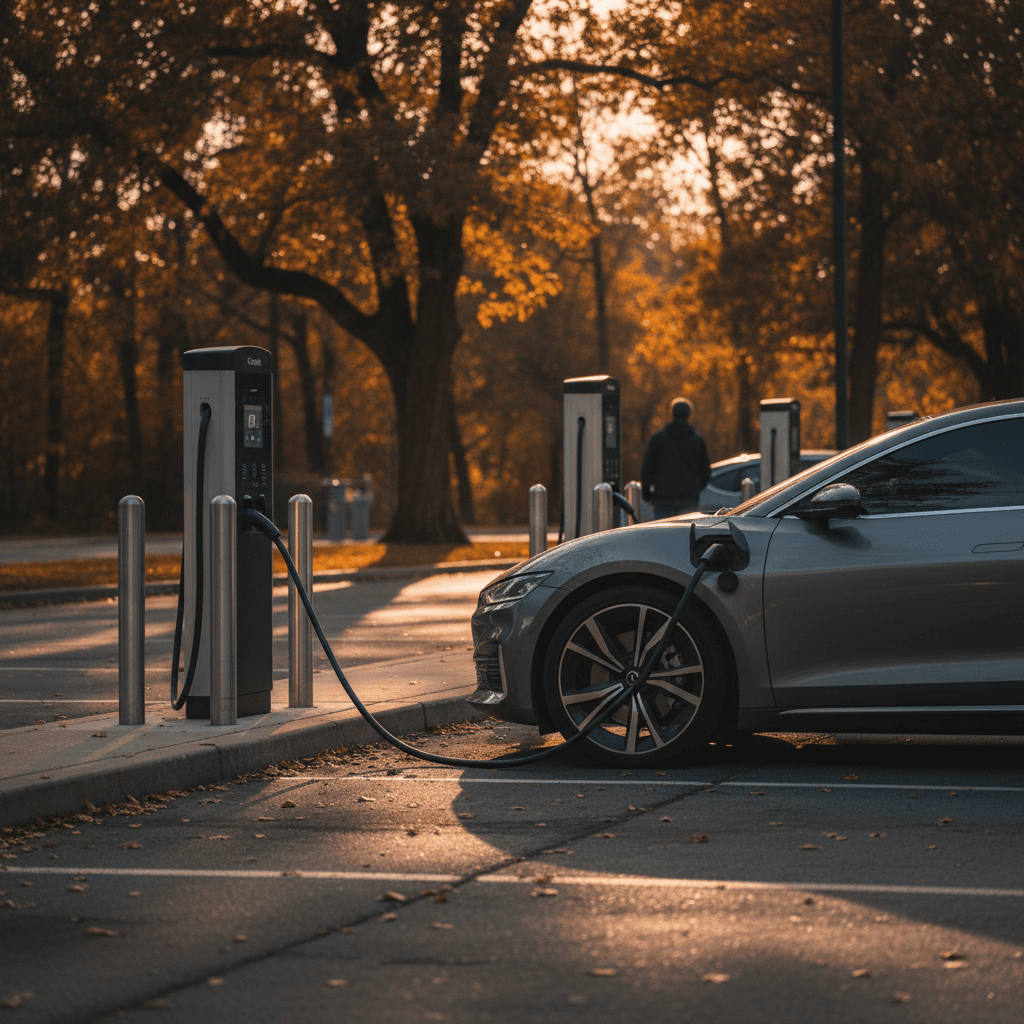
Broadly, Delaware’s electric car charging network falls into four buckets: interstate fast chargers at highway exits, slower Level 2 clusters in cities, destination chargers at hotels and attractions, and a scattering of utility or workplace sites. The pattern reflects how the state sees itself, part commuter corridor, part vacation funnel, part bedroom community for bigger metro areas nearby.
The four main “flavors” of charging in Delaware
Understanding these helps you plan realistic charge stops instead of wishful thinking.
1. Corridor fast chargers
Found at highway interchanges, travel plazas and big-box parking lots along I‑95, DE‑1, US‑13 and US‑113.
- Typically DC fast chargers (50–350 kW)
- Operate under networks like Tesla, Electrify America, EVgo or Shell Recharge
- Best for road trips and quick top‑ups
2. Urban Level 2 clusters
Parking garages, municipal lots and campuses in Wilmington, Newark and Dover.
- 6–10 kW Level 2 chargers
- Park‑for‑hours situations: office, dinner, a movie, a Blue Rocks game
- Often run by ChargePoint, Flo, Blink or local networks
3. Destination and resort chargers
Hotels, inns and attractions in beach towns like Rehoboth, Lewes, Bethany and Fenwick.
- Mix of Level 2 and legacy Tesla destination chargers
- Great if you’re staying overnight; useless if you’re in a hurry
4. Workplace & utility‑linked charging
Office parks, government buildings, and utility‑supported sites, especially in New Castle County.
- Key for commuters without home charging
- Sometimes limited to employees or specific programs
Don’t rely on one map alone
Fast charging on I‑95, DE‑1 and major corridors
If Delaware has a backbone, it’s the line of DC fast chargers that mirrors its highways. I‑95 hums along the top edge of the state; DE‑1 peels off south toward the beaches; US‑13 and US‑113 form a parallel spine on the Delmarva Peninsula. That’s where federal NEVI money and private networks are concentrating their bets, and where most out‑of‑state EV drivers ever meet Delaware’s grid.
Key Delaware EV charging corridors in 2026
Use this as a mental map, then confirm exact locations and power levels in real‑time apps before you drive.
| Corridor | Primary role | Typical charging options | Driver takeaway |
|---|---|---|---|
| I‑95 (Wilmington corridor) | Northeast interstate funnel between Baltimore, Philly and NYC | Multiple DC fast sites near service plazas, Wawa and shopping centers, plus dense Level 2 in Wilmington/Newark | If you’re just passing through on I‑95, Delaware is no longer the weak link. |
| DE‑1 (Christiana to beaches) | Main north–south spine to Dover and coastal resorts | Growing mix of DC fast at big‑box clusters and Wawa/royal‑blue travel stops; Level 2 in towns | Plan one proper fast stop on the way down and another before heading home. |
| US‑13 / US‑113 (Delmarva inland route) | Alternative to DE‑1 for southbound trips | Fewer fast chargers; more dependence on Level 2 in towns and at hotels | Fine for patient drivers or plug‑in hybrids; pure EVs need a plan B. |
| SR‑896 / Newark area | Commuter corridor to the University of Delaware | Level 2 around campus and retail; limited DC fast nearby | Good for top‑ups if you’re parked for class or work, not a fast‑in‑fast‑out zone. |
Power ratings and exact station counts change frequently, treat this as a planning framework, not gospel.
Think in 60–80‑mile segments
Charging in Wilmington and New Castle County
If Delaware’s charging network has something like a beating heart, it’s New Castle County. Wilmington, Newark and their suburbs concentrate the state’s EV ownership and, naturally, the plugs. The county’s “100 EV Plugs Plan,” launched in 2023, has already put dozens of public Level 2 chargers into libraries, parks and parking lots, with more on the way as projects clear permitting and utility work.
Wilmington core
Inside Wilmington proper, you’ll find chargers in:
- Downtown and Riverfront parking garages
- Hospital and university campuses
- Municipal lots near courthouses and office towers
These are mostly Level 2 at urban parking rates: perfect if you’re downtown for work or a ballgame, not so great if you were dreaming of a 15‑minute splash‑and‑dash.
Newark, Christiana & suburbs
Out toward Newark and the massive Christiana retail cluster, you see a different pattern:
- Higher density of DC fast chargers near malls and highway exits
- Employer and campus Level 2 for the University of Delaware crowd
- Scattered hotel and big‑box parking lot chargers
For many Delaware EV owners, this is where you grab a fast charge while you shop, then head home to cheaper overnight juice.
New Castle County’s quiet win
Beach towns and lower Delaware: great destination, patchy charging
Drive south past Dover and you enter Delaware’s second identity: beach country. Rehoboth, Lewes, Bethany and Fenwick were built for towels and funnel cake, not 1,000‑volt power electronics. The charging network is catching up, but if you roll in on a July weekend with 8% battery and hope, you’re rolling the dice.
EV charging reality in Delaware’s beach towns
Think of it as “good if you plan, bad if you wing it.”
The good news
- Many hotels and inns now advertise Level 2 charging as an amenity.
- Municipal lots in towns like Rehoboth and Lewes have added public chargers.
- More DC fast plugs are appearing at highway‑adjacent retail before you actually hit the boardwalk.
The bad news
- Limited number of fast chargers, and they can clog on holiday weekends.
- Some “destination” chargers are for guests only or blocked by gas cars.
- Seasonal parking rules and paid lots can complicate long charges.
How to stay sane
- Arrive at the coast with 40–60% battery, not fumes.
- Book lodging that explicitly confirms EV charging access.
- Plan your departure day around a breakfast‑or‑lunch fast charge inland before heading home.
Beach‑town worst‑case scenario
Home, workplace and utility programs
For most Delaware EV owners, public chargers are the supporting cast. The star of the show is still home or workplace charging, where electricity is cheaper, time is flexible, and you’re not staring at the pump wondering how you got here.
Making the most of Delaware’s off‑street charging
1. Install a 240‑volt Level 2 at home (if you can)
If you have a driveway or garage, a 240‑volt circuit and a wallbox or portable Level 2 charger will turn your EV into a ‘full every morning’ appliance. Most Delaware homes can support at least a 32–40 amp circuit with modest electrical upgrades.
2. Join Delmarva Power’s EVsmart® program
Delmarva Power’s EVsmart® Smart Charge Management program offers bill credits if you let them nudge your charging to off‑peak hours. Enroll your car or smart charger and you can earn annual incentives while easing strain on the grid.
3. Ask your employer about workplace charging
New office developments and business campuses in New Castle and Kent counties increasingly include Level 2 chargers. Even a few hours of 6–7 kW at work can halve your need for public chargers.
4. For renters, look for ‘EV‑curious’ landlords
In older rowhouse blocks, running new conduit can be tough. But some landlords are starting to see EV‑ready parking as a differentiator. Ask whether adding a shared Level 2 is on the table, and whether you can cost‑share.
5. Understand apartment and condo politics
Condo boards move at the speed of continental drift, but several Delaware associations now have formal policies for shared charging. Show them sample policies from other states and highlight that **controlled access + usage billing** avoids freeloading.
Let the grid work for you
How to plan an EV trip through Delaware
Because Delaware is compact, it’s tempting to treat it as a drive‑through state you can ‘wing’ on battery alone. That’s exactly how people get stranded at 2 a.m. in a closed parking lot outside Dover. The state’s electric car charging network is good enough that you don’t need drama, but not so dense that you can ignore it.
Step‑by‑step: planning a low‑stress EV trip in Delaware
1. Start with your worst‑case weather range
In winter or at highway speeds, assume your EV’s **effective range is 25–30% lower** than the brochure number. Plan Delaware segments around that pessimistic number, not the marketing fantasy.
2. Mark real fast chargers along your route
Use PlugShare or A Better Routeplanner to find DC fast chargers on I‑95, DE‑1 and key exits. Filter out broken or consistently low‑rated stations. Save at least two options within 20–30 miles of each other.
3. Build in one ‘anchor’ charge each way
Northbound or southbound, pick one stop where you’d be happy to linger, an outlet mall, a Wawa with decent food, a town center, and plan to charge from ~20–30% to ~70–80% there. Everything else is contingency.
4. Avoid deep discharges in the lower half of the state
Below Dover, treat anything under 20–25% as an emergency, not a goal. Density thins out, and detours to working chargers get longer and more rural.
5. Verify parking rules and access hours
Some chargers sit behind gates, in paid lots or in garages that close overnight. Read recent user check‑ins and, if in doubt, call the host business before you bank your trip on that plug.
6. Layer in a Plan B if you’re new to EVs
If you’re on your first or second EV road trip, over‑plan. Add a backup charger, leave more buffer, and don’t be shy about taking an extra 10 minutes at the plug. Confidence comes after a few uneventful drives.
Old data can bite you
What’s coming next for Delaware’s charging network
The headline for 2026 and beyond is simple: more fast chargers along the same key corridors. Federal NEVI funding earmarked for Delaware and regional utility initiatives are being aimed like darts at I‑95 exits, DE‑1 travel stops and a few strategic inland towns. The goal is to make it impossible to drive more than about 50 miles on a designated corridor without tripping over a fast charger.
How Delaware’s charging landscape is likely to evolve
Short term (2026–2027)
More DC fast sites at existing highway clusters, think additional cabinets at travel plazas and Wawa locations.
New fast chargers in a few currently thin spots on DE‑1 and US‑13/113, smoothing north–south trips.
Incremental Level 2 build‑out in New Castle County as the ‘100 EV Plugs’ vision fills in remaining gaps.
Refinements to utility programs that pay you more clearly to charge off‑peak.
Medium term (late 2020s)
Higher‑power chargers (350 kW and beyond) become more common at multi‑stall sites, making 10–20 minute stops realistic for newer EVs.
More mixed‑network plazas, Tesla, Electrify America, Ionna and others sharing the same parking lot, so you’re not locked to one brand.
Better coverage in beach towns and secondary highways as local governments realize EV drivers are tourists with credit cards.
Smarter integration with the grid: dynamic pricing, managed charging and perhaps vehicle‑to‑home pilots in coastal communities.
Politics vs. infrastructure inertia
What this means if you’re buying a used EV in Delaware
If you’re shopping for a used EV in Delaware, or in nearby states but planning to live with the car here, the charging network should inform what you buy, almost as much as the car’s color or trim. The right match between battery size, charging speed and your daily routes will make the state’s modest network feel adequate instead of marginal.
Match your used EV to Delaware’s charging reality
Three common buyer profiles and what the network will feel like for each.
Suburban commuter (New Castle County)
Typical life: 30–60 miles a day, mix of I‑95, DE‑1 and local streets.
- A 200–250 mile used EV feels comfortable if you can charge at home or work.
- New Castle’s Level 2 network plus a few DC fast options cover surprises.
- Look for cars that can take at least 100 kW on DC fast; it makes mall‑and‑errand stops efficient.
Beach‑oriented family
Typical life: Weekdays inland, frequent summer runs to Rehoboth/Lewes.
- A larger‑battery EV (250–300+ miles) gives you margin when chargers are crowded.
- If you can’t install home charging, favor models with strong fast‑charging curves.
- Book lodging with guaranteed overnight charging; it’s effectively refrigerated parking for your range.
I‑95 road‑tripper
Typical life: Delaware is one piece of regular DC–NY or Philly–DC drives.
- Charging density is improving along I‑95, but reliability still varies by network.
- Favor used EVs with good cold‑weather efficiency and 120–150 kW DC capability.
- Test drive on the highway and watch real‑world consumption before you sign.
How Recharged can help in Delaware
Ready to find your next EV?
Browse VehiclesThe bottom line on Delaware’s electric car charging network is paradoxical. On a map, it still looks underbuilt next to bigger, richer neighbors. On the road, if you choose your car wisely and do even modest planning, it mostly fades into the background, which is exactly what you want from infrastructure. It’s not California; it doesn’t need to be. For a state you often cross in less than an hour, Delaware has finally reached the point where the charging story is less “Will I make it?” and more “Where do I want to stop?”, and every new plug in the ground pushes that narrative a little further.