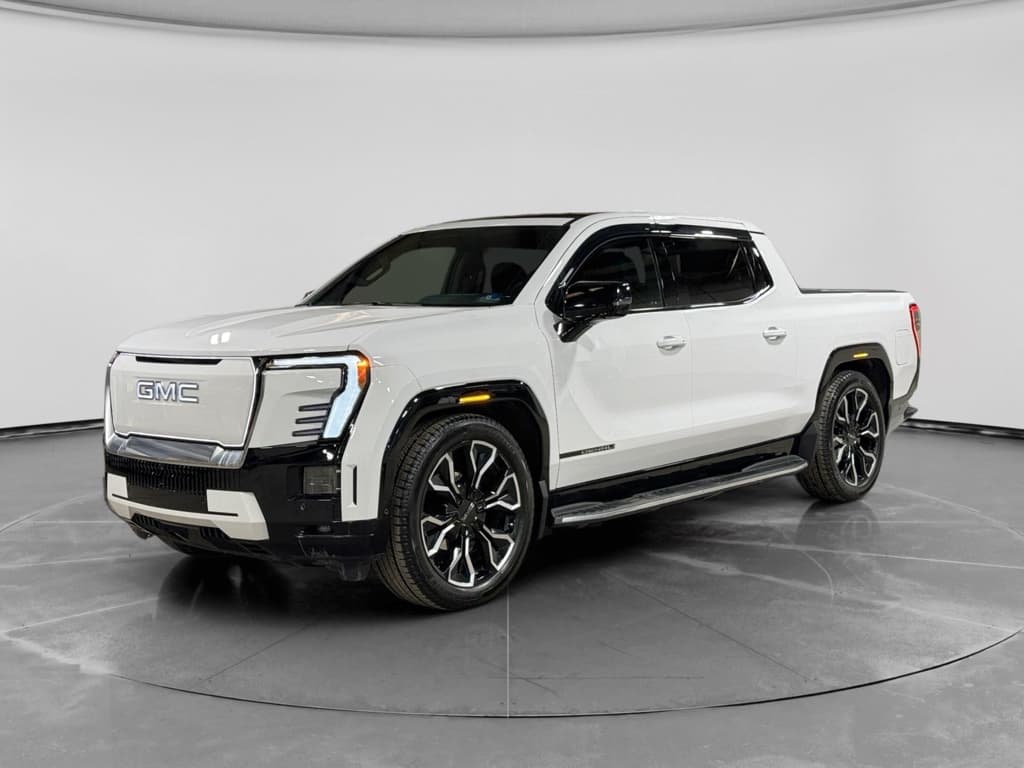
Thinking about a GMC Hummer EV, maybe even a used one, and wondering what you’re really signing up for? This electric “supertruck” is part wild off‑roader, part luxury lounge, part rolling science project. A solid GMC Hummer EV buying checklist keeps the emotion in check and makes sure you get the capability you want without overpaying or overlooking expensive surprises.
Who this checklist is for
Hummer EV basics: trims, body styles, and key specs
Before you work through the checklist, ground yourself in the basics. The GMC Hummer EV comes as a pickup and an SUV, both built on GM’s Ultium platform. Power and range vary widely by trim and battery pack, so it’s worth understanding the broad strokes.
GMC Hummer EV at a glance
Pickup
- Longer wheelbase, open bed with MultiPro tailgate.
- Higher towing ratings in dual‑motor trims.
- Heavier feel on the road; harder to park in tight cities.
- Best if you truly haul gear, toys, or trailers.
SUV
- Shorter overall length; easier to maneuver and garage.
- Enclosed cargo area instead of open bed.
- Similar power and tech options, but slightly different range figures.
- Better everyday family vehicle if you don’t need a bed.
Trim name shorthand you’ll see in listings
Step 1: Define how you’ll use your Hummer EV
The Hummer EV can be anything from a luxury commuter to a rock‑crawling weekend toy. Before you chase horsepower numbers, get honest about how you’ll actually use it in the next three to five years.
Match your use case to the right Hummer EV
Start here before you even contact a seller
Daily driver & commuter
- Mostly pavement, light off‑road at most.
- Prioritize ride comfort, tech, and range.
- Dual‑motor EV2X or SUV trims often make the most sense.
Off‑road & overlanding
- CrabWalk, four‑wheel steer, and Extreme Off‑Road package matter.
- Plan for reduced range on big mud‑terrain tires.
- Look for underbody protection in good condition.
Towing toys & trailers
- Check the specific trim’s towing rating.
- Dual‑motor trucks tow more than tri‑motor.
- Know that range can drop dramatically when towing at highway speeds.
Reality check on size and weight
Step 2: Battery packs, range, and charging
With a vehicle this heavy, battery size and charging aren’t details, they’re the whole ballgame. Get clear on which pack you’re looking at, the official range rating, and how that fits your routes.
Hummer EV battery packs and typical range
Always confirm the exact configuration in the window sticker, build sheet, or listing details.
| Configuration | Battery pack | Approx. EPA range | Notes |
|---|---|---|---|
| Pickup dual‑motor (EV2X) | 20‑module Ultium (~170 kWh) | ≈318 miles | Longer‑range workhorse; strong towing ratings. |
| Pickup tri‑motor (EV3X) | 20‑ or 24‑module Ultium | ≈312–381 miles | 24‑module pack boosts range; off‑road packages trim it back. |
| SUV Edition 1 / EV3X | 20‑module Ultium | ≈300+ miles | Slightly shorter than comparable pickups; more practical size. |
| SUV EV2 / EV2X | 20‑module Ultium | ≈298–300 miles | Lower trims with fewer heavy add‑ons often go farther in real life. |
Numbers are approximate and vary with options and wheels; use them as a starting point, not gospel.
DC fast‑charging capability
Battery and charging questions to ask the seller
Confirm battery pack and range rating
Ask for the original window sticker or build sheet. Verify whether the truck has the 20‑ or 24‑module pack and note the official EPA range so you’re not relying on guesses.
Review charging history
For used Hummer EVs, ask how often it’s fast‑charged versus Level 2 at home, and whether it has sat at 100% charge for long periods. Frequent DC fast‑charging and extended time at full charge can accelerate battery wear.
Check home charging readiness
Do you have (or can you add) a 240‑volt circuit in your garage or driveway? With a huge pack like this, Level 1 (120‑volt) charging is a last‑resort, not a plan.
Inspect the charge port and cable
Look for broken latches, bent pins, or excessive dirt and corrosion around the charge port. Plug in during your test drive to confirm proper charging behavior and that no warning lights appear.
Where Recharged can help on charging
Step 3: Off-road hardware and heavy‑weight reality check
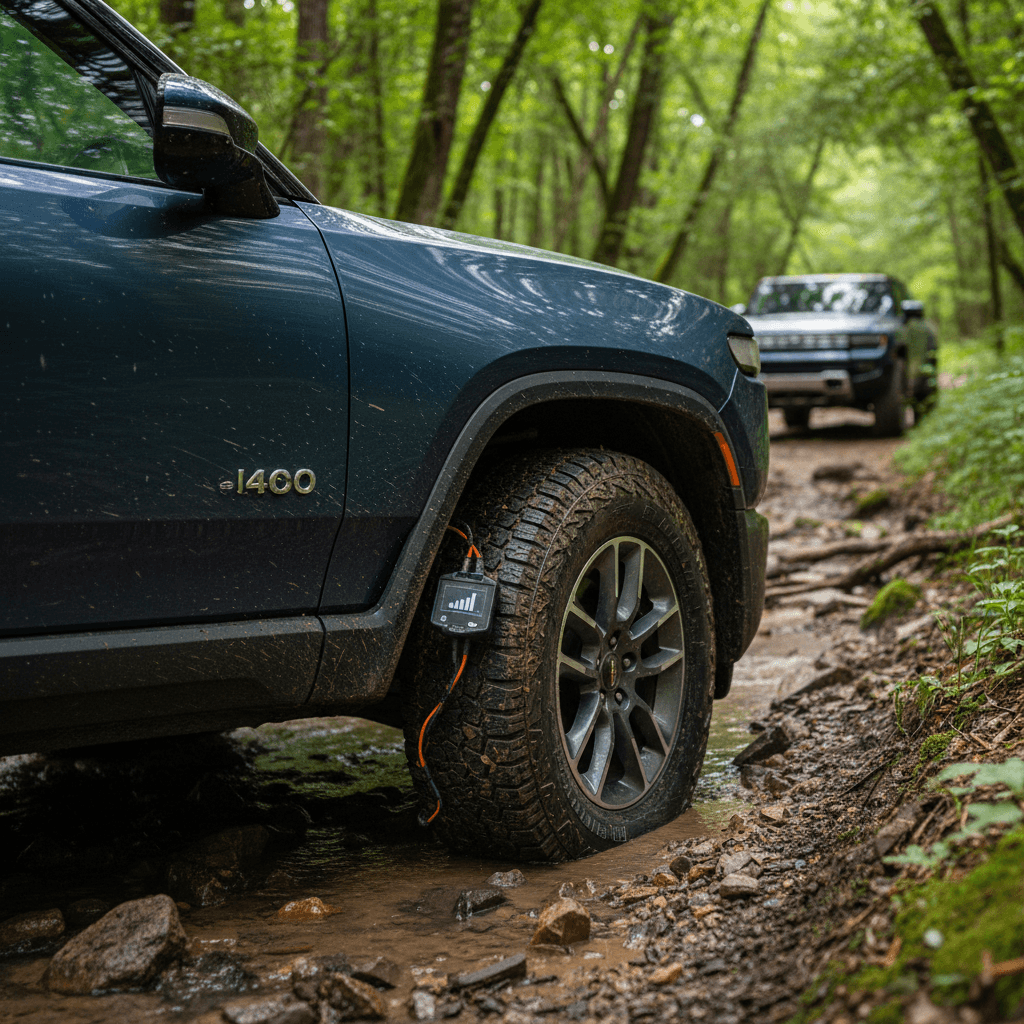
The Hummer EV is marketed as a moon‑rover for Earth, with CrabWalk four‑wheel steering, adaptive air suspension, underbody cameras, and an Extreme Off‑Road package. Those toys are incredible off‑road, and expensive when abused.
Key off‑road features to verify
Don’t just trust the buttons on the dash, make sure the hardware is healthy
Four‑wheel steer & CrabWalk
- Turn steering lock‑to‑lock in a parking lot.
- Watch the rear wheels: do they respond smoothly?
- Listen for clunks or grinding that might signal damage.
Adaptive air suspension
- Cycle through ride‑height settings.
- Truck should raise and lower evenly, without warnings.
- Check for sagging corners after it sits awhile.
Extreme Off‑Road package
- Inspect skid plates and rock rails for deep gouges.
- Look for leaks or dents around underbody components.
- Heavy rock rash may hint at harder use than the seller admits.
Why underbody damage matters more on an EV
Step 4: Towing, hauling, and tire condition
A big part of the Hummer EV’s appeal is its brute strength. But towing and hauling come with tradeoffs: reduced range, accelerated tire wear, and extra stress on suspension and brakes.
Know your numbers
- Dual‑motor pickups can tow up to roughly 12,000 pounds when properly equipped.
- Tri‑motor versions trade some tow rating (≈7,500–8,500 pounds) for wild acceleration.
- Payload isn’t infinite, load a big trailer, passengers, and gear, and you’ll hit limits fast.
Range while towing
- Expect range to drop dramatically when towing at highway speeds.
- Plan routes with DC fast chargers that can handle this truck’s size.
- On your test drive, watch energy consumption on the trip computer; a thirsty truck empty will be very thirsty with a trailer.
What to inspect on wheels, tires, and brakes
Look for uneven tire wear
Run your hand across the tread. Cupping, feathering, or bald shoulders suggest alignment or suspension issues, and you’re staring at four giant, expensive replacement tires.
Check tire age and load rating
Verify that tires match or exceed the factory load rating. Oversized or incorrect‑spec tires can hurt range and safety. Check the DOT date code; more than six years old means they’re aging out.
Inspect wheels and brake rotors
Curb‑rashed wheels and rusty, ridged brake rotors tell you this truck has had a hard or neglected life. On a heavy EV, brakes work harder than you think.
Ask about towing history
If the seller towed frequently, ask what weights, how often, and over what distances. A clean‑looking truck can still have lived a very heavy life.
Step 5: Tech features and driver assistance
The Hummer EV cabin is part command center, part gaming rig. You’ll see massive touchscreens, configurable off‑road widgets, and, in many examples, hands‑free driver assistance like Super Cruise.
In‑cab tech to test on your drive
Tap every button while you still have the keys
Infotainment & cameras
- Check for lag, random reboots, or frozen screens.
- Verify front, rear, and underbody cameras work and are clear.
- Pair your phone and test CarPlay/Android Auto if equipped.
Super Cruise & assists
- If equipped, confirm an active subscription and proper operation.
- Test adaptive cruise, lane‑keeping, and blind‑spot monitoring.
- Watch for warning lights or error messages.
Comfort & convenience
- Run heated/ventilated seats and steering wheel.
- Cycle climate controls and rear seat features.
- On trucks with removable roof panels, listen for wind noise and check for water leaks or stains.
Subscriptions and software matter
Step 6: Battery health and used Hummer EV inspection
Because the Hummer EV’s Ultium pack is enormous and complex, battery health is the single most important factor in a used purchase. You want proof the pack is performing as it should and hasn’t been abused or damaged.
Battery‑focused checks for a used Hummer EV
Scan for diagnostic trouble codes
Have an EV‑savvy shop or inspector scan the vehicle for high‑voltage battery and charging system codes, not just generic OBD‑II powertrain codes.
Compare displayed range to original rating
Charge the truck to 100% and compare the indicated range to the original EPA rating for that trim. Some drop with age and use is normal; a huge gap calls for deeper investigation.
Inspect underbody and pack enclosure
On a lift, check the battery enclosure for dents, scrapes, or signs of fluid leakage or repair. Anything more than light cosmetic scuffs deserves a professional opinion.
Review service records and recalls
Ask for documented service history. Confirm that any safety recalls or software updates related to the battery or charging system have been performed.
What the Recharged Score adds
Ready to find your next EV?
Browse VehiclesStep 7: Total cost of ownership and financing
Sticker price is only the opening bid. A Hummer EV asks for serious commitment in insurance, tires, brakes, and electricity. Add those numbers now so you’re not surprised a year in.
Ownership costs to budget for
- Insurance: Full‑size luxury EV trucks typically cost more to insure than smaller EVs or gas trucks.
- Tires: Huge, heavy‑duty tires can run four figures for a full set, and this truck can eat them quickly if driven hard.
- Electricity: Multiply your kWh rate by the battery size and your miles driven. A giant pack means big charging sessions.
- Maintenance: Less routine engine service, but more weight on suspension and brakes.
Financing and value retention
- Compare the cost of a new build slot with lightly used examples, early depreciation can work in your favor.
- Ask lenders how they treat high‑priced EV trucks in terms of loan length and rates.
- Consider shopping through a marketplace like Recharged that offers EV‑specific financing and can also value your trade‑in or provide an instant offer.
Use pre‑qualification as a reality check
Quick-reference GMC Hummer EV buying checklist
Here’s your condensed, glove‑box‑ready checklist. Use it during test drives, inspections, or while scrolling listings on your couch.
One‑page GMC Hummer EV buying checklist
1. Confirm body style and trim
Pickup or SUV? EV2, EV2X, EV3X, or Edition 1? Make sure the truck’s badging and features match the listing description and price.
2. Identify battery pack and EPA range
Verify 20‑ versus 24‑module battery, and note the official EPA range. Compare to the current displayed range at 100% charge.
3. Inspect underbody, suspension, and off‑road hardware
Look for damage to skid plates, suspension arms, steering components, and the battery enclosure. Test four‑wheel steer, CrabWalk, and air suspension if equipped.
4. Evaluate wheels, tires, and brakes
Check for even tread, correct load‑rated tires, straight wheels, and smooth, quiet braking with no warning lights.
5. Test tech and driver assistance
Run through infotainment, cameras, climate, and any driver‑assist or hands‑free systems. Confirm active subscriptions where needed.
6. Review battery health and charging history
Ask for service records and, if possible, a third‑party or marketplace‑provided battery health report. Inspect the charge port and do a live charging test.
7. Run the numbers on ownership costs
Estimate monthly payment, insurance, electricity, and a “tire fund.” If the total makes you queasy, step back before emotion takes over.
8. Get an expert EV inspection
For private‑party or off‑brand dealers, consider paying an EV‑experienced shop, or using a marketplace like Recharged with its own inspection and Recharged Score, to validate what you’re seeing.
FAQ: GMC Hummer EV buying questions
Frequently asked questions about buying a GMC Hummer EV
Bottom line: Should you buy a GMC Hummer EV?
The GMC Hummer EV is not a sensible car in the way a compact hatchback or even a mid‑size EV crossover is sensible. It’s a supertruck, huge, dramatic, and packed with technology. That’s exactly why people love it, and exactly why you need a disciplined buying checklist before you sign anything.
If you work through each step, use case, battery and charging, off‑road hardware, towing, tech, battery health, and total cost of ownership, you’ll have a clear picture of whether this is the right tool for your life or just the right poster for your wall. When you’re ready to move from research to reality, shopping a curated selection of used EVs with verified battery health and expert help from Recharged can make that decision far less intimidating and a lot more fun.