If you’re shopping for an electric vehicle, especially a used one, you’re going to hear a lot about DC and AC chargers. The labels on the apps and plugs don’t always help: Level 1, Level 2, DC fast, 50 kW, 350 kW. Underneath the jargon is a simple question: How long will it take to charge, and where should you do it?
Quick definition
Why DC and AC chargers matter for real-world EV driving
Most EV drivers in the U.S. rely on AC charging at home (Level 1 or Level 2) for daily needs, and use DC fast charging on road trips or when they’re in a hurry. Understanding both sides of the DC and AC charger equation helps you decide whether you need to upgrade your home panel, how much to budget for public charging, and what kind of charging history you should ask about when you’re looking at a used EV.
DC and AC EV charging at a glance
AC vs DC charging in one minute
AC charging (Level 1 & Level 2)
- Power source: Alternating current from the grid (120V or 240V in the U.S.).
- Where you see it: Home, workplaces, most public "destination" chargers.
- Speed: ~3–5 miles of range per hour on Level 1; ~10–60 miles per hour on Level 2, depending on charger and vehicle.
- Best for: Overnight charging and routine daily driving.
DC charging (DC fast, Level 3)
- Power source: High‑voltage DC supplied directly to the battery.
- Where you see it: Highway corridors, travel plazas, high-traffic public sites.
- Speed: Often 100–300+ miles of range per hour at mid state-of-charge on modern stations.
- Best for: Road trips and quick top‑ups when you’re away from home.
Rule of thumb
How EV batteries and chargers actually work together
The grid delivers AC power, but your EV’s battery stores DC energy. Something has to convert between the two, and where that happens is the heart of the DC vs AC charger story.
- In AC charging, the onboard charger inside your vehicle converts AC to DC. Its maximum rating (say 7.2 kW, 11 kW, or 19.2 kW) caps how fast you can charge on AC, no matter how powerful the wall box is.
- In DC fast charging, the converter lives in the station. The charger communicates with your car’s battery management system (BMS) and sends DC straight to the pack, bypassing the onboard charger.
- Because DC chargers don’t rely on the onboard charger, they can deliver far higher power, 50 kW, 150 kW, 350 kW and beyond, subject to what your battery can safely accept.
Don’t chase numbers alone
Charging levels explained: Level 1, Level 2 and DC fast
In the U.S., charger marketing usually revolves around three levels. Two are AC, one is DC. Here’s how Level 1, Level 2 and DC fast charging fit together in the DC and AC charger landscape.
The three main EV charging levels
What Level 1, Level 2, and DC fast actually mean for you
Level 1 (AC, 120V)
- Standard household outlet using the portable cord that ships with many EVs.
- Typically ~1–2 kW, or about 3–5 miles of range per hour.
- Good if you drive low daily miles or just need a backup option.
Level 2 (AC, 240V)
- 240V outlet or hardwired wall box at home or work.
- Commonly 7–11.5 kW; some new AC chargers reach 19.2 kW.
- Roughly 20–40+ miles of range per hour for many EVs.
- Workhorse for most owners, this is where daily charging happens.
DC fast (Level 3)
- High‑power DC from 50–350+ kW at public stations.
- Often takes many EVs from ~10–80% in 20–45 minutes.
- Best for road trips, fleet use and quick turnarounds.
- Much more expensive hardware and per‑kWh rates than AC.
AC chargers at home: What most U.S. drivers use
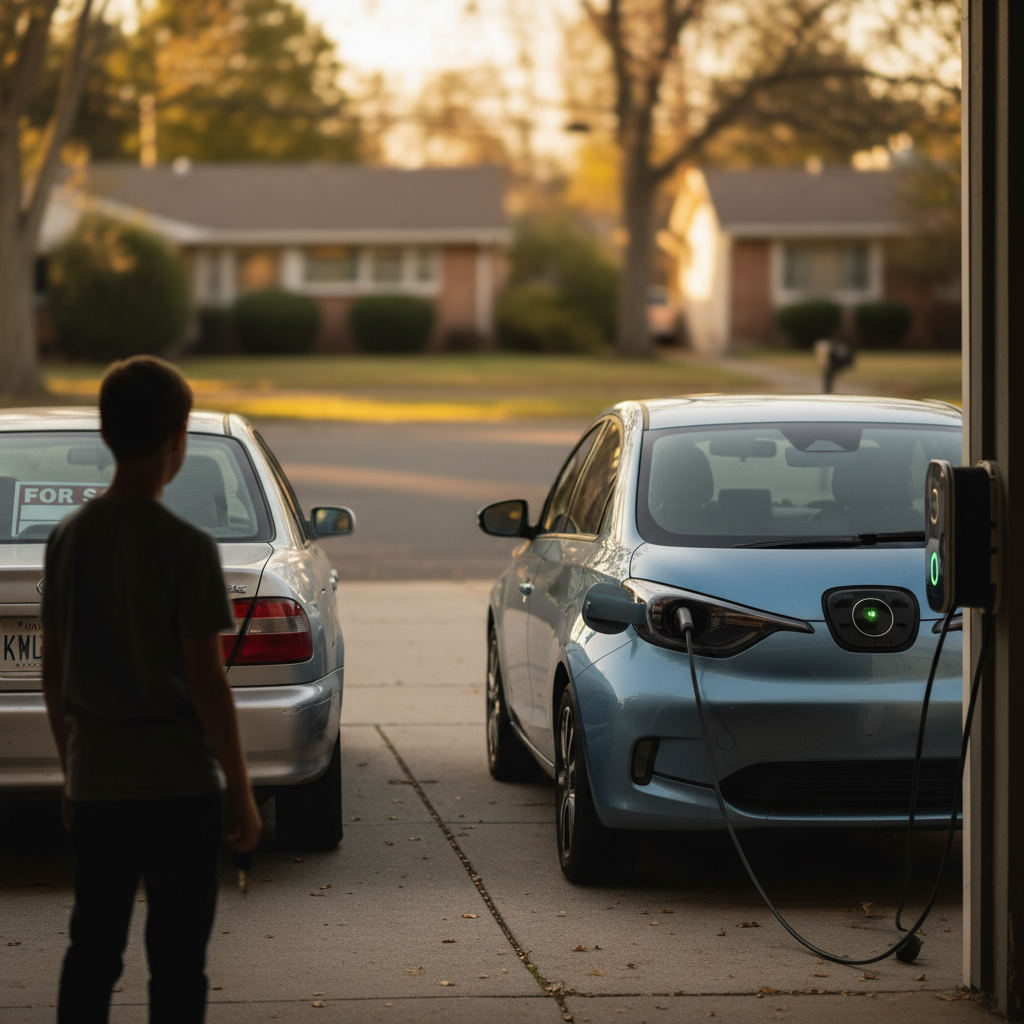
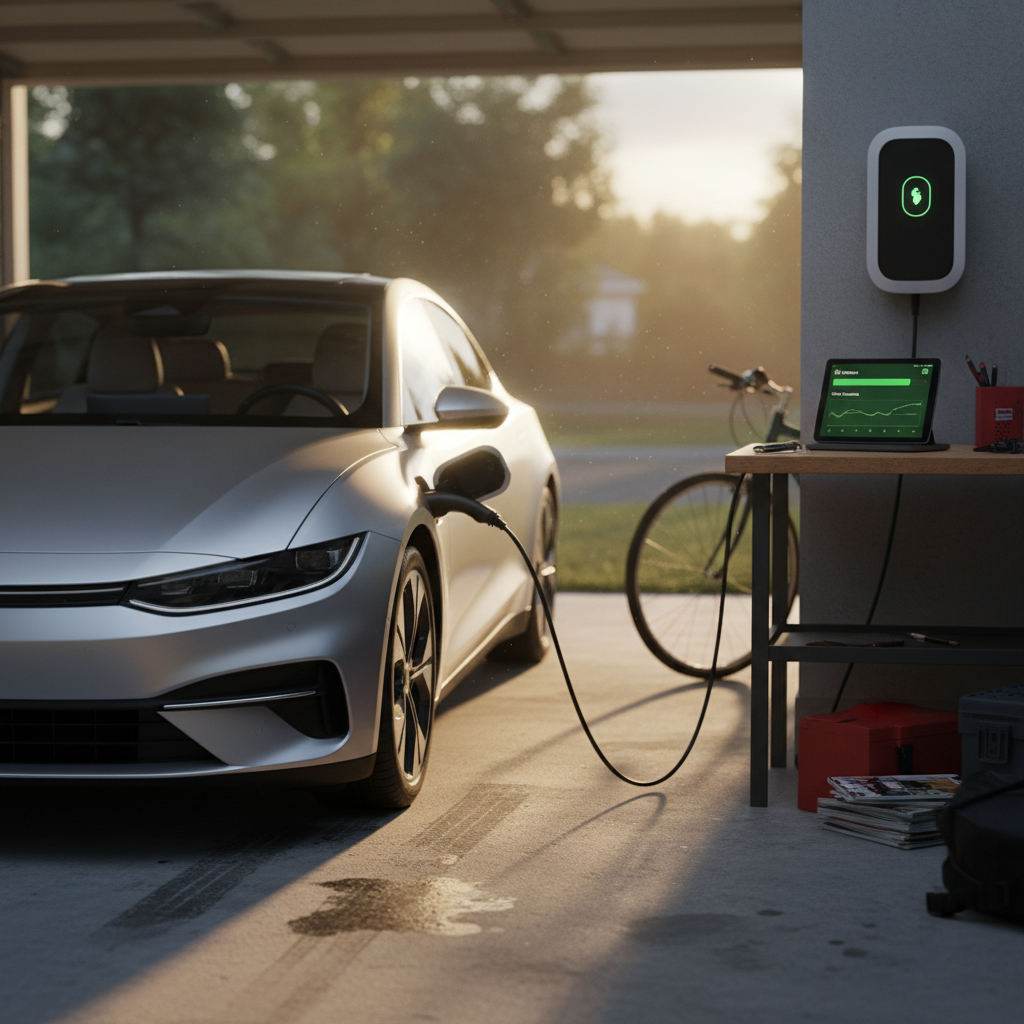
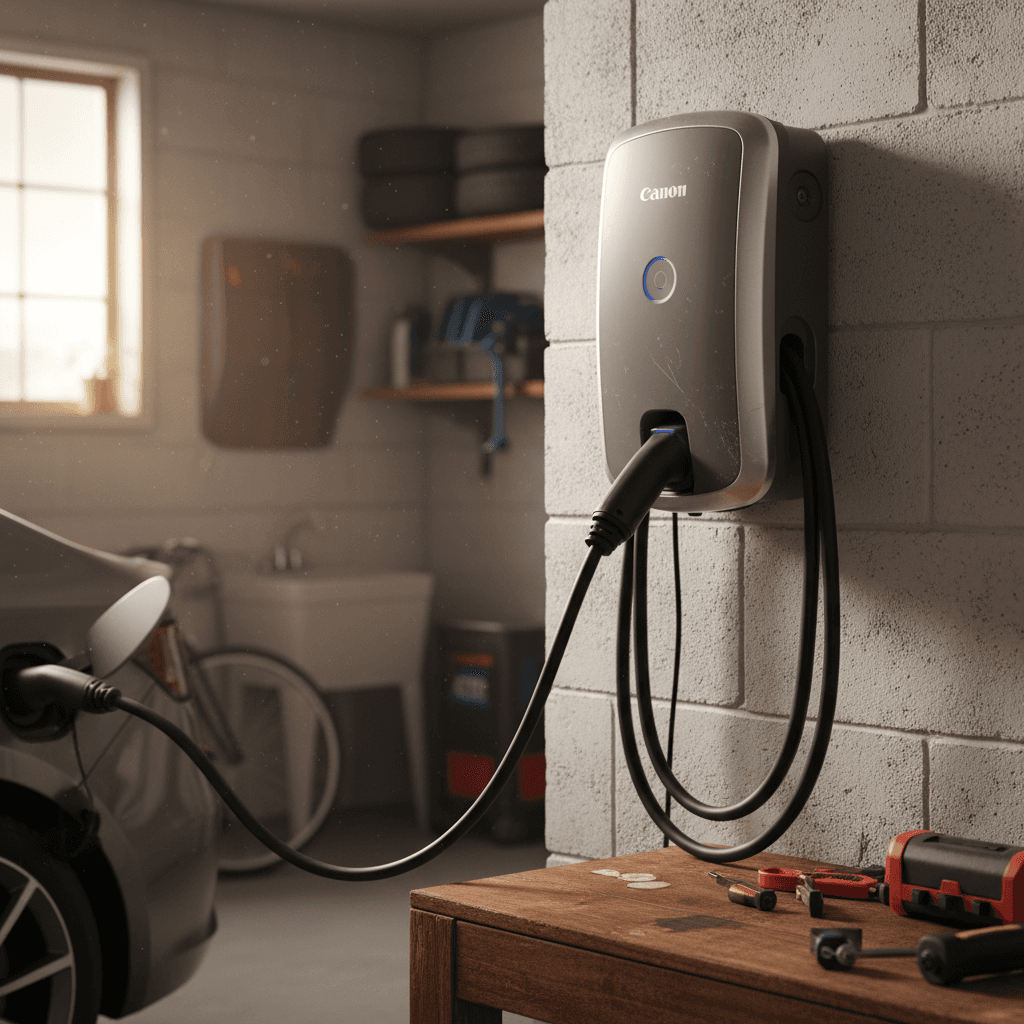
For most American EV owners, the real work happens with AC chargers in the garage or driveway. You plug in when you get home, charge slowly and cheaply overnight, and wake up with the range you need. DC fast is the exception, not the rule.
Key decisions for your home AC charger
1. Choose Level 1 vs Level 2
If you drive 20–30 miles a day and have all night to charge, Level 1 might be enough. If you want faster turnarounds or plan to own multiple EVs, a dedicated Level 2 charger is worth serious consideration.
2. Match charger amps to your panel
Popular home Level 2 units draw 32–48 amps (delivering ~7.7–11.5 kW). Higher‑amp AC chargers up to 80 amps (19.2 kW) are emerging, but they require robust electrical service, often a 100A or 200A panel upgrade.
3. Think about smart features
Wi‑Fi, scheduled charging, load management, and vehicle‑to‑home or bidirectional support are becoming common on premium AC chargers. These can help you target off‑peak rates and integrate solar.
4. Plan for future vehicles
If you’re going from one EV to two, or moving from a plug‑in hybrid to a long‑range SUV, it’s cheaper to size wiring and conduit once than to re‑do it later.
Where Recharged fits in
DC fast chargers on the road: When speed matters
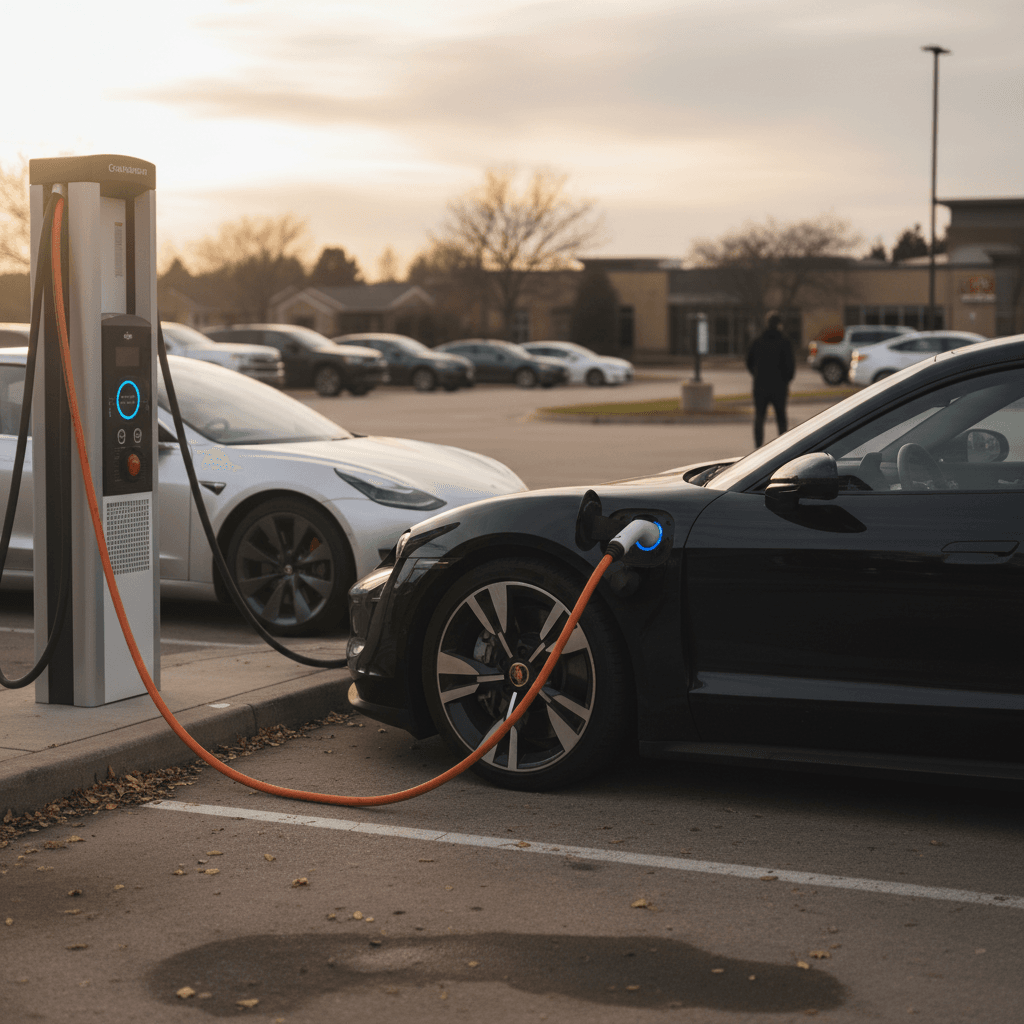
DC fast chargers are the high‑power side of the DC and AC charger story. You’ll see them clustered along interstates, at travel plazas and in busy urban corridors. They’re built to move energy quickly, but they’re not always the right tool for the job.
- Modern passenger EVs typically accept between 50 and 250 kW on DC fast, even if the station can deliver more.
- Charge speed follows a curve: fastest around 10–50% state of charge, then it tapers as the battery fills to protect longevity.
- Sessions are usually priced by the kWh, the minute, or a mix of both, and per‑kWh rates are generally higher than AC public charging.
- Networks are rolling out higher‑power systems, 600 kW+ for passenger and heavy‑duty vehicles, but your car still decides how much it will take.
Mind the last 20%
Charging speed comparison: AC vs DC at a glance
Numbers vary by model, temperature and battery size, but the table below shows how common DC and AC chargers translate into real‑world experience for a typical long‑range EV.
Typical DC and AC charger performance for a long-range EV
Approximate values for a modern EV with ~250–300 miles of EPA range.
| Charger type | Power (approx.) | Energy added in 1 hour | Miles of range added in 1 hour | Time for ~10–80% |
|---|---|---|---|---|
| Level 1 AC (120V outlet) | 1.4–1.9 kW | ~1.5 kWh | ~3–5 miles | Not practical for large top‑ups; think 24+ hours from low to full |
| Level 2 AC (typical home, 32–40A) | 7–9.6 kW | ~7–10 kWh | ~20–35 miles | ~6–10 hours from low to full |
| Level 2 AC (high‑power, 80A) | 19.2 kW | ~19 kWh | ~50–75 miles | ~4–6 hours from low to full |
| DC fast (50 kW) | 50 kW (peak) | ~40–45 kWh avg | ~120–150 miles | ~45–60 minutes |
| DC fast (150 kW) | 150 kW (peak) | ~70–90 kWh avg | ~200–270 miles | ~20–35 minutes |
| DC fast (250–350 kW) | 250–350 kW (peak) | Vehicle‑dependent; high peaks but similar 10–80% times to strong 150 kW units for many EVs | Vehicle‑dependent | Often 20–30 minutes if the EV supports high‑power charging |
Your exact results will depend on your vehicle’s efficiency and maximum charge rates.
Battery health: Is DC fast charging bad for your pack?
Every lithium‑ion battery prefers cooler temperatures and gentler charging. That doesn’t mean you should avoid DC fast stations, but it does mean the AC vs DC balance matters over years of ownership, especially if you’re buying a used EV.
How AC and DC charging affect battery life
It’s about patterns, not individual sessions
AC charging (kinder, slower)
- Lower power and less heat, especially on Level 1 and modest Level 2.
- Great for overnight charging where time isn’t critical.
- Battery management systems are tuned for this day‑to‑day pattern.
Frequent DC fast (hotter, harder)
- Higher currents generate more heat, especially in extreme weather.
- Shortens battery life faster if it’s your primary charging method.
- Occasional road‑trip use is fine; constant high‑power fast charging is what you want to avoid when possible.
Watch for heavy fast‑charge history
How to choose the right mix of DC and AC charging
Your ideal setup depends on where you live, how far you drive, and whether you can install a charger at home. Use AC and DC charging strategically instead of treating every plug the same.
Practical DC and AC charging strategies
Daily commuter (20–50 miles/day)
Install a 32–40A Level 2 AC charger at home if possible; use it overnight.
Rely on public Level 2 at work or shopping if you can’t charge at home.
Save DC fast charging for road trips, emergencies, or rare busy days.
Apartment or street parker
Lean on workplace or public Level 2 AC whenever you’re parked for hours.
Use DC fast chargers periodically, maybe once a week or every few days, to top up quickly.
Pay attention to pricing: some networks charge idle fees after your session completes.
Road‑trip regular
Plan routes around DC fast corridors, but start each day with as much AC charge as you can get overnight.
Aim to arrive at fast chargers around 10–30% state of charge and unplug near 70–80% for the best time‑per‑mile balance.
Mix in occasional Level 2 destination charging at hotels, restaurants and attractions.
Fleet or rideshare driver
If you log high miles, you’ll use more DC fast charging, but don’t ignore overnight Level 2 where possible.
Look into demand‑charge‑friendly DC options and smart AC load management if you manage multiple vehicles.
Track battery health over time; a diagnostic like the Recharged Score can help you decide when to rotate vehicles.
Good news for most drivers
What DC and AC charging mean if you’re buying a used EV
With used EVs, you’re inheriting someone else’s charging habits. Understanding DC and AC chargers helps you read between the lines of a listing, and avoid surprises after you sign the papers.
Questions to ask about DC and AC charging history
1. Where was the car usually charged?
A garage with a Level 2 AC charger is ideal for long‑term battery health. Frequent DC fast charging at highway stations is fine for trips, but you don’t want that to be the main routine.
2. How often did they fast charge?
Daily or near‑daily DC fast use is a red flag if the car also has high mileage. Occasional use, road trips, rare busy days, is normal.
3. What’s the current usable range?
Compare the seller’s real‑world range at common speeds to the original EPA rating. Large gaps can hint at aggressive past charging or heavy use in hot climates.
4. Is there independent battery data?
A <strong>Recharged Score Report</strong> includes third‑party battery health diagnostics and fair market pricing, giving you more than just the dashboard guess-o‑meter to rely on.
5. Does the car support modern DC and AC standards?
Check which connectors it uses for AC (typically J1772 or NACS) and DC (CCS, NACS, or older standards). Adapter availability and network access can affect your real charging options and costs.
FAQ: DC and AC chargers
Frequently asked questions about DC and AC chargers
The bottom line on DC and AC chargers
DC and AC chargers aren’t competing technologies, they’re complementary tools. AC charging, especially Level 2 at home or work, quietly does most of the heavy lifting, keeping your battery healthy and your costs predictable. DC fast charging is there when time is tight or the odometer is spinning fast on a road trip.
If you’re considering a used EV, pay as much attention to its charging story as you do to trim and mileage. Look for cars that lived on AC chargers, used DC fast reasonably, and still deliver range that matches their age and use. Tools like the Recharged Score Report, with verified battery health, transparent pricing, and EV‑specialist support, can turn that story into hard data so you can shop confidently, charge smarter, and get more life out of your next electric vehicle.