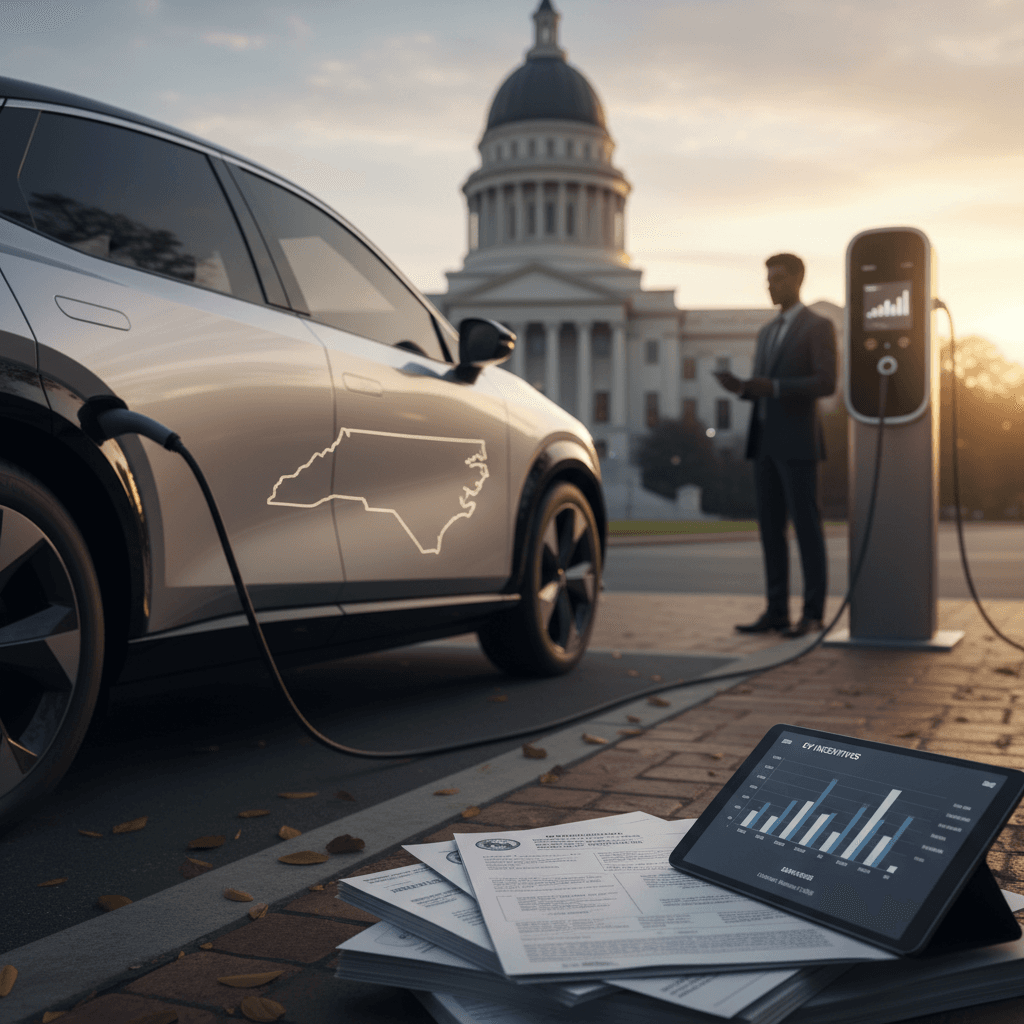
If you’re trying to figure out the **North Carolina electric car rebate situation in 2026**, you’ve probably hit a wall of half-updated blogs and expired offers. The short version: the easy federal tax credits for buying most new and used EVs are gone, but **home charger incentives, new Energy Saver NC rebates, and utility bill credits** can still take a real bite out of your costs, especially if you’re buying a used EV.
First things first
North Carolina electric car rebates in 2026: the quick overview
NC EV savings snapshot for 2026
When people search for **“North Carolina electric car rebate 2026”**, they’re usually looking for a single big check that makes an EV thousands cheaper. That era has largely ended. Instead, North Carolina drivers now save money by combining: - A **federal home charger tax credit** that runs through **June 30, 2026** - The new **Energy Saver NC** home rebate program that can subsidize electrical work - **Duke Energy EV bill credits and rate plans** that reward off-peak charging - Smart shopping on a **fairly priced used EV** with a strong battery, rather than chasing an expired purchase credit on something new
Think “EV ecosystem,” not just “EV rebate”
What happened to federal EV tax credits before 2026?
A lot of the confusion in 2026 comes from how fast federal rules shifted between 2024 and 2025. Here’s the practical impact for you in North Carolina today:
- The old **New Clean Vehicle Credit** for most new EVs ended for vehicles placed in service after **September 30, 2025**.
- The **Previously Owned Clean Vehicle Credit** (up to $4,000 off a used EV) also ended for vehicles acquired after that same date.
- Those credits were tied to income caps and vehicle price limits; they helped in 2024–mid‑2025, but **they do not apply** if you’re buying an EV in 2026.
- The separate federal **residential charging equipment credit** survived longer, but only through **June 30, 2026**, and only for qualifying equipment and installation.
Watch those purchase dates
Energy Saver NC: where EV charging fits into the new home rebates
In **January 2025**, North Carolina launched **Energy Saver NC**, a statewide program funded by the Inflation Reduction Act’s home rebate dollars. By **February 2026**, it was up and running in **all 100 counties**, with about **$208 million** earmarked to help households cut energy use and electrify key equipment.
How Energy Saver NC can help an EV owner
It’s a home rebate program, but it can indirectly lower the cost of charging your car.
Panel & wiring upgrades
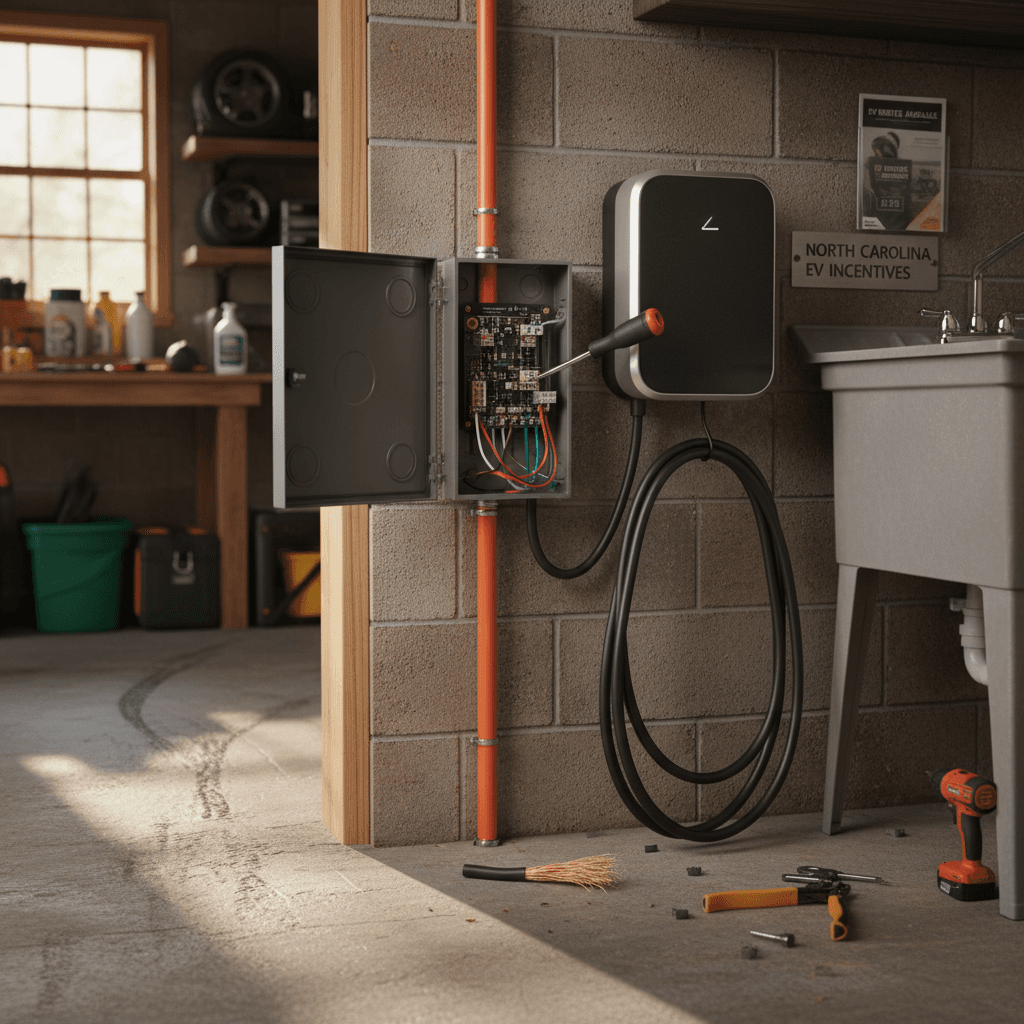
If your electric panel is maxed out or your garage has no 240‑volt circuit, Energy Saver NC can help pay for **panel upgrades, wiring, and other electrical work** that also make a Level 2 charger possible.
Shared upgrades for heat + EV
Many households pair a new **heat pump** or water heater with panel work. That same upgraded panel and circuit space can support a **future EV charger** without paying twice for electricians.
Income‑based bonus savings
Low‑ and moderate‑income households can qualify for **higher rebate levels**, sometimes covering **most or all** of eligible upgrade costs. That’s a big deal if your EV plans depend on affordable home charging.
Key point about Energy Saver NC
Because Energy Saver NC is new and demand is high, **funding buckets and rebate amounts can change**, and you may see waitlists or pauses. Before you schedule major electrical work, talk with your electrician and check the program’s latest rules to confirm which upgrades will qualify and whether income limits apply.
Duke Energy EV bill credits and charger programs
If you get your power from **Duke Energy Carolinas** or **Duke Energy Progress**, your “EV rebate” in 2026 often shows up as **lower bills**, not a one‑time check. Duke has been steadily rolling out EV‑friendly rates and credits across North Carolina.
Common Duke Energy EV incentives in North Carolina (2026 snapshot)
Program availability can vary by service territory and can change with new rate cases and pilots. Always confirm details with Duke before you count on a specific credit.
| Program type | What it does for you | Where the savings show up |
|---|---|---|
| EV off‑peak bill credits | Gives you a monthly bill credit when most of your home charging happens during off‑peak hours. | Lowers your electric bill $10–$20/month for typical drivers. |
| EV‑specific rate plans or pilots | Offers a time‑of‑use rate with cheaper overnight power, sometimes alongside a flat fee for home charging. | Cuts per‑kWh cost of charging; biggest win if you drive and charge a lot. |
| Charger “prep” or rental programs | In some pilots, Duke helps cover or finance the cost of installing a Level 2 charger or pre‑wiring for one. | Reduces or spreads out the upfront cost of home charging gear and installation. |
| Smart thermostat & demand response | Not EV‑specific, but pairs well with EV ownership to reduce whole‑home energy use. | Keeps overall bills in check so adding an EV doesn’t sting as much. |
Representative Duke Energy EV‑related programs as of early 2026.
How to find your exact EV offer
These aren’t life‑changing windfalls on their own, but stacked over a few years they add up. A typical commuter driving 10,000–12,000 miles a year can easily save a few hundred dollars annually by combining **EV‑friendly rates, off‑peak habits, and a reasonably efficient home.**
NEVI and state charging grants: why they’re not “your” rebate
You may also see headlines about North Carolina getting tens of millions of dollars for new fast chargers along major highways. That’s the **NEVI program**, the National Electric Vehicle Infrastructure funding pool, plus a patchwork of state and settlement grants.
What NEVI does
- Funds DC fast charging plazas along key corridors like I‑95, I‑40, and I‑77.
- Helps private companies cover equipment and installation costs.
- Improves charger reliability and spacing so road trips get easier.
What NEVI does not do
- Doesn’t put cash in your pocket at purchase time.
- Doesn’t reduce your sales tax or registration fees.
- Doesn’t guarantee that a specific station will have lower kWh prices.
Good news for used EV owners
How to stack what’s left: real-world savings scenarios
Without a big line‑item EV tax credit, the game in 2026 is about **stacking smaller wins**. Here’s how that can look in real life for North Carolina drivers.
Scenario 1: Homeowner buying a used EV with garage parking
1. Hunt for a fairly priced used EV
Start with the car itself. Use tools like the **Recharged Score** to understand battery health, real‑world range, and fair pricing so you don’t overpay just because EVs feel “futuristic.”
2. Confirm your panel and wiring situation
Have an electrician check if your panel has space for a **240‑volt circuit** in the garage. Ask specifically what it would take to support a **40‑ or 50‑amp Level 2 charger** and get the estimate in writing.
3. Check Energy Saver NC eligibility
If your home needs a panel upgrade or significant wiring, see whether those upgrades can qualify under **Energy Saver NC**, especially if your household is low‑ or moderate‑income.
4. Use the federal home charger credit before June 30, 2026
If your equipment and install qualify, you may be able to claim a **federal credit for part of the charger and installation cost** on your taxes, as long as work is completed before the mid‑2026 deadline.
5. Enroll in Duke EV rates or bill credits
Once your charger is in, talk to Duke about **off‑peak credits or EV time‑of‑use plans**. Shift most charging to overnight hours to stack monthly bill savings on top of any panel or charger help you received.
6. Compare “total cost per mile” to your old car
When the dust settles, compare what you actually spend per month on payment, insurance, electricity, and maintenance against your previous gas car. Many NC households still see **lower total monthly costs**, even without a big purchase rebate.
Scenario 2: Renter or condo owner without dedicated parking
1. Prioritize range and public charging access
Without home charging, look for a used EV with **more generous real‑world range** and study nearby public Level 2 and DC fast charging options before you buy.
2. Talk to your landlord or HOA early
Ask whether your building plans to tap **Energy Saver NC** or utility programs to add shared chargers. Sometimes, the conversation just hasn’t started yet.
3. Use workplace and retail chargers strategically
If your employer or local grocery offers free or discounted charging, that can offset the lack of home incentives. Think of it as someone else’s “rebate” helping you every week.
4. Don’t overpay for a car chasing a lost credit
Since 2026 purchase credits are gone, don’t stretch just because a dealer is still advertising 2024‑style incentives. Focus on **battery health, monthly costs, and charging access** instead.
Eligibility, income limits, and fine print you can’t ignore
Every remaining program that touches EV ownership in North Carolina, whether it’s Energy Saver NC, a federal home charger credit, or a Duke Energy pilot, comes with its own rules. It’s not glamorous, but this is where a lot of people accidentally leave money on the table.
- **Household income:** Energy Saver NC rebates are richest for **low‑ and moderate‑income households**, with spending caps that can cover a large share of eligible projects.
- **Property type:** Some incentives only apply to **owner‑occupied single‑family homes**, while others extend to multifamily buildings or rental properties with the right sign‑offs.
- **Timing:** The federal home charging credit has a **hard stop on June 30, 2026**, while local rebates or pilots can close once their funding caps are hit.
- **Paperwork:** Expect to need detailed **invoices, model numbers, and signed program forms**. Many people lose eligibility because they install first and ask questions later.
- **Stacking rules:** Some programs require you to subtract rebates from the project cost before calculating any remaining tax credit. That changes the math, so plan your sequence before you start work.
Don’t DIY the rules
Timeline: what to watch in North Carolina through late 2026
Key EV‑related milestones for North Carolina households
Now through June 30, 2026
Lock in any **eligible residential charger credit** before the federal deadline.
Use **Energy Saver NC** to tackle panel and wiring upgrades that support EV charging and other electric appliances.
Enroll in or switch to **Duke EV‑friendly rates or bill credits** where available.
Shop used EVs with strong **battery health reports** instead of chasing expired purchase credits.
Mid‑ to late‑2026
Watch for **new rounds or tweaks** to Energy Saver NC funding as early dollars get used up.
Follow NEVI and state announcements about **new fast‑charging corridors and sites** to see how they affect your route options.
Keep an eye on any **new utility pilots or merged‑utility rate changes**, especially if you’re a higher‑mileage driver.
If you’re planning a move or major renovation, time **panel and wiring work** to align with any still‑available rebates.
Why this all changes so often
FAQ: North Carolina electric car rebates in 2026
Frequently asked questions about NC EV rebates in 2026
Bottom line: is an EV still worth it without big rebates?
In North Carolina in 2026, there’s no magic **“$7,500 off” button** for an electric car. But that doesn’t mean an EV is a bad deal. It just means your savings are spread out: a **smarter home**, a **cheaper kilowatt‑hour**, and a **well‑priced used EV with a healthy battery** instead of an over‑subsidized new one. For many households, that combination still delivers lower total monthly costs than a comparable gas car, especially once you layer in maintenance savings and the convenience of fueling at home.
If you’re ready to run the numbers on a used EV, **Recharged** was built for exactly this moment. Every vehicle comes with a **Recharged Score battery health report**, transparent pricing, and expert guidance on **which incentives and home upgrades make sense for your situation**, plus financing, trade‑in options, and delivery across North Carolina. In a post‑rebate world, that kind of clarity is the new incentive.