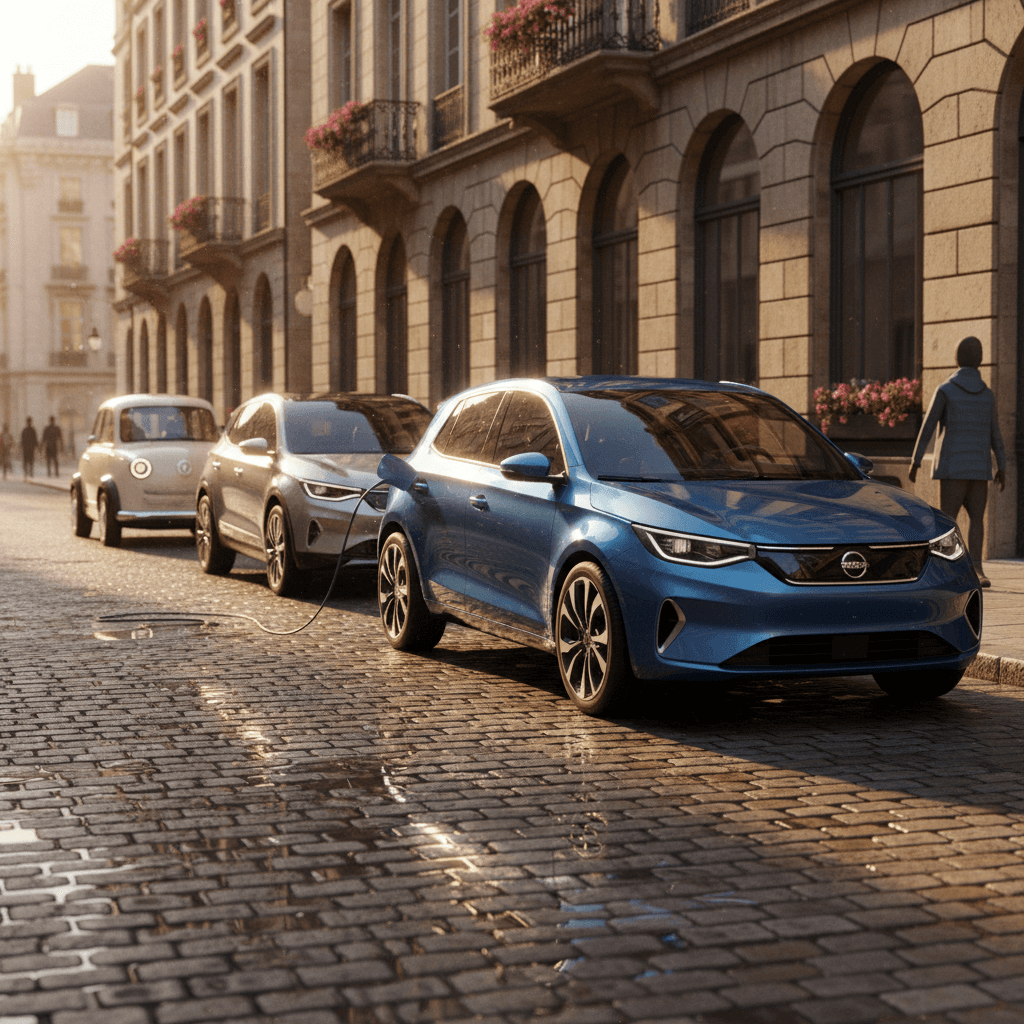
If you spend most of your time in city traffic or tight suburbs, compact electric cars hit a sweet spot: easy to park, cheap to run, and now with enough range to cover far more than grocery runs. In 2025, small EVs span everything from tidy hatchbacks to “just-right” small crossovers, and the used market is finally big enough that you don’t have to pay new-car money to go electric.
Compact EVs in a nutshell
Why compact electric cars are having a moment
Why small EVs are suddenly everywhere
Automakers spent the early EV years proving they could build big, flashy battery-powered crossovers and luxury sedans. Now the focus is shifting down-market. Small hatchbacks like the Nissan Leaf and Fiat 500e, subcompact crossovers such as the Hyundai Kona Electric and Kia Niro EV, and compact SUVs like the Volkswagen ID.4 and Hyundai Ioniq 5 give you everyday practicality without feeling like you’re maneuvering a studio apartment through a coffee drive-through.
Where small EVs shine
What actually counts as a compact electric car?
“Compact” is one of those fuzzy car terms that means a little bit different things depending on who you ask. For this guide, we’ll treat compact electric cars as small hatchbacks and crossovers that are easy to park, seat four or five, and usually come in under about 180 inches in length. That captures cars like the Leaf, Kona Electric, and Bolt EUV, vehicles that feel right at home in tight parking lots but can still handle a highway trip.
True city runabouts
- Think Fiat 500e, Mini Cooper SE, Renault 5 E-Tech (in Europe).
- Short overall length, tiny turning circles, cozy back seats.
- Best if you live in dense urban neighborhoods with tight parking.
Small crossovers & hatchbacks
- Examples include Nissan Leaf, Hyundai Kona Electric, Kia Niro EV, Chevy Bolt EUV.
- More back-seat and cargo space, a bit taller ride height.
- Still compact outside, but easier to live with as an only car.
U.S. vs. Europe
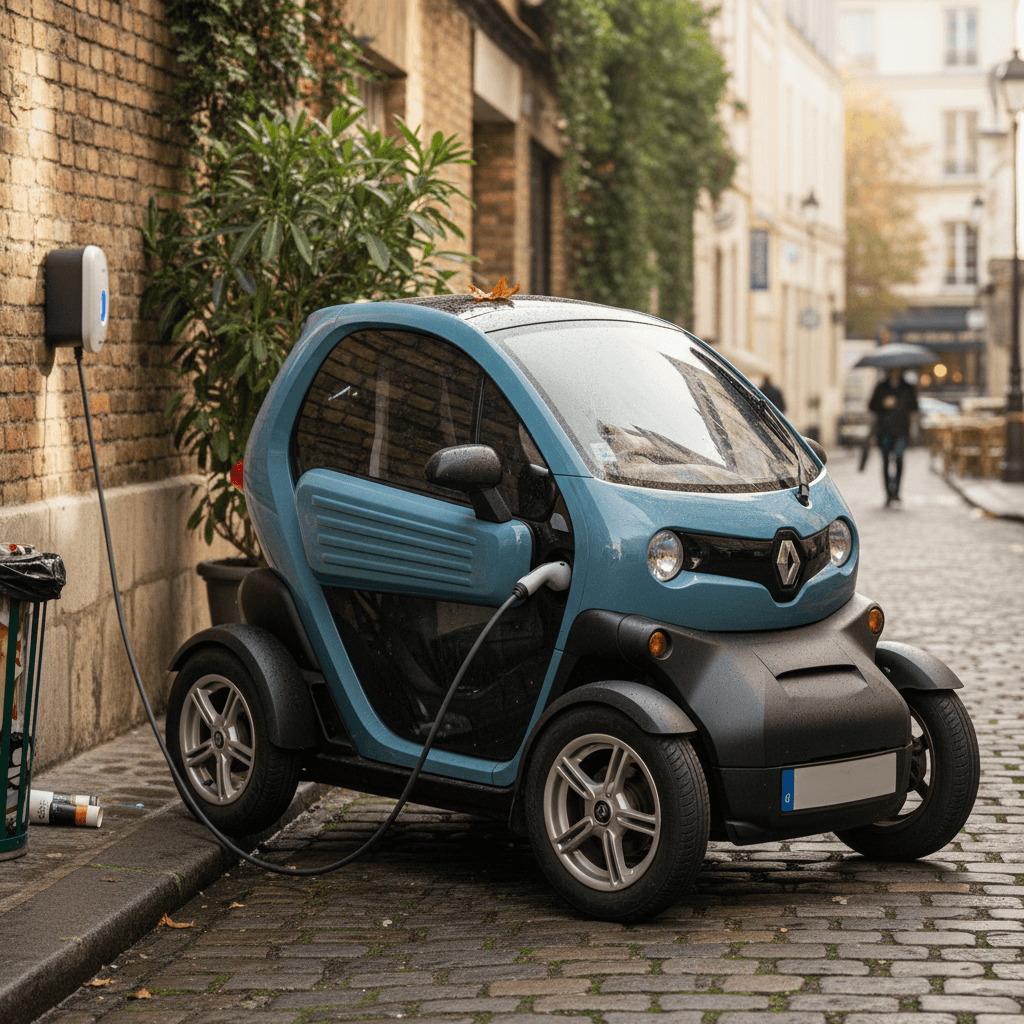
Standout compact EVs in 2025
Line up today’s compact electric cars and you’ll notice a theme: most of them are trying to give you real-car practicality in a smaller footprint. Here’s a look at some notable models you’re likely to see on U.S. roads in 2025, especially if you’re browsing the used market.
Popular compact electric cars to know
Small on the outside, surprisingly capable inside
Nissan Leaf
One of the original mass-market EVs and now a staple of the used market. Later Leaf Plus models offer 200+ miles of range and roomy hatchback practicality.
Chevrolet Bolt EV & EUV
The Bolt duo packs strong range for the size, around 247–259 miles for many trims, and a tall, airy cabin. Great value as a used compact EV.
Hyundai Kona Electric
A subcompact crossover that drives more like a sporty hatch. Recent models hover around the 260-mile range mark and deliver a nicely finished interior for the price.
Kia Niro EV
Small family crossover with a square, useful cargo area and an easygoing ride. A smart choice if you want compact dimensions but more rear-seat space.
Volkswagen ID.4
Technically on the bigger side of “compact,” but still shorter than many gas SUVs. Lots of cabin room and up to roughly 290+ miles of range in certain trims.
Fiat 500e & Mini Cooper SE
These are the fashion-forward city cars. Range is more modest, but they’re incredibly easy to park and genuinely fun to drive in tight city streets.
Good news for used shoppers
Small electric SUVs vs true city cars
Walk onto an EV lot in 2025 and you’ll notice that most “small” electric vehicles are actually small crossovers. That’s not an accident: Americans love the view out of a taller seat and the idea of SUV practicality, even on a compact footprint.
City cars vs. small electric SUVs
How the two flavors of compact electric cars stack up for everyday life.
| Type | Typical Examples | Best For | Pros | Trade-offs |
|---|---|---|---|---|
| City EV | Fiat 500e, Mini Cooper SE | Tight urban neighborhoods, second cars | Super easy to park, fun to drive, stylish | Smaller back seat, limited cargo, modest range |
| Small electric SUV | Hyundai Kona Electric, Kia Niro EV, Chevy Bolt EUV | One-car households, small families | More space, higher seating, better highway comfort | Slightly bigger footprint, usually higher price |
| Compact SUV | VW ID.4, Hyundai Ioniq 5 | Families that travel, longer trips | Spacious interior, larger battery options | Not as tiny-feeling in the city, higher cost |
City-focused EVs trade space for agility; small electric SUVs add space and comfort while staying reasonably compact.
Don’t get hung up on the label
Range realism: how far do compact EVs really go?
Look at a window sticker and you’ll see an EPA range number, say 247 miles for a compact crossover or around 200 miles for a small hatchback. Treat that as a reference point, not a promise etched in stone. Temperature, speed, hills, and even how you pack the car all tug on that number.
- Most compact EVs in 2025 land between 180 and 270 miles of rated range.
- Highway driving at 70–75 mph can shave 15–25% off that number compared with city speeds.
- Cold weather is the enemy of range, especially in the single digits and teens, but preconditioning the cabin while plugged in helps.
- Smaller, lighter EVs can be surprisingly efficient: you may see well over 3 mi/kWh in gentle city driving.
Watch your winter expectations
What compact EVs really cost to own
Sticker price gets all the attention, but compact electric cars quietly win the long game. They sip electricity, skip gas stations, and come with fewer parts to service. Over a few years, that adds up, especially if you buy used and let someone else take the first-year depreciation hit.
Day-to-day running costs
- Electricity vs. gas: In many parts of the U.S., charging at home works out to the equivalent of paying $1–$2 per gallon.
- Maintenance: No oil changes, fewer moving parts, and less brake wear thanks to regenerative braking.
- Insurance: Can be similar to a comparable gas car; shop around and ask how battery coverage is handled.
Longer-term costs
- Battery health: Modern packs are designed to last the life of the car, but capacity does slowly fade.
- Depreciation: Early EVs dropped fast; today’s models are holding value better as demand grows.
- Incentives: Federal and state programs change often, check the latest credits before you buy.
Used vs. new math
Buying a used compact electric car
Shopping used is where compact electric cars really start to make sense for a lot of people. You’re looking at practical, easy-to-live-with EVs, often coming off lease, with everyday range and modern safety tech. The trick is making sure the car’s battery and charging hardware are in the shape you expect, and that you’re paying a fair price for the range you’re actually getting.
Used compact EV buying checklist
1. Start with your real-world range needs
Add up your longest regular trips, include winter driving if that applies, and be honest. If your weekly life rarely demands more than 120–150 miles in a day, most compact EVs will fit just fine.
2. Check battery health, not just mileage
Two identical cars with the same miles can have very different usable range. Look for a <strong>verified battery health report</strong>, for example, every vehicle on Recharged includes a Recharged Score Report so you know how the pack is aging.
3. Confirm charging speed and connector
Make sure the car supports the public fast chargers you’re likely to use, and note whether it uses CCS, NACS, or CHAdeMO (older Leafs). Faster DC charging is helpful if you plan road trips.
4. Inspect for city life scars
Compact EVs live in parking garages and tight streets. Check for curb rash on wheels, scraped bumpers, and underbody damage that might have affected battery protection.
5. Verify software and recalls
Ask that all software updates and recall work are completed. Many EV improvements arrive over-the-air or via dealer updates, from charging speed tweaks to better range estimates.
6. Take a long test drive
Drive your typical routes: a bit of highway, city streets, and parking. Pay attention to ride comfort, visibility, and how confident you feel in traffic and tight spaces.
How Recharged fits in
Ready to find your next EV?
Browse VehiclesHow to choose the right compact EV for you
Compact electric cars cover a wide spectrum, from adorable city toys to small family crossovers. Instead of starting with the car, start with your life. How you drive will narrow the field faster than any spec sheet.
Match your life to the right type of compact EV
Urban apartment dweller
Prioritize small footprint and easy street parking over maximum range.
Look closely at city cars (Fiat 500e, Mini Cooper SE) or shorter hatchbacks like the Leaf.
Make sure you have a reliable way to charge, workplace, public Level 2, or overnight access to a shared charger.
Apps that show real-time charger status become part of your routine.
Suburban commuter
Daily round-trip commute under 60–70 miles? Almost any compact EV will work.
Small crossovers such as Kona Electric, Niro EV, or Bolt EUV balance range with practicality.
Home Level 2 charging turns your driveway into your personal “gas station.”
Look for driver-assist features that ease rush-hour stress.
Small family, one-car household
Focus on small electric SUVs like Niro EV, ID.4, or Ioniq 5 with more rear legroom and cargo space.
Consider versions with longer-range battery options if you do frequent weekend trips.
Check car-seat fit and stroller storage in the actual cargo area, not just on paper.
Fast-charging capability becomes more important if you road-trip with kids.
Budget-conscious used buyer
Target late-model compact EVs coming off lease for the best value.
Compare battery health reports, not just odometer readings.
Look for models with active liquid-cooled batteries (common on Kona, Niro, Bolt, ID.4).
Factor in total cost: purchase price, charging setup, insurance, and incentives.
Drive your decision, literally
FAQ: compact electric cars
Frequently asked questions about compact electric cars
The bottom line on compact electric cars
Compact electric cars have finally grown into themselves. They’re no longer science projects or stripped-down compliance cars; they’re honest, capable daily drivers that just happen to slip into parking spots your neighbor’s SUV can only dream about. If your life revolves around city streets, short trips, and occasional weekend getaways, a small EV can quietly save you money and stress, especially if you’re open to the growing used market.
Start with your real range needs, then decide whether you’re more of a city-car or small-SUV driver. From there, focus on battery health, charging options, and how the car feels in your actual routine. And if you want help reading between the lines, Recharged’s EV specialists and Recharged Score battery diagnostics are built to turn that compact EV on your screen into a clear, confident decision, without the guesswork.